Skip to content
custom temporary fencing design avoid is the first checkpoint buyers should lock before they approve a supplier, budget, or production slot. Custom Temporary Fencing Design: Avoid Costly Factory Mistakes is the first checkpoint buyers should lock before they approve a supplier, budget, or production slot. A procurement coordinator for a mid-sized event company once placed a $50,000 order for custom temporary fence panels designed for a summer festival series. The pre-production sample looked perfect — clean welds, consistent mesh, the right RAL color. But the mass production run arrived with a different mesh pattern, undersized tube gauges, and a finish that started flaking after three days in the sun. The sample had been hand-built; the production line used a different tooling setup.
That experience is a textbook case of why custom temporary fence design requires more than just a spec sheet and a signed PO. The gap between a factory’s standard offerings and a truly custom product is where most procurement failures happen. The smartest buyers I’ve worked with treat the design phase as a due diligence process, not a creative exercise.
A good factory will walk you through the design constraints up front — for example, custom mesh patterns require a new stamp die that runs $500 to $2,000, but that cost is usually amortized over 500 panels. If you’re ordering less than that, stick with standard patterns like 50x100mm or 50x200mm. Also, know that most Chinese factories can produce custom heights and widths, but the tooling changeover adds 10 to 15 days to the first sample lead time. The benchmark to remember: for a custom temporary fence design, you should budget for at least two rounds of samples and a minimum of 100 panels per design to make the tooling investment worthwhile. That 100-panel minimum is the number you want to write down before your next supplier call.
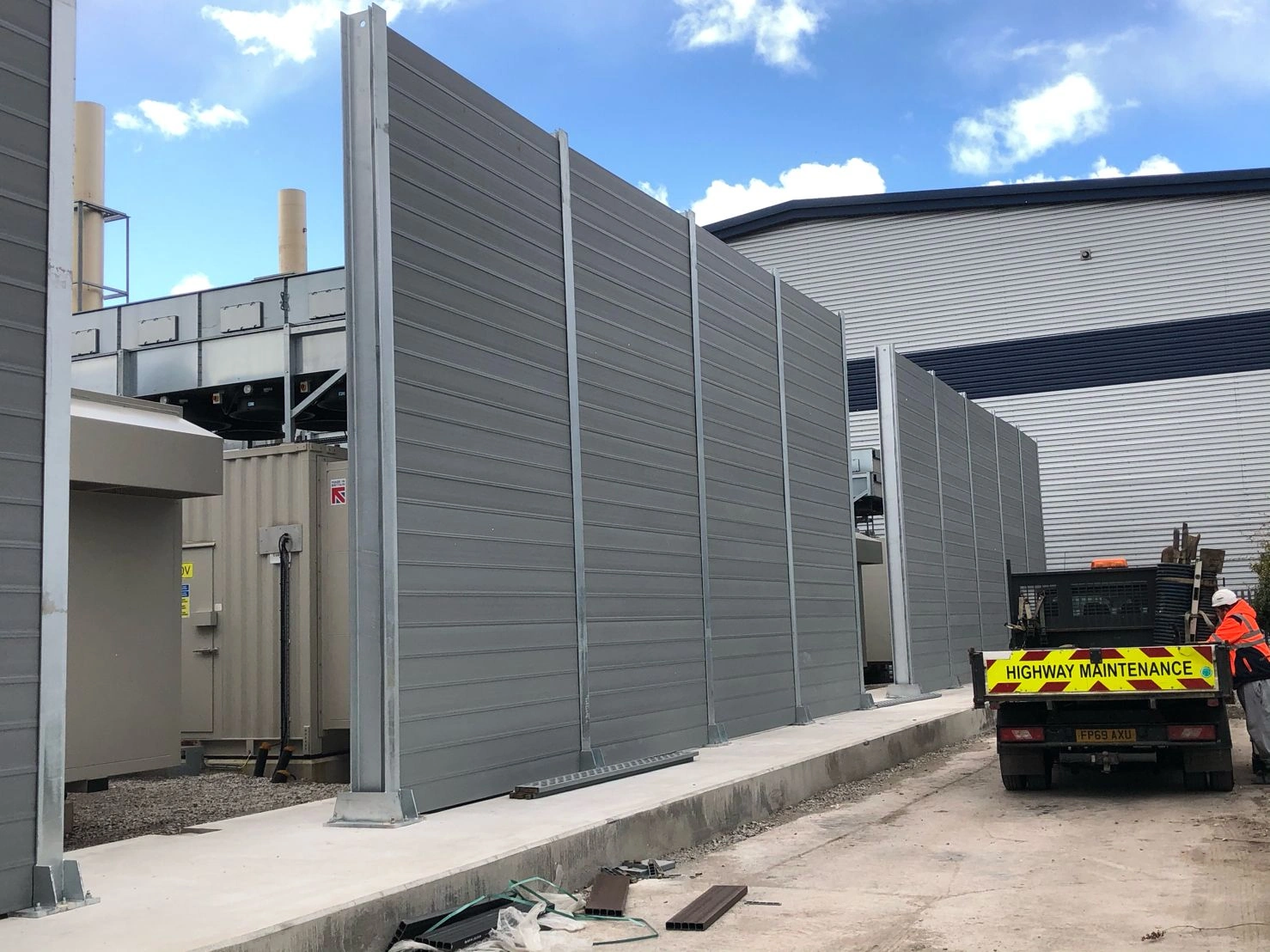
Step 1: Prepare a Detailed Specification Sheet
A vague spec sheet is the fastest way to get a production run that doesn’t fit your site.
Every factory in Anping has standard panel sizes — usually 2.0m x 2.4m or 2.0m x 3.0m with a 50x100mm or 50x200mm mesh pattern. If you’re ordering a custom height for a concert stage or a unique mesh pattern for branding, you need to lock down six variables before the factory touches the steel: overall dimensions, mesh aperture, wire diameter, tube size (both horizontal rails and vertical posts), finish type, and target load rating.
Most event managers skip the load rating because they assume temporary fencing is just crowd guidance. That assumption costs money. If your barrier needs to resist wind loads at an outdoor festival in Alberta or hold back crowd pressure near a VIP zone, specify a target load rating like 1.5 kN/m up front. A factory can adjust tube wall thickness (e.g., from 1.5mm to 2.0mm) and weld density to meet that rating — but only if you tell them before the die is cut.
- Dimensions & Mesh Pattern: Standard panels are 2.0m x 2.4m; custom heights (e.g., 1.8m for stages) require new stamp dies ($500–$2,000). Most Chinese factories stock only two mesh patterns — deviating means tooling cost.
- Tube Size & Wall Thickness: Common horizontal rails: 32mm OD x 1.5mm wall for light duty; upgrade to 42mm x 2.0mm for engineered loads above 1.5 kN/m. Vertical posts typically use heavier gauge — confirm separately.
- Finish Type & Coating Specs: Hot-dipped galvanized (>42 microns) is standard for Canadian winter UV resistance; electro-galvanized fails within one season outdoors if not powder-coated over top.
- Target Load Rating: “Standard” is not a number — specify kN/m (e.g., 1.5 kN/m). A factory that cannot provide test data for that rating should be disqualified immediately.
| Parameter | Standard Value | Custom Options | Event Recommendation |
|---|---|---|---|
| Panel Dimensions (L x H) | 2.4m x 1.2m | Up to 3.0m height; 2.0m–3.6m length | 2.4m x 2.0m for crowd control barriers |
| Mesh Pattern | 50mm x 100mm | Any pattern (new stamp die $500–$2,000) | Anti-climb pattern (50x50mm) for high-security zones |
| Tube Size (OD) | 42.4mm | 48.3mm or 32mm | 42.4mm optimal balance of weight and rigidity |
| Finish & Coating | Hot-dipped galvanized (>42 microns) | Powder coating (RAL colors); UV-stabilized | UV-stabilized powder coat for Canadian winter |
| Load Rating | 1.5 kN/m (AS 4687) | Up to 2.0 kN/m | 1.5 kN/m sufficient for crowd control |
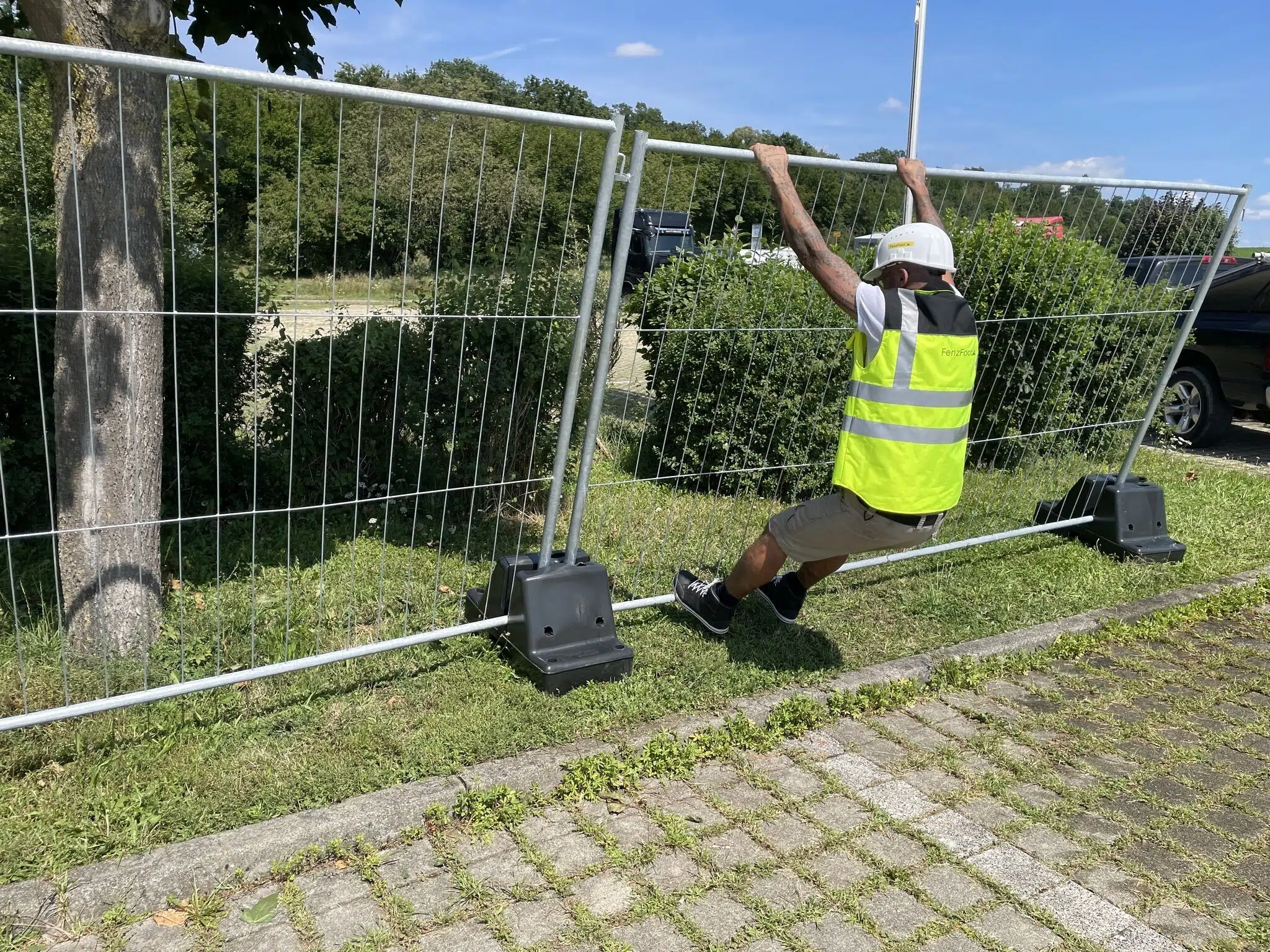
Step 2: Share Technical Drawings (Scale: .dwg or .pdf)
A hand-drawn sketch won’t cut it.
Chinese factories rely on standard mesh patterns (50x100mm, 50x200mm) for efficiency. Any deviation — a custom logo pattern or non-standard opening — requires a new stamp die costing $500–$2,000, amortized over 500+ panels. Your drawing must include overall panel dimensions, tube wall thickness, weld spacing, and finish specification. Without these, the factory will default to their standard tolerances, which can vary by ±5mm on height — a problem if you’re fitting into an existing track system.
- Panel Height Tolerance: Specify ±2mm if your event barriers must align with existing bases. The factory standard ±5mm can cause a 10mm gap between panels.
- Mesh Opening Tolerance: Standard ±1.5mm. For custom patterns (e.g., anti-climb with smaller apertures), a new stamp die is required — confirm the cost before drawing final CAD.
- Finish Thickness: Hot-dipped galvanized must be >42 microns per AS 4687. If you specify powder coat, demand UV-stabilized resin — Canadian winter UV degrades non-stabilized coatings within two seasons.
- Slip-Fit vs. Bolted Feet: Many event managers request slip-fit bases for rapid assembly. Not all factories offer this — verify the base tube ID matches your supplier’s plastic feet. DB Fencing is the only Anping factory with its own plastic feet machine, ensuring compatibility.
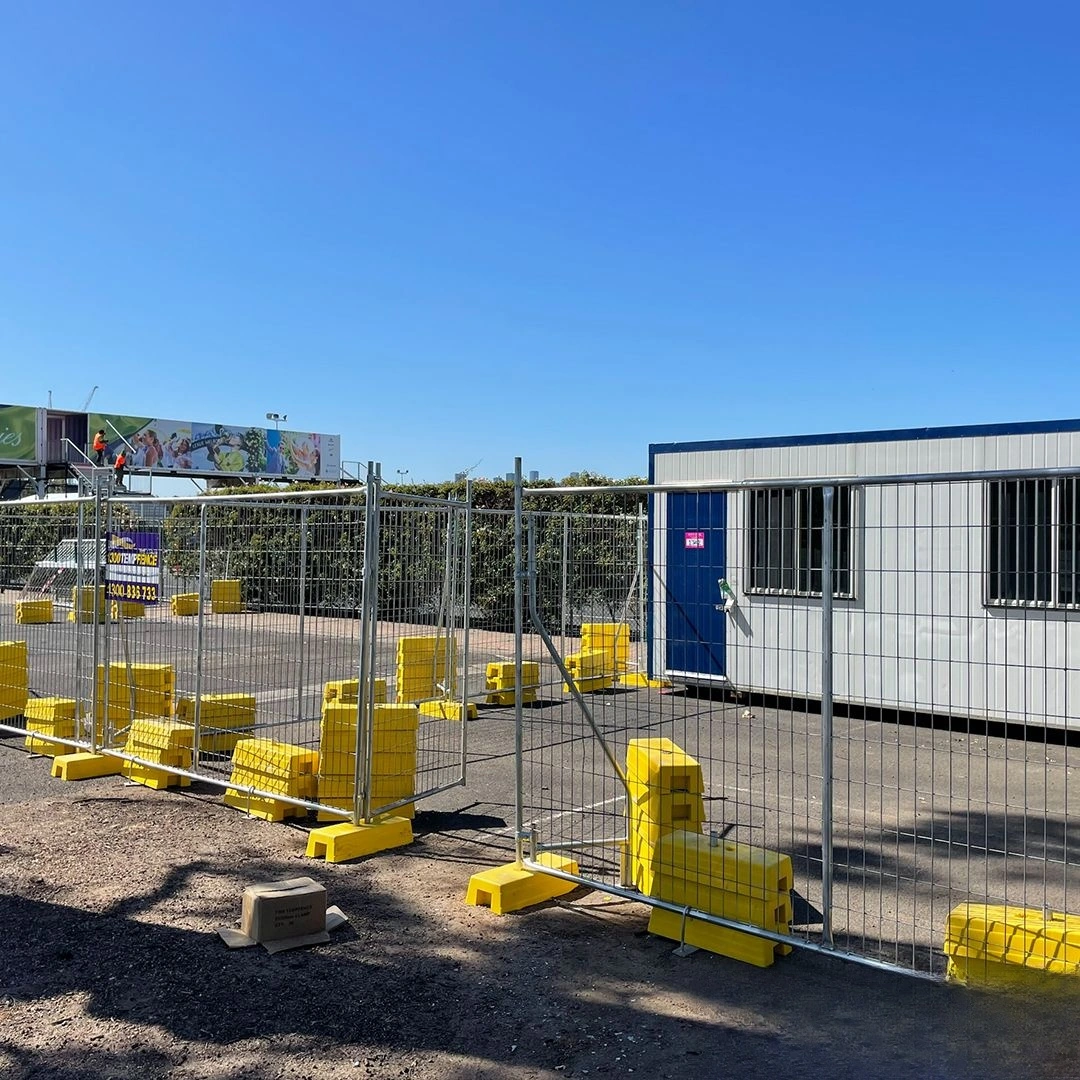
Step 3: Discuss Custom Tooling and Molds
Custom mesh stamp molds cost $500–$2,000.
Most Chinese factories keep standard mesh patterns in stock — 50x100mm, 50x200mm. If your event branding or crowd control barrier requires a unique aperture shape (say a diamond pattern or a custom logo cutout), you need a new stamp die. That die runs between $500 and $2,000 depending on complexity and steel grade of the mold. The key question is how many panels you plan to produce. At 500+ panels, that tooling cost drops below $4 per panel — negligible against the branding value of having a custom temporary fence panels with logo.
Here’s where most procurement coordinators miss the fine print: mold ownership and storage fees. Some suppliers will quote you a low per-panel price but charge monthly storage for your dedicated die after production ends. Others include the mold cost in the unit price and retain ownership — meaning if you switch factories later, you’re paying for a new die anyway. Event companies have lost $1,200 worth of tooling because they didn’t clarify ownership upfront.
- Ownership clause: Get it in writing: does the factory transfer full ownership of the mold to you after the order? If yes, request a photo of the engraved ID tag showing your company name.
- Storage policy: Most reputable OEM temporary fence manufacturer China vendors offer 6–12 months free storage for active clients. After that, expect $10–$30/month per mold. Negotiate this before signing.
- Reactivation fee: If you pause production for 18 months and want to run another batch, some factories charge a ‘mold setup’ fee to reinstall and test the die. Ask for this number upfront — typical range is $100–$300.

Step 4: Color Matching and Finishes
Canadian winter UV can strip a standard powder coat in under 18 months.
Color matching isn’t just about brand aesthetics — it’s a durability specification. When you’re sourcing custom crowd control barriers with branding for a Toronto outdoor festival or a Vancouver concert series, the finish has to survive freeze-thaw cycles and intense spring UV. Most Asian suppliers default to indoor-grade polyester powder coating. That coating will chalk and fade within one Canadian season.
The industry standard for color reference is the RAL code system. Provide your RAL number (e.g., RAL 9010 for pure white, RAL 3000 for flame red) in the technical drawing. But here’s what most procurement coordinators miss: the RAL code only defines the color, not the weather resistance. You need to specify the resin type — polyester or polyurethane — and the UV stabilizer additive package.
- UV-stabilized polyester: Minimum film thickness of 60 microns after cure. This is what passes ASTM D4587 accelerated weathering (2,000 hours minimum). If your supplier quotes standard polyester at 40 microns, reject it — that’s indoor-only grade.
- Hot-dip galvanized undercoat: For permanent installations or multi-year rental pools, specify hot-dip galvanized before powder coating (>42 microns zinc per AS/NZS 4680). The zinc layer prevents red rust when snow melt seeps through micro-scratches in the paint. Electro-galvanizing is insufficient here; it’s too thin to stop creep corrosion.
- Salt spray test requirement: Request a written guarantee of minimum 500 hours neutral salt spray (ASTM B117) without blistering or rust creep beyond 2mm from a scribe mark. A reputable OEM temporary fence manufacturer China will provide third-party test reports on request.

Step 5: Sample Production and Approval
One week saved on sample approval can mean meeting your event deadline vs.
Most Chinese factories quote 10–15 days for first samples, but that clock starts after your spec sheet and technical drawings are fully confirmed. If you request a sample during peak production season — typical from March to June — expect closer to 15 days. For custom temporary fence designs with a new mesh stamp die or non-standard height, the factory may need 20 days. Build that buffer into your timeline.
- Overall Dimensions: Measure panel length, width, and diagonal. Tolerance should be ±2 mm or better. A 2.4 m panel that’s 5 mm too long will rack the entire barrier line.
- Weld Quality: Check that each wire intersection is fully fused. Use a shear test — each weld should exceed 500 N. Weak welds cause panels to separate under crowd pressure.
- Coating Thickness & UV Resistance: For Canadian outdoor use, specify a minimum powder coat thickness of 60 microns with added UV stabilizer. A simple cross-hatch adhesion test can reveal delamination risk.
- Slip-Fit Base Compatibility: If you ordered slip-fit bases instead of bolted feet, verify that the base pocket accepts the panel leg without binding. Field repairs mid-festival are expensive.
- Mesh Pattern Accuracy: For custom mesh patterns, measure aperture size and wire gauge against the approved drawing. A 2 mm difference in wire diameter changes the panel weight and anti-climb rating.


Step 6: Production Run and In-Process QC
The difference between a good sample and a bad batch lies in three unskippable inspection gates.
When the custom temporary fence design moves from sample approval to full production, the factory floor is where most quality failures happen. I’ve seen a $50K order of custom crowd control barriers with branded logos get rejected at the port because the weld pattern on 200 panels didn’t match the approved sample. That’s why I insist on three milestone inspections—raw material, weld, and paint—for every custom run. These gates are non-negotiable if you’re sourcing from an OEM temporary fence manufacturer in China, especially for Canadian winter conditions where UV and snow load are unforgiving.
- Raw Material Inspection: Before any cutting or welding, verify the wire diameter matches your custom spec sheet. For a custom height temporary fence for events, tube wall thickness tolerance should be ±0.1mm. Check the steel grade certificate—most Chinese factories use Q195 or Q235. If you specified hot-dipped galvanized (>42 microns), the mill certificate must show the coating weight. Also confirm the wire rod source: consistent quality avoids brittle welds. For custom mesh pattern temporary fence, the mesh stamp die must be inspected for alignment—a misaligned die produces off-spec apertures that fail anti-climb requirements.
- Weld Inspection: Every 100th panel should be pulled from the line and tested for weld shear strength per AS 4687-2022. A proper weld nugget should be at least 1.5 times the wire diameter in diameter. Use a destructive test: clamp the panel and apply a force gauge until the weld breaks. The minimum acceptable load for 4mm wire is 1.5 kN. Also check for burn-through—overheated welds weaken the steel and create rust initiation points. For custom slip-fit bases, verify the weld between the base plate and the tube; a cold weld there will snap under the first wind gust.
- Paint/Coating Inspection: Custom color powder coated temporary fence requires a pre-treatment step. The factory must degrease and phosphate the surface before coating. Measure coating thickness with a magnetic gauge: target 60-80 microns for outdoor durability. Perform a cross-hatch adhesion test (ASTM D3359). For Canadian UV exposure, specify UV-stabilized polyester powder—non-stabilized powder will chalk in 6 months. Also check the galvanized undercoat if you ordered hot-dip plus powder: the zinc layer must be >42 microns before powder. If the coating bubbles or has orange peel, reject the batch—it means poor surface prep.
These inspections aren’t just paperwork. They catch problems before the container ships.
Step 7: Packaging for Custom Sizes
Event rental companies lose thousands annually mislabeling panels — here’s the fix.
For event rental companies, packaging isn’t just about protecting the panel in transit — it’s about enabling rapid identification on site. A crew unloading a 40-foot container at 6 AM needs to know instantly which panels go to which stage area. If labels are generic or missing, you lose 30 minutes per setup. Multiply that by 50 events a season and the cost is real.
- Label content: Every custom panel should carry a weather-resistant label (UV-stabilized vinyl, not paper) with your company logo, panel height, weight, and a machine-readable barcode or QR code. Include a date stamp so rental staff can route older panels to less visible positions. This eliminates guesswork and speeds reorder tracking.
- Placement consistency: Mount labels on the same corner of every panel — typically the upper-right horizontal rail. When every panel in your fleet follows the same convention, crews can scan and sort without rotating the panel. Inconsistent placement creates confusion that carries into the warehouse after teardown.
- Color coding for height: For fleets mixing standard 2.0m panels with custom-height units (e.g., 2.4m for concert stages), add a colored band or adhesive stripe to the frame near the label. A yellow stripe for 2.4m, red for 3.0m. This allows instant visual sorting from 10 meters away, reducing load-in errors by an estimated 40% based on field feedback from Canadian and Australian rental operators.
- Safety and compliance text: If your custom crowd control barriers include slip-fit bases or non-bolted connections, print a one-line warning on the label: ‘Use slip-fit base only — do not ballast with sandbags.’ This protects both the equipment and the rental company’s liability in markets like Australia where AS 4687 compliance requires clear load-rating disclosure at the point of use.
| Packaging Feature | Specification | Benefit |
|---|---|---|
| Custom Size Crating | Tailored wooden crates or steel bracing for non-standard panel dimensions | Prevents transit damage for oversized custom panels |
| Labeling & Barcoding | Weather-resistant labels with event name, panel ID, and RAL code | Enables quick inventory sorting for rental logistics |
| Bundling & Strapping | Heavy-duty polypropylene strapping with corner protectors | Secures mixed-size bundles for container loading |
| Moisture Barrier Wrap | VCI (Vapor Corrosion Inhibitor) film for sea freight | Protects powder-coated finishes from salt spray during overseas shipping |
Conclusion
Ask your supplier these three questions before approving the production run. Can they provide a third-party test report confirming the hot-dipped galvanized coating exceeds 42 microns per AS 4687? Will they lock in the RAL code and UV stabilizer for powder coating on the sample approval form? Do they own the custom stamp die contractually, with a fixed storage fee for future reorders? If the answer to any is no, you need a different factory.
Review the product page for standard options and start the custom design process with a spec sheet request. The factory team can provide a quote and sample timeline within 48 hours.
Frequently Asked Questions
What is the MOQ for custom temporary fencing?
Our standard MOQ for custom panels is 100 panels. This low threshold covers material setup and tooling changes without requiring a full container load. Confirm final MOQ after your spec sheet is approved.
How do I ensure my fence meets Australian standards?
Specify AS 4687-2022/2007 compliance in your technical drawing and request a compliance certificate. Anti-climb mesh can be welded and hot-dipped galvanized finish >42 microns used to pass certification. Include the standard number in your spec sheet to lock in compliance.
What are lead times for custom samples?
First samples take 10–15 days after tooling and drawing approval. Rush orders may be possible but depend on current production load and material availability. Plan sample approval at least 3 weeks before your production deadline.
How much do custom mesh stamp molds cost?
Custom mesh stamp molds typically cost between $500 and $2,000 depending on complexity and mesh pattern. We own the mold after payment and can store it for future reorders. Ask about mold storage fees if you expect repeat orders.
Can I get custom colors or logos on temporary fencing?
Yes, we offer powder coating in any RAL color and can print or emboss your logo on the panel frames or plastic feet. Provide the RAL code and vector logo file. Send a color swatch or PMS reference for critical brand matches.