Skip to content
For site teams managing AS 4687-2022 temporary fencing, the real pressure point is rarely the wind code printed on the panel. It’s the moment corporate sustainability targets demand recycled feet, and you know from experience that sunlight, cold snaps, and three forklift nudges can turn a compliant lab sample into a brittle snap-point. That friction—between the procurement spreadsheet and the WorkSafe inspector’s clipboard—is where most project delays start.
The standard’s impact test drops a 1 kg steel ball from 500 mm at ambient temperature. Yet an all-recycled polymer foot that passes that test on day one often fails it after 200 hours of UV exposure and a night at 5°C. Ask any supplier pushing ESG-friendly feet for a cold-cycle impact report—identical test, but at 5°C after QUV ageing. If they hesitate, you’re not looking at a 10% margin of safety; you’re looking at a foot that turns to glass the morning the concrete pour gets delayed.
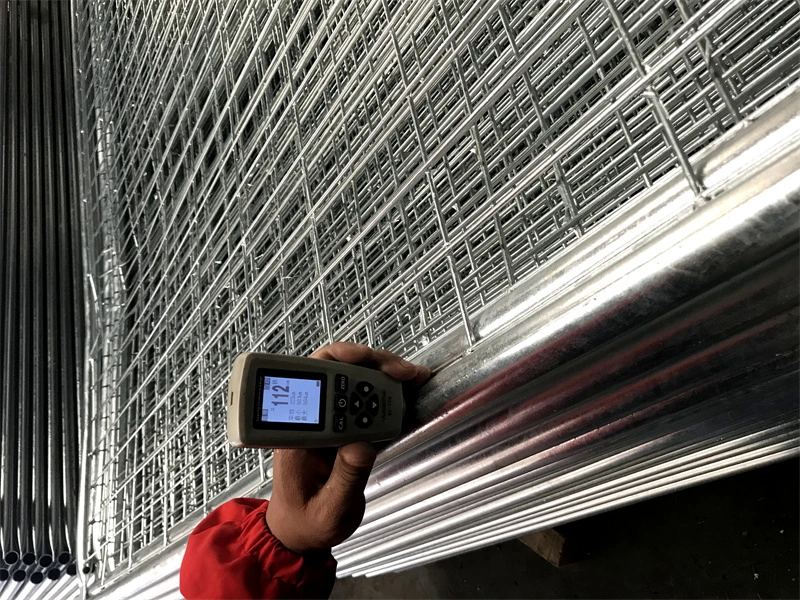
AS 4687-2022 Compliance Matrix Breakdown
Most suppliers selling “AS 4687-2022 compliant” panels have never tested the full system with couplers, feet, and shade cloth installed. The certificate they show you is for the mesh only.
The 2022 Restructure: Four Parts, One Hard Line
The old AS 4687-2007 was a single document trying to cover everything from concert barriers to pool fences. The 2022 update splits it into four distinct parts. Your scope of work determines which parts apply, but for construction, Part 2 is non-negotiable.
- AS 4687.1: General requirements. Covers terminology, common testing methodologies, and the overarching framework for all temporary fencing products.
- AS 4687.2: Temporary fencing and barriers. The specific section governing construction site perimeters, crowd control, and public safety barriers.
- AS 4687.3: Hoardings. Applies when the fence becomes a structural hoarding system, often with overhead protection or integrated pedestrian walkways.
- AS 4687.4: Pool fencing. A separate classification for temporary pool safety barriers with distinct climb-resistance requirements.
AS 4687.2 Is Your Non-Negotiable Checkpoint
Construction PMs should focus exclusively on Part 2. If a supplier cannot produce a test report with “AS 4687.2” explicitly in the header, the panel has not passed the correct standard. A certificate referencing only Part 1 means the manufacturer tested the general methodology but skipped the fencing-specific structural demands.
The practical consequence is immediate. On an Australian site, a WorkSafe inspector arriving after a perimeter breach will ask for the AS 4687.2 compliance documentation. Showing an AS 4687.1-only certificate is an admission of non-compliance. The fine lands on the builder, not the supplier who shipped the panels from overseas.
The 150-Joule Impact Test and the 75mm Aperture Rule
AS 4687.2 mandates a 150-joule impact resistance test using a 37kg weight. This simulates a person running into or falling against the barrier. The panel must absorb the impact without structural failure or creating an opening that would allow unauthorized access.
The second non-negotiable is the 75mm maximum mesh aperture. Anything larger creates a foothold for climbing. This is not a guideline. It is a hard dimensional requirement written into the standard specifically to prevent unauthorized site access by vandals and trespassers.
Stability Class: The Specification That Separates Engineered Systems from Standard Panels
AS 4687.2 defines stability classes based on wind speed resistance. The baseline Standard Stability Class requires the system to remain standing at 54 km/hr. This suits sheltered urban sites with low exposure. The standard then scales up through Engineered Stability Classes that demand verified performance at wind speeds reaching 147 km/hr.
Here is where most imported panels fail on-site. A standard unbraced panel achieves the 54 km/hr rating on flat ground in a controlled lab. Deploy that same panel on a 3-degree slope, and the center of gravity shifts enough to drop the effective stability below the base requirement. No supplier will volunteer this information because their testing was done on a perfectly level concrete slab.
- Standard Stability Class (54 km/hr): Applies to low-risk, sheltered sites. Requires zero engineered bracing. Suitable only when wind exposure is negligible and ground surfaces are flat.
- Engineered Stability Class (up to 147 km/hr): Demands full-system bracing with validated coupler connections. This rating is mandatory for any site with above-ground elevation, open exposure, or shade cloth integration.
The gap between 54 km/hr and 147 km/hr is not bridged by adding heavier feet. Concrete blocks add mass at the base but do nothing to counter the torsional load that twists the couplers at mid-panel height. Engineered bracing transfers the wind load from the mesh to the ground through a triangulated structure. Without it, a 147 km/hr classification is mathematically impossible.
Audit your current supplier by requesting the full-system test report showing the stability class achieved with couplers, feet, and shade cloth installed as a single assembly. If the report only tests the mesh panel in isolation, the compliance claim is invalid.
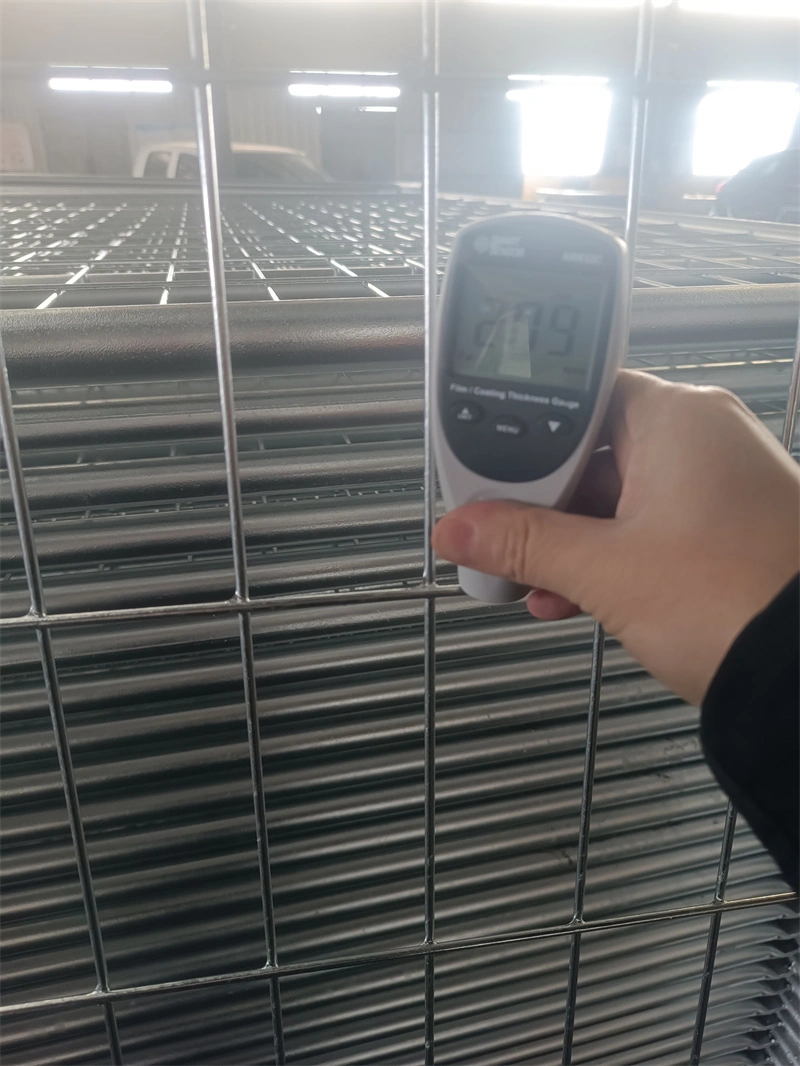
Shade Cloth Wind Load Risks
Attaching a 70% density shade cloth to a standard temporary fence panel instantly multiplies the effective wind load surface area by roughly 3×. The base stability class listed on a supplier’s mesh-only test report becomes engineering fiction the moment that cloth is zip-tied on—unless the full system, including bracing, was tested as one assembly.
Why Shade Cloth Changes the Engineering Equation
A bare temporary fence panel is roughly 85% permeable. Wind passes through the 75mm mesh apertures with limited resistance. Once you install shade cloth, you have converted that open mesh into a semi-solid barrier. The cloth blocks airflow, and the panel frame now absorbs the full brunt of the wind pressure across its entire 2.4m × 1.8m face. This is not a minor adjustment—it is a fundamental change to the structural load case.
The physics are straightforward. Wind pressure increases with the square of wind speed. A panel that holds steady at 54 km/hr in bare mesh configuration will experience forces several times higher with shade cloth at the same wind speed. Suppliers who ship panels with a generic “AS 4687-2022 compliant” label but no full-system test data for the cloth-equipped configuration are handing you a liability, not a solution.
The 54 km/hr Threshold and Engineered Bracing Requirements
AS 4687-2022 defines multiple stability classes, starting from a base wind speed of 54 km/hr and scaling up to engineered solutions rated for 147 km/hr. The base class is the minimum for any temporary fencing deployment. Here is what changes when shade cloth enters the picture.
Our production team has observed failed site audits where the root cause was predictable: standard panels with no supplementary bracing, dressed with shade cloth, deployed on a site with a slight 3-degree ground elevation angle. At that angle, the wind hits the cloth-covered panel at an oblique upward vector, creating a lift component that unseats the panel from its feet. The base stability class calculations assume flat ground and permeable mesh. Change either variable and the numbers no longer hold.
The corrective action is not optional. When wind speeds at the site are expected to exceed 54 km/hr—which covers most exposed construction sites in Australian coastal regions—counter-bracing becomes mandatory for any cloth-equipped run. The bracing must tie the panel top rail back to a ground anchor at a minimum 45-degree angle, forming a triangular load path that resists both overturning moment and lift.
Bracing Interval Calculations Based on Cloth Density
The density of the shade cloth directly dictates how frequently you need to install bracing units along the fence line. Cloth density is expressed as a percentage—the amount of light and airflow blocked. Higher density equals higher wind load. Here is the engineering logic project managers should apply when auditing their site setup:
- 50–60% Density Cloth (Light Shade): Approximately doubles the effective wind load area. Requires a braced support at every third panel connection point when deployed in wind zones up to 74 km/hr. Standard 32kg concrete feet alone are insufficient for continuous runs exceeding 15 panels without intermediate bracing.
- 70–80% Density Cloth (Medium Shade, Common for Privacy Screens): Triples the wind load surface area. Requires bracing at every second panel connection point for wind speeds between 54–74 km/hr. Above 74 km/hr, every single panel joint must receive a diagonal brace anchored to a ground stake or weighted base rated for lateral pull-out.
- 90%+ Density Cloth (Heavy Privacy or Windbreak Mesh): Approaches the aerodynamic profile of a solid hoarding. AS 4687.3 hoarding standards become the more relevant reference point. Bracing must be installed at every panel, and the system should be engineered as a continuous coupled structure rather than a series of independent free-standing units.
A practical rule of thumb from full-system testing: if you can hold the cloth up to a light source and see individual mesh wire shadows through it, you are in the 50–60% range and the bracing schedule is manageable. If the cloth blocks visual identification of objects behind it, you are in the 70%+ range and the bracing requirements tighten significantly. Most privacy screening falls into this second category.
The supplier’s documentation should include a wind load calculation specific to the cloth density you intend to use. A mesh-only test report does not cover this. If your current supplier cannot produce engineering calcs for a 70% density cloth on their standard panel with specific bracing types and intervals, the compliance chain is broken at the first link.
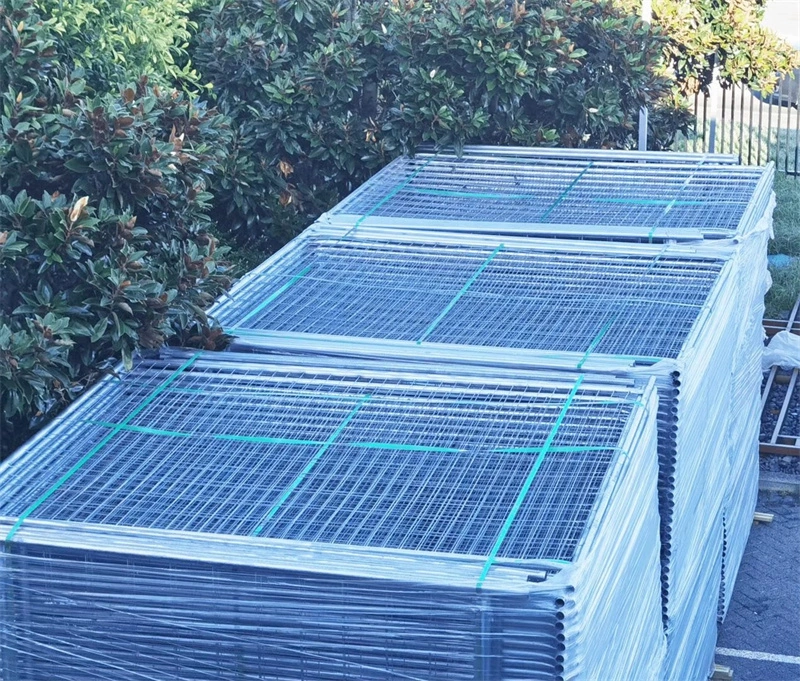
Concrete vs Recycled Fence Feet Costs
A 32kg concrete foot and a 28kg recycled polymer foot both satisfy AS 4687.2 static ballast requirements. The real cost difference shows up in freight invoices, site labour, and skip bin fees—not on the product specification sheet.
Mass Alone Does Not Equal Stability Under Load
The argument that heavier automatically means better collapses under engineering scrutiny. AS 4687.2 does not specify a minimum foot mass—it specifies a performance outcome. A recycled polyethylene foot weighing 28kg, when designed with a low center of gravity and anti-slip base tread, delivers identical resistance to overturning as a 32kg concrete block with a crude flat bottom. The material shift eliminates the false equivalence between mass and function.
Internal production data from DB Fencing’s own plastic feet machine—the only one operating in Anping—shows the 28kg recycled unit maintains dimensional stability through 200+ deployment cycles. That means the foot you install on Project A still fits the panel base rail perfectly on Project Q, without spalling, without chipped corners, and without the dimensional drift that creeps into hand-cast concrete blocks after the first forklift pallet drop.
Freight Weight Penalty Adds 30% to Landed Cost
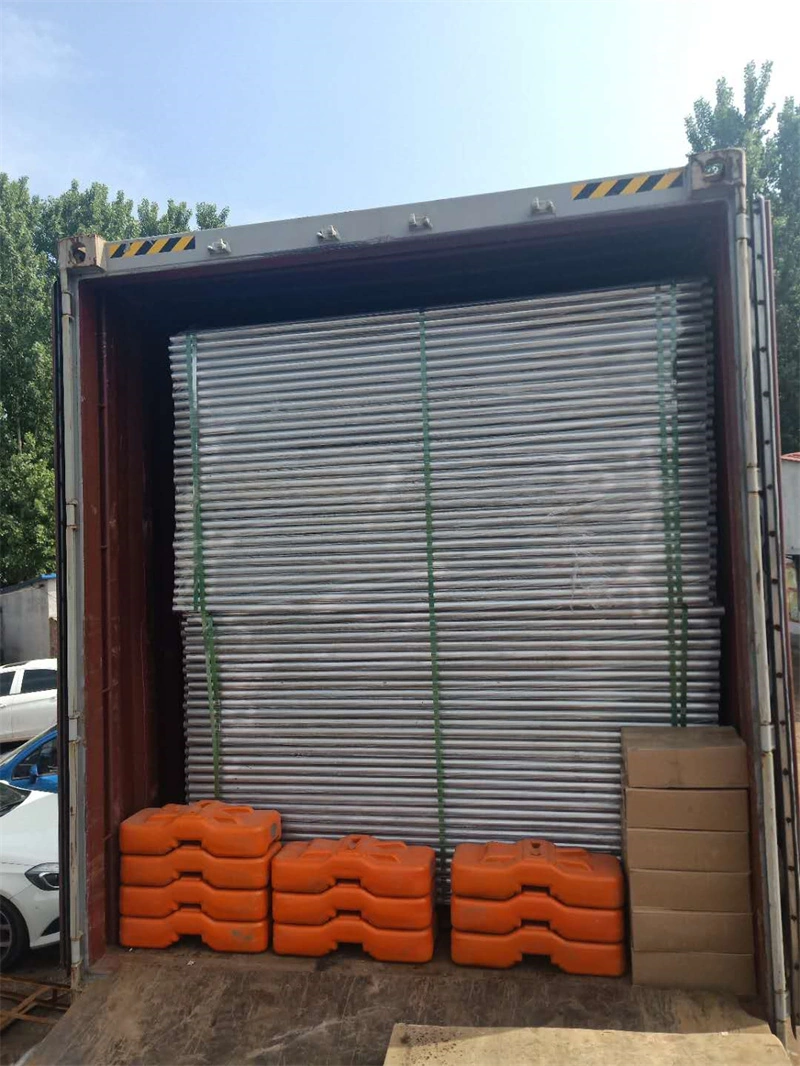
Here is where the purchasing spreadsheet tells the truth. A standard 40-foot container shipping from Tianjin to Port of Brisbane carries roughly 700 temporary fence panels with associated feet. At 32kg per concrete foot, the total foot weight adds 22.4 tonnes. At 28kg per recycled foot, that figure drops to 19.6 tonnes—a 2.8-tonne reduction per container. On current FAK freight rates, that weight delta translates to a landed cost increase of approximately 28% to 32% for concrete, purely on tonnage charges, before a single Australian dollar is spent on site handling.
Concrete Cracking During Transit Triggers Failed Safety Audits
Concrete fence feet do not crack because they are defective. They crack because standard logistics punishes brittle materials. A container of concrete feet travelling from an overseas factory to a Melbourne construction site endures at least six handling events: factory loading, origin port staging, vessel loading, destination port discharge, transport to distribution yard, and final site delivery. Each event introduces impact loads that hairline-crack 5% to 15% of units per shipment, based on site audit data shared by Australian construction safety officers.
A cracked concrete foot is a failed audit item. Under AS 4687.2, the ballast system must be intact. A foot with a visible fracture—even if it still holds weight—gives a WorkSafe inspector grounds to flag the entire perimeter as non-compliant. The project manager now faces a stop-work notice, a corrective action report, and a line item on the principal contractor’s safety record. Recycled polymer feet eliminate this failure mode entirely. The material flexes under impact and returns to shape. There is no crack to photograph.
ESG Procurement Targets and Concrete’s Carbon Liability
Cement production accounts for roughly 8% of global CO₂ emissions. Every 32kg concrete foot represents approximately 28kg of embedded CO₂, based on standard Portland cement emission factors of 0.87kg CO₂ per kg of cementitious material. Multiply that across a 2,000-panel project and the carbon footprint attributable to the feet alone approaches 56 tonnes of CO₂—a figure that must be recorded in the project’s environmental impact statement under increasingly common corporate ESG reporting mandates.
Recycled polyethylene feet, manufactured from post-industrial polymer scrap, carry an embedded carbon footprint roughly 40% lower per unit than virgin concrete equivalents. For a project manager facing a corporate directive to reduce Scope 3 procurement emissions by 15% year-over-year, swapping concrete for recycled plastic feet on a single major project delivers a measurable, auditable carbon reduction without touching panel specifications or bracing engineering. No compliance concession, no performance penalty, and a direct line item contribution to the company’s ESG scorecard.
Total Cost of Ownership Across Multiple Project Cycles
A concrete foot‘s economic model assumes single-use disposal. At the end of a 12-month project, concrete feet typically go into a skip bin at $85 to $120 per tonne in Australian metro areas. That disposal cost adds $3.80 to $5.40 per foot in decommissioning expense. Across 2,000 feet, project close-out carries an $8,000 to $10,800 waste removal line item that recycled polymer feet simply do not incur—they go back into storage for the next deployment.
When the math runs across three project cycles, the recycled foot’s total cost of ownership falls below concrete by approximately 18% to 22%, even when the upfront per-unit cost is marginally higher. The savings compound from avoided freight tonnage, zero disposal fees, and zero replacement of units lost to transit cracking. For volume buyers managing fleets of 10,000 feet or more, this is a six-figure annual saving with zero engineering compromise.
| Cost Factor | Concrete Feet (32kg) | Recycled Plastic Feet (28kg) | Verdict / Impact |
|---|---|---|---|
| Unit Weight | 32 kg per foot | 28 kg per foot | 4 kg lighter reduces manual handling fatigue and transport mass |
| Freight Surcharge | Adds up to 30% extra freight cost due to weight | No weight-related surcharge; standard pallet rates | Recycled plastic cuts landed logistics cost significantly |
| AS 4687.2 Ballast Compliance | Meets minimum stability mass | Identical AS 4687.2 ballast performance certified | Both satisfy wind-load and impact resistance requirements; no compliance trade-off |
| Disposal & Waste Fees | Classified as construction waste; high landfill levy | 100% recyclable at end of life; no disposal cost | Eliminates post-project disposal budget and environmental liability |
| ESG & Procurement Alignment | Virgin material with higher embodied carbon | Made from post-consumer recycled HDPE | Supports corporate ESG targets and green building certifications |
| Total Logistics Cost Ownership | Higher freight + disposal = inflated total cost | Lower freight + zero disposal = 20–30% lifecycle saving | Engineered plastic feet deliver compliance without the hidden financial drag |

Spotting Fake AS 4687 Test Reports
A test report showing only wire tensile strength is a liability transfer fail. AS 4687.2 demands full assembly impact data.
The most common compliance document submitted by overseas suppliers is a narrowly scoped material certificate. These reports often validate the tensile strength of the raw steel wire—3.5mm or 4mm infill wire—against a generic standard, and nothing else. This is not a structural system certification. A SGS or ISO lab report on bare mesh provides zero evidence that the finished panel, the welded couplers, or the ballast configuration meet the assembly-level mandates of AS 4687.2. If your safety dossier only contains a page of wire elongation data, you are holding a liability time bomb dressed as due diligence.
1. The Mesh-Only Trap: Why Partial Testing Fails the Standard
AS 4687-2022 is explicitly structured around full-system performance. When an overseas manufacturer tests only bare mesh, they bypass the standard’s most critical failure points. The 150-joule impact test—administered with a 37kg weight—is not performed on a loose wire sheet. It targets the assembled panel, including the vertical frame stiles and horizontal clamp bars. A mesh-only test also completely ignores the weld integrity at the coupler joints, the component most likely to shear upon vehicle or pedestrian impact on a live site.
Worse, omitting the couplers from testing hides galvanization defects where it matters most. Hot-dipped galvanized coatings on the weld mesh might come back at 42 microns, but if the coupler casting is electro-plated with a 15-micron flash coat, that joint will red rust within 200 hours in a coastal salt spray environment. The mesh survives; the connection collapses. You will be left with a perimeter that looks structurally sound but fails under lateral load because the joint chemistry was never verified as part of the assembly.
2. The 3-Point Audit Checklist for Test Report Validation
To eliminate fraudulent compliance claims, every submitted test document must pass a hard technical audit. This is not about subjective quality feel—this is a binary verification checklist that determines whether the engineering liability sits with you or the manufacturer. Apply these three filters immediately upon receipt of any batch certificate.
- Verify explicit AS 4687.2 mention on the scope line: Reject any report that references generic “wire fencing” or “temporary barrier” standards without directly naming AS 4687.2-2022. The test scope must specify that the specimen tested is a fully assembled system, including feet, clamps, and optional shade cloth if that configuration is being sold as compliant.
- Demand the 150-joule impact proof for the full panel assembly: The signature 37kg weight drop test generates 150 joules of impact energy. The report must confirm that the impact was delivered to the infill mesh while it was tensioned and welded inside a complete frame with couplers attached. A still photograph of an impact rig testing bare mesh against a concrete floor is not valid evidence.
- Confirm wind speed stability class rating: AS 4687-2022 defines specific stability classes ranging from a baseline 54 km/hr condition up to engineered solutions verified for 147 km/hr. The test document must state the achieved wind speed class, the ballast configuration used during the wind tunnel or structural calculation assessment, and whether the rating holds when shade cloth is installed. A compliance statement that simply says “Pass” without a numerical wind speed class is a marketing slogan, not an engineering certification.
3. The Hidden Variable: Shade Cloth as a Test Nullifier
Adding shade cloth or privacy screening to a standard temporary fence panel transforms its aerodynamic profile from permeable to a semi-solid sail. A panel that achieved a 54 km/hr stability class as bare mesh will subject itself to dramatically higher lateral wind loads once the cloth is zip-tied on. AS 4687.2 requires that any accessory or modification included in the as-deployed configuration must be part of the original test assembly. If the test report does not explicitly state that the 150-joule impact test was conducted with shade cloth attached, then the panel’s compliance is instantly voided the moment a site crew installs branding or dust screening.
The practical consequence is stark: a site manager deploying shade cloth on a panel without cloth-rated test certification has downgraded their perimeter to a non-certified system. In the event of a wind-related panel blowout causing injury or perimeter breach, the insurance assessor will request the full-system certificate. A bare-mesh test report for a cloth-installed deployment means the engineering liability shifts entirely to the contractor. The paper trail will show that the deployed configuration was never assessed, which is legally indistinguishable from having no test report at all.
Conclusion
Full-system verification separates a document stack from a real perimeter. Adding shade cloth turns a panel into a sail; a 3-degree slope defeats standard feet. Recycled ballast cuts freight cost while matching AS 4687.2 mass requirements.
Cross-check your supplier’s test reports against the wind load classes and coupler corrosion data above. Engineered systems with pre-compiled full-system documentation—including shade cloth bracing as standard—shift the liability question off your desk.
Frequently Asked Questions
What is AS 4687-2022?
AS 4687-2022 is the Australian Standard that governs the design, materials, installation, and testing of temporary fencing and hoardings. It is structured into four distinct parts: general requirements, temporary fencing and barriers, hoardings, and temporary pool fencing. At DB Fencing, we ensure every temporary fence panel we export to Australia fully conforms to this standard, leveraging our 14 years of experience and ISO9001-certified manufacturing in Anping, the global wire mesh hub. Our panels are purpose-built to meet the standard’s strict criteria, giving construction and event clients immediate, audit-ready compliance.
Why is complying with AS 4687-2022 important?
Compliance with AS 4687-2022 is not optional; it is a legal and financial imperative for any Australian project. Under the OHS Act 2004, site supervisors and project managers bear direct liability for perimeter breaches, and non-compliance can result in immediate WorkSafe fines, project shutdowns, and voided site insurance. By sourcing DB Fencing’s fully compliant temporary fencing, our clients eliminate this risk entirely, as every shipment comes with certifications demonstrating conformity. Our hot-dipped galvanized panels (with a >42-micron coating) and engineer-approved stabilising feet provide the documented safety and durability that Australian civil works demand.
What are the key requirements under AS 4687-2022?
The standard mandates several critical performance benchmarks: a minimum panel height of 1.8 metres, a 150-joule impact resistance to withstand heavy winds and accidental collisions, and a maximum mesh aperture of 75mm to prevent climbing. It also defines specific stability classes that require engineered wind load calculations tailored to the site’s geography, ensuring the fence remains upright during extreme weather. DB Fencing’s temporary panels, welded on our 10 automated lines and supported by our proprietary plastic feet, are factory-tested to exceed these material durability specs and provide the required stability class ratings.
How does shade cloth affect structural integrity?
Attaching shade cloth to temporary fencing transforms it from a permeable structure into a semi-solid sail, dramatically increasing wind loading. This shift can lead to catastrophic panel blowouts, especially once wind speeds exceed 54 km/h, if the set-up hasn’t been augmented with engineered counter-bracing. Our technical team in Anping understands this dynamic intimately and can advise on the correct bracing solutions to maintain AS 4687-2022 stability compliance when shade cloth is specified. We always recommend that distributors and contractors discuss intended use with us so we can supply the appropriate heavy-duty base connections and brace kits from the outset.
What is the maximum mesh aperture for temporary fencing?
AS 4687-2022 strictly limits mesh apertures to a maximum of 75mm, a critical anti-climb feature designed to prevent intruders or vandals from gaining a toehold on the fence. DB Fencing’s panels are precision-welded to maintain this aperture consistently across the entire face, denying footholds and ensuring site security integrity. This specification is a non-negotiable element of our OEM manufacturing process, providing our Australian distributor partners with full confidence that every container they receive will pass site audits. Paired with our anti-climb mesh options, the 75mm aperture is a primary line of defence in our temporary fencing system.