Skip to content
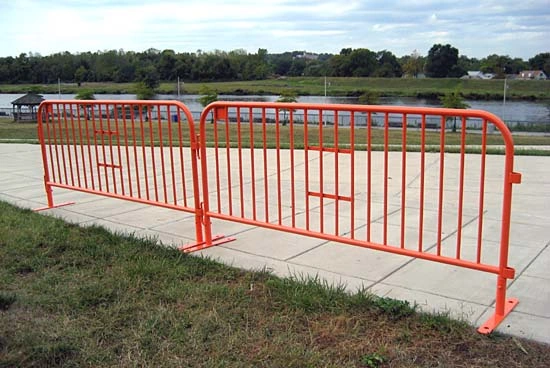
import crowd barriers direct is the first checkpoint buyers should lock before they approve a supplier, budget, or production slot. The spec sheet says the barrier has ahot-dipped galvanized coating. The container arrives with a thin electro-galvanized layer that flakes after one coastal weekend. That gap between what you approved at sample stage and what actually hits the warehouse floor is the real reason event procurement coordinators hesitate to import crowd barriers direct. Buyers have burned through a $50,000 order because the pre-production sample matched perfectly but the mass production run swapped the base material without notice. That is not a quality issue — it is a supply chain trust problem.
DB Fencing solves that trust problem at the factory floor level. We are the only manufacturer in Anping County with our own injection-moulding machine for plastic feet. Most competitors outsource that component to a separate specialist, which introduces fit variance and a second layer of cost. When you import crowd barriers direct from us, the FOB pricing reflects one factory, one quality tolerance, and one compliance standard. Our standard hot-dipped coating exceeds 42 microns — AS 4687-2022 only requires 35. That extra margin means you are not gambling on sample approval alone. You have a per-shipment galvanization certificate from SGS.
The cost of leaving this step untested is not just a slightly higher per-unit price. It is a $20,000 delta on a 500-panel order compared to distributor pricing. It is a crew that fights with 25 kg concrete bases instead of 10 kg recycled rubber alternatives. And it is the risk of unboxing a container full of barriers that wobble because the plastic feet were cast from a different mold batch. If you skip the due diligence now, you will either eat the markup or inherit the headache next season.
Why Import Direct Saves Your Event Budget
Local resellers add 300–400% margin.
The typical Australian distributor or rental company prices a single crowd barrier at around AUD $110. That same panel, built to the same AS 4687 spec, leaves a Chinese factory at roughly AUD $66. The difference isn’t freight or compliance — it’s pure margin. For a 500‑panel order, that gap is AUD $22,000. Money that could fund staging, lighting, or additional security.
Most event managers don’t realise the markup because they’ve never seen a factory price list. They see the rental quote, compare it to the purchase quote from a local distributor, and both look expensive. But the distributor is buying from the same factories we operate — they’re just adding their own logistics and margin on top.
-
- Rental trap: Renting at AUD $15–$25 per panel per week. A four‑week festival using 500 panels costs AUD $30,000–$50,000 in rental fees alone. One season of rental equals the purchase price of owning the barriers outright.
- Ownership math: Buying direct at ~AUD $66 per panel (500 panels = AUD $33,000) pays for itself after one major event. Subsequent events only incur storage and transport. No recurring rental invoices.
The Weight Problem Solved: Concrete vs Recycled Rubber Bases
25 kg concrete bases add 12.5 tonnes to a 500-barrier setup.
Concrete feet are the standard for crowd barriers, but if you’ve ever watched a team unload 25 kg blocks in 35°C heat, you know the hidden cost: slower setup, more injuries, and grumpy crews. For a 500-barrier order, that’s 12.5 tonnes of dead weight to truck, lift, and place. You’re paying for extra labor hours and risk compensation, not just the concrete.
Then there’s the damage. Concrete chips on asphalt, cracks under UV, and absorbs moisture that rusts the steel insert over time. Rental yards often pass those worn blocks to clients who didn’t specify otherwise.
-
- Weight per base:: Concrete – 25 kg. Recycled rubber – 10 kg. That’s a 60% reduction per barrier.
- Total order weight:: 500 barriers with concrete = 12,500 kg. With rubber = 5,000 kg. Seven tonnes less to ship and handle.
- Crew impact:: Each person can carry two rubber bases at once without strain. Setup time for a festival perimeter drops by roughly 30%.
- Durability:: Recycled rubber won’t crack, absorb water, or mark asphalt. Anti-UV formulated for Australian sun.
Aesthetics That Impress Sponsors and Media
Your barriers are a moving billboard for sponsors — don’t let them look like a rental.
Rental barriers arrive with scratched paint, rust spots, and that generic safety yellow. When the cameras roll at a festival or a corporate event, those barriers are in every shot. They kill the visual consistency that sponsors pay for. One event manager told me a sponsor pulled out after seeing test photos because the barriers looked “like a demolition site.”.
-
- Industrial look cost you sponsorship value: Chipped paint and mismatched colours make your event look low-budget. Media footage amplifies that. No sponsor wants their branding next to a rusted panel.
- Full colour OEM customisation: We powder-coat in any RAL colour — matte black, corporate blue, whatever matches your event theme. We also print logos or sponsor ads directly on the panels. No middleman upcharges. MOQ for custom colours is 200 panels, and lead time is four weeks.
Low MOQ Means Test Without Risk
100 panels is the threshold—test before you commit to a full container.
Most Chinese factories will not touch an order under 500 panels. That means you either gamble on a full container or walk away. The MOQ is set at 100 panels for stock colours precisely because event procurement coordinators need to validate quality, crew handling, and compliance before scaling.
-
- Pilot size: 100 panels covers a single festival zone or a small event. Enough to run a real-world trial without overcommitting AUD 33,000+.
- Tooling lock: We use the same jigs, wire gauge, and injection‑moulded feet for every order—pilot and bulk are identical. No spec drift.
- Compliance check: Request the SGS test report for your pilot batch. Verify the hot‑dipped galvanized coating (>42 microns) against AS 4687‑2022 before you reorder.
Once the crew has moved 10‑kg recycled rubber bases instead of 25‑kg concrete, and you’ve seen the barrier’s anti‑climb mesh hold up during a crowded festival, you scale with confidence. Our 10 welding lines can ramp from 100 to 2,000 panels per week without changing material or lead time. Your pilot order sets the baseline; every repeat order matches it exactly.
Rush Orders and Lead Times: Factory vs Distributor
Your event schedule can’t wait?
Standard sea freight from Tianjin to Melbourne runs 4–6 weeks. If you plan 8 weeks ahead, that’s manageable. For last-minute changes, we offer air freight on small top-ups with a 2-week lead. The real question is: can your local distributor beat that? Most can’t, because their ‘in stock’ often means limited generic inventory in one or two colours. If you need a specific RAL colour or powder-coated finish, they’ll add 2–3 weeks for special order, plus delivery time. That brings their lead time to the same 4–6 weeks—except you’re paying a 300–400% markup.
-
- Factory direct lead time:You align production with your event calendar. With 10 welding lines (2,000 sets/week), the factory can schedule your batch within 2–3 weeks after sample approval.Sea freightthen adds 4–6 weeks. Total: 6–9 weeks if planned early.
- Distributor lead time: They claim ‘in stock’ but often carry only silver or yellow in standard quantity. If you need 500 panels in custom orange, they’ll order from a factory—adding their own lead time plus 1–2 weeks for warehouse handling and local delivery. Net effect: same 6–9 weeks, higher cost.
- Hidden bottleneck: plastic feet: Many Chinese factories wait on third-party plastic feet suppliers. DB Fencing runs its own injection-moulding machine in-house. That cuts out a 1–2 week sourcing delay and ensures every base fits your panels perfectly—no wobble.
If you’re thinking ‘but I need barriers next month’, ask your distributor for a guaranteed delivery date in writing. Then compare that to a factory direct order with a confirmed production slot and a freight forwarder booking. You’ll likely find the factory timeline is more predictable because we control every step from steel coil to container loading.
Conclusion
Importing crowd barriers direct from DB Fencing cuts unit costs by 30–50% compared to Australian distributors. The 10 kg recycled rubber base eliminates crew strain, and the low MOQ of 100 panels removes the risk of a full container commitment. Every shipment includes batch-specific SGS test reports verifying AS 4687 compliance.
The key benchmark to remember: AS 4687 requires a minimum galvanized coating of 35 microns; DB Fencing ships at >42 microns. That’s a number you can reference in your next supplier call. Review your event’s current barrier spend against these factory direct figures. A pilot order of 100 panels is enough to validate the quality and crew response.
Frequently Asked Questions
How long does shipping take from China to Australia?
Shipping from China to Australia typically takes 15–25 days via sea freight. For full container loads, you should add a few days for customs clearance and inland delivery. Confirm the exact schedule when you place your order.
Can I get custom colors for my event?
Yes, full OEM customization is offered including any RAL color and your logo on the barriers. Just provide your color code or artwork and it will be matched exactly. Send your color code and artwork for a quote.
What is the minimum order quantity for crowd barriers?
Our minimum order quantity is 100 panels for standard models. For custom colors or OEM designs, the MOQ may be higher depending on the spec. Contact us with your specs to confirm the exact MOQ.
Are your barriers compliant with Australian safety standards?
Yes, all our crowd barriers meet Australian Standard AS 4687-2022/2007 and are ISO9001 and SGS certified. We include compliance documentation with every shipment. Request a copy of our compliance certificate for your records.
How do I protect barriers from rust in coastal events?
Our barriers use hot-dipped galvanized coating over 42 microns, specifically designed to resist rust in seaside environments. For extreme coastal exposure, we offer a marine-grade coating option. Ask about our marine-grade coating for long-term coastal use.