...

How to Request a Hesco Barrier Sample: 5-Step Guide

How to Request a Hesco Barrier Sample: 5-Step Guide is the first checkpoint buyers should lock before they approve a supplier, budget, or production slot. Every distributor knows the drill: the sample approval process goes smoothly, you sign off on the pre-production sample, then the container arrives and the weld spacing is off by 5mm, or the galvanizing looks patchy. That gap between the spec sheet and what actually lands on your dock is where a Hesco barrier sample request stops being a formality and becomes your only insurance policy. I’ve seen buyers lose a $50K order because the mass production run didn’t match the original sample — the geotextile fabric weight was lighter, and the whole barrier failed the client’s load test.

The reality is that sample quality is not just about the sample itself. It’s about understanding the manufacturer’s production consistency, their quality tolerance on weld strength and zinc thickness, and whether they can hold those specs across 2,000 panels. A factory that runs 10 welding lines and outputs 2,000 sets per week — like the one I work with in Anping — has a different rhythm than a small workshop. That scale matters when you’re comparing FOB pricing across suppliers. The question is: how do you structure a sample request so you actually get the data you need to make a decision, not just a pretty panel that looks good in photos?

Anping Deban Metal Wire Mesh Products Co., Ltd (DB Fencing) inspecting high-quality Hesco Barrier units in the factory to ensure compliance and durability.

Why Sampling is Critical for Distributors

One bad sample can cost you $50K in rejected bulk orders.

I’ve seen it happen more times than I can count. A distributor rushes past sampling to lock in a container price — then opens the first pallet to find welds that snap under finger pressure and galvanization so thin you can see rust spots within two weeks of installation. That $50K order becomes a warehouse headache and a lost customer relationship.

For global fence distributors operating on margin, sampling isn’t a formality — it’s your only verifiable defense against hidden quality variance between pre-production approval and mass production runs. Chinese factories vary wildly in how they execute the same spec sheet. A supplier might show you a hand‑picked sample built on their best line while shipping production units from a secondary line with thinner wire or skipped galvanization dips.

    • Weld shear strength: A proper mesh panel should withstand >500 N of pull force per weld joint without cracking. Request a destructive test video alongside your sample.
    • Galvanization thickness: <42 microns hot‑dipped? Walk away — especially if your end market is coastal Australia or Canada with salt exposure.
    • Geotextile fabric weight: <150 g/m² will tear during filling or degrade within months under UV. Ask for the GSM certificate on the same batch as your sample.
  • Packaging condition: $0 saved on inner cardboard dividers during sampling means crushed panels arriving at your warehouse — inspect corner protection and strapping method.
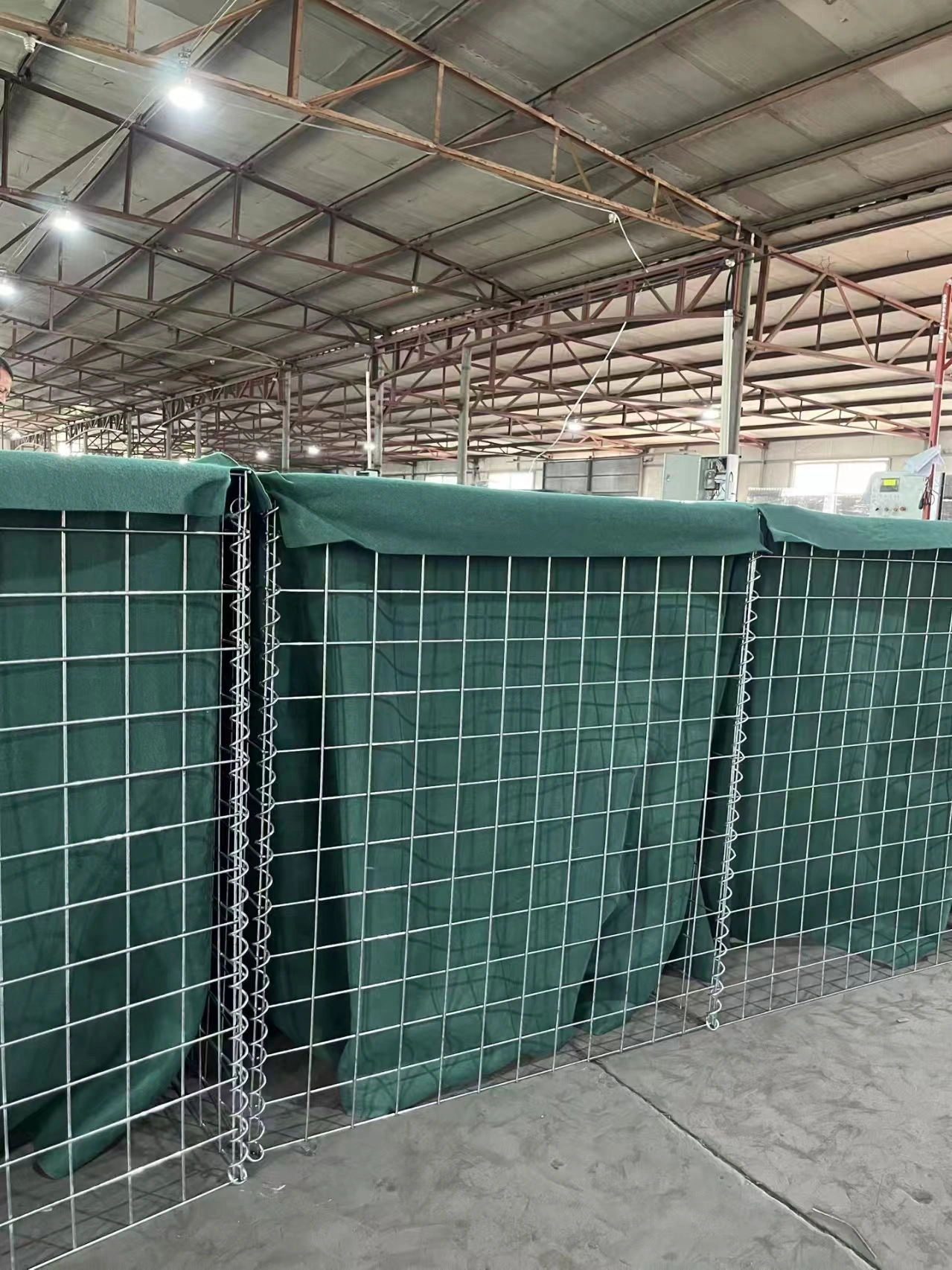
Anping Deban Metal Wire Mesh Products Co., Ltd factory production of galvanized temporary fencing systems and heavy-duty wire mesh panels for Hesco barriers. These industrial security fences feature durable anti-climb mesh designed to meet strict compliance standards for construction sites and crowd control.

Step 1: Identify 3-5 Qualified Manufacturers

The first sample tells you about the factory.

Most distributors make the mistake of requesting a single sample from the cheapest supplier they find on Alibaba. That approach burns time and money when the bulk order arrives with different wire gauge, thinner galvanization, or welds that pop under load. You need to identify 3–5 qualified manufacturers before asking for samples — not after.

    • Production capability: Look for factories with dedicated Hesco barrier lines, not general wire mesh shops that switch production between cattle panels and temporary fencing. DB Fencing operates 10 welding lines with a capacity of up to 2,000 sets per week — that volume tells you they have dedicated tooling and consistent output.
    • Certification scope: “ISO9001” alone is table stakes. For Hesco barriers destined for Australia, verify AS 4687-2022/2007 compliance. For North America, ask if they hold SGS certification for hot-dipped galvanized finishes above 42 microns. A factory that can produce test reports alongside the sample is signaling traceability.
  • Geographic concentration risk: Anping County produces roughly 70% of China’s wire mesh exports. That concentration means shared labor pools and raw material suppliers — but it also means quality varies wildly between neighboring factories. Prioritize suppliers who own their plastic feet injection machines (DB Fencing is the only one in Anping with its own) because outsourced plastic parts are a common failure point in Hesco barrier assembly.

A quick way to filter: send each candidate a short RFQ asking for their standard Hesco barrier specification sheet, minimum order quantity, and lead time for a sample request from factory. Factories that respond within 24 hours with specific data (wire diameter, mesh aperture, galvanization thickness in microns) are worth your time. Those who reply with vague descriptions or ask “what do you need?” without offering their standard spec are likely trading companies posing as manufacturers.
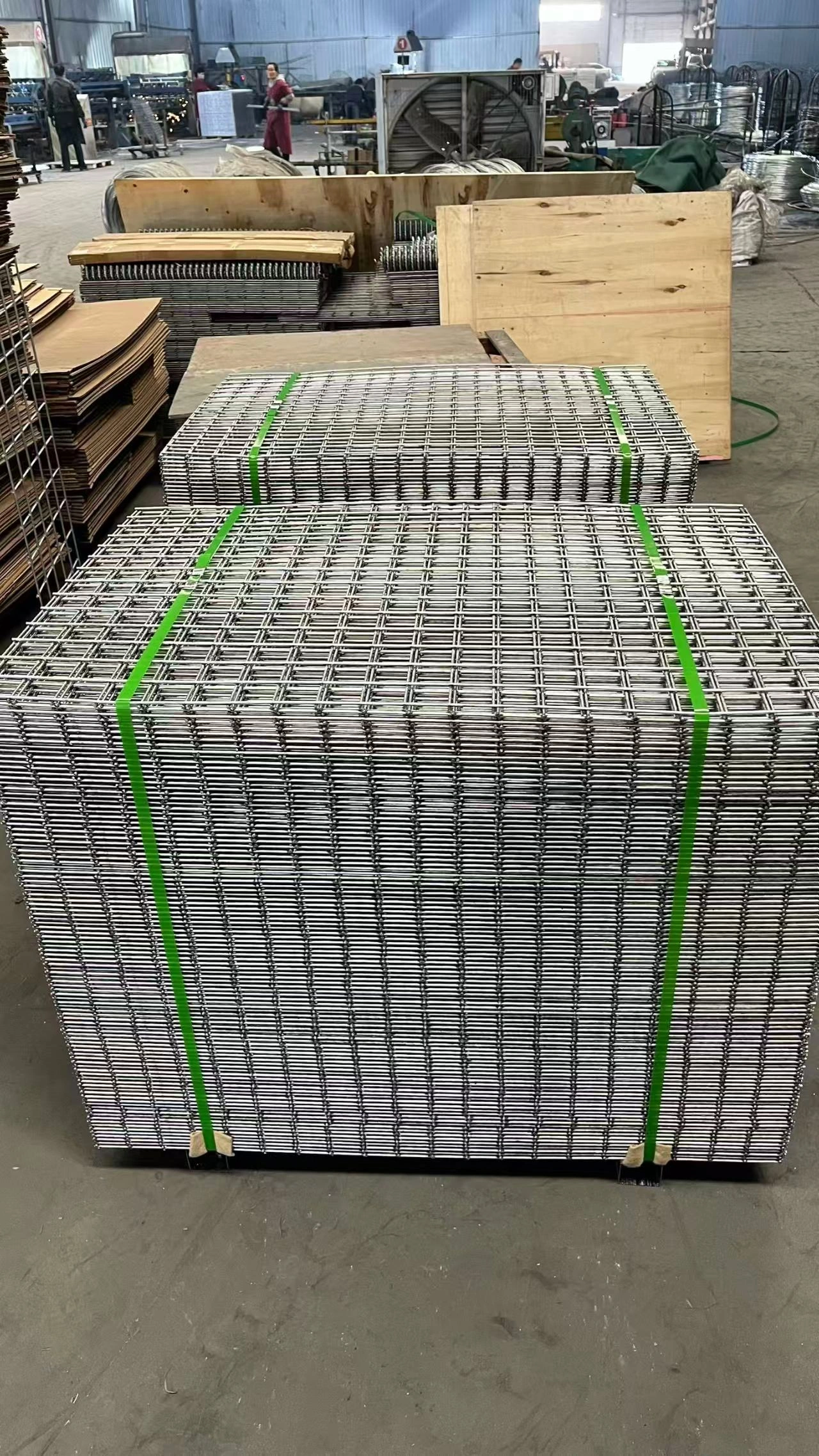
Stacks of galvanized Hesco barrier wire mesh panels packaged and ready for export from DB Fencing's Anping production facility.

Step 2: Send a Detailed Inquiry (Include Specs, Volume, Standards)

A vague inquiry gets a vague quote.

Most buyers send a one-liner: ‘Quote me for Hesco barriers.’ That tells the factory nothing about what you actually need. The result is a generic price that doesn’t reflect your real costs, and when the sample arrives, it’s the wrong configuration. You lose weeks on back-and-forth emails.

A detailed inquiry forces the manufacturer to show their hand. Include three things: exact specs, projected volume, and applicable standards. For Hesco barriers, that means wire diameter (typically 4.0mm to 5.0mm), mesh aperture (50x100mm or 50x200mm), panel dimensions (standard 2.4m x 1.2m or custom), and galvanization thickness in microns — not just ‘galvanized.’ If you’re targeting Australia, state AS 4687-2022/2007 compliance upfront; if North America, mention ASTM A653 or ISO 9001 certification.

    • Specs: Wire diameter, mesh size, panel height & width, tube gauge for frame (e.g., 1.5mm or 2.0mm), base plate dimensions, hinge type (pinned vs bolted). Attach a drawing if you have one.
    • Volume: State your annual forecast and initial order quantity — even if it’s just a range (e.g., ‘first order: 500 panels; annual: 3,000 panels’). This lets the factory plan raw material procurement and offer tiered pricing.
  • Standards: Name the specific standard your market requires: AS 4687 for Australia/New Zealand, ISO/DIN for Europe, ASTM for North America. A supplier that can’t produce test reports on request should be crossed off immediately.

One insider trick: ask for the FOB price per panel at two different volumes — say, 100 panels and 1,000 panels — plus the estimated container load capacity in units per 20ft container. A factory that answers these numbers within 24 hours likely has real production data behind them. One that hedges or asks you to ‘confirm later’ probably doesn’t run their own lines.

Close-up detail of DB Fencing's Hesco barriers demonstrating the durable hot-dipped galvanized finish and reinforced spiral connections of our welded wire mesh panels. This solution is engineered to meet Australian Standard AS 4687-2022 for construction site security and crowd control applications.

Step 3: Understand Sample Costs and Lead Times

Sample costs are negotiable.

Most Hesco barrier manufacturers will quote a sample fee that ranges from $50 to $300 per unit, depending on the size and whether you request OEM customization like a specific color or logo. The trap here is shipping — a single collapsed barrier can cost $150–$400 to ship via express courier because dimensional weight is brutal. A smarter approach: ask for a refundable sample fee that converts into a credit against your first bulk order. This filters out suppliers who aren’t serious about long-term partnerships.

Lead time on samples is where you separate organized factories from backyard workshops. A credible supplier should quote 7–14 working days for standard samples and 15–20 working days for customized units with printed fabric or powder-coated frames. If a manufacturer promises samples in 3 days, they’re likely pulling from existing stock that may not match your production specs — always confirm the sample will be made from the same material batch and galvanization run as your intended bulk order.

    • Sample Fee vs Shipping: Expect $50–$300 per unit for the sample itself; express shipping adds another $150–$400. Request a refundable fee credited to your first bulk order.
    • Standard Lead Time: 7–14 working days for off-the-shelf sizes; 15–20 working days for OEM customization (color, logo, fabric type).
  • Production Match Risk: If lead time is under 5 days, verify the sample comes from the same production line as your bulk order — not a pre-made showpiece with different weld spacing or wire gauge.
DB Fencing's high-quality geotextile Hesco barriers are shown here with spiral link connectivity and hot-dipped galvanized mesh construction for durable temporary site security.

Step 4: Evaluate the Sample (Checklist: Weld Quality, Galvanization, Fabric, Packaging)

A sample that passes visual inspection can still fail in the field — you need measurable checks.

When the sample arrives, resist the urge to just look at it. Grab a caliper, a magnet, and a scale. The gap between what looks good on a desk and what survives six months on a construction site is wider than most buyers expect. Here is exactly what to verify before you sign off.

    • Weld quality: Check that each wire intersection is fully fused, not just tacked. A proper weld leaves no gap between wires and shows consistent discoloration around the joint. Use a flathead screwdriver to gently pry at three random welds per panel — if any pops loose, reject the batch. Target shear strength per weld should exceed 2.5 kN for standard Hesco panels.
    • Galvanization thickness: The coating is your only defense against rust in coastal or wet environments. Measure with a magnetic thickness gauge at five points across the panel (edges, center, corners). For hot-dipped galvanized mesh used in Australian or North American projects, minimum acceptable reading is 42 microns per face. Anything below 35 microns means the supplier either skipped the dip time or diluted the zinc bath.
    • Fabric (geotextile liner): Weigh the fabric sample on a calibrated gram scale. Industry standard for military-grade Hesco barriers uses 400 g/m² polypropylene geotextile with UV stabilization. If your sample comes in under 350 g/m², expect tearing during filling and degradation within 12 months of sun exposure. Also test seam strength — pull perpendicular to the stitch line; failure should not occur below 800 N.
  • Packaging condition: Open every corner of the shipping carton or pallet wrap. Look for crushed edges, rust bloom on exposed wire ends, or moisture stains inside poly bags. A reputable manufacturer ships each panel individually wrapped in shrink film plus corrugated edge protectors for sea freight over 20 days transit time. If packaging shows wear before you even unpack it, imagine what happens after transshipment through two ports.
Explore Our Product Collection.
Browse this product, solution, or service page to explore relevant offerings.

Explore Our Products →

CTA Image

Step 5: Compare Samples and Make Decision

Comparing samples without a scoring system is guesswork—use a weighted matrix.

You have three to five samples on your desk. Now what? The mistake most distributors make is treating this like a beauty contest—whoever looks best in the photo wins. A Hesco barrier sample comparison needs structure. I recommend building a simple weighted scorecard with five categories: weld integrity (25 points), galvanization thickness (25 points), geotextile fabric weight and tear resistance (20 points), packaging quality for container loading (15 points), and documentation completeness—test reports, certification copies, fumigation certificates (15 points).

Start with the welds. Place the sample under direct light and look for pinholes, uneven spacing, or cold welds that haven’t fully fused. Take calipers to the wire diameter at three different spots—if it varies by more than 0.2 mm, that supplier has inconsistent production runs. Then check the galvanization. A hot-dipped finish above 42 microns should feel smooth, not gritty or flaky. If you can scrape zinc off with a fingernail, that’s electro-galvanized pretending to be hot-dipped—a common substitution that cuts cost by roughly 18% but halves service life in outdoor conditions.

    • Geotextile test: Weigh the fabric piece on a digital scale. Standard Hesco barrier geotextile should be minimum 200 gsm for single-fill units and 270 gsm for multi-cell barriers. Anything lighter risks blowouts during filling.
  • Packaging check: Measure carton thickness and internal bracing. A supplier shipping samples in thin single-wall cardboard will likely send bulk orders with crushed corners and torn fabric—request photos of their standard export packing.

Once you have scores across all samples, eliminate any supplier below 70 total points unless they offer a price advantage of more than 15% AND can provide third-party test reports confirming their specs match your sample evaluation. For the remaining two or three, request a pre-shipment inspection video of an actual production run—not just the sample line. In my experience, at least one factory in every batch of five will produce a near-perfect sample but ship from a different material batch.

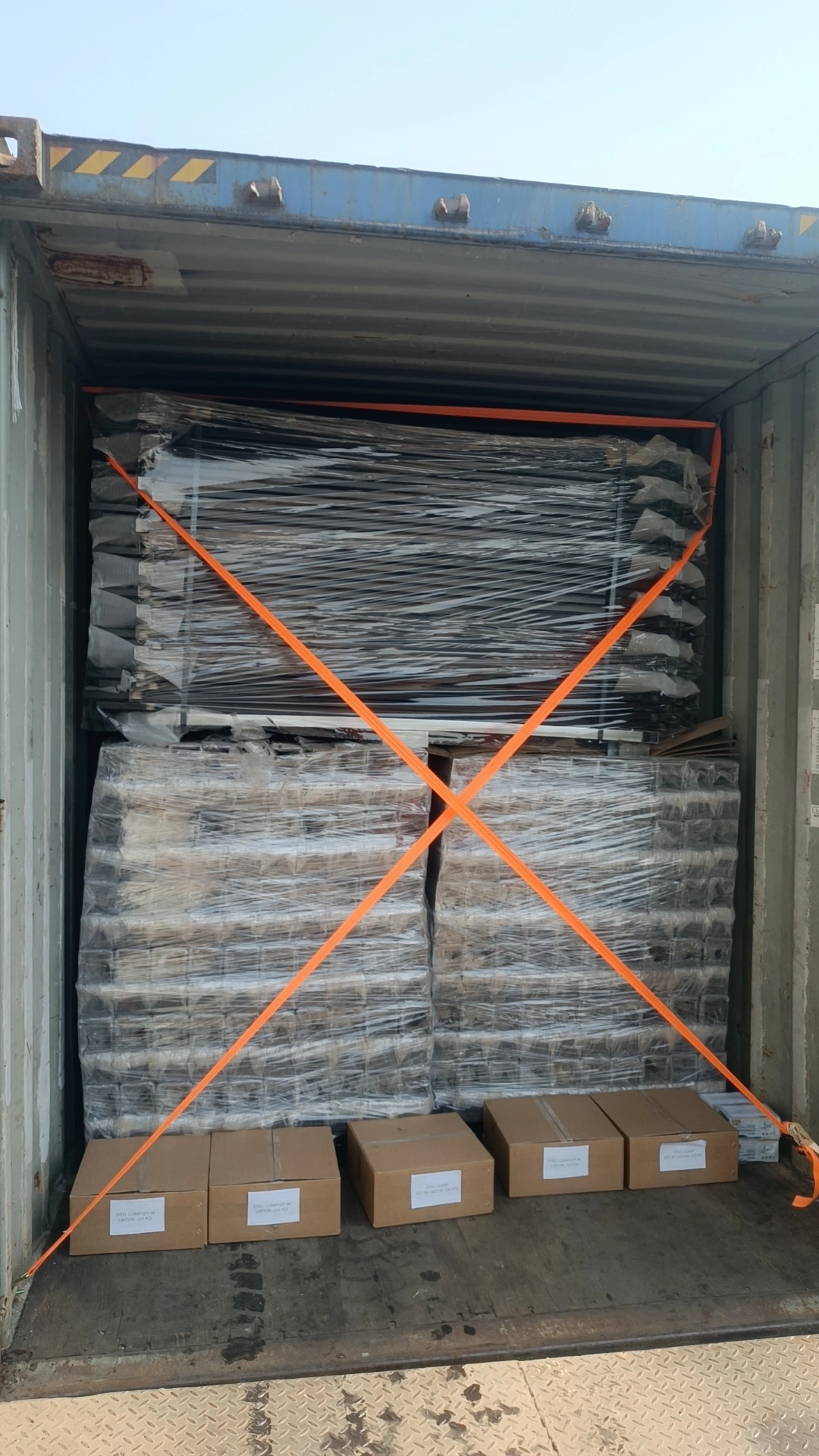
Large container loaded with plastic-wrapped Hesco Barriers and temporary fencing secured with orange straps, prepared for shipping from DB Fencing.

Red Flags: Free Samples but Poor Quality

Free samples often hide the cost of quality — ask for the test report, not just the sample.

A free sample sounds like a win. A manufacturer offers to send you a Hesco barrier unit at no charge — you just pay shipping. The box arrives, the welds look clean, the fabric feels strong. You place a bulk order. Then the container lands, and every panel is different: thinner wire, uneven mesh openings, geotextile that tears under tension. The pre-production sample was a hand-picked showpiece; the mass production run was built to a different standard.

This isn’t rare. In Anping alone, dozens of small shops use free samples as a lead-generation tactic. They know that once your deposit is wired and production starts, you’re locked in. The real red flag isn’t the price — it’s that the supplier cannot or will not provide verifiable evidence that their sample matches their production specs.

    • The Weld Test: A quality Hesco barrier weld should withstand 500 N of shear force per joint (ISO 15614-1). Free-sample suppliers often skip tensile testing. Ask for a weld pull-test report dated within 30 days of your sample request.
    • Galvanization Thickness Check: Hot-dipped galvanized finish must exceed 42 microns (AS 4687-2022). A free-sample supplier who cannot produce a magnetic thickness gauge reading on your actual sample piece is hiding something.
    • Geotextile Weight Verification: Standard military-spec geotextile for Hesco barriers is 200 gsm minimum. Free samples sometimes ship with lightweight non-woven fabric (120 gsm) that fails after one rain event. Request a gram-per-square-meter certificate from the fabric roll used for your sample.
  • Packaging Consistency: “Free” often means no packaging standard. If your sample arrives loosely wrapped or with visible rust spots on corners, expect worse on a full container load without proper edge protectors and shrink wrap.

“Free” in B2B sampling is rarely free. The cost gets buried in shipping markups or absorbed into your first order margin — and if quality drops after the sample stage, the real cost hits your reputation when those barriers fail onsite. A serious manufacturer will quote you a refundable sample fee (typically $50–$150 depending on size) and include test documentation with shipment.

Close-up view of stacked PVC-coated Hesco barriers manufactured by Anping Deban Metal Wire Mesh Products Co., Ltd, designed for robust temporary site security and crowd control.

How DB Fencing Handles Sampling (24-hour quoting, pre-shipment inspection)

A 24-hour quote means nothing if the sample doesn’t match production.

When you request Hesco barrier samples from a factory, the speed of the quote tells you how organized their sales and production teams are. A supplier that can’t generate a pricing breakdown within 24 hours likely lacks standardized bill-of-materials data — which means every bulk order becomes a negotiation, not a repeatable process. DB Fencing operates on a fixed-cost matrix: raw wire price, galvanization thickness, geotextile grade, and packaging type are all pre-calculated. That’s why we deliver quotes within one business day.

    • Quote turnaround: DB Fencing provides itemized pricing within 24 hours of receiving your spec sheet (dimensions, wire diameter, mesh size, coating requirement).
    • Sample customization: We offer OEM sample customization — logo stamping, custom color powder coating (RAL codes), or specific geotextile weight — so your sample matches what you’ll sell in your market.
  • Pre-shipment inspection: Before any bulk order leaves our factory, an independent third-party inspector (SGS or your designated agent) performs dimensional checks, weld shear tests, galvanization thickness measurement (>42 microns per AS 4687), and packaging verification. You receive a signed inspection report with photos.

Conclusion

A sample that passes your checklist at the desk still needs to match mass production. The five steps above are the difference between a $50,000 order that lands on spec and one that costs twice that in rework. The real test is whether the sample comes with a galvanization thickness report showing >42 microns and a cert confirming AS 4687 compliance.

Write that benchmark down. Use it on your next supplier call. Then browse the product page to compare how different manufacturers stack up against the standard.

Frequently Asked Questions

How to get a quote for How to Request a Hesco Barrier Sample from a Manufacturer: 5-Step Guide for Distributors?

The exact answer depends on the product specification, quantity, and order setup. The safest approach is to confirm the commercial terms only after the final requirement sheet is locked. Sample availability should be confirmed against the current stock and shipping plan.

Can I request samples first?

The exact answer depends on the product specification, quantity, and order setup. The safest approach is to confirm the commercial terms only after the final requirement sheet is locked. Sample availability should be confirmed against the current stock and shipping plan.

Cost Type Typical Range (USD) Lead Time Key Consideration
Sample Fee (Refundable) $50 – $200 per panel N/A Request a refundable fee; avoid ‘free sample’ traps with inflated shipping.
Sample Shipping (DDP) $100 – $400 per set 3-7 business days
Facebook
Twitter
LinkedIn
Pinterest
engineer cooperation two asian male female technician maintenance inspect relay robot system with tablet laptop control quality operate process work heavy industry 40 manufacturing factory

Talk To Our Expert

Connect with our specialists to discuss your needs and confidently start your project!

Picture of Frank Zhang

Frank Zhang

Hey, I'm Frank Zhang, the founder of DB Fencing, Family-run business, An expert of metal fence specialist.
In the past 15 years, we have helped 55 countries and 120+ Clients like construction, building, farm to protect their sites.
The purpose of this article is to share with the knowledge related to metal fence keep your home and family safe.

Leave a Reply

Categories

Recent Posts

Table Of Contents

We are at your disposal for any technical or commercial information

Table Of Contents

Picture of Frank Zhang

Frank Zhang

Hi, I’m Frank Zhang, the founder of DB Fencing, I’ve been running a factory in China that makes metal fences for 12 years now, and the purpose of this article is to share with you the knowledge related to metal fences from a Chinese supplier’s perspective.
Facebook
Twitter
LinkedIn

Leave a Reply

Ask For A Quick Quote

We will contact you within 1 working day, please pay attention to the email “info@metalfencetech.com”.

Your Email is necessary!!!