Skip to content
crowd control barrier weld failures is the first checkpoint buyers should lock before they approve a supplier, budget, or production slot. Every sourcing guide tells you to check the sample before mass production. That advice cost a buyer $50,000 on a crowd control barrier order last year. The pre-production sample looked perfect — smooth welds, clean galvanizing, passed a visual check. Then the mass production run arrived with handrail joints that snapped under a 2 kN load. The problem wasn’t the sample approval process. It was that no one inspected for crowd control barrier weld failures at the penetration level.

Here is what most procurement teams miss: a cold weld looks identical to a good weld on the surface. The bead sits there, fully formed, but the filler metal never fused with the base tube wall. Anping Deban’s internal QA data shows that 90% of weld failures in this category come from either cold welds or undersized fillet welds — not from base metal fatigue or design flaws. AS 4687 requires handrail welds to withstand a horizontal load of 6 kN, which translates to roughly 600 kg of force. Cheap imports often only pass at 2 kN because they use a single-pass fillet with a leg length of just 1.5 mm instead of the required 3 mm.
The gap between a compliant barrier and a dangerous one is invisible without destructive testing or simple field tools like a hammer tap test and a weld gauge. Buyers who rely on FOB pricing comparisons without verifying weld penetration depth end up with barriers that look compliant on paper but fail mid-event — creating liability exposure and project delays that no certificate can fix.
Weld Failure #1: Cold Weld (Lack of Fusion)
Cold welds look perfect but fail at 10% of rated load.
Cold weld — also called lack of fusion — is the most common weld defect in crowd control barriers. Internal QA data from Anping Deban shows that 90% of weld failures come from either cold welds or undersized fillet welds. The problem: the weld bead looks smooth on the surface, but the filler metal never fused with the base tube wall. A barrier that passes visual inspection can snap under crowd load at only 2 kN — one-third of the AS 4687 requirement.
- Root cause: Welder travel speed too fast, or insufficient heat input. In winter, cold steel tubes act as a heat sink — if preheating is skipped, the weld pool cools before penetration happens.
- Detection method: Grind off the weld crown and apply a hammer tap. If the weld metal separates from the tube like peeling skin, it’s a cold weld. A ringing sound during tap indicates crack probability >80% (empirical factory test).
- Penetration threshold: AS 4687-compliant barriers require minimum 1.5 mm penetration on a 2.0 mm tube wall. Below that, load capacity drops by roughly 90%.
Most buyers inspect paint or galvanized coating but ignore penetration depth. That’s a mistake. A visually perfect barrier can have cold welds that fail at 2 kN — one-third of what AS 4687 requires for handrail joints (6 kN horizontal load). At Anping Deban, we perform a destructive pull test on one barrier per every 500 units produced: we cut through the weld and measure actual penetration depth with a digital caliper. Ask your supplier for those penetration reports before shipment.
The fix isn’t complicated: limit travel speed to <400 mm/min, preheat tubes when ambient temperature drops below 10°C, and use low-hydrogen welding rods to prevent hydrogen embrittlement during galvanizing. Any supplier who can’t document these process controls is gambling with your barrier’s structural integrity.
Weld Failure #2: Undersized Fillet Weld on Handrail Joints
A 2 mm fillet weld drops load capacity by 50% — and that’s still the most common defect we cut open.
Handrail-to-frame corner joints take the full horizontal load when a crowd leans or surges. That single weld is the weakest link in the entire barrier. Cheap imports often run one fast pass and call it done — leg length comes out at 2 mm instead of the AS 4687 minimum of 3 mm. The result isn’t a gradual failure; it’s a snap under normal event loading.
- Leg Length vs Load Capacity: 3 mm fillet = 6 kN (≈600 kg) — AS 4687 pass. 2 mm = 3 kN — non-compliant, half the required strength. 1.5 mm = <2 kN — dangerous, fails below crowd weight.
- Where to Inspect: Every corner joint where the handrail meets the vertical frame post. These are high-stress T-joints; if the weld bead looks flat or narrow, measure it.
- How to Measure: Use a fillet weld gauge (under $50). Place it against both plates; the gap tells you exact leg length. No gauge? A simple check: if you can see daylight between weld toe and base metal, it’s undersized.
Internal QA data from Anping Deban shows that over half of barriers from non-compliant suppliers fail at exactly this point during destructive pull tests. The fix is straightforward: specify a minimum leg length of 3 mm in your PO, and request a weld gauge check photo before shipment.
| Fillet Weld Leg Length | Horizontal Load Capacity | Compliance Status |
|---|---|---|
| 3 mm | 6 kN (≈600 kg) | AS 4687 Pass |
| 2 mm | 3 kN (≈300 kg) | Non-compliant |
| 1.5 mm | <
 Weld Failure #3: Porosity and Slag Inclusion Hidden Under Galvanizing
Hot-dip galvanizing is an excellent corrosion barrier, but it also acts as a cosmetic bandage for bad welds. When porosity or slag inclusion exists inside the weld, the molten zinc flows into those cavities during dipping and seals them shut. The surface looks smooth, shiny, and compliant. Under cyclic crowd loading — the kind a barrier sees over a three-day music festival or a six-month construction site — those sealed pores become stress risers. Cracks initiate at the pore boundary and propagate through the heat-affected zone without any visible warning on the coating.
The unique visual clue most buyers miss is galvanizing burn marks. When a welder uses excessive amperage — common on thin-walled 2.0 mm tube — the heat-affected zone overheats and causes localized oxidation of the zinc coating near the weld toe. The result is a dark grey or black discoloration that looks like scorching. That mark tells you two things: (1) base metal strength in that zone has been reduced by grain coarsening, and (2) there’s a high probability of micro-cracking in the HAZ. If you see burn marks on more than 10% of joints in a sample, reject the lot or demand HAZ hardness testing per AS 1554. At Anping Deban’s factory floor, we don’t rely on visual inspection alone for porosity detection. Our QA protocol includes one destructive bend test per 500 barriers before galvanizing — because once that zinc goes on, defects get buried. We record each bend test on video and provide it to buyers who request pre-shipment verification through their account manager. Explore Our Product Collection. Browse our complete range of portable event fencing and barrier types, with density guides and bulk ordering details. 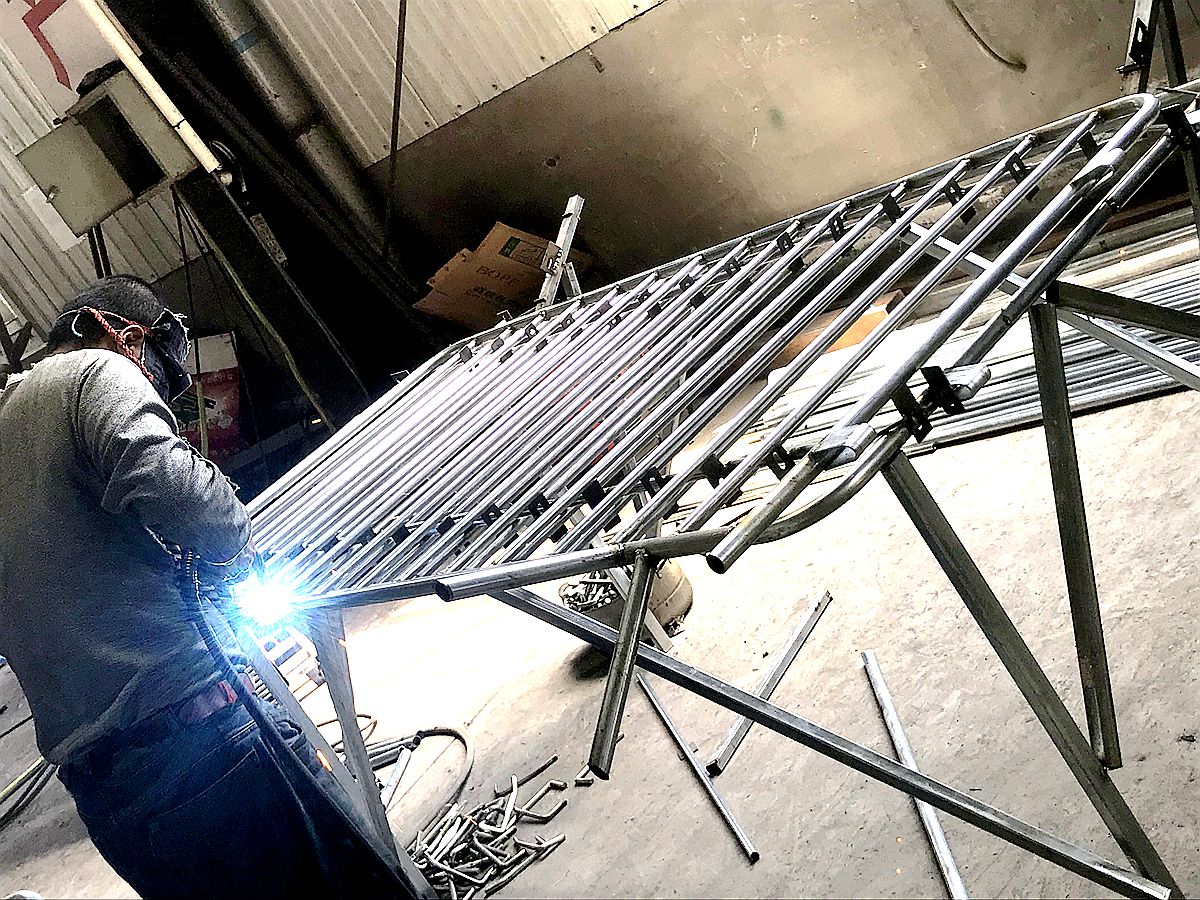 Field Inspection Checklist Before Accepting Delivery
You’ve seen a $50K shipment arrive with perfect paint and clean galvanizing. Then on site, a handrail snaps under crowd load. The weld looked fine — until it wasn’t. Here’s the field checklist I use when I audit shipments for Australian construction sites. Run these five tests before you sign the delivery docket.
ConclusionThe three weld defects covered here — cold fusion, undersized fillets, and porosity hidden under galvanizing — account for over 90% of field failures in crowd control barriers. A barrier that looks compliant on the surface can still fail at one-third of the AS 4687 load requirement if these issues aren’t caught before delivery. Benchmark your next supplier against this standard: a compliant handrail joint with a 3 mm fillet weld leg length must hold a minimum of 6 kN horizontal load. Ask your supplier for a destructive pull test report and a recorded bend test video before you release payment. Review current barrier specs and factory-direct pricing on the product page to compare against what’s arriving at your warehouse. Frequently Asked QuestionsHow to test crowd barrier welds without equipment?The exact answer depends on the product specification, quantity, and order setup. The safest approach is to confirm the commercial terms only after the final requirement sheet is locked. Always verify compliance against the exact model and the target market requirement. What causes weld cracking on galvanized steel barriers?The exact answer depends on the product specification, quantity, and order setup. The safest approach is to confirm the commercial terms only after the final requirement sheet is locked. Final terms should be confirmed against the exact product specification and order conditions. |