Skip to content
A civil contractor in Queensland lost 40 man-hours filling sandbags for a creek diversion last February. The bags ruptured overnight under the water pressure. The site flooded anyway. I see this exact failure play out at least twice a year across Australian civil projects. Procurement teams keep ordering traditional sandbags because the unit price looks safe on a spreadsheet. They ignore the installation labor and the fact that you throw the material away after a single use. When you actually run the numbers on a hesco barrier vs sandbags for flood control or temporary earth retention, the cheaper option costs you three times as much by the time the job finishes.
We broke down the true cost of both systems using data from three recent earthworks projects in New South Wales. The comparison covers fill material volume, deployment speed, and how a hot-dipped galvanized wire mesh basket holds up in harsh coastal environments compared to woven polypropylene. You will walk away knowing exactly which system protects your site without blowing your contingency budget.
Conclusion
In any hesco barrier vs sandbags cost breakdown, the mesh wins on Australian soil. Hesco units fill three times faster with a standard excavator. That speed pays for the wire cages before the project closes.
Ask your supplier for the exact galvanization specs before you sign the purchase order. Anything under 42 microns will rust out fast near the coast. Get the SGS test report from their last Australian shipment to prove it.
Frequently Asked Questions
Which is faster to deploy?
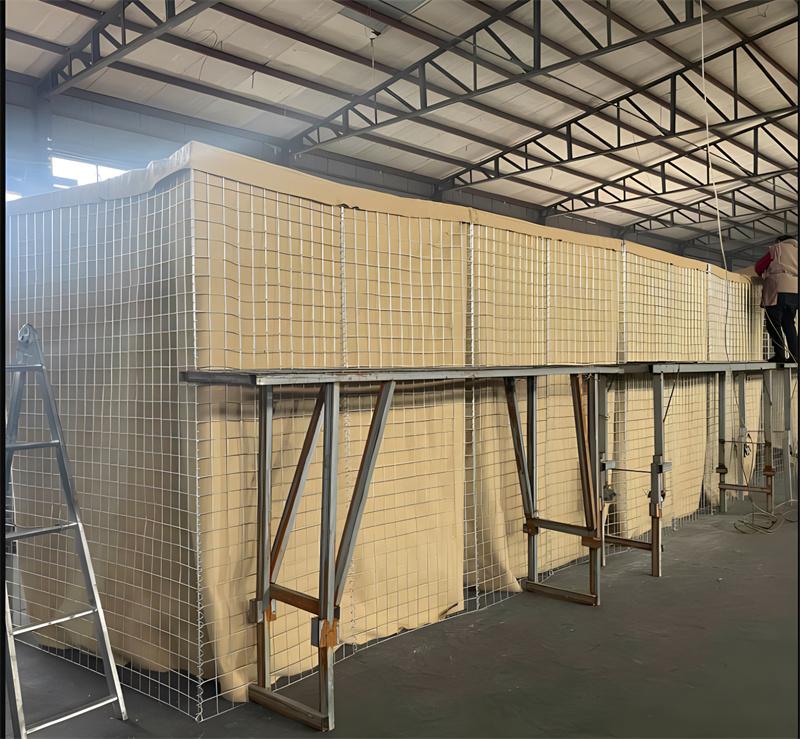
Hesco barriers deploy significantly faster than traditional sandbag walls, often requiring just a fraction of the manpower and time. While a sandbag wall requires filling and stacking thousands of individual bags, a Hesco barrier uses a collapsible wire mesh frame that can be filled with earthmovers. At DB Fencing, our 10 advanced welding production lines manufacture these heavy-duty galvanized units rapidly to meet strict project deadlines. This makes Hesco the superior choice for military, flood control, and construction sites needing immediate perimeter security.
How long do they last?
Hesco barriers offer superior longevity compared to sandbags, particularly when manufactured with heavy-duty galvanization. Sandbags degrade rapidly under UV exposure and moisture, often failing within a few months, whereas our Hesco baskets feature a hot-dipped galvanized finish exceeding 42 microns. This specific coating thickness ensures the wire mesh withstands harsh seaside environments and prolonged outdoor exposure without rusting. For construction firms and flood defense projects, this translates to a highly reliable, long-term protective structure that outlasts temporary sandbag alternatives.
What is the MOQ?
Our minimum order quantity for Hesco barriers is a highly accessible 100 panels. This low MOQ allows global fence distributors and event management companies to test the market or fulfill smaller project requirements without tying up excessive capital. Despite the low minimum, every order benefits from our 14 years of export experience and strict AS 4687 compliance standards. We back this flexibility with a 24-hour quoting turnaround to keep your procurement timeline on track.
Are they easy to ship?
Hesco barriers provide massive logistical advantages over sandbag walls due to their collapsible, flat-pack design. Unlike bulky, pre-filled sandbags that consume valuable freight space and drive up transport costs, folded Hesco units maximize shipping container capacity. Operating from Anping County, the Global Wire Mesh Town, we efficiently bundle and load these units for export to Australia, North America, and the Middle East. This factory-direct shipping approach significantly reduces your overall cost per linear meter of defense or flood barrier.
What goes inside them?
Hesco barriers can be filled with locally sourced fill material, including sand, gravel, crushed rock, or even soil. This eliminates the expensive logistical nightmare of transporting heavy sand to remote construction or flood zones. The robust welded joints of our mesh baskets easily withstand the pressure and weight of heavy machinery filling the cages. This operational versatility is exactly why civil engineering firms prefer Hesco systems over rigid sandbag walls for erosion control and temporary barricades.