Skip to content
A client in Perth called me last month, absolutely furious. His temporary fencing panels were showing surface rust after just six weeks on a beachfront construction site. He paid for “heavy galvanizing,” but a quick magnetic gauge test showed the coating was barely 20 microns thick—nowhere near what temporary fence rust prevention coastal areas demand. That shortcut cost him the entire contract and a repeat customer. It happens constantly. Buyers focus on the unit price per panel and forget that the real cost shows up two years later when the replacement cycle hits.
We need to talk about the gap between the quote sheet and the delivered product. I’m going to break down the specific coating thickness you need for salt air environments, the mechanics of container loading optimization fence panels to avoid shipping damage, and the paperwork required for AS 4687 verification. If you are importing without verifying these specs, you are not saving money. You are just delaying a claim.
Steel Picket Fence MOQ Negotiation
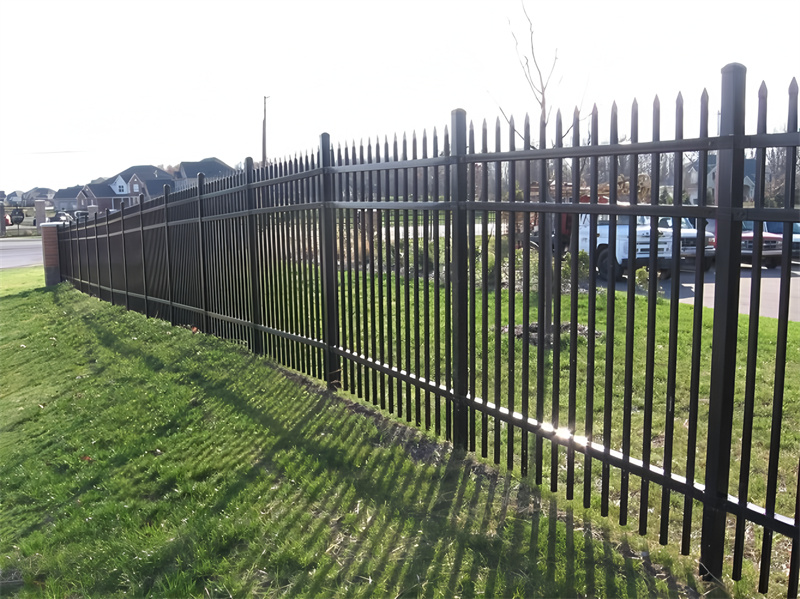
DB Fencing sets a low MOQ threshold of 100 panels for steel picket fence orders, giving distributors and contractors a practical entry point for testing new markets or fulfilling smaller project requirements.
The Real Cost of High MOQs in Steel Fence Procurement
Most Chinese manufacturers push for 500+ panel minimums to justify production line setup costs. This forces smaller distributors and construction firms into inventory they cannot move quickly. DB Fencing breaks this pattern with a documented MOQ of 100 panels—a threshold that aligns with container consolidation strategies rather than arbitrary factory preferences.
For Australian and New Zealand importers handling 75% of our export volume, this flexibility translates directly into cash flow preservation. You can order a trial batch of steel picket fence panels, verify the hot-dipped galvanized coating thickness exceeds 42 microns as specified, and confirm AS 4687-2022 compliance before committing to larger volumes.
Production Capacity That Supports Flexible Orders
Our 10 welding production lines operate at a capacity of up to 2,000 sets per week. This scale means a 100-panel order does not disrupt production schedules or get deprioritized behind larger contracts. We maintain this flexibility because we control the entire supply chain—from our own plastic feet machine (the only one in Anping) to final packaging.
- Standard MOQ: 100 panels for steel picket fence configurations
- Production lead time: 10-15 days for standard orders under 500 panels
- Container loading: Mixed SKUs accepted within single container shipments
Negotiation Strategies for B2B Buyers
When negotiating MOQ terms, focus on total container value rather than panel count. A 100-panel order of heavy-gauge steel picket fence with custom powder coating may carry equivalent margin to a 300-panel standard order. Our quoting system—responsive within 24 hours—accounts for this value density.
For distributors seeking OEM customization, the 100-panel MOQ applies to standard configurations. Custom profiles, non-standard heights, or proprietary bracket systems may require higher minimums to cover tooling amortization. We disclose these costs upfront rather than inflating per-unit pricing to hide setup fees.
Construction procurement managers should note that our MOQ flexibility extends to accessory bundling. You can combine steel picket fence panels with temporary fencing feet, crowd control barriers, or corral panels within a single shipment to reach optimal container utilization without exceeding actual project demand.
Wholesale Steel Fence Pricing Factors
Wholesale steel fence pricing is driven by three non-negotiable factors: zinc coating thickness, steel grade certification, and container loading efficiency. Miss any one of these, and your margin disappears.
Material Specification Drives 60% of Your Cost
The single biggest pricing variable is the galvanized coating thickness. Many suppliers quote you on 20-30 micron coatings—fine for inland storage, but a liability for coastal or high-humidity environments. We specify hot-dipped galvanized finishes exceeding 42 microns because that threshold is what prevents rust claims in Australian seaside conditions. The price difference between a 25-micron and 42-micron coating is roughly 8-12% per panel, but the replacement cost after one salt-air season makes the cheaper option a false economy.
Steel wire diameter is the second lever. A 3.0mm wire frame looks identical to a 3.5mm frame in photos, but the structural integrity difference becomes obvious after six months on a construction site. For temporary fencing destined for AS 4687-2022 compliance verification, underspecified wire gauge is the most common reason products fail inspection at the border.
Hidden Costs That Erode Import Margins
Container loading optimization directly impacts your landed cost per panel. A standard 20ft container holds approximately 250-300 temporary fence panels when loaded efficiently. Poor packing—gaps, inconsistent stacking, inadequate bracing—reduces that to 180-200 panels and increases your per-unit shipping cost by 30% or more. We run 10 welding production lines with a 2,000-set weekly capacity, which allows us to standardize packing configurations and maximize container density for our wholesale partners.
- Shipping damage responsibility: Clarify this before signing. Factory-door terms mean you absorb transit losses; FOB terms shift that risk. Request photos of loaded containers before release.
- Compliance documentation: ISO9001 and SGS certifications should be provided upfront. Non-compliant products can be seized at customs, turning a “bargain” purchase into a total loss.
- Plastic feet sourcing: We are the only Anping supplier with our own plastic feet machine. Most competitors buy feet from third parties, adding lead time and quality inconsistency.
MOQ Flexibility and Quoting Speed Matter
For distributors testing a new product line or filling a gap in inventory, a 500-panel minimum order is a barrier. We set our MOQ at 100 panels to allow buyers to validate market response before committing to larger volumes. Combined with 24-hour quoting and 14 years of export documentation experience, this reduces your procurement cycle from weeks to days—critical when construction projects operate on tight schedules.
The lowest factory price rarely delivers the highest margin. Factor in coating durability, compliance risk, shipping efficiency, and supplier reliability. A panel that costs 5% more but arrives compliant, undamaged, and on schedule preserves your reputation and your repeat business.
Selecting Steel Fence Manufacturers
Most buyers focus on unit price and get burned on compliance failures, shipping damage, and coating defects. The real cost lies in what happens after the container leaves the factory.
The Compliance Verification Gap
Australian construction procurement managers carry legal liability for non-compliant temporary fencing. A supplier claiming AS 4687-2022 certification means nothing without traceable documentation. We have seen competitors ship panels with coating thickness under 30 microns—far below the 42+ microns required for harsh coastal or seaside environments. Request mill certificates and independent test reports before signing any contract. If a supplier cannot produce SGS or ISO9001 documentation within 24 hours, walk away.
Production Capacity and Supply Chain Transparency
Anping County is known as the “Global Wire Mesh Town,” but not all manufacturers here operate their own facilities. Many are trading companies outsourcing to unknown workshops. This creates quality inconsistency and shipping delays. DB Fencing operates 10 welding production lines with a verified output of up to 2,000 sets per week. We are also the only supplier in Anping with an in-house plastic feet machine—we supply feet to other local vendors. Vertical integration means we control quality at every stage, not just the final weld.
Hidden Costs That Destroy Your Margin
Container loading optimization directly impacts your landed cost. Poorly packed panels shift during transit, causing galvanized coating damage that arrives as rust spots before installation. We have spent 14 years refining our loading configurations to maximize container capacity while preventing panel-to-panel contact. Ask any prospective supplier for photos of their actual container loads—not staged marketing shots. If they cannot show you real shipping documentation, they are hiding something.
The MOQ Reality Check
Large manufacturers often demand 500+ panel minimums, forcing smaller distributors to overstock or walk away. We maintain a flexible MOQ of 100 panels because we understand that testing a new supplier should not require a six-figure commitment. A 24-hour quoting turnaround separates serious manufacturers from those who treat export orders as an afterthought. If you wait five days for a quote, imagine how long you will wait when a shipment has a problem.
Geographic and Market Experience
Seventy-five percent of our business ships to Australia and New Zealand. We know the documentation requirements, the port handling procedures, and the specific coating thickness standards that Australian construction sites demand. A supplier whose primary market is domestic China or the Middle East will not understand why a 35-micron galvanized finish fails in Australian coastal conditions. Market-specific experience is not a luxury—it is risk mitigation.
Steel Fence Import Compliance Standards
Non-compliant temporary fencing creates immediate liability for Australian construction sites. Verifying standards like AS 4687-2022 before shipment prevents costly customs delays and site shutdowns.
The Compliance Trap: What Australian Buyers Must Verify
Australian construction procurement managers face strict legal liability when importing temporary fencing. The AS 4687-2022 standard is not optional guidance—it is a regulatory requirement. Products that fail to meet this standard expose importers to project delays, customs holds, and potential lawsuits if an incident occurs on-site. We have seen competitors cut corners on coating thickness, only to have entire containers rejected at Australian ports.
Critical Specification Checkpoints
Before placing an order, request documentation that proves compliance. A legitimate supplier should provide mill certificates, coating thickness reports, and weld strength test results without hesitation. Our products undergo third-party SGS inspection, and we maintain full ISO9001 certification. These are not marketing badges—they are your assurance that the panels will pass scrutiny from Australian authorities.
- Coating Thickness: Hot-dipped galvanized finish must exceed 42 microns for coastal and harsh environments. Anything less will rust within 12 months.
- Weld Integrity: Each weld point must meet structural load requirements defined in AS 4687.
- Documentation: Request original test reports, not photocopies. Forged documentation is common among low-cost suppliers.
The Hidden Cost of “Cheaper” Alternatives
Many importers focus exclusively on unit price. This is a mistake. A panel priced 15% lower often lacks proper galvanization or uses undersized steel. When that container arrives with non-compliant goods, the total cost explodes: demurrage fees at port, rushed replacement orders, and damaged reputation with your clients. Our 14 years of export experience to Australia has taught us that compliance verification upfront is always cheaper than remediation later.
Pre-Shipment Inspection Protocol
We strongly recommend third-party inspection before shipment. SGS or equivalent inspectors should verify random samples from each production batch. This protects both parties and creates a documented chain of evidence. For Australian buyers specifically, we provide pre-shipment photos and video confirmation of container loading. You see exactly what is being shipped before it leaves our facility in Anping.
Compliance is not a bureaucratic hurdle—it is your competitive advantage. Importers who can demonstrate verified compliance win repeat business from construction firms and government contracts that require documented supply chain integrity.
Calculating Landed Cost for Fences
Landed cost extends beyond the FOB price. Distributors who survive calculate freight, duties, and risk exposure before signing the purchase order.
The Real Cost Components Most Buyers Miss
The FOB price on a quote is roughly 60-70% of your actual landed cost. Procurement managers who skip the remaining calculations often face margin erosion of 15-25% by the time goods hit their warehouse. We have watched importers accept a “competitive” FOB rate only to lose their profit on unexpected port fees and non-compliant documentation penalties.
For Australian importers, the 5% customs duty plus 10% GST applies to the CIF value (Cost, Insurance, Freight), not just the product price. A container of temporary fencing panels valued at $18,000 FOB will attract roughly $2,700 in duties and taxes before you even touch the goods. North American buyers face different structures: Section 301 tariffs on Chinese steel products can add 25% duty on top of standard rates, though certain welded mesh classifications may qualify for exemptions.
Container Loading Efficiency Directly Impacts Per-Unit Cost
Shipping is sold by container, not by panel. A 40HQ container holds approximately 500-600 sets of temporary fencing panels when loaded efficiently. Inefficient loading—often caused by inconsistent panel dimensions from smaller workshops—can reduce capacity by 15-20%. That gap means you pay the same freight for fewer units, effectively raising your per-panel shipping cost by $0.80-$1.50 depending on current rates.
Our production team optimizes loading plans before shipment. We maintain dimensional consistency across batches because our 10 welding production lines operate to standardized jigs, not manual measurements. For a 100-panel MOQ order, we still provide a loading diagram so you understand exactly how your goods fill the container space.
Hidden Risk Costs: Damage, Delays, and Documentation
- Transit damage: Panels shifting during the 18-28 day sea journey to Sydney or Melbourne can cause surface scratches or weld stress. Proper strapping and blocking materials add $50-$80 per container but prevent claims that take 60+ days to resolve.
- Documentation failures: Incorrect HS codes or missing certificates of origin trigger customs holds. Our 14 years of export experience means we provide compliant paperwork for AS 4687-2022 standards, ISO9001, and SGS certifications upfront.
- Quality deviation: A 42-micron hot-dipped galvanized coating meets Australian seaside requirements. Receiving 25-micron coatings instead means your product fails in 12-18 months, destroying your reputation and generating warranty claims.
Request a Total Landed Cost Breakdown
We provide 24-hour quoting that includes estimated freight to your nearest port, applicable duty calculations, and insurance options. This transparency lets you compare true costs between suppliers rather than chasing the lowest FOB number that hides downstream expenses.
| Cost Component | DB Fencing Solution | Landed Cost Benefit |
|---|---|---|
| Unit Purchase Price | Factory-direct pricing with Low MOQ (100 panels) | Eliminates middleman margins; reduces initial capital outlay |
| Freight & Logistics | Container loading optimization for high-volume shipping | Maximizes panels per container; lowers per-unit freight cost |
| Compliance & Risk | AS 4687-2022 & ISO9001/SGS certified products | Avoids legal fines, customs delays, and project shutdown costs |
| Durability & Maintenance | Hot-dipped galvanized finish (>42 Microns) | Prevents rust in coastal areas; reduces long-term replacement spend |
| Transit Damage | 14 years export experience with professional packaging | Minimizes insurance claims and costly replacement shipments |
Customs Duties for Steel Fencing
Steel fencing imports face complex duty structures including anti-dumping measures, HS code classifications, and regional trade agreements. Misclassification can add 15-40% to your landed costs.
Anti-Dumping Duties: The Australian Market Reality
For our Australian buyers representing 75% of our business, anti-dumping duties on certain steel products remain a critical cost factor. The Australian Anti-Dumping Commission imposes duties on specific steel pipe and tube products from China. These duties vary by exporter and can range from 5% to over 30% depending on the investigation period and product classification.
DB Fencing maintains detailed records of current duty rates applicable to our product lines. Our temporary fencing panels classified under HS code 7308.90 typically face different duty treatment than structural steel tubing. We provide all necessary customs documentation with every shipment, including mill certificates and country of origin declarations required by Australian Border Force.
HS Code Classification Precision
Correct HS code classification directly impacts your duty liability. Temporary fencing panels, crowd control barriers, and corral panels each fall under distinct tariff classifications with varying duty rates. A 5% classification error on a container of fencing worth $15,000 means $750 in unexpected costs at the port.
- HS 7308.90: Structures and parts of structures, of iron or steel; fencing panels typically fall here
- HS 7326.90: Other articles of iron or steel; applies to certain fencing accessories
- HS 8301.00: Padlocks and base metal locks; relevant for security fencing packages
Documentation That Protects Your Margin
After 14 years of export experience, we understand that incomplete documentation creates costly delays. Every DB Fencing shipment includes commercial invoices with accurate HS codes, packing lists matching physical counts, and certificates of compliance with AS 4687-2022 standards. Our ISO9001 certification provides traceability that customs authorities recognize and accept.
North American buyers (our 15% market) face Section 232 tariffs on steel products at 25%. We work with importers to optimize product specifications and explore tariff engineering options where legally permissible. Agricultural wholesalers importing corral panels may qualify for different treatment than construction fencing under certain trade agreements.
Your Responsibility as the Importer
Ultimately, customs duty liability rests with you as the importer of record. We recommend consulting a licensed customs broker in your destination country before placing your first order. Provide them with our product specifications and they can confirm exact duty rates. Our sales team responds within 24 hours with detailed product data sheets to support your customs pre-classification process.
Conclusion
If you are shipping to a coastal site, spec the hot-dipped galvanized finish at a minimum of 42 microns. I have seen too many shipments of thin, pre-galvanized tubing rust out in six months, leaving you to eat the replacement costs. Compliance with AS 4687 isn’t just paperwork; it is your liability shield.
Before you sign off, ask for a salt spray test report and a photo of the actual coating thickness gauge. A legitimate manufacturer won’t hesitate to prove their galvanizing meets the standard. Verify the weld strength on a sample panel first—it saves you from arguing about quality claims later.
Frequently Asked Questions
What is the MOQ?
DB Fencing offers a highly flexible Minimum Order Quantity of just 100 panels, which is exceptionally low for a direct manufacturer. This allows smaller distributors and construction firms to access factory-direct pricing without the burden of massive inventory requirements. We structure this policy to support businesses of all sizes while maintaining efficient production runs on our 10 welding lines.
Do you meet Australian standards?
Yes, our products fully comply with Australian Standard AS 4687-2022/2007, which is critical for our primary markets in Australia and New Zealand. We maintain ISO9001 and SGS certifications to ensure rigorous quality control and safety adherence. With 75% of our export business serving these regions, we possess deep expertise in navigating local compliance and regulatory requirements.
What is your production capacity?
We operate 10 advanced welding production lines with a robust output capacity of up to 2,000 sets per week. This high-volume capability allows us to reliably fulfill large-scale orders for civil engineering firms and global distributors without compromising lead times. Our facility is optimized for efficiency, ensuring consistent supply chains even during peak construction seasons.
How durable is the galvanized finish?
Our steel picket fences feature a hot-dipped galvanized finish exceeding 42 microns, providing superior corrosion resistance compared to standard coatings. This heavy-duty protective layer is specifically engineered to withstand harsh seaside environments and extreme outdoor weather conditions. We prioritize material thickness to ensure a longer product lifecycle and reduced maintenance costs for end-users.
Do you manufacture fence feet?
Yes, DB Fencing is the only supplier in Anping with its own plastic feet machine, giving us a unique vertical integration advantage. We manufacture these components in-house and supply many other local vendors, ensuring we offer a true ‘one-stop’ solution. This capability guarantees strict quality control over accessory consistency and allows for more competitive bulk shipping rates.