Skip to content
Last month, a civil contractor in Queensland lost 11 days on a subdivision job because their perimeter failed an OH&S spot check. The inspector tagged every panel where the posts were direct-buried instead of concreted. Their supplier had sent a generic assembly video showing exactly that method. If you are searching for how to install brc fence based on those videos, you are setting yourself up for the same penalty. Australian commercial sites do not care what works on a rural property overseas. AS 4687:2022 requires specific post depths, concrete grades, and clamp torque values.
We spent 14 years shipping panels to Australian sites and watching what happens when installation specs are left vague. Subcontractors guess the concrete volume, over-torque the clamp bolts, and deform the roll-top profile until the welds stress-fracture. That stops here. This breakdown gives you the exact numbers your tender documents are missing: 600mm post embedment depth for a 1.8m panel, 0.04 cubic metres of 20MPa concrete per hole, and a strict 35 Nm clamp torque limit. Put these specs in your next site plan. Your fencing crew will know exactly what to do, and your inspector will walk the perimeter without stopping.
Tools and Materials Checklist
Tools and Materials Checklist
Every tool on this list maps directly to an AS 4687:2022 installation requirement. Omitting any required item introduces a specific, quantifiable compliance risk.
Required On-Site Tools
Your site crew needs five tools to execute a compliant BRC fence installation. A post hole digger rated for a minimum 600mm depth handles the embedment requirement for a 1.8m panel (1/3 of total height per AS 4687:2022). For 2.4m and 3.0m panels, you need digger capacity reaching 800mm and 1000mm respectively. A 1200mm spirit level with 0.5mm/m accuracy keeps posts plumb during the 48-hour concrete cure window.

A concrete mixer with a minimum 60-litre batch capacity ensures consistent 20MPa mix for footings ranging 0.03–0.05m³ per post hole at 150–200mm diameter. Steel fencing clamps hold posts upright while concrete sets—standard G-clamps with a 100mm jaw opening work for 48mm and 60mm OD posts. A calibrated torque wrench covering the 30–40 Nm range is non-negotiable for clamp bolt tensioning.
Clamp Bolt Specification: M8 x 25mm Galvanised
We ship every panel order with M8 x 25mm galvanised bolts, paired with nuts and rubber ferrules. This is not a generic hardware store bolt. The 25mm shank length matches the combined thickness of the roll-top V-bend and the post wall without bottoming out—a critical tolerance. The rubber ferrule prevents galvanic corrosion between the zinc-coated bolt and the panel surface, which directly affects the >42-micron hot-dipped galvanised lifespan in seaside environments.
Torque each bolt to 30–40 Nm. We have seen site crews overtighten to 60+ Nm using standard socket wrenches, which deforms the roll-top profile and creates stress concentration at weld points. This is a leading cause of panel failure that gets flagged during AS 4687 inspections. A torque wrench eliminates this variable entirely.
Required vs Optional Tools
- Required: Post hole digger, spirit level, concrete mixer, G-clamps, M8 x 25mm galvanised bolts with ferrules, calibrated torque wrench (30–40 Nm range).
- Required: 20MPa concrete mix (minimum), string line for post alignment, measuring tape (minimum 5m).
- Optional: Petrol-powered auger for sites with 50+ post holes—reduces dig time from 8 minutes/manual hole to under 90 seconds.
- Optional: Laser level for runs exceeding 30m where string line sag introduces alignment drift over 5mm.
- Optional: Post driver for temporary fencing scenarios using DB Fencing plastic feet—does not apply to permanent BRC concrete footing installations.
The optional tools reduce labour hours on large commercial sites but do not affect AS 4687 compliance outcomes. A crew with only the required list and proper torque discipline will pass inspection. A crew with all optional tools but no torque wrench will not.
| Item Type | Component / Equipment | Technical Specification | Installation Purpose |
|---|---|---|---|
| Material | Security Fence Panels (BRC) | 2.5m or 3.0m widths; 1.8m-3.0m heights; >42 micron hot-dipped galvanised | Dictates post spacing centres and ensures zero OH&S compliance incidents |
| Material | Steel Fence Posts | 48mm, 60mm, or 75mm OD; Q235 steel grade equivalent to AS/NZS 3679.1 | Requires embedment depth equal to minimum 1/3 of total fence height per AS 4687:2022 |
| Material | Galvanised Clamp Kits | M8 x 25mm galvanised bolt with nut and rubber ferrule | Secures panels while protecting the roll-top profile from deformation |
| Material | Concrete Mix | 20MPa minimum grade; 0.03-0.05m³ volume per post hole (150-200mm diameter) | Provides structural stability; requires minimum 48-hour curing before panel loading |
| Tool | Calibrated Torque Wrench | 30-40 Nm operating range | Prevents over-torquing that causes stress concentration and panel weld failure |
| Tool | Post Hole Auger | 150-200mm diameter bore capacity | Ensures accurate excavation volume for compliant concrete footings |

BRC Fence Post Spacing and Depth
Post embedment must equal a minimum of one-third total fence height under AS 4687:2022. Get this ratio wrong and your perimeter fails inspection before the first panel is loaded.
The 1/3 Embedment Rule
AS 4687:2022 mandates that post embedment depth equals no less than one-third of the finished fence height. This is not a guideline—it is the compliance threshold Australian OH&S inspectors reference during site audits. We supply BRC fence panels across five standard heights (1.8m through 3.0m), and every post length we quote is calculated from this ratio plus a 50mm concrete cover above ground level.

Direct burial without concrete footing is non-compliant for commercial Australian sites. Competitor installation videos showing posts driven directly into soil will not pass a formal AS 4687 inspection. Footings must use a minimum 20MPa concrete grade with a curing period of 48 hours before any panel loading is applied. Concrete volume per standard post hole ranges from 0.03m³ to 0.05m³ at a 150–200mm diameter.
Panel Height to Post Length and Hole Depth Mapping
- 1.8m panel: Post length 2.4m, hole depth 600mm
- 2.0m panel: Post length 2.7m, hole depth 670mm
- 2.4m panel: Post length 3.2m, hole depth 800mm
- 2.5m panel: Post length 3.35m, hole depth 835mm
- 3.0m panel: Post length 4.0m, hole depth 1000mm
Post diameters scale with panel height: 48mm OD for 1.8–2.0m panels, 60mm OD for 2.4–2.5m panels, and 75mm OD for 3.0m panels. All posts we export are manufactured from Q235 steel, equivalent to AS/NZS 3679.1, with hot-dipped galvanised finish exceeding 42 microns per AS/NZS 4680.
Post Spacing Centres and Tolerance
Standard BRC panel widths dictate your post spacing: 2.5m centres for our 2.5m-wide panels, and 3.0m centres for our 3.0m-wide panels. The spacing measurement is taken from the centre of one post to the centre of the next—not face to face. This distinction matters when you are writing tender specifications for subcontractors.
We hold post centre spacing to a ±5mm tolerance across the entire run. This is not arbitrary. BRC roll-top panels are welded to tight dimensional specs, and if post spacing drifts beyond 5mm, the panel will not seat flush against both posts simultaneously. Force-fitting a panel into an oversized gap creates stress concentration at the V-bend weld points—the leading cause of panel failure we see from competitor-sourced installations. When you receive our panels, the spacing tolerance is already accounted for in the manufacturing dimensions, which is why we specify M8 x 25mm galvanised clamp bolts torqued to 30–40 Nm to prevent roll-top profile deformation during assembly.
Concrete Footing Installation Method
Concrete footings are non-negotiable for AS 4687:2022 compliance on Australian commercial sites. Direct burial methods will fail inspection.
Step-by-step footing installation
Dig the post hole to a depth equal to minimum one-third of the total fence height, per AS 4687:2022. For a standard 2.4m panel, this means a minimum 800mm embedment depth. Hole diameter should be 150–200mm, centred on your post spacing of 2.5m or 3.0m depending on panel width.
Set the galvanised steel post (48mm, 60mm, or 75mm OD) into the hole and apply temporary bracing. Use two timber stays at opposing 45-degree angles, staked into the ground, to hold the post plumb. Check vertical alignment with a spirit level on two adjacent faces before proceeding.
Pour concrete around the post, not directly onto it, to avoid air pockets. Fill the hole to ground level or slightly above to shed surface water. Vibrate the concrete lightly with a rod to eliminate voids, then re-check plumb before the concrete begins to set.
Concrete mix and volume specifications
Use a minimum 20MPa concrete grade for all BRC fence footings. We specify this threshold because lower-strength mixes such as 15MPa lack the compressive resistance to withstand wind load on 2.4m and 3.0m exposed panel faces. Each standard post hole requires 0.03–0.05m³ of concrete, depending on hole diameter and embedment depth. Order premixed concrete or batch on-site using a consistent 1:2:4 ratio (cement:sand:aggregate) with a water-to-cement ratio below 0.5.
Minimum curing time before loading
Allow a minimum 48-hour curing period before attaching any fence panels to the posts. We have seen subcontractors attempt to load panels at 24 hours, which risks post displacement under clamp torque (30–40 Nm) and voids the footing integrity. In temperatures below 10°C, extend curing to 72 hours. Do not remove temporary bracing until after panels are clamped and the fence run is longitudinally aligned.
Water table and drainage considerations

In areas with a high water table or poorly draining soils such as clay, increase the hole diameter to 250mm and add 100mm of coarse aggregate (20mm gravel) at the base before pouring concrete. This creates a drainage buffer that prevents hydrostatic pressure from lifting the footing. For sites with known seasonal water table rise, we recommend extending embedment depth by an additional 200mm beyond the one-third rule and using 25MPa concrete to compensate for reduced ground-bearing capacity.
Base Plate Mounting on Concrete
Base plate mounting on existing concrete requires precise anchor selection and placement. Substandard fixing is the most common cause of AS 4687 non-compliance on commercial sites.
Wallplug vs Chemical Anchor Methods
For existing slabs, you have two viable options: mechanical expansion anchors (wallplugs) and chemical (resin) anchors. Mechanical anchors using M10 or M12 galvanised through-bolts are sufficient for standard 2.4m BRC panels in sheltered locations where wind loads stay below 0.5 kPa. We supply M10 x 100mm and M12 x 120mm galvanised anchor kits with our base plates for these standard conditions.
Chemical anchors become mandatory on elevated slabs, exposed coastal sites, or anywhere wind design pressures exceed 0.5 kPa per AS/NZS 1170.2. Injected polyester or vinyl ester resin fills the drilled void completely, bonding the threaded rod to the concrete matrix rather than relying on expansion friction. From our export experience to Australian sites, chemical anchoring adds roughly 4–6 minutes per post but eliminates the risk of anchor creep under cyclic wind loading.
Anchor Bolt Pull-Out Strength Requirements
Each base plate anchor point must resist a minimum pull-out force of 3.5 kN for 2.4m panel installations to satisfy AS 4687 structural requirements. In 20MPa concrete, a properly installed M10 mechanical anchor delivers approximately 12 kN ultimate pull-out capacity, and an M12 delivers roughly 18 kN. These figures assume correct installation into solid, cured concrete with no cracking visible at the drill point. We specify a minimum safety factor of 3.0 on pull-out, meaning your working load per anchor should never exceed 4 kN for M10 or 6 kN for M12 regardless of the rated ultimate capacity.
Drilling Depth Specifications
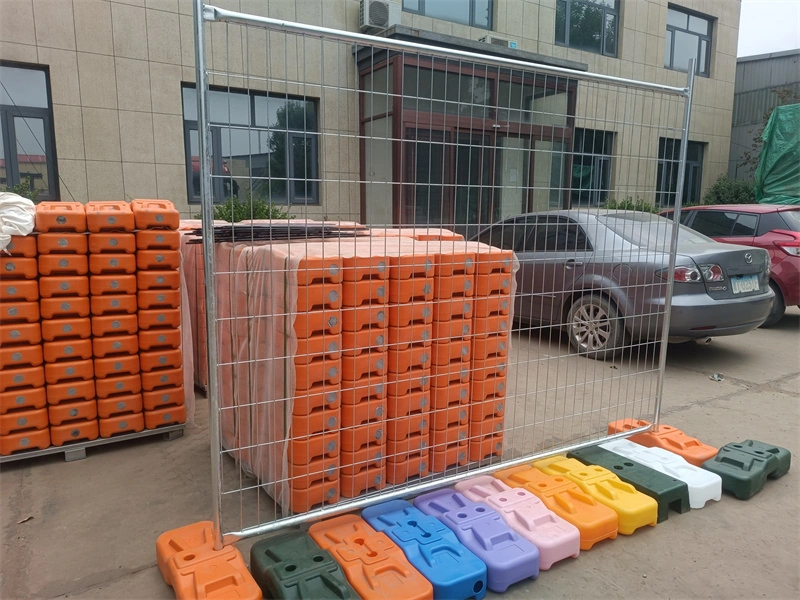
Drill depth must exceed the anchor embedment length by a minimum of 10mm to accommodate drilling dust and ensure the anchor or resin sits fully engaged. For M10 mechanical anchors, drill to 90mm depth using a 12mm masonry bit. For M12 mechanical anchors, drill to 110mm depth using a 14mm bit. Chemical anchor installations require deeper drilling: 120mm for M10 threaded rod and 140mm for M12. Clean the hole with compressed air and a wire brush before anchor insertion—our site audits in Australia consistently find that failure to clean the hole reduces pull-out capacity by 30–40%.
Edge Distance Rules from Slab Edges
Maintain a minimum edge distance of 60mm from any slab edge or expansion joint for M10 anchors, and 75mm for M12 anchors. Reducing this distance risks concrete cone failure under lateral load—the slab edge fractures outward rather than the anchor pulling out. Where base plate hole centres fall within 100mm of a slab edge, you must either relocate the post position or switch to a deeper chemical anchor with a minimum 150mm embedment to develop adequate cone resistance. We have seen project delays on Australian civil sites specifically because installers placed anchors within 40mm of slab edges, triggering failed inspections.

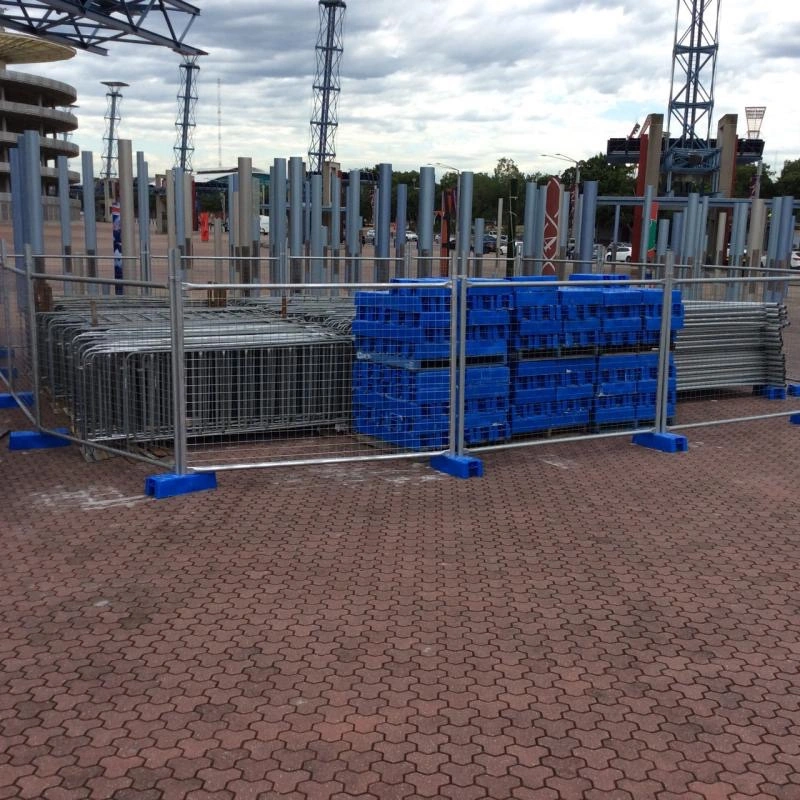
Panel Attachment and Clamping
Correct clamp torque is the single most overlooked compliance point on Australian BRC fence sites—most panel failures we investigate trace back to this step.
Galvanised Fishplate Clamp and Bolt Assembly
Attach each BRC panel to the post using a galvanised fishplate clamp paired with an M8 x 25mm galvanised bolt, nut, and rubber ferrule. The fishplate wraps around the vertical wire adjacent to the panel’s V-bend roll-top, sandwiching it against the post. The rubber ferrule sits inside the clamp loop to prevent galvanic contact between the steel clamp body and the panel wire, preserving the >42 micron hot-dipped galvanised finish on both components.
Position the clamp so the bolt head faces outward from the fence line. This gives your site crew clear access for torque wrench operation and makes post-installation inspection straightforward for OH&S auditors checking AS 4687:2022 compliance. On a standard 2.5m wide panel, use two clamps per post—positioned roughly 150mm from the top and bottom horizontal wires. A 3.0m panel follows the same two-clamp arrangement, as the panel’s rigidity is governed by the welded mesh matrix, not clamp quantity.
Bolt Torque Specification: 30–40 Nm
Tighten every M8 clamp bolt to between 30 and 40 Nm using a calibrated torque wrench. We specify this range based on our export experience to Australian civil sites: below 30 Nm, the clamp grip is insufficient and the panel will shift laterally under wind load or manual force, creating a gap that fails anti-climb inspection. Above 40 Nm, you enter deformation territory—more on that below.
In practice, instruct your crew to target 35 Nm as the midpoint. A single click-type torque wrench set to 35 Nm eliminates guesswork and produces consistent results across every panel on the perimeter. This consistency is what procurement managers need when writing tender specifications: a single, quantified torque value that subcontractors can be held accountable to.
Risks of Over-Tightening Beyond 40 Nm

Exceeding 40 Nm deforms the V-bend roll-top profile at the clamp point. The roll-top is not decorative—it is a structural fold that distributes load across the panel’s top edge and eliminates sharp wire ends for OH&S compliance. When a clamp crushes this fold, the wire alignment shifts and concentrated stress transfers directly to the adjacent weld nodes.
We have seen failed panels returned from Australian sites where over-torqued clamps caused weld fractures at the top horizontal-to-vertical wire intersections. The root cause was not material quality—it was a site crew using standard socket wrenches with no torque control. This type of failure is almost impossible to detect during a visual walk-through, because the panel looks correctly attached. It only becomes apparent under lateral load testing or impact. Specify the 30–40 Nm range in your installation method statement, and require torque wrenches on the tool list for any crew installing your BRC fence.
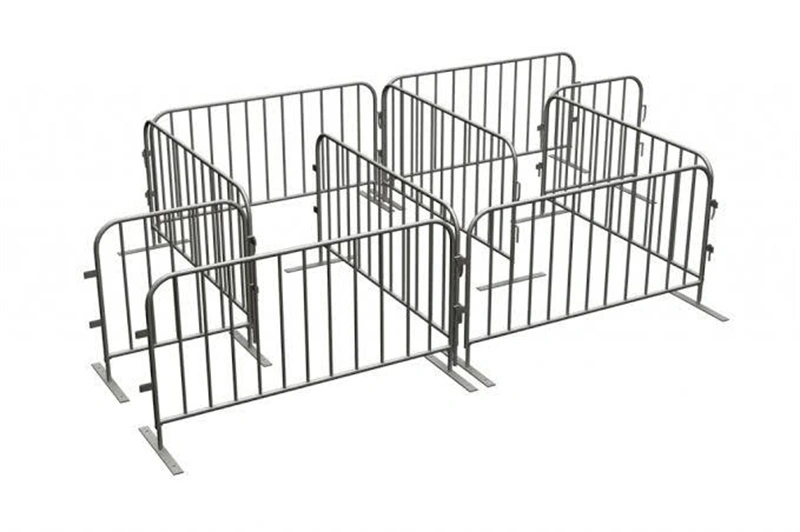
Common BRC Fence Installation Errors
Four installation errors cause the majority of BRC fence non-compliance on Australian commercial sites. All are preventable with quantified on-site checks before final assembly.
Post Spacing Drift Exceeding 10mm
Standard BRC panels are manufactured at 2.5m and 3.0m widths. When post centres drift beyond a 10mm tolerance, the clamp system is forced to bridge a gap it was not engineered for. We see this most often when crews set posts using string lines without measuring each individual bay. At a 10mm drift, the M8 x 25mm galvanised clamp bolt engages the roll-top V-bend at an offset angle, creating stress concentration at the weld points. For a 2.5m panel bay, verify each post centre with a tape measure before proceeding to clamping.
Insufficient Concrete Cover Below Post Base
AS 4687:2022 requires post embedment depth to equal a minimum of one-third of total fence height. For a standard 2.4m panel on a 600mm extended post, that means a minimum 800mm hole depth. The problem we observe on failed inspections is not depth alone—it is the concrete volume below the post base. If the post sits directly on the earth at the bottom of the hole, corrosion initiates at the lowest point where moisture concentration is highest. Leave a minimum 100mm concrete pad below the post base. At a 150–200mm diameter hole, this requires a total concrete volume of 0.03–0.05m³ per post using 20MPa minimum grade concrete.
Omitting Rubber Ferrules on Clamp Bolts
Every galvanised clamp bolt assembly includes a rubber ferrule. Its function is to isolate the steel clamp bracket from the galvanised panel surface. When installers discard the ferrule or lose it on-site, the clamp contacts the panel directly. In seaside or high-moisture environments, this creates a galvanic corrosion cell between dissimilar metals under clamp pressure. Our panels carry a hot-dipped galvanised coating exceeding 42 microns per AS/NZS 4680, but that coating is locally compromised at the clamp point without the ferrule. We supply replacement ferrules in bulk packs for exactly this reason—do not skip this step.
Failing to Check Panel Vertical Alignment Before Final Torquing
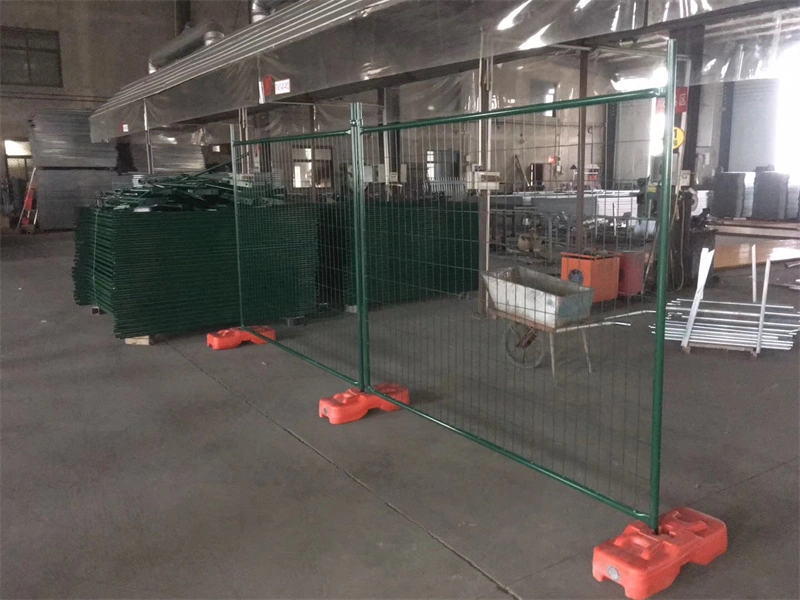
Clamp bolt torque must fall within 30–40 Nm. Exceeding this range deforms the roll-top profile and can crack the weld nodes at the wire intersection points. Before applying final torque, check panel plumb with a spirit level on both the face and the edge. We have seen crews torque clamps to 60+ Nm to force a misaligned panel into position. The panel appears straight temporarily, but the internal stress at the deformed V-bend leads to premature fatigue failure. Set the panel vertical first, then torque to 35 Nm as a baseline target.
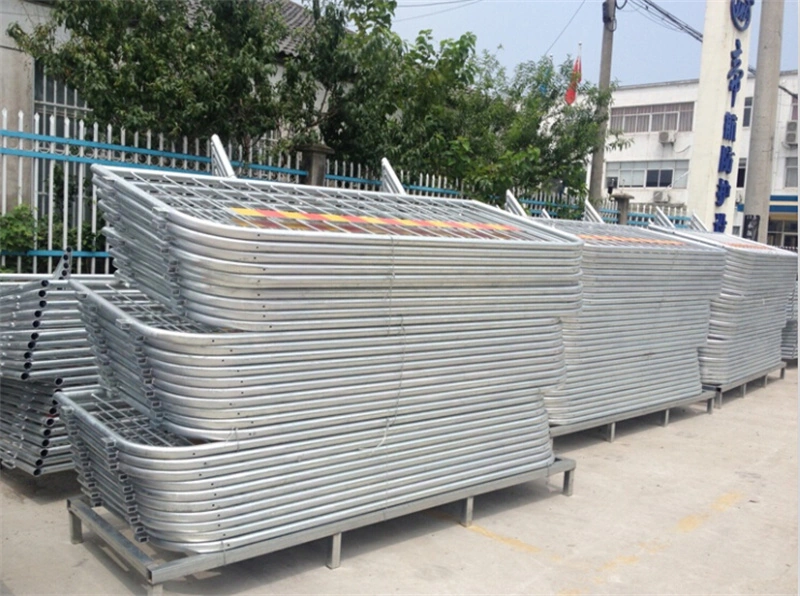
AS 4687 Compliance During Installation
AS 4687:2022 compliance during installation is determined by measurable site actions—embedment depth, concrete grade, and clamp torque—not just the panel’s factory certification.
Embedment Depth and Post Sizing
Set the post embedment depth to a minimum of one-third of the total fence height per AS 4687:2022. For a standard 2.4m panel, this requires an 800mm hole. Post diameter must scale with height to maintain the structural section modulus required to resist wind loading and impact.
- Post Sizing: 48mm OD for 1.8m–2.0m heights; 60mm OD for 2.4m–3.0m heights.
- Post Spacing: 2.5m or 3.0m centres, strictly dictated by our standard BRC panel widths.
- Concrete Footing: 0.03–0.05m³ volume per hole at 150–200mm diameter. Use a minimum 20MPa grade concrete.
- Curing Time: Minimum 48 hours before applying any panel loading or clamp torque.
Deflection Testing Requirements
Deflection limits apply to the installed system, not the isolated panel. We frequently see procurement managers assume a certified panel automatically passes site deflection tests. It does not. The footing rigidity dictates whether the fence absorbs impact within the allowable 50mm deflection measured at 150mm from the top. If your contractor skips the 48-hour concrete cure or uses a low-strength mix, the footing will pivot under load and fail the deflection test regardless of the panel’s structural integrity.
Finish Integrity Checks
Protecting the >42 micron hot-dipped galvanised coating during assembly is critical. Secure panels using M8 x 25mm galvanised bolts with rubber ferrules, and torque them strictly to 30–40 Nm. We observe widespread panel failure in the field because installers treat clamping as a simple bolt-on step. Over-torquing deforms the roll-top V-bend profile and creates severe stress concentration at the weld points, causing micro-cracking in the galvanised layer and exposing bare steel to moisture. Additionally, direct burial methods commonly shown in competitor installation videos are non-compliant for Australian commercial sites, as soil contact aggressively degrades the zinc coating.
Warranty Voidance Due to Non-Compliant Installation
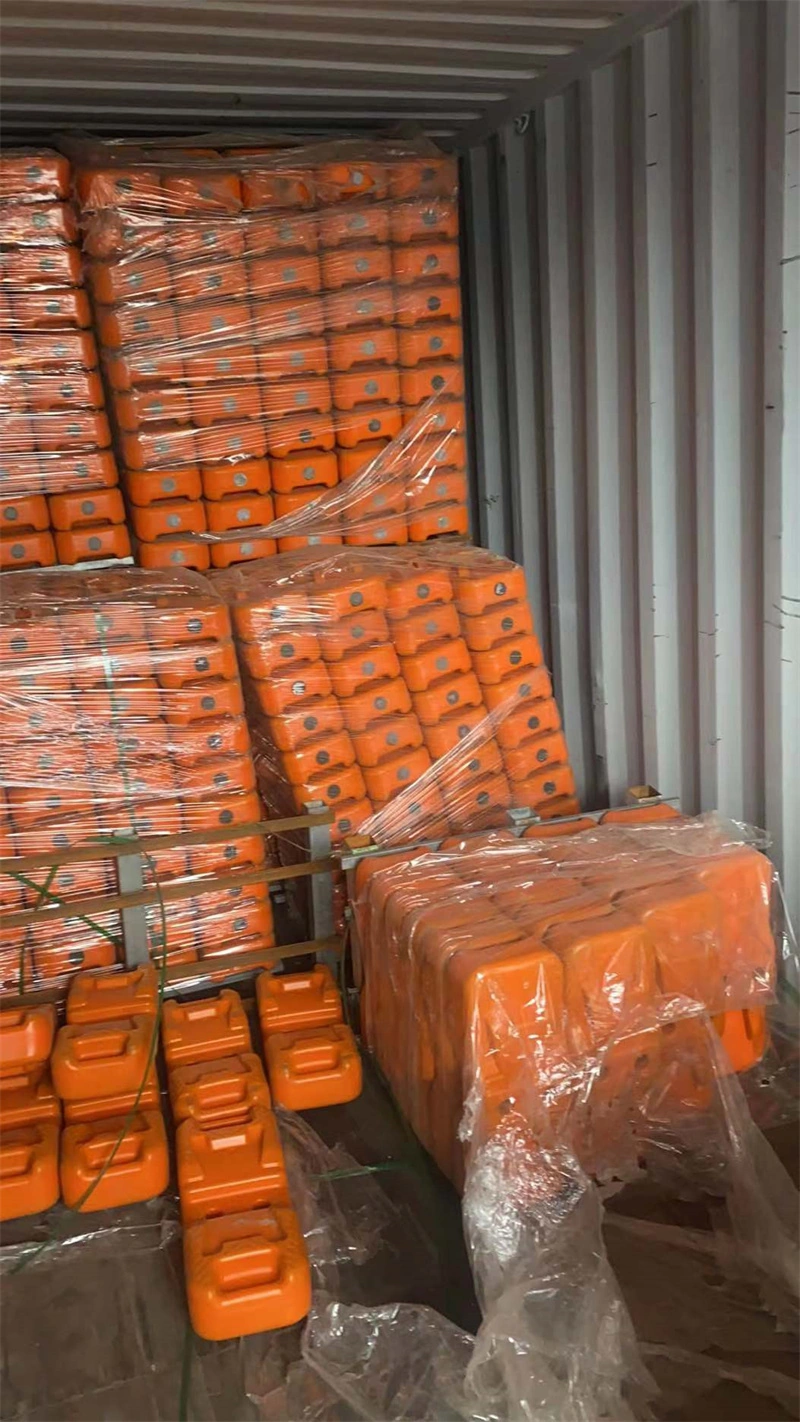
Factory AS 4687 certification covers manufacturing tolerances and material grades, not site execution. If an installation fails an OH&S audit due to shallow footings, premature panel loading, or deformed clamps, the liability shifts entirely from the manufacturer to the installer. We explicitly state in our export terms that warranty coverage on our hot-dipped galvanised finish is voided if panels are installed via direct burial rather than concrete footing, or if clamp bolts exceed the 40 Nm specification. Include these parameters in your subcontractor tender documents to protect your project margins.
Conclusion
If your crew uses direct burial on a commercial site, you will fail the AS 4687 inspection. Period. Spec concrete footings with a 1/3 embedment depth and enforce the 30–40 Nm clamp torque on every single bolt, or you are paying for a full tear-out.
Put those exact concrete volumes and torque values into your tender documents right now. Do it today. Then ask your shortlisted suppliers to send their AS 4687 certification and prove their clamps will not deform at 35 Nm.
Frequently Asked Questions
What are the installation methods for BRC fencing?
There are three primary methods for installing BRC fencing: concrete footings, direct burial, and base plate mounting. For our Australian and commercial clients, we highly recommend concrete footings to ensure maximum security and compliance with AS 4687-2022 standards. Base plate mounting is ideal for event management companies needing crowd control barriers on existing concrete slabs, while direct burial is typically reserved for low-risk agricultural applications like livestock enclosures.
How deep should BRC fence posts be set?
BRC fence posts must be set at a minimum depth equal to one-third of the total fence height to ensure structural integrity. For example, a standard 2.4-meter anti-climb mesh panel requires at least 800mm of post embedment into the ground. In poor-drainage soils, which are common in coastal areas our hot-dipped galvanized products are designed to withstand, adding a 100mm gravel base is essential to prevent water accumulation and protect the foundation.
What concrete mix is best for BRC fence posts?
The optimal concrete mix for setting BRC fence posts requires a minimum strength of 20MPa to support heavy-duty security fencing. We recommend using a standard ratio of 1:2:4 for cement, sand, and aggregate, keeping the water-cement ratio strictly below 0.5. Construction firms must allow a minimum 48-hour curing period before attaching the panels to ensure the footings achieve the stability required for high-capacity temporary site security.
Can BRC fencing be installed on a concrete slab?
Yes, BRC fencing can be efficiently installed on existing concrete slabs using base plates equipped with M10 or M12 mechanical or chemical anchors. The anchors must achieve a minimum embedment depth of 80mm and maintain a strict 100mm edge distance from the slab perimeter to prevent cracking. This method is particularly advantageous for global fence distributors seeking fast deployment options for urban construction sites or public event crowd control.
How far apart should BRC fence posts be spaced?
BRC fence posts should be spaced to precisely match the panel width, typically set at 2.5m or 3.0m centers. To guarantee a seamless fit and maintain the high-quality finish expected by our wholesale partners, spacing tolerance must remain within ±5mm across the entire fence run. Maintaining this strict alignment is critical for maximizing the anti-climb properties of the fencing while ensuring rapid installation for large-scale civil engineering projects.