Skip to content
Choosing between bow top and spear top fencing for a school or playground is a safety decision dressed up as a design decision. Both are steel picket systems, both are hot-dip galvanised under the finish, and both secure a perimeter — but the top of the fence is where children’s hands go, and the two tops make opposite bets. Bow top fencing rolls the picket into a hoop, leaving nothing sharp at head and hand height. Spear top fencing does the reverse, pressing the picket into a point that discourages climbing. Neither is wrong; each belongs on a different side of the gate.
This comparison is for facility managers, school asset owners and fencing contractors in Australia and New Zealand who are specifying a permanent steel perimeter. Both product families sit in DB Fencing’s steel picket and decorative line, manufactured in Anping with hot-dipped galvanising under powder-coated or painted finishes, quoted within 24 hours. What follows is how to choose between them on safety, security and cost logic rather than on a brochure photo.
Key Takeaways
- Bow top fencing puts a rolled hoop at the top of each picket: no sharp points at hand height, which is why it is widely used for school and playground boundaries where children touch the fence daily.
- Spear top fencing trades that soft edge for a climbing deterrent; it belongs on perimeter sections facing public streets, rear boundaries and after-hours risk, not on the play-side line.
- Many schools run both deliberately: bow top along play areas and internal boundaries, spear top on the public-facing perimeter, with gates positioned where the two styles meet.
- Both systems share the same engineering base: steel picket infill, hot-dip galvanising under the coating, and powder-coated colour finishes, so the comparison is about the top profile and what it is asked to do.
- Specify heights against the rules, not by eye: boundary and pool fencing heights are regulated in Australia, and the specification should follow the current requirements for your state and use.
- Price them as systems, not per panel: posts, gates, hardware and installation dominate the budget difference; both styles are quoted within 24 hours, so compare like-for-like specifications.
How Bow Top and Spear Top Actually Differ
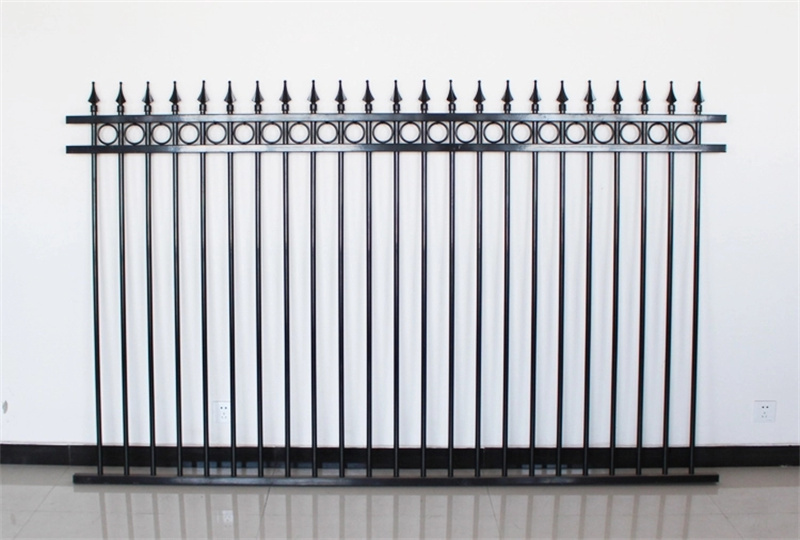
The difference is one manufacturing step with two outcomes. Both styles start as vertical steel pickets welded between top and bottom rails inside a tubular frame. In bow top, each picket (or pair of pickets) is rolled into a hoop at the top, producing a continuous series of rounded arcs; in spear top, the picket is pressed or capped into a point, producing a continuous series of upward spikes. The hoop gives the fence a softer, park-like face; the spear gives it an unmistakable keep-off signal.
Neither profile changes the core engineering. The infill spacing, rail structure and post system can be engineered to the same specification in either style, and both come off the same production logic: welded steel picket panels, hot-dipped galvanised, then powder-coated in the school’s colours. So the choice is genuinely about the top edge and the behaviours it invites or discourages — which is why the right answer for most sites is a mix rather than a single style.

The Safety Case: Hands, Clothes and Falling Heights
A playground boundary is a piece of play equipment whether the brief says so or not. Children run along fence lines, grab the top rail to swing, hook bags and clothing over pickets, and climb anything with a foothold. A rolled bow top has no sharp point to meet a hand, no spike to snag a sleeve, and a top profile that is forgiving when a child falls against it. That is the main reason the style is a common choice for school frontages and early-learning centres: it is engineered tolerance for daily contact, not a decorative preference.
Spear tops ask for the opposite behaviour — respect the line. The points are designed to make pressing on, reaching over or climbing the fence unpleasant, and they do that job well. The trade-off is that every one of those duties is performed with a sharp edge at exactly the height where a school boundary sees contact. A spear top is not automatically non-compliant for schools; rules vary by state, authority and fence position, and many public-facing school perimeters legitimately use them. The specification decision is to keep them away from the play side and the daily touch zones, and to confirm current requirements with your authority and installer before locking the drawing.
The Security Case: Climbing, Deterrence and After-Hours Risk
Turn the clock past home time and the priorities flip. A school’s real security problem is after-hours intrusion: vandalism, theft from sheds and buildings, and unauthorised occupation. Against a determined climber, a spear top adds a genuine obstacle at the top of the climb — the last, most awkward metre — while a bow top’s hoops, ironically, can offer a functional handhold sequence to a practiced climber. The hoop that protects hands by day helps grip by night.
The honest reading: bow top is a boundary marker with soft edges; spear top is a deterrent line. Facilities that need genuine after-hours protection usually combine the spear top with height, good gate hardware and lighting, rather than expecting any picket profile to carry security alone. For higher-security perimeters, heavier systems exist — 358 anti-climb mesh and similar closed-infill designs — and are specified where deterrence, not appearance, is the whole brief.
Materials and Finish: What Both Systems Share
Keep the materials conversation separate from the style conversation, because suppliers sometimes sell one with the other. Both bow top and spear top panels in this line are welded steel picket systems hot-dip galvanised before the colour coat, which is the finish strategy that matters for a school asset expected to stand for decades in weather and against constant touch. The galvanising is the corrosion barrier; the powder coat is the appearance layer and first sacrificial surface. A chipped coating on a galvanised panel is cosmetic; the same chip on ungalvanised painted steel is rust within the season.
The specification questions worth asking are common to both styles: steel grade and tube wall in the pickets and rails, how the panels fix to posts, and what the gate hardware is built from. The same steel fundamentals that govern any fence purchase apply — our guide to steel tube grades for fencing covers what a Q235 tube with mill test documentation means, and why the paperwork matters for a school asset register.
Specifying for a School or Playground Project
- Start from the boundary plan, not the catalogue. Mark which lines face play areas, which face public streets, and which are internal divisions. That map decides where bow top and spear top each belong.
- Set heights against the rules. Fence heights for boundaries and pool areas are regulated across Australia; our guide to steel picket fence height rules in Australia is the starting point, and your authority confirms the current figure.
- Keep spear tops off the play side. Where children touch the fence daily, the rolled hoop is the right edge; put the deterrent profile on the public-facing and rear sections.
- Plan the gates first. Gates are the working parts of a school perimeter — daily opening, latch wear, self-closing requirements where relevant — and both fence styles need gate hardware specified with the same care as the panels.
- Ask for galvanising plus powder coat, in writing. The specification that protects a school budget is hot-dip galvanised steel under the colour coat, named in the purchase order.
- Compare quotes as complete systems. Panels, posts, gates, hardware and installation priced together; both styles are quoted within 24 hours on drawings, so there is no reason to compare partial numbers.
Frequently Asked Questions
Is spear top fencing safe for schools?
It is used on school perimeters, particularly public-facing sections, but it is not the profile for play-side boundaries where children touch the fence daily. Rules and authority policies vary, so confirm current requirements for your state and fence position before specifying.
Why is bow top fencing recommended around playgrounds?
The rolled hoop at the top of each picket leaves no sharp point at hand height. Children grab, swing on and fall against playground fences every day, and the bow top profile is engineered to make that contact harmless.
Can you mix bow top and spear top on the same site?
Yes, and it is often the right answer: bow top along play areas and internal boundaries, spear top on public-facing and rear sections. Both use the same posts and finish system, so transitions look deliberate rather than mismatched.
Is bow top or spear top more expensive?
Both sit in the same steel picket product family with the same galvanising and powder-coat base, so per-panel price differences are modest. The budget difference between projects is driven by posts, gates, hardware and installation, which is why quotes should be compared as complete systems.
What height should a school boundary fence be?
Heights for boundary fencing are regulated and vary by state and authority; pool and playground enclosures carry their own specific rules. Set the height from the current local requirements, not from a supplier’s standard panel size.
Conclusion
Bow top and spear top are the same engineering with opposite top edges: the hoop protects hands, the point deters climbers. A school perimeter usually needs both behaviours, on different sides of the site, specified against the height rules and built on hot-dip galvanised steel under the colour coat.
Map the boundary first, then send the drawing — bow top along the play areas, spear top on the public-facing line — and ask for the complete system quote. For sites where child safety is the whole brief, our guide to pool safety fencing with temporary construction panels shows the same principle taken further.