Skip to content
A pool under construction does not pause its risk while the tiles are curing. In Australia, the barrier obligations around a swimming pool attach to the pool itself, and a renovation or a new build can create weeks or months in which the permanent fence is down, half-built or not yet certified. A temporary pool fence built from mesh panels, stabilised feet and clamps is the standard answer on construction sites — but a temporary fence only does its job if it is specified, installed and checked with the same seriousness as the permanent barrier it is covering for.
DB Fencing manufactures temporary fencing systems in Anping under AS 4687-2022 compliance, running from heavy-duty 2400×2100mm panels in 40mm tube down to lightweight Econo panels, with plastic and recycled-rubber feet, clamps and bracing completing the system. This guide covers how a temporary barrier gets built around a pool zone, what the pool barrier standard expects of it, and what to check before the inspector arrives — the honest version, with no invented numbers.
Key Takeaways
- Pool barrier obligations in Australia sit under the AS 1926 standard series enforced through state law — a temporary construction-phase barrier may need to satisfy equivalent performance, so confirm the requirements with your council or certifier before install.
- The temporary system is modular: mesh panels, stabilising feet, clamps and bracing; the heavy-duty line runs 2400×2100mm panels in 40mm tube to AS 4687-2022.
- Panel height, gap performance, climbability and gate self-closing are the four criteria a certifier will test — the same four the permanent fence faces.
- Feet and bracing are the temporary system’s structural weak points: every panel needs stable feet, and bracing belongs on long runs and wind-exposed lines.
- Orders run from 100 panels minimum with 24-hour quote turnaround and 20-25 day production for made-to-order lines.
Why a Construction-Phase Pool Barrier Is Not Optional
Australia’s pool barrier rules are attached to the pool, not to the finished landscape. During construction or renovation the excavation, the water that collects in it, and the half-dismantled old fence add up to the highest-risk period in a pool’s life — and the period when the permanent barrier is least able to help. The exact obligations during this phase, including what a temporary barrier must achieve and who must sign it off, are governed by state legislation built on the AS 1926 standard series and administered by local councils and private certifiers. The first call in any pool project is therefore to the certifier, before any fencing order: ask what the construction-phase barrier must satisfy, in writing.
A common answer is a temporary mesh panel system. It goes up in hours, it comes down without damage, it redeploys on the next project, and at panel level it offers the height and the climb resistance that pool barrier rules look for. What it does not offer automatically is compliance: a temporary fence satisfies the criteria only if it is specified to them, installed on stable feet, and maintained through the whole construction window. That is the standard this guide works to.
The Temporary System: Panels, Feet, Clamps, Bracing
A temporary pool barrier is a system, and every component is load-bearing in the compliance sense. The panels carry the height and the mesh aperture; the heavy-duty line runs 2400×2100mm panels in 40mm tube, hot-dip galvanised above 42 microns on the outdoor lines, with the 3300×2100mm Maxi Panel covering longer runs with fewer joints. The feet carry the stability — plastic feet and recycled-rubber bases are the two families, and the comparison guide on this site covers the trade-offs in detail. The clamps join panel to panel; a clamp line that lets panels pivot is a barrier with a built-in door. Bracing locks the geometry on long runs and wind-exposed lines, and it is the component most easily skipped — which is why the wind-region guide on this site is worth reading before any exposed install.
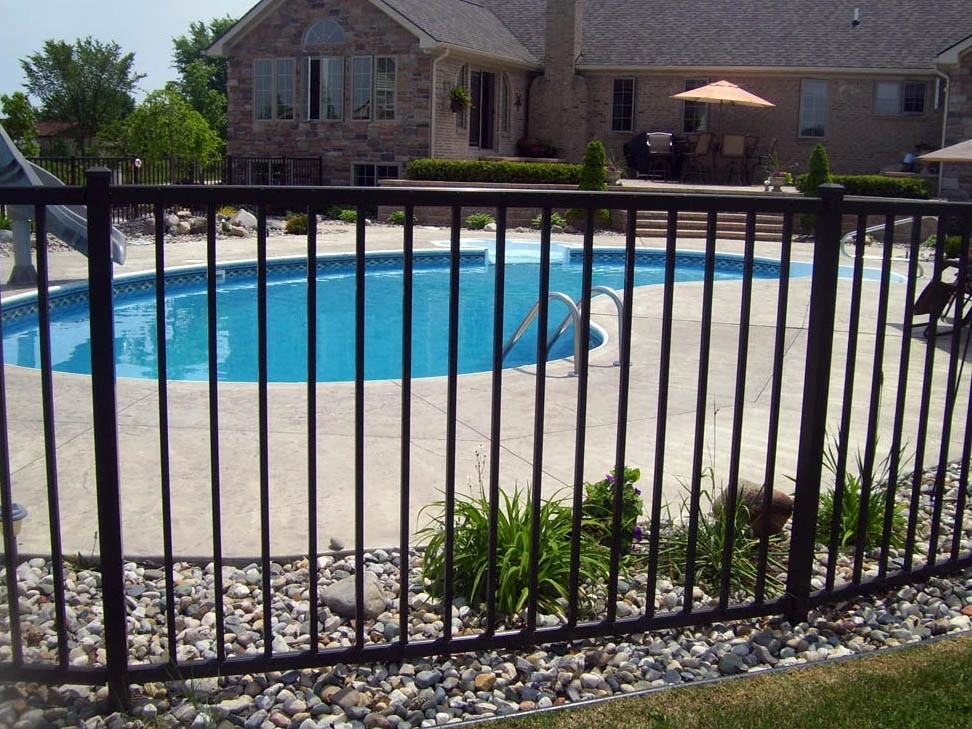
Around a pool zone, three system choices matter more than the rest. Panel height has to meet whatever the certifier’s written minimum is — measured from the ground on the outside of the barrier, over the feet, not from the panel edge alone. The feet have to stay stable on the actual surface: paving, sand, mud and scaffold debris each change the footing answer. And the gate matters: temporary systems accept gate panels, and a pool-zone gate lives or dies on its self-closing behaviour, so the gate in the barrier line is a specification item, not an accessory. Match every component to the certifier’s criteria at order stage — the factory quotes within 24 hours. When the barrier becomes permanent, the target is a vertical-picket pool fence of the kind shown below; the temporary panels stand in until it is installed and certified.
The Four Criteria a Certifier Applies
Whether the barrier is permanent or temporary, the assessment framework under the pool barrier standard concentrates on four tests, and a temporary system has to be built to pass each one. First, height: the barrier must reach the applicable minimum from the ground on the outside — the side a child would approach from — which is why foot height and ground preparation belong in the conversation. Second, gaps: the clear openings in the mesh, under the panels, and between the barrier and anything climbable nearby must stay within the limits the certifier applies; mesh panels answer the in-panel test by their aperture, and the under-panel gap is an installation setting that has to be held along the whole run.
Third, climbability: the barrier must not offer footholds or nearby climbable objects — which around a construction site means keeping scaffold, stacked materials and excavated spoil away from the outside of the line. Fourth, the gate: self-closing and self-latching from any open position, with the latch where the rules require it. A temporary system passes these tests the same way a permanent fence does — by specification and installation discipline — except the temporary barrier also has to survive being bumped, relocated and left unattended through a building programme, so the daily walk-past is part of the compliance system too.
Layout Around a Pool Zone
Layout is where a temporary barrier earns or loses its compliance. The line should enclose the pool and the immediate work zone, and exclude everything else — site sheds, material stockpiles and vehicle access stay outside the barrier so the inside stays free of climbable clutter. Corners are the natural weak points of a panel run: use them deliberately, because a kinked line joined at odd angles behaves wrong under a push test. On sloping ground the panels step, and each step re-opens the under-panel gap question — check the gap at every step transition, not just once along the run.
The gate belongs where the work traffic actually is, not where the plan drawing thought it would be, because a gate that workers have to detour around gets propped open and a propped-open gate is not a gate. Bracing goes on any run the wind can work on — and the exposed edge of a half-built pool fence is exactly that. None of this is exotic; it is the same layout discipline any temporary fencing installation runs, applied with the pool barrier criteria as the reference rather than site security alone.

Handover: From Temporary Barrier to Permanent Fence
The temporary barrier comes out when the permanent one goes in — and the overlap is the point. Keep the temporary line standing until the permanent fence is installed, inspected and certified; the day the pool is filled is not the day to discover the new fence’s gate needs adjusting. On the permanent side, the product family changes: steel picket panels, BRC mesh with its rolled top edge, or tubular fencing, each with its own compliance geometry, and the picket height guide on this site covers the pool-zone rules that govern the finished fence.
The temporary system then packs down into its components and moves to the next job — panels stacked, feet and clamps counted, bracing bundled. That redeployability is the economic argument for buying over improvising: a 100-panel minimum order from the factory, at 20-25 day production for made-to-order lines, becomes a site asset that works across projects rather than a one-off expense. The stock-programme lines ship in 7 days where the range allows, which covers the urgent renovation where the certifier’s deadline is next week.
Frequently Asked Questions
Does a temporary pool fence have to meet the same standard as a permanent one?
The obligations around a pool under construction are governed by state legislation built on the AS 1926 series, and how they apply to a temporary barrier depends on your state and certifier. Confirm in writing what the construction-phase barrier must satisfy before ordering — the answer is a compliance decision, not a product decision.
What is the minimum order for temporary pool fencing panels?
The factory’s minimum order is 100 panels, with quotes returned within 24 hours. Made-to-order lines run 20-25 days production, and stock-programme items can ship in 7 days where the range allows.
Which feet should a pool-zone temporary fence use?
Plastic feet and recycled-rubber bases are the two families, and the right choice depends on the surface, the panel weight and UV exposure over the project length. Around a pool under construction, foot stability on the actual surface — paving, sand or mud — matters more than any other foot attribute, so decide against the site, not the brochure.
When can the temporary pool fence come down?
When the permanent barrier is installed, inspected and certified — not before. Keep both systems standing through the overlap so the pool is never without a compliant barrier, then strike the temporary line and bank the components for the next project.
Conclusion
A temporary pool fence is a compliance system wearing construction clothes. The panels, feet, clamps and bracing are commodity components, but the height, gap, climbability and gate criteria they must satisfy come from the same standard framework as the permanent barrier, and the certifier’s written requirements are the only safe specification source. Build the line as a system, brace it against the wind, keep the outside clear of climbable clutter, and hold it in place until the permanent fence is certified.
If the certifier’s figures are in hand, settle the feet question against your site surface and request the system quote — panel, feet, clamps, bracing and gate on one order, quoted within 24 hours.