Skip to content
A temporary fence quote is not a price — it is a stack of decisions wearing the costume of one number. Two quotations that look identical on the summary line can differ by an entire shipping term, a coating specification, or a hundred plastic feet. The buyer who reads line by line, and knows which lines carry hidden weight, is the buyer whose landed cost matches the plan.
This guide dissects a quotation from a China temporary fencing supplier line by line, using DB Fencing’s own commercial parameters as the reference case: quotes returned within 24 hours, an MOQ of 100 panels, bulk lead times of 20-25 days, and trade terms across FOB, CIF, CFR, DDU and DDP. Every figure below comes from the company’s published commercial terms.
Key Takeaways
- The headline number means nothing until you know the trade term behind it — FOB, CIF, CFR, DDU and DDP put very different costs on your side of the ledger.
- Panel price is only one line: feet, clamps, bracing and ballast are separate items, and a quote that omits them is not cheaper, it is incomplete.
- Coating specification belongs in writing: the temporary fencing line is hot-dip galvanised to more than 42 microns for outdoor and coastal exposure.
- Capacity and lead time set whether the quote is real: 10 welding lines, up to 2,000 sets per week, bulk delivery in 20-25 days, and stock items dispatched in 7 days.
- MOQ is 100 panels and payment terms are negotiable — a quote should state both, along with compliance to AS 4687-2022 for Australian sites.
The Header: Who Is Actually Quoting
Start at the top of the document, because the first trap is identity. The legal entity on the quotation should match the entity you are paying and the entity that manufactures. DB Fencing quotes as Anping Deban Metal Wire Mesh Products Co., Ltd, based in Anping, Hebei — a district that styles itself the Global Wire Mesh Town — and has exported fencing for 14 years under a business founded in 2009. A quotation that names one company, a bank account that names another, and a factory you cannot locate is not a quotation; it is a riddle.
The header also sets expectations for speed. A supplier quoting within 24 hours of receiving your specification has an engineering desk attached to sales; one that takes a week to answer a panel enquiry is telling you where you will sit in their priority order when a production problem appears. Buyers new to sourcing from China can run the wider supplier check in our buying guide, and the factory audit steps in our Anping audit checklist.
Line Items: Panels, Feet, Clamps and Bracing
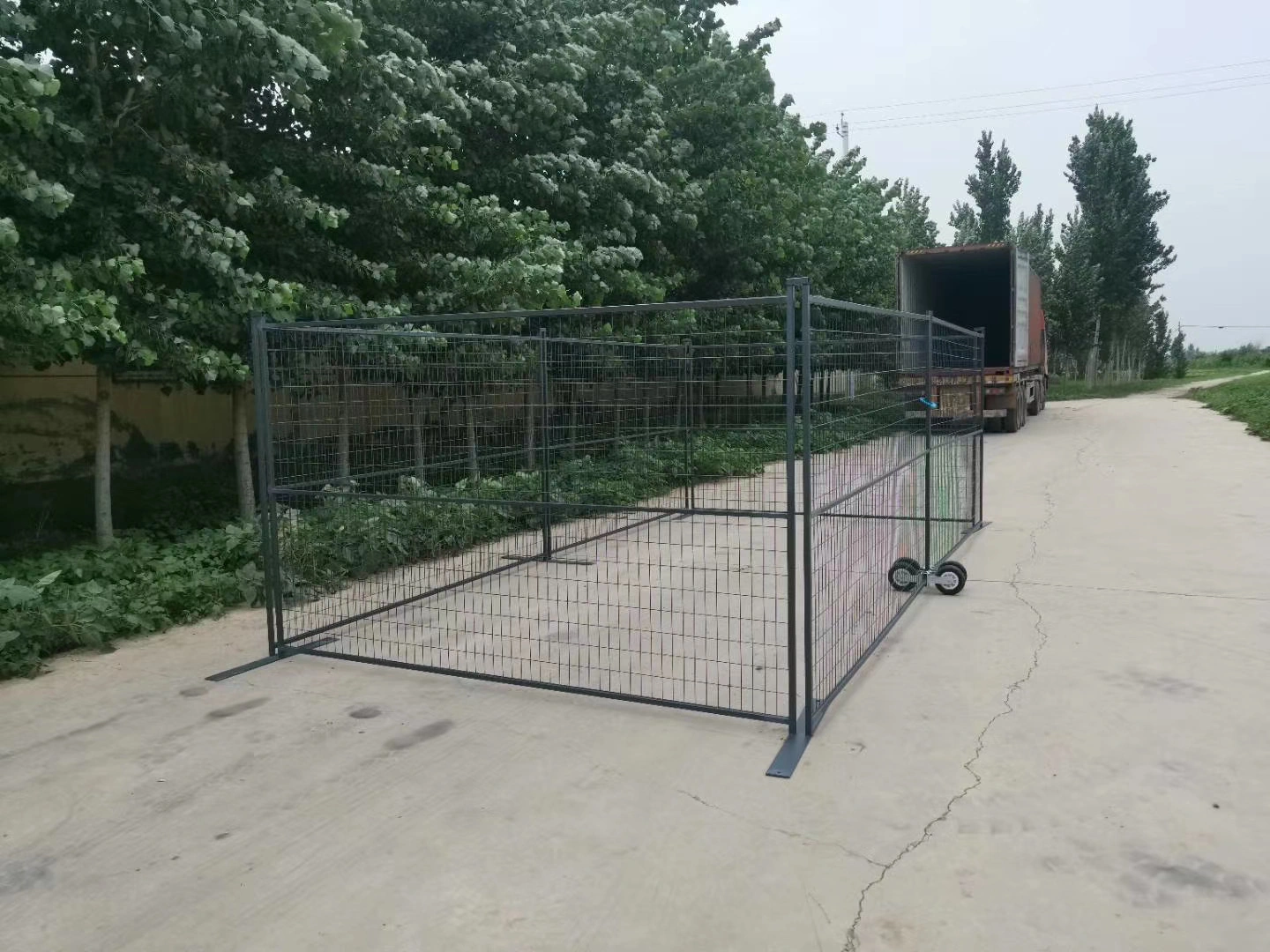
A complete temporary fencing system is panels plus the hardware that keeps them standing. The quotation should show each family as its own line: panels themselves (heavy-duty 2400×2100mm construction panels, 3300×2100mm Maxi panels, 6ft×8ft and 6ft×9.5ft formats, or lighter Econo sections), recyclable rubber feet, clamps that join panel to panel, bracing for exposed runs, and ballast blocks where the layout needs weight rather than steel.
Read the quantities against your own site plan, not the supplier’s suggestion. The classic cost trap is a quote priced per panel with feet and clamps listed as “optional accessories” — every panel needs a foot or two, and every joint needs a clamp, so a quote without them undercounts the order by design or by accident. Ask for the accessory count to be stated per 100 panels, which matches the MOQ and makes comparison between suppliers arithmetic instead of guesswork.
The Fine Print That Moves the Price
Three lines of fine print do more damage to budgets than the panel price ever does. First, the trade term. FOB, CIF, CFR, DDU and DDP are all available from DB Fencing, and each shifts freight, insurance and duty to a different party; a quote compared across two different terms is not a comparison at all. The mechanics of each term are worth learning properly — we break them down here.

Second, the coating specification. The temporary fencing line is hot-dip galvanised to more than 42 microns for outdoor and coastal exposure — that figure belongs in the quote, in writing, because it is what separates a panel that survives a coastal site from one that rusts out the warranty. Third, compliance. For Australian sites the reference standard is AS 4687-2022 (with AS 4687-2007 as the predecessor edition); the quote should state the panels are manufactured to comply, and quality claims should be backed by ISO9001 certification and SGS audit status rather than adjectives.
| Quotation line | What it should say | Red flag |
|---|---|---|
| Seller identity | Legal company name matching bank and factory (e.g. Anping Deban Metal Wire Mesh Products Co., Ltd) | Trading company name that does not match the payee |
| Panels | Size and format per line (2400×2100mm, 3300×2100mm Maxi, 6ft×8ft, Econo), MOQ 100 panels | One blended “per set” price with no size breakdown |
| Accessories | Recyclable rubber feet, clamps, bracing, ballast listed with per-100-panel counts | “Accessories optional” with no quantities |
| Coating | Hot-dip galvanised, more than 42 microns on the temporary fencing line | “Galvanised finish” with no thickness figure |
| Terms and lead time | Named incoterm (FOB/CIF/CFR/DDU/DDP), negotiable payment terms, 20-25 day bulk lead time or 7-day stock dispatch | “Best price, immediate shipment” with no term or date |
Lead Time, Capacity and the 7-Day Stock Option
The delivery line deserves the same scepticism as the price line. DB Fencing runs 10 welding lines with capacity up to 2,000 sets per week and quotes 20-25 days for bulk production — a number you can hold against the calendar. Where timing is tighter, the stock program changes the equation: stock items ship in 7 days. That distinction should appear on the quotation, because a bulk-spec price with a stock-spec promise is how deadlines die.
Ask one closing question before you accept any quote: which production lines will this order run on, and can the salesperson confirm the panel specification in writing? A supplier with its own plastic feet injection machines — DB Fencing supplies feet to other Anping factories — can quote accessories with the same authority as panels. The stock program details and the temporary fencing product line are both worth a read before you sign.
Frequently Asked Questions
What is a reasonable minimum order for temporary fencing from China?
DB Fencing’s MOQ is 100 panels, with accessory counts (feet, clamps, bracing) quoted per the same order size.
How fast should a supplier return a temporary fence quote?
Within 24 hours for a specified enquiry is the benchmark DB Fencing works to. Slower responses usually signal that engineering questions are being outsourced rather than answered in-house.
Which incoterm should a first-time importer choose?
There is no single right answer — FOB, CIF, CFR, DDU and DDP each move freight, insurance and duty costs to a different party. Match the term to your freight experience, and compare quotes only on identical terms.
What lead time should the quotation commit to?
For bulk production, 20-25 days from a supplier running 10 welding lines at up to 2,000 sets per week. For stock items, 7 days. If the quote promises neither, ask which one you are buying.
Conclusion
A quotation earns trust through specificity: a legal entity that matches the factory, accessory lines counted per 100 panels, a coating thickness above 42 microns in writing, a named incoterm, and a lead time backed by real capacity. Those five lines protect your budget more than any discount ever will.
Take your next quote and mark it against the table above before you reply. If a line is missing, ask for it — a supplier that answers within 24 hours and states its terms plainly has nothing to hide behind fine print.