Skip to content
Anping County in Hebei is the world’s densest cluster of wire mesh and fence production — the self-styled “Global Wire Mesh Town”. For an overseas buyer, that density is a double-edged sword. Genuine manufacturers with welding lines, galvanising partners and stock programs sit alongside trading companies that own a website, a sample room and nothing else. Telling them apart is the single highest-value audit skill in sourcing a wire mesh fence factory from China.
This checklist is written from the manufacturing side of the table. DB Fencing (Anping Deban Metal Wire Mesh Products Co., Ltd) has produced fence panels in Anping since 2009, and every item below is framed as the evidence a real factory can show you — and the evasions a trading company hides behind.
Key takeaways
- Check the legal entity first: the business licence name should match the invoice name and the bank account — a trading company often quotes under one name and bills under another.
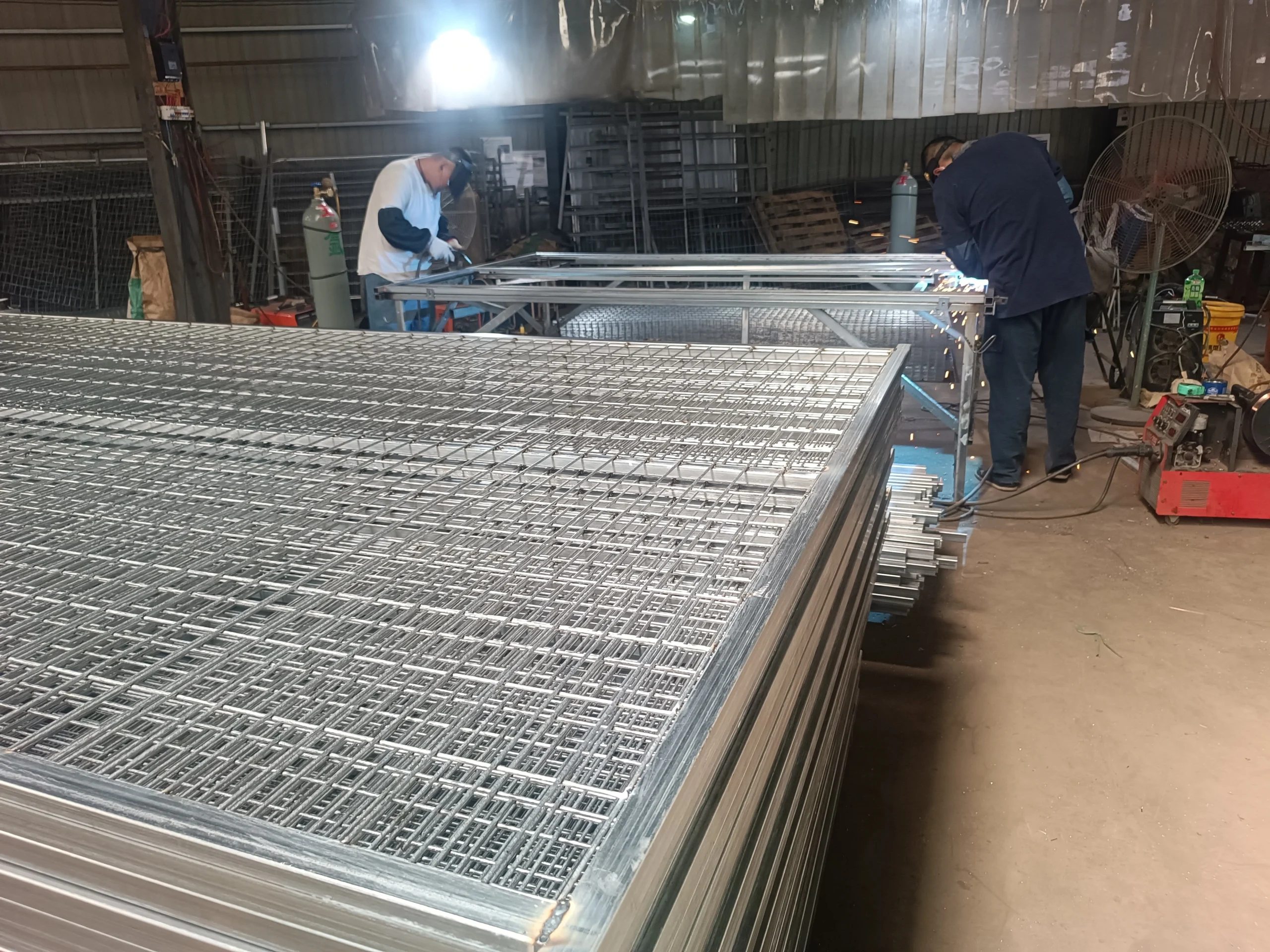
- Ask for capacity in units, not adjectives: a real manufacturer states welding lines and output — DB Fencing runs 10 welding lines with capacity up to 2,000 sets per week.
- Probe the in-house steps: injection-moulded feet, welding, assembly, packing — each step done in-house is one that cannot be quietly outsourced mid-order.
- Demand a live video walkthrough, unedited: a pre-recorded factory tour proves nothing; a live camera that walks to the machine you ask about proves everything.
- Verify certifications at the statement level: “ISO9001 certified / SGS audited” is a checkable claim; certificate numbers you cannot verify are decoration.
- Use sample approval plus third-party QC before balance payment — the two checkpoints that catch problems while you still hold the money.
Why Anping Doubles the Risk
In a cluster this dense, almost anyone can show you fence panels. Trading companies keep sample panels from half a dozen factories in a showroom; they photograph production lines they visit as customers, not owners. The panels may even be identical to what a manufacturer sells direct — in the short term. The risk shows up later, when your order is subcontracted to whichever workshop has spare capacity that week, and the specification drifts in the subcontracting.
The audit objective is therefore narrow: establish which entity physically controls the production steps your specification depends on. Not who is nice on WeChat, not whose English is best — who holds the welding schedule.
Checklist Item 1: The Legal Entity Trail
Start with paperwork, because paperwork is where trading companies are structurally exposed. Ask for the Chinese business licence of the entity that will produce your goods, and check three points of alignment: the licence name, the name on the commercial invoice, and the beneficiary name on the bank account. In a real manufacturer, all three are the same company. A mismatch — quote from “Anping X Trading Co.”, invoice from “Hebei Y Import-Export Co.” — does not automatically mean fraud, but it does mean the entity you audited is not the entity executing your order.
The licence also states the registered business scope. Manufacturing licences list production; trading licences list buying and selling. It is a public document, and a supplier who hesitates to show it has answered your question anyway.
Checklist Item 2: Capacity in Units
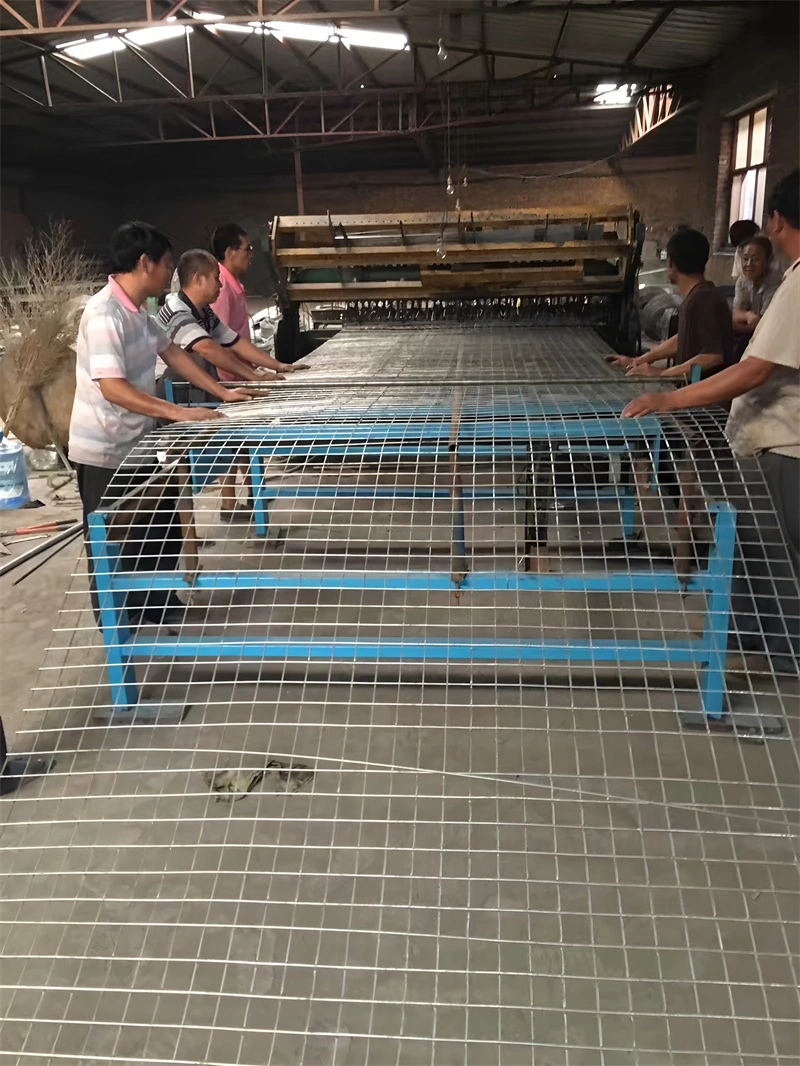
“Large production capacity” is not a specification. Ask every candidate supplier to state capacity the way a factory does: number of welding lines, output in sets or panels per week, and current utilisation. DB Fencing runs 10 welding production lines with capacity up to 2,000 sets per week — a claim you can sanity-check during a video walkthrough by counting the lines yourself.
Then connect capacity to your order. A supplier quoting 2,000 sets per week can absorb a 500-panel order without subcontracting; a workshop quoting 200 sets per week that happily accepts your 2,000-panel order is planning to subcontract the difference — and the specification you negotiated applies only to the panels made in-house. Capacity math is subcontracting detection.

Checklist Item 3: Which Steps Are In-House
Walk the production sequence for your product and ask, step by step, who performs it: wire drawing, welding, frame fabrication, plastic feet injection, assembly, quality inspection, packing. A manufacturer answers instantly, because the answer is “us” or a named long-term partner. A trading company answers vaguely, because the answer is “whichever factory is cheapest this month”.
Injection-moulded fence feet are the sharpest single probe in Anping. Most fence suppliers buy feet from third-party moulders; DB Fencing operates its own plastic feet injection machines — reportedly the only fence supplier in Anping that does, supplying feet to other local fence companies as well. When your audit question “do you make the feet yourself?” gets the answer “yes, and here is the machine running”, you have located a real manufacturer. When it gets a brochure, you have not.
Checklist Item 4: The Live Video Walkthrough
A pre-recorded factory tour video is marketing, not evidence — it can be filmed anywhere, edited anytime, and re-used for years. What carries weight is a live video call where you control the camera: ask the guide to walk to a specific machine, show a current production batch, and read the work order taped to a line. Ten minutes of live footage answers more than an hour of slides.
Three moments to engineer into the call. First, ask to see today’s date on a production board or shipping label — it defeats archived footage. Second, ask to follow one panel batch from welding to packing — it maps the real production flow. Third, ask a technical question mid-walk (“which line runs the 2400×2100mm heavy-duty panel?”) and watch whether the guide navigates without hesitation — familiarity with the floor is hard to fake.
In a live walkthrough, you control the camera. The moment a supplier insists on “sending you a video instead”, the audit has returned a result.
Checklist Item 5: Certifications and Standards
Treat certifications as statements to verify, not badges to admire. For Australian temporary fencing buyers, the standard that matters is AS 4687 (current edition AS 4687-2022, superseding AS 4687-2007) — ask how the supplier’s panels meet it and what documentation supports the claim. For management systems, “ISO9001 certified” and “SGS audited” are meaningful, checkable statements; a supplier who volunteers verification paths for those claims is behaving like a manufacturer, and one who pads the conversation with unverifiable certificate graphics is not.
The same discipline applies to product specifications. A hot-dip galvanised coating “above 42 microns” is a specification — ask for it in writing on the quote. Coating thickness, tube dimensions and mesh specifications that appear nowhere in the paperwork will not appear on the goods either. Our guide on hot-dip versus pre-galvanised fence steel covers why that particular number matters for coastal and outdoor sites.
Checklist Item 6: Sample Approval and Third-Party QC
The final two checkpoints happen while you still hold leverage — before full payment. Sample approval first: a production sample made to your specification, signed off as the reference standard for the batch. The sample is the contract the goods cannot argue with.
Third-party QC second: an inspection agency visiting the factory between production completion and balance payment, checking the finished goods against your approved sample and specification. It is a routine service in Chinese manufacturing districts, inexpensive relative to a container of off-spec panels, and the request itself is diagnostic — manufacturers with nothing to hide routinely host inspectors.
Sequencing matters: sample before mass production starts, QC before balance payment, and the audit items in this checklist before the deposit. Money is the only audit instrument a supplier truly respects, so spend it in the order that buys you verification. For the full commercial picture — MOQ, payment structure and QC workflow in one pass — see our guide on how to buy temporary fencing from China.
 style=”margin-top: 50px; margin-bottom: 30px; font-size: 28px; border-bottom: 2px solid #eee; padding-bottom: 10px; font-weight: bold;”>Trading Company vs Manufacturer Tells
| Audit question | Real manufacturer | Trading company tell |
|---|---|---|
| Can I see your business licence? | Sends it; licence, invoice and bank names align | Sends a different entity’s licence, or delays |
| What is your weekly capacity? | States lines and sets per week (e.g. 10 lines, up to 2,000 sets/week) | “Very large” — no units, no utilisation detail |
| Who makes the plastic feet? | “We injection-mould them in-house” — shows the machine live | Changes the subject to catalogue colours |
| Can we do a live video walkthrough? | Schedules it within days; guide knows the floor | Offers a polished pre-recorded video instead |
| Can I run third-party QC before balance? | Standard practice; routinely hosts inspectors | Resists, delays, or redirects to “trust” |
Frequently Asked Questions
Is a trading company always the worse choice?
Not always — for mixed orders across many product types, a good trader can consolidate. But for specification-critical fence panels, the manufacturer link removes the subcontracting risk, so audit for control of the welding schedule first.
Can I audit a Chinese factory without visiting China?
Largely, yes: business licence review, a live video walkthrough you control, sample approval and third-party QC together cover most of an on-site audit’s value at a fraction of the cost.
What single question exposes a trading company fastest?
Ask for a live video walk to a specific machine — the injection-moulding shop or the welding line running your panel — dated today. Manufacturers comply; traders redirect.
How does minimum order size fit the audit?
A manufacturer’s MOQ reflects its production economics — 100 panels for factory-direct fence orders — while a trader’s MOQ is whatever the underlying workshop agrees to. Treat MOQs that change every conversation as a tell.
What lead time should a verified manufacturer quote?
Made-to-order production runs 20–25 days; stock-program items dispatch in 7 days. Quoted times far outside that band, in either direction, deserve a follow-up question about who is actually making the goods.
Conclusion
Separating an Anping manufacturer from a trading company is a paperwork-and-camera exercise: align the legal entity, demand capacity in units, probe the in-house steps, control the video walkthrough, verify the certification statements, and hold sample approval and third-party QC before the balance payment. Each step is cheap; together they close the subcontracting gap that ruins specification-critical orders.
Run the checklist against every candidate — including us. Book a live walkthrough of the DB Fencing production floor, and start the factory-direct conversation with your panel specification.