 Skip to content
What Matters Most in Negotiation
- Effective negotiation requires thorough market data analysis, detailed itemized quotes, and clear contract terms to maximize value.
- Building a long-term partnership involves setting transparent quality standards, flexible pricing linked to market indexes, and regular communication.
Preparing to Negotiate with Manufacturers
I once walked into a meeting with a new steel fence manufacturer feeling confident, armed only with a project scope and a budget handed down from finance. The supplier’s representative was cordial, but the conversation was entirely on their terms. They presented their standard price list, and every question I asked was met with a polite but firm, “That’s our package price.” We ended up paying 15% more than we should have. The next time, with a different supplier, I spent two weeks gathering data first. I entered that room knowing the index price of steel, typical fabrication margins, and their competitor’s discount tiers. It wasn’t a negotiation; it was a collaborative discussion that landed us a multi-year deal well under budget. Preparation is not just a step—it’s your greatest source of leverage.This initial phase is where the most value is created, long before you shake hands on a deal. Understanding the underlying market forces, raw material cost drivers, and pricing indexes transforms your position from a price-taker to a strategic partner. When you can anchor your requests to objective market data, you shift the conversation from a subjective haggle to a fact-based discussion about fair value. This knowledge empowers you to set realistic but ambitious targets, anticipate a manufacturer’s arguments, and build a negotiation strategy that is both flexible and resilient.
Research Steel Fence Market Pricing
Before any meaningful negotiation can begin, you must ground yourself in the financial realities of the steel market. The final price of a steel fence is a composite of several key cost drivers. The most significant is the raw material itself, typically low-carbon steel or specific iron alloys, where the price is heavily influenced by global supply and demand for inputs like iron ore and coking coal. Manufacturers don’t just invent prices; they respond to these market dynamics. Understanding this allows you to assess the fairness of a quote in real-time.
Start by researching typical per-meter pricing benchmarks for the fence types you need, accounting for different finishes like hot-dip galvanizing or powder coating, which add significant cost. Critically, you must familiarize yourself with benchmark steel market indexes. According to industry analysis from authoritative sources like the CRU Group and the World Steel Association, these indexes are the primary basis for price adjustments in long-term contracts. Monitoring these fluctuations enables you to anticipate price hikes or identify opportunities for cost reduction. For up-to-date pricing data, consult industry publications, commodity market websites, and even paid market intelligence platforms that track raw material and finished goods pricing.
Finally, investigate structural pricing factors. Most manufacturers offer volume commitment discounts, where larger or multi-year orders unlock lower per-unit costs. There can also be seasonal pricing trends, with potential discounts during slower production months. By mapping out these elements—raw material costs, finishing premiums, index trends, and discount structures—you build a comprehensive picture of what a fair price looks like before the first quote even lands on your desk.

Set Clear Negotiation Objectives
Walking into a negotiation without clear objectives is like setting sail without a destination. Your market research provides the map; your objectives are the coordinates you steer toward. The first step is to define a target price range—not just a single number. This range should include an ideal price (your ambitious but justifiable goal), a realistic price (your expected outcome), and a walk-away price (the absolute maximum you will pay). This gives you the flexibility to make concessions without compromising your budget.
Beyond price, you must prioritize specific contract terms that hold strategic value. Which is more important for this project: a 10% lower price or a guarantee of delivery within 60 days? Is a 10-year corrosion warranty more valuable than a 20% deposit instead of 40%? Outline and rank these priorities—payment schedules, quality guarantees, firm delivery timelines, and warranty periods are all significant points of value. Differentiating between short-term cost savings and long-term security is crucial. A slightly higher price for a fence with a superior coating and a longer warranty may deliver a far lower total cost of ownership.
Your research should have also revealed your points of negotiation leverage. Are you offering a high-volume order? Can you commit to a multi-year framework agreement? Are you able to offer faster payment in exchange for a discount? Identify these strengths and decide when and how to introduce them. Prepare alternative offers and concessions in advance. For example, if the manufacturer won’t budge on the per-meter price, perhaps you can negotiate for waived delivery fees or an extended warranty at no extra cost. A well-prepared checklist of “must-haves” and “deal-breakers” ensures you cover all critical points and protect your organization’s core interests.
Prepare for Supplier Communication
Your first interaction with a potential supplier sets the tone for the entire relationship. Approach it not as an adversary but as a discerning partner gathering crucial intelligence. During initial contact, your goal is to understand their capabilities, capacity, and communication style. Are they responsive? Do they answer questions transparently, or are their answers evasive and vague? This initial evaluation of their professionalism is a valuable data point.
The cornerstone of effective supplier communication is the request for quotation (RFQ). Do not accept a simple, all-in price. Best practice dictates requesting a detailed, itemized quote that breaks down costs into distinct categories: raw materials, fabrication, specific coating processes (e.g., hot-dip galvanizing), logistics, and any applicable tariffs or taxes. This transparency is non-negotiable for a serious buyer. Once the quote is received, prepare clarifying questions about their technical specifications. Ask specifically about the steel grades used, the precise coating thickness in microns, and the standards they adhere to for corrosion resistance (e.g., ASTM standards). The quality of their answers reveals their technical competence.
These technical specifications are not just details; they are a central part of the negotiation. A lower price is meaningless if it’s for an inferior product that will fail prematurely. Whenever possible, schedule a pre-negotiation site visit or a detailed video call with their production team. Seeing their operations and speaking directly with their technical experts can provide invaluable insights into their quality control processes and overall capabilities, giving you a much stronger foundation for the subsequent negotiation.

Negotiating Steel Fence Pricing Effectively
A few years ago, our team was sourcing perimeter fencing for a large logistics hub. The leading bid came in with a competitive, single-line-item price per meter. It was tempting to accept it. But on principle, we pushed for a full cost breakdown. The supplier reluctantly complied. We discovered that while their material and fabrication costs were fair, their bundled logistics fee was nearly 40% higher than market rates. By unbundling that cost and arranging our own shipping, we saved over $50,000 on the project. This is the power of itemization; it uncovers the hidden assumptions and inflated margins that a bundled price is designed to conceal.
Effective price negotiation goes far beyond asking for a discount. It involves strategically deconstructing the supplier’s offer to understand where their costs and profits lie. By separating the price into its core components—raw material, coating, fabrication, and logistics—you expose each part to scrutiny and negotiation. This tactic moves the discussion away from an arbitrary “per-meter” number and toward a transparent partnership where both sides can identify and create value. It’s in these details that the most significant savings are found, turning a standard procurement process into a strategic financial win.
Request Itemized Quotes
The single most powerful tool in your pricing negotiation toolkit is the itemized quote. Insisting that a manufacturer separate their pricing into material, coating (e.g., galvanizing, powder coating), fabrication/labor, and shipping/logistics is critical. A bundled price obscures where the costs truly are, allowing a supplier to embed excessive margin in areas you can’t see. By breaking it down, you gain the transparency needed to analyze each component against the market benchmarks you researched earlier.
When you analyze the quote, you can quickly spot overpriced segments. For example, is their raw material cost significantly above the current steel index price? Is their charge for hot-dip galvanizing double what other providers charge? Common markup practices include padding logistics costs, assigning high labor rates to simple fabrication, or failing to pass on raw material cost decreases. Don’t be afraid to question these figures directly and ask for justification. A sample template for your RFQ should include specific line items for these categories, making it clear from the outset that transparency is a prerequisite for doing business.
This approach offers benefits that extend far beyond a single transaction. When a supplier knows you will be scrutinizing their pricing structure, it encourages fair pricing from the start. This move toward transparency builds a foundation of trust that is essential for long-term negotiation and a healthy, collaborative partnership. It communicates that you are a sophisticated buyer focused on total value, not just the lowest headline number.
Leverage Volume Commitment Discounts
One of the most compelling pieces of leverage you possess is your order volume. Manufacturers are motivated to secure large, predictable streams of revenue, as this allows them to optimize production schedules, purchase raw materials in bulk at a discount, and reduce their sales overhead. You can directly capitalize on this by negotiating volume commitment discounts. This can be structured in several ways, from immediate discounts on large single orders to tiered pricing that unlocks greater savings as your cumulative volume increases over a quarter or year.
Consider proposing a multi-year order commitment. The stability this offers a manufacturer is highly valuable and can translate into significant price concessions for you. For example, committing to purchase a minimum of 5,000 meters of fencing per year for three years is a much more powerful negotiating position than a one-time order of 2,000 meters. Explore concepts like rebates, where you receive a cash-back sum at the end of the year for hitting certain volume thresholds, or bonus incentives for exceeding them. The key is to negotiate minimum order volumes that you are confident you can meet, avoiding the risk of overcommitment and potential penalties.
| Order Volume (meters) | Discount (%) | Notes |
|---|---|---|
| < 500 | 0% | Standard price |
| 500 – 1000 | 3% | Small volume discount |
| 1001 – 5000 | 7% | Medium volume discount |
| > 5000 | 12% | Large volume discount with rebate options |
When leveraging volume, it’s wise to mitigate risks. Build flexibility into your agreement, such as clauses that allow for adjustments based on your project pipeline. While a large commitment provides leverage, an ironclad obligation that doesn’t account for market shifts in your own business can become a liability. A well-structured volume agreement benefits both parties by providing the supplier with predictability and the buyer with significant cost savings.
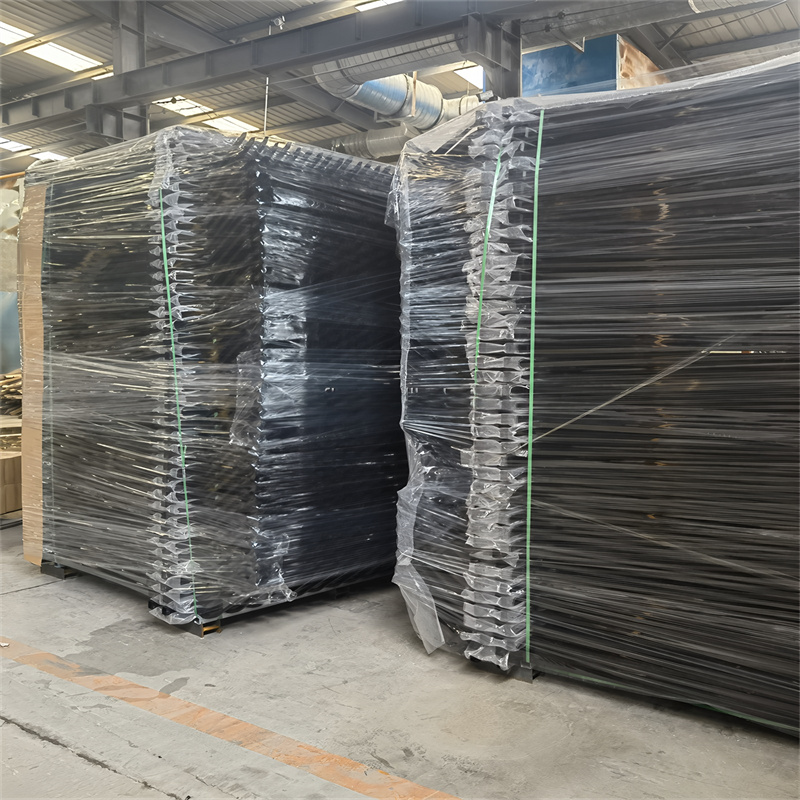
Reliable Metal Fencing, Built for Strength and Speed
Get top-quality steel fences made in our Chinese factory since 2009. Fast sample delivery, rigorous quality checks, and expert support ensure your project stays on track with durable products and fair pricing.
Negotiate Payment Terms
Negotiating payment terms is as crucial as negotiating the price itself, as it directly impacts your organization’s cash flow and risk exposure. Avoid supplier-friendly terms like “50% upfront, 50% on shipment.” The gold standard for manufacturing agreements is a balanced, milestone-based payment schedule. As widely recommended in procurement best practice whitepapers, this structure protects both buyer and supplier interests by tying payments to tangible progress. A common, fair structure involves a modest deposit (10-15%) to initiate the order and cover initial material costs, followed by progress payments tied to verifiable production milestones (e.g., fabrication completion, coating application).
This approach significantly reduces your risk. If the supplier fails to meet a milestone, you are not heavily exposed financially. It keeps the supplier motivated to maintain their production schedule. You can further enhance your position by negotiating for early-payment discounts. If your company has strong cash flow, offering to pay an invoice in 10 days instead of 30 in exchange for a 1-2% discount can yield substantial savings over time. For very large or high-risk orders, consider using an escrow service, where funds are held by a neutral third party and released only upon completion of agreed-upon terms, providing ultimate protection for both sides.
Your payment terms should also include clauses that address potential problems. Embed clear financial penalties for late deliveries or rework required due to quality failures. A clause stipulating a 1% reduction in the final payment for each week of delay, for example, creates a powerful incentive for the supplier to perform. By thoughtfully structuring payment terms, you can improve your financial outcomes, mitigate risk, and create a framework of accountability.
| Stage | Payment % | Conditions |
|---|---|---|
| Order Confirmation | 10-15% | Deposit to start production |
| Mid-Production Milestone | 30-40% | Progress payment on milestone verification |
| Pre-Shipping | 30-40% | Before shipment approval |
| Final Acceptance | Remaining | After quality inspection and acceptance |
Contract Terms & Quality Guarantees
On a major infrastructure project, a contractor client of mine accepted a bid for “commercial-grade steel fencing.” The price was excellent. Eighteen months after installation, rust streaks began to appear at weld points across a two-kilometer fence line. An independent analysis revealed the steel had a high carbon content making it brittle, and the “galvanized” coating was a cheap electroplate finish less than 20 microns thick—not the 85-micron hot-dip galvanizing required for long-term durability. The contract was too vague to enforce a warranty claim, and the cost of replacement was catastrophic. This is why a contract’s technical specifications are not fine print; they are the most important part of the deal.
The core principle behind establishing detailed quality guarantees is to eliminate ambiguity. Vague terms like “high-quality” are unenforceable. By precisely defining the steel grade, chemical composition, coating thickness, and corrosion resistance standards, you create a shared, objective, and legally binding definition of what constitutes an acceptable product. This doesn’t signal mistrust; it signals professionalism and a commitment to long-term performance. It protects the buyer from substandard materials and protects the reputable manufacturer from unwarranted claims, preventing disputes by ensuring both parties agree on the criteria for success before production even begins.
Define Steel Grade and Materials
The durability and longevity of a steel fence begin at a metallurgical level. It is essential that your contract specifies the exact steel grade to be used. While terms like “mild steel” are common, for a robust contract, you should specify standards, such as those from ASTM International, which dictate chemical composition. A low carbon content is particularly important, as it enhances the steel’s ductility and weldability, reducing the risk of cracks and failures at joints. Conversely, you must set strict limits on impurities like sulfur and phosphorus, as well as slag inclusions, which are non-metallic particles that can become trapped in the steel during manufacturing and create weak points that promote corrosion.
Understanding the historical context of steel manufacturing can provide insight into quality. While modern methods are dominant, the principles of historical metallurgical processes like the puddling process, finery forge, and the original bloomery method all centered on removing impurities (slag) to create a stronger, more resilient final product—wrought iron, the precursor to modern steel. Specifying a clean, low-impurity steel in your contract honors this fundamental principle of quality. Ensure your contract language is clear, for example: “All steel used must conform to ASTM A36/A36M standards, with a maximum carbon content of 0.26% and maximum phosphorus and sulfur content of 0.04% and 0.05% respectively.” Linking to these objective, external industry standards leaves no room for interpretation.
Set Coating and Corrosion Resistance Standards
The raw steel provides the strength, but the coating provides the longevity. A fence’s primary enemy is corrosion, and the coating is its only line of defense. Your contract must be explicit about the type, thickness, and quality of the protective finish. The most common high-performance coating for steel fencing is hot-dip galvanizing, where the fabricated steel part is submerged in a bath of molten zinc. This creates a thick, durable, and metallurgically bonded layer that provides exceptional corrosion resistance. An even more robust—and expensive—option is a duplex system of powder coating over a galvanized base.
It’s not enough to specify the type; you must specify the thickness. Industry standards, documented in manufacturer technical specifications, often call for a minimum average coating thickness of 45 to 85 microns for hot-dip galvanizing to ensure a multi-decade lifespan. A cheap, thin coating will fail years sooner, dramatically increasing maintenance and replacement costs. Your contract language should be precise: “All fence components shall be hot-dip galvanized after fabrication in accordance with ASTM A123, with a minimum average coating thickness of 85 microns.” Also define finish tolerances, ensuring the coating is smooth and free from drips or bare spots. Tie these specifications directly to warranty terms that cover premature corrosion or coating failure.
| Coating Type | Corrosion Resistance | Typical Thickness (microns) | Cost Impact |
|---|---|---|---|
| Hot-Dip Galvanizing | High | 45-85 | Moderate to High |
| Powder Coating Over Galvanizing | Very High | 60-100 | High |
| Paint Only | Low | 20-40 | Low |
Warranty and Penalty Clauses
A strong warranty is not a bonus feature; it is a fundamental quality guarantee. For industrial and commercial steel fencing, a standard warranty period should cover defects in materials, corrosion, and workmanship for at least three to five years, with premium products often carrying warranties of 10 years or more. However, the warranty’s value lies in its details. It must clearly define the remediation procedures: if a defect is found, will the manufacturer repair, replace, or refund the product? Who covers the cost of labor and shipping for the replacement? These terms must be explicitly stated to be enforceable.
Accountability is further reinforced through penalty clauses. These are not intended to be punitive but to create clear financial incentives for the supplier to meet their obligations. A common example is a liquidated damages clause for missed delivery dates, where a pre-agreed-upon sum (e.g., a percentage of the contract value per week of delay) is deducted from the final payment. Similar penalties can be structured for failing to meet critical quality standards discovered during inspection. The legal phrasing must be precise to be enforceable, clearly linking the penalty to a specific, measurable failure.
To ensure ongoing compliance, the contract should also include provisions for post-delivery quality audits and inspections, giving you the right to check the product even after it has been accepted. To balance the penalties, consider incorporating performance bonuses. A bonus for delivering ahead of schedule or for achieving zero defects over a one-year period can foster a more collaborative and positive relationship, encouraging the supplier to consistently meet and exceed your standards rather than simply avoiding penalties.
Building Long-Term Supplier Partnerships
For years, a company I advise treated its fencing suppliers as interchangeable commodities, chasing the lowest price on every individual project. The result was a chaotic mix of quality, constant renegotiations, and frequent delivery delays. We shifted their strategy. They selected one high-performing manufacturer and negotiated a three-year framework agreement. The supplier gave them preferential pricing and dedicated production capacity. In return, the company gave them predictable volume. Last year, when a market shock caused steel prices to spike and lead times to explode, their supplier honored the contract’s pricing formula and prioritized their orders. Their competitors were scrambling, but their projects stayed on track. That’s the strategic value of a true partnership.
The underlying principle of modern supply chain management is that a relationship built on collaboration yields far greater returns than one based on transactional conflict. By establishing a collaborative framework, you move beyond one-off deals. Index-linked pricing, a cornerstone of such agreements, takes the contentious issue of price fluctuations off the table, replacing it with a transparent, mutually agreed-upon formula. This stabilizes costs over the long term and frees up both parties to focus on higher-value activities like joint innovation, process improvement, and mutual growth.
Establish Framework Agreements
Instead of negotiating every purchase from scratch, a framework agreement establishes a long-term relationship governed by a pre-negotiated set of terms. This master contract details the overarching rules of engagement, providing immense efficiency gains for both buyer and supplier. At its core, a framework agreement sets baseline prices for standard fence types. Crucially, it should include an annual price-adjustment formula explicitly linked to a specific steel market index. This transparent mechanism ensures that prices adjust fairly based on market realities, preventing contentious renegotiations every time raw material costs shift.
The agreement should also establish minimum order volumes (MOQs) that you commit to purchasing annually, which in turn secures the preferential pricing. However, include flexible ramp-up clauses that allow you to adjust volumes based on your business forecasts. A powerful feature to include is an option clause for collaboration on new fence profiles or product innovations. This opens the door for co-developing custom solutions tailored to your unique needs. You can also build in mechanisms for performance-based rebates, volume bonuses, or even joint marketing incentives, aligning the supplier’s success directly with yours. Finally, a robust framework agreement includes legal provisions for renegotiation triggers, defining specific market events (like an index moving beyond a certain percentage) that would prompt a good-faith review of terms.
Maintain Open Communication Channels
A contract provides the structure, but communication gives the partnership life. The foundation of a strong supplier relationship is built on regular, transparent, and bidirectional communication. Schedule formal performance and quality review meetings on a quarterly or semi-annual basis. These meetings should be data-driven, reviewing metrics on delivery times, quality acceptance rates, and cost performance against the agreement. They are an opportunity to solve problems collaboratively and plan for the future, not just to review the past.
Go beyond formal reviews by sharing market intelligence and business forecasts. If you anticipate a large project in six months, giving your supplier a heads-up allows them to plan their capacity and material purchasing, which ultimately benefits you. Rapport and trust are greatly enhanced through personal contact. Regular site visits to the manufacturer’s facility—and inviting them to see your projects—build a much deeper understanding of each other’s operations and challenges. Use shared digital platforms for real-time order tracking, quality feedback, and documentation. Lastly, establish a clear conflict resolution protocol. When disagreements arise—and they will—having a pre-agreed process for escalating and resolving them quickly prevents minor issues from damaging the entire relationship.

Leverage Volume and Innovation Collaborations
The pinnacle of a strategic partnership is moving beyond a simple buyer-seller dynamic into true collaboration. This involves working jointly with your manufacturer to co-develop customized fence profiles that are perfectly tailored to your project specifications or market needs. Furthermore, you can collaborate on testing new, innovative materials or advanced coatings to improve product longevity and performance, creating a competitive advantage for both parties. This shared R&D effort transforms the relationship into a source of mutual value creation.
Commercial collaborations can also strengthen the partnership. Consider joint marketing initiatives that showcase successful projects, increasing mutual brand visibility and driving sales. Structure performance rebates that are not just tied to volume but also to quality metrics and innovation contributions. Sharing case studies that demonstrate this mutual value growth reinforces the benefits of the partnership. To protect both parties, it’s crucial to define intellectual property rights and confidentiality terms clearly within the framework agreement, ensuring that the fruits of your collaboration are shared equitable.
Conclusion: Key Takeaways
- Successful negotiation starts with detailed market research and clear objectives. Without understanding market pricing and defining your goals, you concede control to the manufacturer.
- Itemized pricing and volume leverage unlock significant cost savings. Deconstruct quotes to find hidden margins and use your purchasing power to secure better terms.
- Contract clarity on steel grade, coating, and warranties safeguards quality. Vague agreements lead to disputes; precise technical specifications ensure you get the product you paid for.
- Long-term partnerships yield better pricing, innovation, and reliability through trust and communication. Move beyond transactional deals to build collaborative relationships that create sustained value and resilience.
Apply these strategies in your next negotiation to transform your procurement process from a simple transaction into a strategic advantage. Prioritizing data, demanding transparency, and investing in supplier relationships are the key pillars for building a resilient supply chain. By following this approach, you can achieve not only better pricing but also superior quality and reliability for years to come.
Frequently Asked Questions
What is the best way to prepare before negotiating with a fence manufacturer?
The best preparation involves a multi-step approach. Start by thoroughly researching current steel market prices and typical per-meter costs for the fence type you need. Next, set clear objectives, including a target price range and prioritized contract terms. Finally, prepare a list of detailed questions for suppliers and insist on an itemized quote to ensure transparency from the very beginning.
How can I ensure the quality of steel fencing meets my requirements?
To guarantee quality, your contract must include precise technical specifications. This means defining the exact steel grade (e.g., using ASTM standards), the minimum coating thickness in microns, and measurable standards for corrosion resistance. Additionally, negotiate a strong warranty clause that outlines remediation procedures and include provisions for third-party quality audits.
What payment terms are commonly accepted when purchasing steel fences?
Commonly accepted payment terms are structured to balance risk between buyer and supplier. This typically involves a small deposit (10-15%) to start production, followed by milestone payments tied to verifiable progress (e.g., fabrication completion, pre-shipping inspection). A final payment is made after delivery and quality acceptance. Negotiating early-payment discounts or using an escrow service for large orders are also effective strategies.
How do long-term contracts benefit both buyers and manufacturers?
Long-term framework agreements create stability and value for both parties. Buyers benefit from preferential pricing, predictable costs through price-index adjustments, and secured production capacity. Manufacturers benefit from guaranteed minimum order volumes, improved production planning, and a collaborative relationship that can lead to joint innovation and a stronger market position.
What negotiation tactics work best with steel fence manufacturers?
Effective tactics are centered on data and transparency. Always request detailed, itemized quotes to analyze costs. Leverage volume commitments and multi-year agreements for significant discounts. Negotiate flexible, milestone-based payment terms to manage cash flow and risk. Most importantly, maintain open and professional communication to build a collaborative partnership rather than an adversarial one.


