 Skip to content
An OEM steel picket fence quote can look sharp on Friday and blow up your week by Tuesday: missing clamps and feet at unload, no AS 4687 evidence in the job file, and landed costs that jump after port storage and split deliveries. I’ve watched good buyers get burned by that exact chain. Unit price never saves you if the site misses handover, the inspector flags documentation, and your team spends days chasing replacements instead of closing works.
In this guide, I’ll show you the checks that actually protect you before you place the order: which compliance documents to demand, how to verify 42-micron galvanizing claims, how to plan container loading so damage and unload time stay under control, and how to test a supplier’s real weekly output before you trust their lead time. I’ll also give you a practical claim path for shortages and defects, because warranty speed matters more than promises once stock hits the yard.
OEM Steel Picket Fence Basics
For OEM steel picket fence buying, control risk in this order: document compliance, lock practical specs, then optimize landed cost and lead time.
Product definition, commercial use cases, and OEM customization scope
An OEM steel picket fence is a factory-built steel perimeter system produced to your brand and project requirements, not retail one-off supply. In our export flow, buyers are usually construction contractors, distributors, and project procurement teams that need repeatable quality, stable lead times, and clean documentation for approval.
- Typical use cases: Commercial perimeter projects, civil works compounds, schools, utilities, and industrial parks.
- OEM scope: Panel geometry, rail and post specs, surface finish, color, logo marking, carton/pallet labels, and packing format for distributor handling.
- Commercial fit: MOQ starts at 100 panels, with 24-hour quotation response and production capacity up to 2,000 sets per week across 10 welding lines.
If you are sourcing for Australia, ask for an oem steel picket fence australia program that includes both technical drawings and shipping pack plans in the same approval cycle. That avoids rework between engineering and logistics teams.
Standard spec vs custom spec boundaries to avoid unnecessary cost
Most margin loss happens when buyers customize too early. The practical rule is simple: keep structural members on proven standard sizes unless the project load case or approval requirement clearly demands a change. Customize visible or branding elements first, then structural upgrades only where needed.
- Keep standard first: Common market references include 25×25×1.6 mm uprights and 40×40×2.0 mm rails for mainstream commercial use.
- Customize with business logic: Color, label, and packaging density usually change sales value faster than over-thick steel.
- Upgrade structure only for defined risk: Coastal corrosion exposure, high-vandal zones, or contract-stated impact/load criteria.
- Landed-cost lever: Container utilization, damage rate, and unloading efficiency can move total cost more than a small ex-works unit-price reduction.
For factory direct steel picket fence australia distributor programs, we usually see better total margin when buyers freeze a standard steel frame and optimize container loading and replacement exposure from day one.
AU Compliance First: required docs, pass/fail thresholds, and delay cost of non-compliance
For Australian tenders, document control is the first gate. Price is irrelevant if your file cannot pass review. We treat compliance as a pre-PO checklist: if any required item is missing, expired, or mismatched to the ordered model code, it is a fail until corrected.
- AS claim file: AS 4687-2022/2007 declaration package aligned to the product scope required by the project.
- System certification: Valid ISO9001 certificate covering manufacturing scope.
- Third-party support: SGS-related reports where specified by the buyer or tender pack.
- Batch QC evidence: Heat numbers or batch IDs, dimensional checks, weld inspection records, and coating readings tied to shipment lots.
- Coating threshold: Hot-dipped galvanized target above 42 microns for outdoor durability claims.
- Test-evidence request template before PO: Fixture setup drawing, sample quantity, failure criteria, repeat count, and test date/lab identity.
- Why this matters: Market load headlines without protocol are not audit-grade evidence.
- Delay exposure: Missing or inconsistent documents can hold site release for days; standby labor and equipment can quickly exceed any unit-price saving.
- After-arrival control: Agree a 48-hour discrepancy reporting window and a written replacement-parts process for missing items (for example, clamps or feet in temporary fence shipments, and equivalent accessory shortages in picket projects).
This is especially important for risk-first buyers: the fastest way to protect timeline KPI is to tie compliance documents, QC lot evidence, and replacement workflow into one contract appendix.
Structural spec benchmarks: thickness, profile, weld method, load references, and cost logic
Use benchmark ranges as a decision tool, not as marketing slogans. We verify weld continuity and coating by batch, but load figures should only be accepted when the test method and failure definition are disclosed.
- Upright profile reference: 25×25×1.6 mm appears frequently in market engineering content.
- Rail/post thickness references: 1.4 mm rail and 2.0 mm post are common entry points; 40×40×2.0 mm rails are also widely specified.
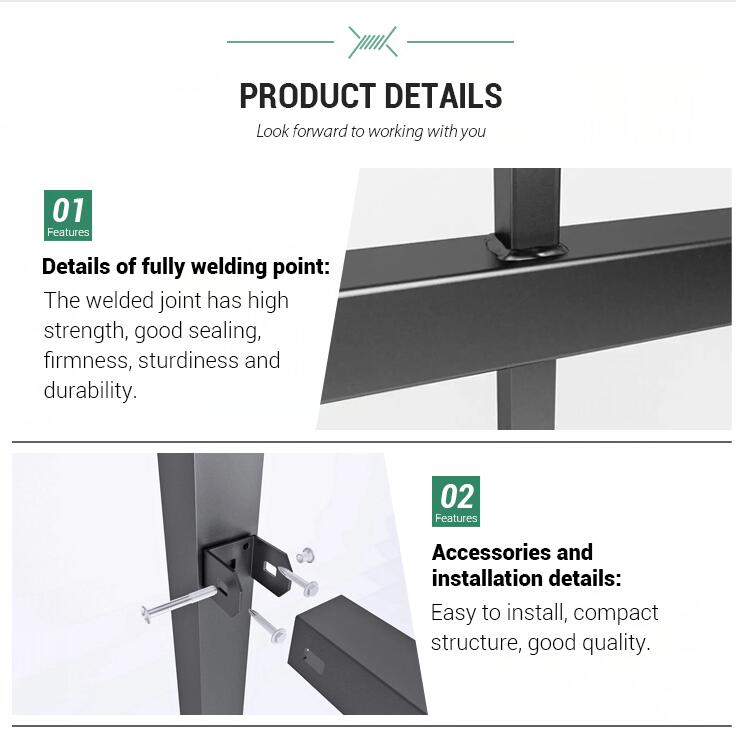
- Weld method: 360-degree weld coverage is commonly requested for joint consistency and corrosion control at weld zones.
- Load-performance references: Competitor-cited figures up to 544 kg vertical and 181 kg horizontal exist in market copy, but protocol transparency is often incomplete.
- When higher thickness pays: Long service life in high-impact or high-corrosion environments, lower replacement frequency, fewer warranty events.
- When it adds excess cost: Low-impact sites where coating quality and packaging discipline drive lifecycle outcome more than steel over-specification.
Bottom line: choose thickness increases only against a defined failure risk and lifecycle target. Otherwise, keep a standard frame, demand clear evidence, and win cost through compliance pass rate, container efficiency, and delivery reliability.

Customization Options That Matter
For OEM steel picket fence programs, customization should be chosen for compliance certainty, lower landed cost, and faster claim control, not cosmetic preference.
High-impact customization points that actually change outcomes
If you buy for Australian projects, the first filter is AS 4687 alignment and document readiness. The second filter is whether custom specs help installation speed and stock turnover. We usually see five options drive real commercial impact, while low-value cosmetic changes add cost without reducing risk.
- Height and length: Match panel dimensions to site scope and container planning to avoid mixed-SKU dead stock.
- Rails and post specs: Confirm exact tube and wall thickness combinations such as 25x25x1.6 mm uprights and 40x40x2.0 mm rails when your bid requires them.
- Coating system: Specify hot-dipped galvanized finish above 42 microns for outdoor exposure, especially for anti-rust steel picket fence coastal projects.
- Color and powder coat: Use color coding only where it supports project zoning, distributor branding, or faster yard picking.
- Bracket and clamp set: Lock bracket type and count per panel before PO to prevent shipment missing clamps or feet issues on arrival.
- Packaging format: Define pallet base, interlayer protection, and bundle logic at quote stage, not after production release.
For factory direct steel picket fence Australia distributor orders, early spec freeze also protects lead time. DB Fencing supports low MOQ at 100 panels and can scale through 10 welding lines up to 2,000 sets per week, so customization does not have to mean unstable supply.
How customization choices affect distributor margin and warehouse efficiency
Customization impacts margin in three places: freight cost per usable panel, handling labor per panel, and replacement exposure from transit or fitment errors. Procurement teams often negotiate unit price hard, then lose margin in unloading delays, repacking, and mismatch claims.
- Container utilization: Better pack density lowers freight cost per panel and improves steel picket fence 40ft container loading economics.
- Damage rate control: Correct edge protection and bundle compression reduce bent pickets and rework write-offs.
- Unload speed: Forklift-friendly pallet dimensions reduce site congestion and labor overtime during inbound peaks.
- SKU simplification: Standardized custom families improve pick accuracy and cut slow-moving inventory risk.
- Accessory completeness: Pre-counted clamps, brackets, and feet lower emergency local buys at higher unit cost.
In short, the right OEM steel picket fence customization raises gross margin by removing avoidable operational leakage. It also protects your KPI that matters most to risk-first buyers: on-time site delivery without compliance or accessory surprises.
Durability in harsh sites: corrosion drivers, galvanization protection, and incoming inspection checklist
Corrosion failure is usually not random. The common drivers are coastal salt deposition, water pooling at low points, and cut-edge exposure after field modification. That is why we prioritize hot dipped galvanized steel picket fence at over 42 microns and verify coating consistency before shipment.
- Corrosion driver 1: Coastal salt accelerates zinc consumption; specify higher coating discipline for seaside storage and installation routes.
- Corrosion driver 2: Pooling traps moisture at rail-post junctions; check drainage design and storage angle on site.
- Corrosion driver 3: Cut edges expose base steel; require touch-up procedure in your install method statement.
- Lifecycle protection control: Use hot-dip galvanization target above 42 microns as a practical baseline for outdoor use.
- Incoming inspection step 1: Verify quantity by pallet, bundle, and accessory count against packing list before unloading sign-off.
- Incoming inspection step 2: Record coating condition, weld integrity, and deformation with dated photos by batch label.
- Incoming inspection step 3: Isolate nonconforming bundles immediately and trigger replacement-parts workflow within the agreed claim window.
One limitation to keep clear: service life is site-dependent, so no responsible supplier should promise one fixed lifespan for every climate. What you can enforce is auditable incoming control and fast corrective action when defects appear.
OEM packaging and labeling for claim reduction and batch control
Private-label success is mostly execution discipline. Good OEM packaging and labeling prevents stock confusion, improves receiving speed, and gives you a clean chain of evidence if a warranty claim appears. This is where many suppliers underperform even when their steel specs look strong on paper.
- Palletization standard: Lock pallet type, stack height, and corner protection so every container unloads the same way.
- Bundle count discipline: Fix panel count and accessory set per bundle to avoid receiving disputes at warehouse intake.
- Private-label marking: Apply distributor logo, SKU code, and destination code on each bundle for faster put-away and dispatch.
- Traceability labels: Add production date, line ID, and batch number to support root-cause analysis and targeted recalls.
- Claim-control protocol: Link label data to photo evidence and replacement records to reduce recurring defects and shorten warranty closure time.
For procurement teams that must defend decisions internally, this packaging-and-labeling discipline is not optional admin. It is a direct control on hidden landed cost, defect escalation speed, and long-term distributor margin stability.

Landed Cost and MOQ Math
For procurement, the winning quote is the lowest landed cost per usable panel, not the lowest FOB unit price.
Unit Price vs Landed Cost: Compare the Full Cost Stack
Start with a fixed cost stack before you compare suppliers. For Australia-bound orders, we recommend calculating landed cost per usable panel under both FOB and CIF scenarios, with the same duty and handling assumptions applied to each quote. This removes sales noise and gives finance a defendable number.
- Base Unit Price: EXW/FOB/CIF panel price in USD per panel.
- International Freight: Ocean freight and origin charges (if FOB), or embedded freight (if CIF).
- Import Duty and Taxes: Apply your broker’s current tariff and GST assumptions consistently.
- Local Handling: Destination port fees, customs clearance, trucking, unloading labor, and warehouse put-away.
- Damage and Replacement Reserve: Budget a reserve per shipment for transit damage, missing clamps/feet, and urgent replenishment.
- Usable Yield Adjustment: Landed cost per usable panel = total landed cost / (received panels minus non-usable panels).
Commercially, this is where MOQ 100 panels matters. It gives buyers a lower-risk entry to validate actual landed cost and defect exposure before scaling to full container volume.
Why the Lowest Unit Price Can Shrink Margin
A cheaper unit price often comes with hidden margin leakage: weak packing density, higher breakage, inconsistent accessories, and re-delivery delays to site. For risk-first buyers, one delayed project handover can wipe out the saving from a lower quote. We see this most when quotes are compared on FOB price only, without delivery reliability and replacement response time.
- Delay Cost: Site idle time, rescheduled crews, and potential liquidated damages.
- Breakage Cost: Rework, local replacement purchases at retail rates, and admin time.
- Compliance Risk: If documentation or quality consistency is weak, inspection failure risk rises.
- Cashflow Drag: Capital is tied up in non-usable stock while claims are processed.
For this reason, we advise buyers to score quotes on landed-cost reliability, not just quote-line price. DB Fencing supports this with 24-hour quoting, AS 4687-2022/2007 alignment documents, and a documented claim workflow for missing or damaged parts.
Container Loading Plan: Required Template Fields
Before PO approval, request a loading plan template in writing. This is not an operations detail; it is a margin-control document. It should let your team verify freight efficiency, unloading speed, and realistic 40HQ utilization.
- Panel Specification: Model/SKU, panel length x height (mm), tube and wire specs.
- Weight Data: Net weight per panel (kg) and gross weight per bundle (kg).
- Bundle Configuration: Panels per bundle, bundle dimensions (mm), bundle strapping and protection method.
- Accessory Packout: Clamps, plastic feet, braces, and fasteners quantity per set and per container.
- Container Utilization: Estimated sets per 40HQ, cube utilization %, and weight utilization %.
- Loading Evidence: Container loading photos and packing list cross-check process before seal.
Where possible, ask for two loading options: maximum density and faster unload layout. The right choice depends on whether your priority is freight cost per panel or site unloading speed.
Use Loading Data for Inventory Planning and Seasonal Stockout Prevention
Once loading data is fixed, convert it into forward inventory rules. For Australia and New Zealand projects with seasonal demand spikes, procurement should plan by container cycle, not by ad hoc panel counts. This reduces emergency airfreight and prevents sales loss during peak months.
- Weekly Demand Baseline: Average and peak panels dispatched per week by region.
- Lead-Time Ladder: Production window, vessel transit, customs clearance, and inland delivery days.
- Reorder Point: Trigger PO when on-hand stock equals lead-time demand plus safety stock.
- Safety Stock Logic: Set higher buffer for peak season and high-variability lanes.
- Capacity Check: Validate supplier output against forecast; DB Fencing capacity is up to 2,000 sets per week across 10 welding lines.
Practical limit: forecasts are never perfect. We recommend quarterly recalibration of demand and reserve assumptions, then adjusting order frequency while keeping MOQ 100 panels as a flexible buffer for gap-filling orders.
| Cost Case | Order Size | Unit Cost Components (USD) | Estimated Landed Cost to AU (USD/panel) | MOQ/ Risk Insight |
|---|---|---|---|---|
| MOQ Trial Order (LCL) | 100 panels (minimum order) | FOB 32.0 + Ocean/Insurance 8.5 + Destination/Customs 3.0 + Inland Delivery 2.5 + Damage/Missing Parts Reserve 1.0 | 47.0 | Best for supplier onboarding and compliance document validation; highest per-panel freight cost but lowest commitment risk. |
| Small Project Batch | 300 panels | FOB 31.2 + Ocean/Insurance 5.8 + Destination/Customs 2.2 + Inland Delivery 1.8 + Damage/Missing Parts Reserve 0.7 | 41.7 | Improved freight efficiency; suitable when delivery certainty matters more than lowest unit price. |
| Standard Replenishment | 600 panels (container-planned) | FOB 30.5 + Ocean/Insurance 3.9 + Destination/Customs 1.6 + Inland Delivery 1.4 + Damage/Missing Parts Reserve 0.5 | 37.9 | Strong balance of cash flow and landed cost; practical level for distributors with stable monthly pull-through. |
| Volume Buy (40ft Optimization) | 1,000 panels | FOB 29.8 + Ocean/Insurance 2.9 + Destination/Customs 1.2 + Inland Delivery 1.1 + Damage/Missing Parts Reserve 0.4 | 35.4 | Lower landed cost through higher loading density and reduced handling loss; requires tighter unloading and storage planning. |
| Framework/Program Purchase | 2,000+ panels (staggered releases) | FOB 29.0 + Ocean/Insurance 2.6 + Destination/Customs 1.1 + Inland Delivery 1.0 + Damage/Missing Parts Reserve 0.3 | 34.0 | Best margin protection; aligns with high-capacity supply (up to 2,000 sets/week) and improves delivery reliability. |
| Hire vs Buy Check (TCO) | Reference: 1,000-panel project | Buy Landed 35.4 per panel vs Typical Hire 2.8 per panel/week | Break-even at ~13 weeks | If project duration exceeds ~13 weeks, buying usually beats hiring; include resale/reuse value to improve ROI further. |
Explore Temporary Fencing Systems Built for AU and CA Compliance.


Supplier Risk Control Checklist
Supplier Risk Control Checklist
Short version: if a supplier cannot prove compliance documents, real production capacity, and a written claim SLA before PO, the risk is still on you.
For Australia-focused procurement teams, this checklist is about downside control first: AS 4687 document readiness, lead-time reliability, and fast defect resolution. We use hard thresholds because price alone does not protect your project KPI. As a benchmark, DB Fencing commits to 24-hour quoting, up to 2,000 sets per week across 10 welding lines, MOQ 100 panels, and hot-dipped galvanized coating above 42 microns for outdoor durability.
Decision Checklist: Quote Speed, Capacity, Defect Terms, and After-Sales SLA
Use a pass/fail gate before price negotiation: response speed, real output proof, written replacement rules, and a timed claim process.
A risk-averse buyer should not move to deposit until all four controls are documented. Fast quoting matters because slow RFQ handling usually predicts slow corrective action later. Capacity must be evidenced, not promised. Defect and missing-parts terms must be explicit, including typical issues like missing clamps or plastic feet in container arrivals.
- Quote speed threshold: Written quotation within 24 hours with panel spec, coating target, accessories count, and Incoterms.
- Capacity threshold: Evidence of welding lines and weekly output; benchmark is 10 lines and up to 2,000 sets/week for scalable orders.
- Defect replacement terms: Define what qualifies as defect, who pays freight, and replacement timeline in calendar days.
- After-sales SLA: Require response time, root-cause report timing, and closure window for claims with photo/video evidence.
Red Flags You Should Treat as Immediate Risk Signals
If certificates are incomplete, weld/coating steps are vague, or warranty text is generic, assume future claim friction.
Most expensive failures start as paperwork ambiguity. For AS 4687-aligned projects, suppliers must provide audit-ready compliance files, not marketing PDFs. The same applies to weld quality and galvanizing process visibility. If process language is unclear before PO, accountability usually disappears after shipment.
- Incomplete certificates: No clear AS 4687-2022/2007 alignment file, expired ISO9001 record, or missing SGS support documents.
- Unclear weld process: No statement on weld layout, inspection checkpoints, or defect criteria for cracked or underfilled welds.
- Unclear coating process: No target thickness for hot-dipped galvanizing; for this segment, ask for the >42 microns target in writing.
- Vague warranty wording: Terms like “quality guaranteed” without claim channel, evidence format, and replacement lead time.
Competitor Gap Analysis: Where Most Buying Guides Fail
Headline strength numbers are not enough; without test conditions, failure rates, and claim workflow, your commercial risk remains hidden.
We often see market claims around high load values, but the protocol behind those values is omitted. If fixture setup, pass/fail criteria, and repeatability are missing, numbers cannot be compared across suppliers. The same gap appears in landed-cost discussion: guides mention panel specs but skip packaging density, damage exposure, and unloading efficiency that directly affect distributor margin.
- Missing test conditions: Load claims are presented without fixture details, test direction sequence, or deformation limits.
- Missing failure-rate data: No disclosed reject rate by weld defect, coating defect, or transit damage category.
- Missing claim-process detail: No end-to-end map from arrival inspection to replacement shipment and closure confirmation.
- Missing container economics: No practical guidance on loading plan, accessory packing, and loss prevention for clamps and feet.
Improved Supplier Interview Evaluation Framework for Buyers
Run supplier interviews as an audit: score evidence quality, not confidence level, then approve only suppliers that pass every critical control.
Use a weighted interview scorecard with hard stop rules. We recommend separating technical validation, commercial terms, logistics reliability, and after-sales accountability. This helps Procurement Pete defend decisions internally because each score is evidence-linked. Limitation: market-referenced structural numbers should be treated as preliminary until protocol-level proof is supplied by the vendor.
- Step 1, compliance gate: Verify AS 4687 alignment documents, ISO9001 validity, and SGS-backed file completeness.
- Step 2, production gate: Confirm line count, weekly output, and realistic lead time at your order size, not sample size.
- Step 3, technical gate: Lock rail/post/picket specs, coating target above 42 microns, and inspection checklist before mass production.
- Step 4, logistics gate: Confirm container loading plan, accessory reconciliation method, and arrival inspection protocol.
- Step 5, claim gate: Require documented SLA for first response, root-cause report, and replacement dispatch for defects or missing parts.
Conclusion
Buy the steel picket fence package only if the supplier shows AS 4687 test evidence and a galvanizing report above 42 microns, because that is what protects your inspections and cuts corrosion callbacks. Price gaps disappear fast when rust claims start. A plant with 10 welding lines and output up to 2,000 sets per week gives you real delivery confidence.
Before you place the order, ask for three files: the latest AS 4687 pass report, a batch coating-thickness sheet, and a container loading plan with panel and clamp counts. Then place a first run of 100 panels and complete arrival inspection in 48 hours with photo records, count reconciliation, and a written missing-parts claim deadline.
Frequently Asked Questions
How deep should fence posts go?
For steel picket systems, a reliable field benchmark is to set about one-third of the total post length below ground. On many 6 ft fence outcomes, that translates to a practical minimum of around 600 mm embedment, with deeper settings recommended for high-wind zones, loose fill, or coastal sites common in parts of Australia and New Zealand. Commercial buyers should also specify footing diameter and concrete grade, not just depth, to control movement over time. DB Fencing can support OEM orders with longer post options to match project-specific engineering requirements.
What is the 1/3 rule for fence posts?
The 1/3 rule means approximately one-third of the full post length is embedded below grade, while two-thirds remains above ground. For procurement planning, this prevents under-ordering: if your visible fence height target is 1.8 m, total post length usually needs to be around 2.7 m before site adjustments. This rule is especially useful for distributors quoting multiple projects because it standardizes takeoffs and reduces onsite variation. DB Fencing can produce OEM-cut post lengths so distributors can align stock directly with this ratio and reduce installation risk.
What fencing mistakes should buyers avoid?
The most common failures are undersized posts, shallow embedment, weak weld zones, and vague coating requirements in purchase specs. These issues typically lead to panel sway, premature corrosion, and higher replacement costs, especially in exposed outdoor or seaside environments. Buyers should insist on clear technical criteria, including compliance to AS 4687-2022/2007 and hot-dip galvanizing thickness above 42 microns. With ISO9001/SGS-backed production and dedicated welding capacity, DB Fencing helps distributors lock quality standards at PO stage rather than fixing problems after installation.
What are the latest fencing design trends?
Current commercial projects increasingly combine steel picket panels with masonry or concrete features to achieve a premium architectural look while preserving perimeter security. Specifiers are also favoring cleaner lines, tighter anti-climb geometry, and consistent finish quality for schools, public facilities, and mixed-use developments. In Australia and New Zealand, demand is rising for durable galvanized systems that balance visual design with long service life in harsh weather. DB Fencing supports this trend through OEM customization on dimensions, profile styles, and coating options for distributor-led product lines.
How many pickets are needed for 100 feet of fence?
The correct method is total run length divided by pitch, where pitch equals picket width plus clear gap. For 100 ft (30.48 m), if the picket is 65 mm and spacing is 15 mm, pitch is 80 mm, giving an estimate of about 381 pickets before allowances. In B2B planning, add contingency for corners, gates, cuts, and wastage, typically around 5% to 8% depending on layout complexity. DB Fencing can help distributors convert these calculations into OEM packing and shipment plans that fit container efficiency and project schedules.


