Skip to content
Every Melbourne temporary fence supplier decision starts with one question: does this fence leave your balance sheet as an asset or a running cost? Local hire yards rent you galvanised welded-mesh panels, tube frames and flat plastic feet by the week, and for short jobs that model works. But once a fence stays on site for months, or you run several sites at once, the hire invoice keeps growing while the panels never become yours.
The numbers explain why serious buyers look past the suburb. Australia and New Zealand absorb 75% of DB Fencing’s export volume, and the Anping factory returns a quote within 24 hours on orders starting from 100 panels. That is the scale a hire yard quietly marks up before you see the weekly rate.
Key Takeaways
- Speed: hire yards deliver panels within days and handle storage, damage swaps and disposal; nobody imports their way out of a fence needed on Monday.
- Order size: buying direct from a manufacturer starts at a minimum order of 100 panels, with bulk production running 20-25 days.
- Stock speed: factory stock items dispatch in 7 days; ocean freight to Melbourne then depends on your shipping schedule and Incoterm.
- Coating: the temporary fence line carries hot-dip galvanised coating above 42 microns, sized for coastal and outdoor exposure.
- Compliance: Australian temporary fencing falls under AS 4687-2022, which superseded the 2007 edition.
- Rule of thumb: hire for one-off short jobs; buy direct once fencing becomes a repeat line of your business.
How Melbourne’s Temporary Fence Market Works
Melbourne sites run the Australian standard panel: galvanised welded mesh in a tube frame, standing on flat plastic or concrete feet, joined with clamps and stiffened with bracing where wind loads demand it. AS 4687-2022 governs how that fencing is designed and used, and the 2007 edition still appears in older project specifications, so check which version your contract cites before ordering.
The supply chain behind it has two layers. Hire yards own fleets of panels and rent them out by the week. Dealers and larger builders import containers directly from manufacturers, mostly from Anping, the wire mesh production hub in Hebei Province. The part nobody advertises: your local hire yard imported its fleet from a factory at some point too. The real question is who keeps the import margin — them, or you.
What Local Hire Yards Do Well
Hire yards earn their margin on three things: speed, zero commitment and someone else’s problem. Panels arrive within days, sometimes same-day for regular customers. You store nothing, maintain nothing, and when a panel gets bent by an excavator the yard typically swaps it on the next run. For a six-week civil job, that convenience is cheap at almost any weekly rate.
The model breaks down on duration and volume. Weekly charges compound for as long as the fence stands, and every dollar funds the yard’s margin stack — import cost, yard overhead, fleet depreciation, delivery runs — stacked on top of what the panels originally cost. One more catch: a hire fleet mixes brands, ages and coating conditions, so the panel on week twelve is rarely the panel you approved on week one. Your site perimeter becomes a patchwork you did not choose.
The Case for Buying Direct from the Manufacturer
Buying direct means dealing with the factory that welds the panels, not a reseller with a warehouse. DB Fencing has manufactured in Anping since 2009 and has 14 years of export experience, with 10 welding lines producing up to 2,000 sets per week. It also runs its own plastic feet injection-moulding machine — the only supplier in Anping that does — and supplies feet to other local fence makers.
The commercial terms are built for volume buyers. The minimum order is 100 panels. Bulk production runs 20-25 days, stock items dispatch in 7 days, and quotes come back within 24 hours. Hot-dip galvanised coating on the temporary fence line exceeds 42 microns, a thickness chosen for coastal and outdoor exposure rather than a price point. Payment terms are flexible and negotiated per order, and shipping runs under whichever Incoterm suits you: FOB, CIF, CFR, DDU or DDP.

Cost Structure: Hire Yard vs Factory Purchase
Hire pricing and purchase pricing are different animals, so compare structures rather than headline numbers. Hiring converts fencing into a pure operating expense: no capital outlay, no import clearance, no storage, but a charge that repeats every week the fence stands. Buying direct converts it into a capital purchase: one invoice, freight, duty and clearance, then the panels work for you across project after project.
| Cost dimension | Local hire yard | Manufacturer direct |
|---|---|---|
| Upfront capital | Minimal; deposit plus delivery fee | Full order value, freight, duty and clearance |
| Recurring cost | Weekly charge for as long as fence stands | None once delivered; storage only |
| Unit economics | Includes yard’s full margin stack | Factory price; improves with volume above 100 panels |
| End-of-life value | Zero; panels returned to yard | Panels remain a resale or redeployable asset |
| Best value point | Short, single projects | Repeat, multi-site or resale demand |
Take a position: on any job where fencing appears in your quotes more than a couple of times a year, hire is the expensive option. The honest answer on the crossover point — how many hire-weeks equal one purchase — depends on your rates, your project pipeline and your storage, so run your own numbers through a hire-versus-purchase cost model rather than trusting a supplier’s rule of thumb, ours included.
Lead Times and Supply Risk
A hire yard can have panels on your site this week. A factory order runs on a different clock: stock items dispatch from Anping in 7 days, bulk production takes 20-25 days, and ocean freight to Melbourne adds time on top that depends on your chosen service and season. If a supplier quotes you a container arrival date down to the day before booking the vessel, treat that as a warning sign rather than a commitment.
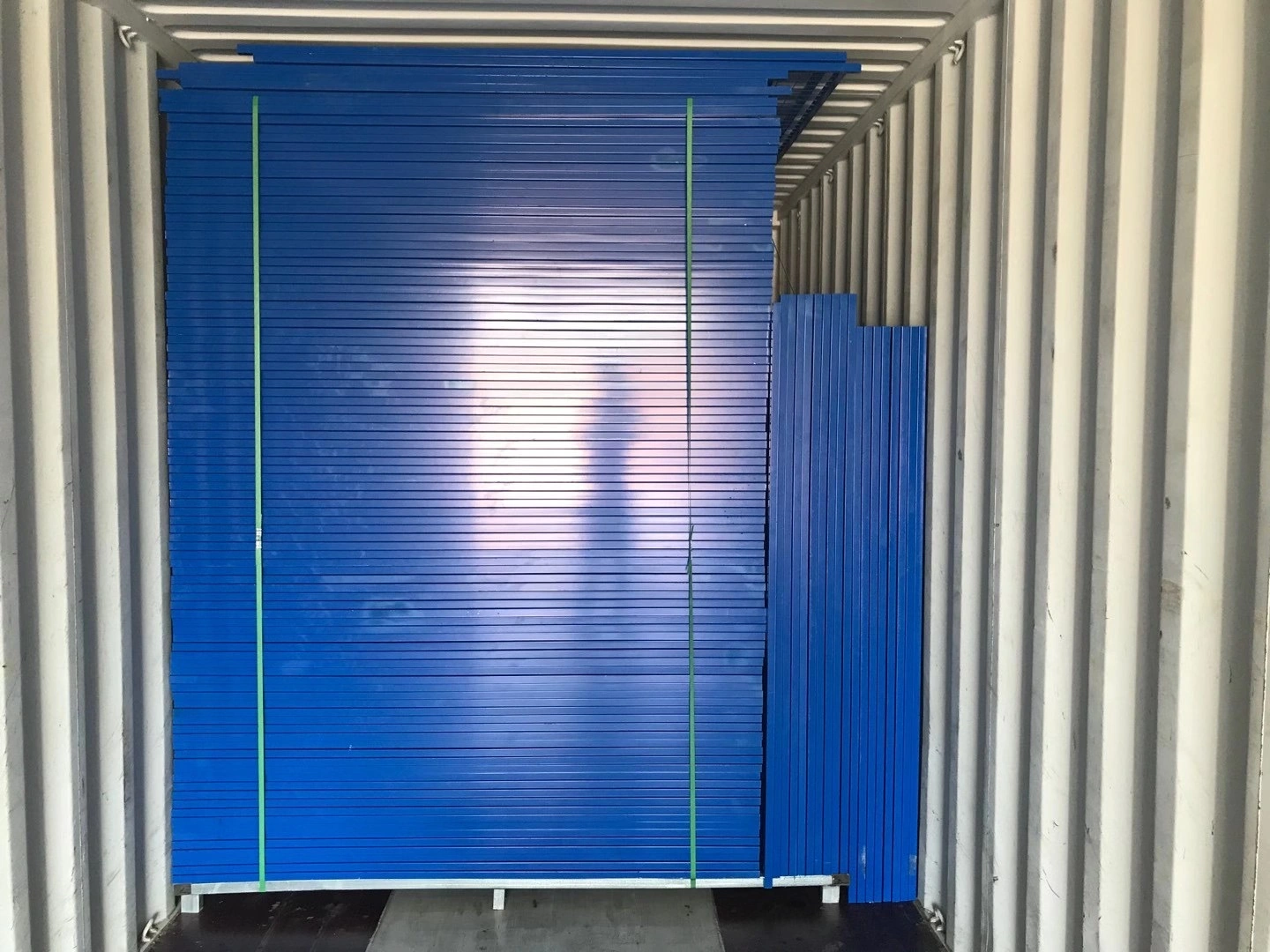
The Incoterm you choose shifts who carries that risk. FOB — the seller’s responsibility ends at loading onto the vessel — gives you the lowest landed cost but hands you the paperwork. DDP, delivered duty paid, shifts clearance and duty to the seller at a higher price; CIF, CFR and DDU sit between the two.
The practical play is hybrid. Hire panels for the first project while your first container is on the water, then switch to owned stock once it lands. Builders who import regularly keep a buffer of owned panels and hire only for genuine spikes, which keeps both lead-time risk and hire fees low.
Quality Control You Can Verify
Every supplier on earth claims quality. Verify it instead. On compliance, ask which edition of AS 4687 the panels are built to — 2022 is current — and ask for documentation, not a website badge. On the factory itself, ISO9001 certification and SGS audit status are checkable facts; DB Fencing holds both, and you can confirm the scope of an audit report against the factory name on your invoice before paying a deposit.
On materials, two checks separate real manufacturers from traders. First, coating: the hot-dip galvanised layer on this temporary fence line runs above 42 microns, so request a coating-thickness measurement report and compare the number. Second, weld integrity: ask for macro photos of the mesh-to-frame welds, since weld failure at the frame corner is what actually retires a panel. A factory audit checklist written for Anping suppliers covers both checks in detail.
After-Sales, Warranty and Replacement Parts
Here the hire yard genuinely wins. A bent panel gets swapped on the next delivery run, and the problem leaves your site the same week. Factory-direct warranty claims run through photographs, reports and freight timelines — slower, and worth knowing before you need it rather than after.
But after-sales is bigger than damage swaps. Fencing fleets live or die on components: feet crack, clamps walk off sites, bracing bends. A manufacturer that moulds its own plastic feet keeps replacement parts dimensionally consistent with the panels you already own, so a reorder in two years still fits. For a dealer reselling into the Melbourne market, that consistency is worth more than any per-panel discount, because mismatched components are what generate the warranty calls.
Which Route Fits Your Business
| Buyer type | Recommended route | Why |
|---|---|---|
| Builder, one short project | Hire yard | Speed and zero commitment beat any unit cost |
| Event company, seasonal spikes | Hire, with owned buffer stock | Crowd-control peaks need instant capacity |
| Multi-site builder, steady demand | Manufacturer direct | Repeat use repays the capital outlay quickly |
| Fence dealer or reseller | Manufacturer direct | Volume pricing and consistent components from one source |
My position: the fence between “hire makes sense” and “buy direct makes sense” sits exactly where fencing stops being a per-project cost and becomes a line of your business. For dealers and multi-site operators, that point arrives early, and a 100-panel starting order with 20-25 day production is a manageable first step. If you have never imported before, the process — specification, sampling, Incoterms, clearance — is walked through end to end in this guide to buying temporary fencing from China.
Conclusion
Local hire yards sell speed and convenience; manufacturers sell unit economics and control. The wrong choice is not a moral failing — it is a mismatch between your project pipeline and the supply model, and it shows up as either compounding hire invoices or a container arriving after the site has closed. Match the route to how often fencing appears in your work, and verify compliance with AS 4687-2022 and coating above 42 microns rather than trusting badges.
If your demand is repeat or you resell fencing in Victoria, gather your panel specifications and quantities and request a factory quote — at 24-hour turnaround on quotes and stock dispatch in 7 days, the numbers will tell you quickly which side of the fence you belong on.
Frequently Asked Questions
Is it cheaper to hire or buy temporary fencing in Melbourne?
Hiring wins for short, one-off projects; buying wins once fencing recurs across projects, because purchase cost is paid once while hire charges repeat weekly. The crossover depends on your hire rates and project pipeline, so model both before committing.
What is the minimum order for factory-direct temporary fence panels?
DB Fencing sets the minimum order at 100 panels, with payment terms negotiated per order. Bulk production runs 20-25 days, and stock items dispatch in 7 days.
How long does a factory-direct order take to reach Melbourne?
Production takes 20-25 days for bulk orders, or 7 days to dispatch for stock items. Ocean freight time on top depends on your shipping service and Incoterm, so plan a buffer into your programme.
What standard should temporary fencing meet in Australia?
Temporary fencing in Australia falls under AS 4687-2022, which superseded AS 4687-2007. Confirm which edition your project specification cites and ask the supplier for compliance documentation.
Can I get panels or components customised for my business?
Yes. The factory produces panels, feet, clamps, bracing and ballast in-house, moulding its own plastic feet, and quotes custom specifications within 24 hours.