Skip to content
Maxi bracing centres are usually set by copying a rule written for a smaller panel. A crew that has stayed 2400 mm lines for years says “every third panel” without thinking. On a 3300 mm maxi run, that sentence leaves 37.5 per cent more span behind each stay than the crew has ever been answerable for.
Two sheets on this site describe bracing and neither publishes a spacing. The maxi page lists a mid-bracing tube, 32 x 2.0 mm or 25 x 2.0 mm. The Econo stay specification gives a prop 1.5 m or 1.8 m high on 32 x 1.3 mm tube welded to a 600 x 290 x 6.0 mm steel plate, with two clamps and two plastic feet per stay. Neither line tells you how far apart the stays go.
Key Takeaways
- A maxi panel is 3300 x 2100 mm against the 2400 x 2100 mm format it is compared with: 37.5 per cent more length and more surface per sheet.
- Two parts share the word bracing on these pages: the mid-bracing tube in the panel, and the line stay propping the posts.
- The mid-bracing tube comes in two sizes. Read as round sections at the stated wall, 32 x 2.0 mm carries roughly 2.2 times the bending resistance of 25 x 2.0 mm.
- Neither the maxi sheet nor the Econo sheet publishes a stay spacing, a deflection limit or a wind load. Those are engineering numbers.
- A 120 m maxi run stands 37 panels. Stays every fourth, fifth, seventh or tenth panel mean 10, 8, 6 or 4 stays, each adding two feet and two clamps on the Econo hardware basis.
- Write centres in metres, not in panel counts. A rule copied from a 2.4 m line under-braces a 3.3 m line by 37.5 per cent, silently.
Two Parts Share the Word Bracing
Ask for “bracing” and the word covers two different items. If the enquiry does not name one, you are left asking afterwards which of the two was priced. Read them separately before you count anything.
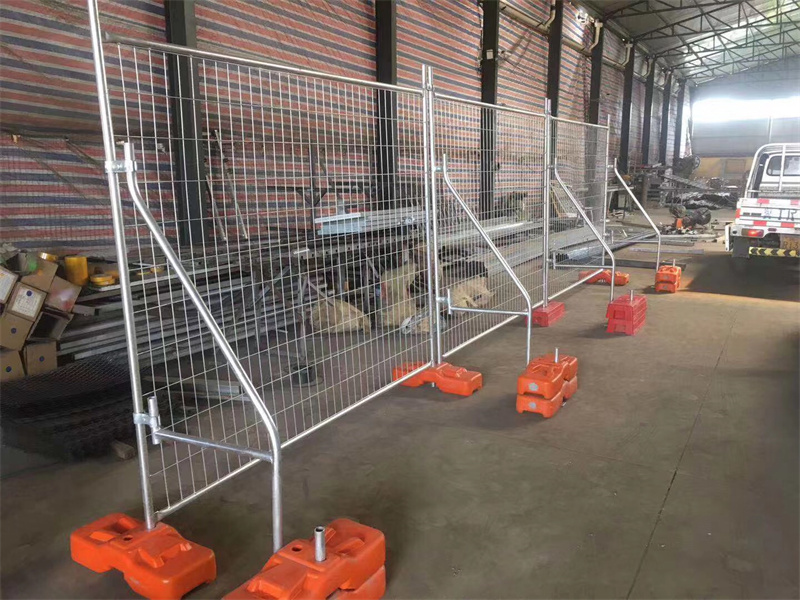
The first is part of the panel. The maxi panel page gives a 3300 by 2100 mm sheet on a 32 x 2.0 mm frame with 4.0 mm wire at 150 by 60 mm centres, and lists the mid-bracing as 32 x 2.0 mm or 25 x 2.0 mm support. On the sheet it is itemised inside the panel, and it is the element that stiffens the sheet itself rather than a prop between posts.
The second is part of the run. The Econo page itemises it as a stay: 1.5 m or 1.8 m high, 32 x 1.3 mm tube, a 600 x 290 x 6.0 mm steel plate full welded, galvanised to the site’s stated 42 micron figure, installed at very high winds, and requiring two clamps and two plastic feet each. The site’s temporary fencing specification table lists fence stays at 1500 mm and 1800 mm high. A second page describes bracing as additional support for a particularly long fence line or one exposed to strong winds. A 3300 mm panel line is exactly that long line.

What a 3300 Run Changes
Panel count is where formats change hands. Divide the line by the published length and round up: 120 m takes 50 panels at 2400 mm and 37 at 3300 mm. Your hire desk knows that part already, and it is worked through in Econo vs maxi panels. This article is about the stays you no longer place.
Every third panel means one support across 7.2 m on a 2400 mm line and across 9.9 m on a 3300 mm line. Same instruction, same crew, 2.7 m more unsupported run. The same factor sits in the sheet: 3.3 by 2.1 m is 6.93 square metres against 5.04 square metres, so each post carries 37.5 per cent more surface as well as 37.5 per cent more span.
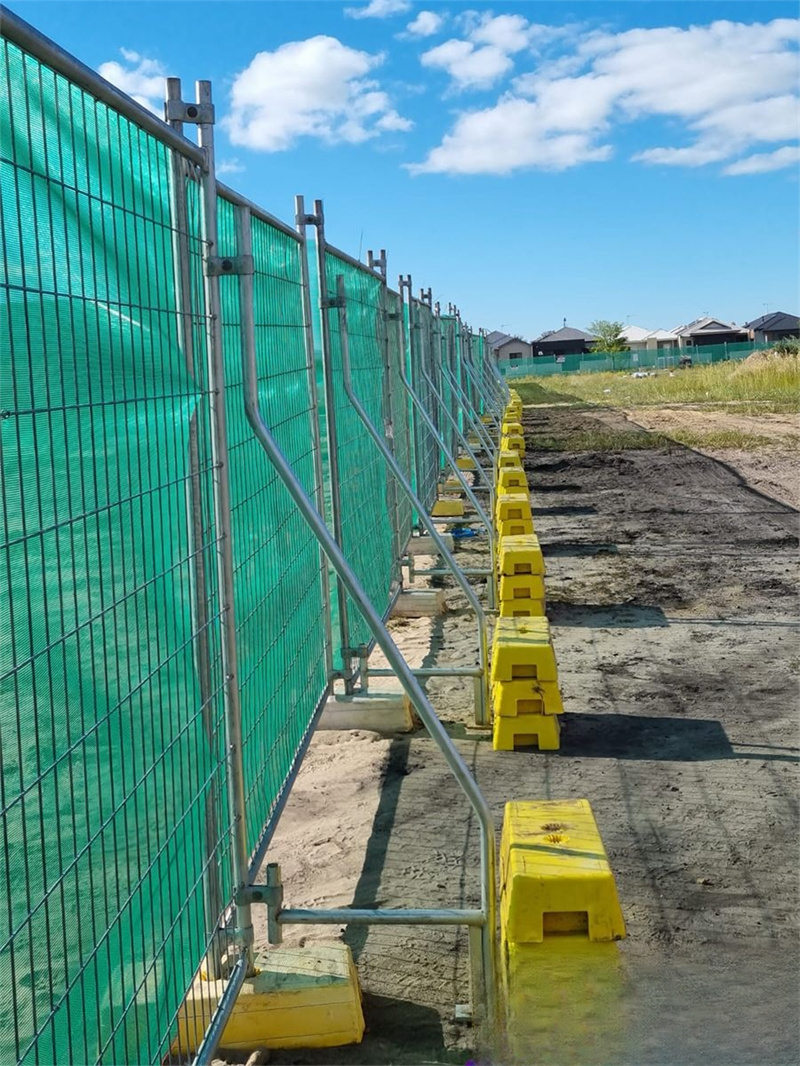
None of that is a load calculation. Neither sheet publishes a wind pressure, a span table or a maximum unsupported length, and the 42 micron line in the coating row is a galvanising figure with nothing to do with stability. The usable output is a counting rule: set centres in metres, then let the panel length tell you how many stays that is.
Reading Deflection Without a Number
Deflection is the word buyers use and the number nobody gives them, so treat it as a set of questions with one arithmetic step in the middle.
That step sits on the maxi page itself, which quotes the mid-bracing at two sizes without saying why a buyer would take one over the other. Using the outside dimensions and the 2.0 mm wall the page states, and reading each as a circular hollow section, the second moment of area comes out at about 21,300 mm to the fourth for 32 x 2.0 mm and about 9,600 mm to the fourth for 25 x 2.0 mm. That is roughly 2.2 to 1 in how much the brace tube resists bending, taken from two lines of one specification block. It is a buyer’s comparison of sections, not a deflection rating, and no published span or load makes it one.
The rest is absent by design. Movement of a stayed line depends on the span between stays, the load on the sheet, how the foot is restrained, and whether shade cloth is added, and no sheet checked here supplies those. One of this site’s fencing pages answers the question with shade cloth or heavier duty panels for stability in wind, which is a direction rather than a figure. Where wind regions themselves drive the bracing decision, that is worked through separately in this site’s cyclone-rated temporary fencing guide; this article stays on spacing.
Weight is the other place a quotation goes quiet. The stay plate is fully dimensioned at 600 x 290 x 6.0 mm, which is about 8.2 kg of steel at 7.85 t per cubic metre before the tube is added. Stay tube length is not published, and a raked prop is longer than the 1.5 m or 1.8 m height it reaches. Ask for the shipped mass per stay rather than inferring it from a height.
Turning a Rule Into an Order
Count once, on paper, before the container is costed. Below, 37 panels is the 120 m maxi run, and the hardware follows the Econo sheet’s published rule of two clamps and two feet for every stay; the maxi sheet itemises no foot or clamp figure, so treat the last column as an Econo-basis estimate and ask for the maxi equivalents.
| Stay every N panels | Centres on 3.3 m | Stays per 120 m | Extra feet and clamps |
|---|---|---|---|
| Every 4th panel | 13.2 m | 10 | 20 and 20 |
| Every 5th panel | 16.5 m | 8 | 16 and 16 |
| Every 7th panel | 23.1 m | 6 | 12 and 12 |
| Every 10th panel | 33.0 m | 4 | 8 and 8 |
Those stay counts round up from 37 panels. Placed strictly at every fourth sheet, ten stays is the conservative reading, and it is the count you should see priced.
Then put five lines on the order.
- Which bracing is priced: mid-bracing tube, line stays, or both. Name the mid-bracing size, 32 x 2.0 mm or 25 x 2.0 mm, and its section shape, so that the option delivered is the one you intended.
- Centres in metres: state the number, and the panel length it was divided by.
- Stay build: height 1.5 m or 1.8 m, tube 32 x 1.3 mm, plate 600 x 290 x 6.0 mm, and the shipped mass per stay.
- Hardware carried by each stay: two clamps and two feet per stay added to the run total, with the clamp hole pitch named.
- What the certification covers: both maxi sheets name AS 4687-2007 and one states the panels are tested and certified to it. Ask which assembly was tested, at what spacing, feet and screen configuration, because a certificate for a system is not a certificate for your layout.
If nobody has drawn the line and you still have to place the stays, put them where the load concentrates rather than on a fixed interval: at each gate return, at each corner, and on the returns either side of any sheet carrying signage or cloth. That is a working position rather than a published one, and it should be settled with your site engineer before it becomes a delivery note.
Frequently Asked Questions
How far apart should maxi panel stays go?
Neither the maxi sheet nor the Econo sheet publishes a stay spacing, so the number is yours or your engineer’s. Convert whatever rule you use into metres: every third panel is 9.9 m on a 3300 mm sheet and 7.2 m on a 2400 mm one.
Does the mid-bracing tube replace a stay?
No. The mid-bracing listed on the maxi page stiffens the panel; a stay props the post and carries the line load into a foot. The two sizes quoted for that tube are roughly 2.2 times apart in bending resistance if both are read as round sections, so say which one is priced.
What hardware does each stay add to a run?
Two clamps and two plastic feet, per the Econo stay specification on this site. The maxi page gives no foot or clamp figure, so confirm the maxi line separately before you count delivered quantities.
Is a longer panel harder to keep straight in wind?
Each 3300 x 2100 mm sheet presents 6.93 square metres against 5.04 for the shorter format, so there is more surface behind every support point. Neither sheet checked here publishes a wind load or a deflection limit for either size, and adding shade cloth changes the case again.
Conclusion
Maxi bracing centres are not on the specification sheet, which is precisely why they belong on your purchase order. A spacing habit carried over from a 2400 mm line quietly buys 37.5 per cent more unsupported run at every stay, and the panel, the foot and the clamp all inherit that span.
Set the centres in metres, name which bracing the price covers, and ask for the tested assembly behind the AS 4687 line. The company quotes within 24 hours and publishes a 7-day dispatch on stock items, so the five confirmations can come back before your next boundary is measured out.