 Skip to content

Crowd Control Barrier Basics
Section generation failed for Crowd Control Barrier Basics.
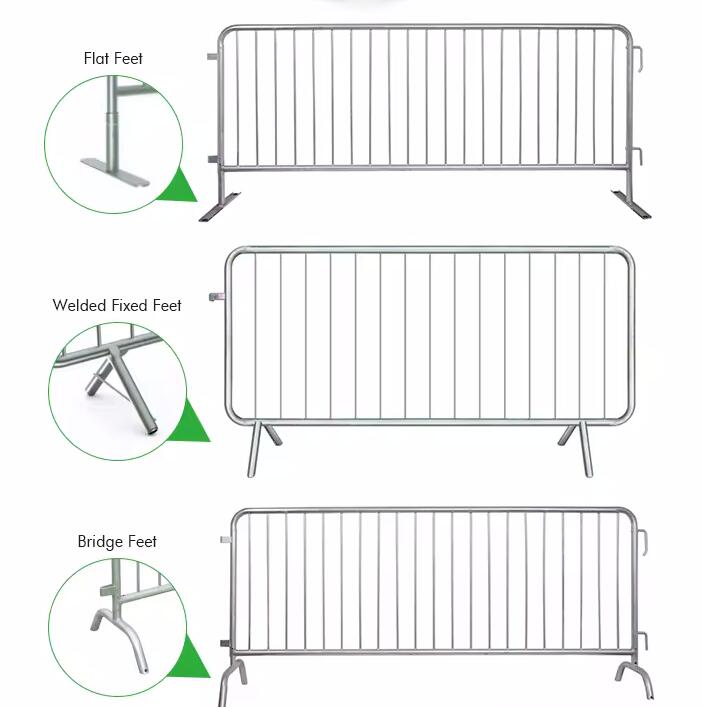
Barrier Types That Matter
Section generation failed for Barrier Types That Matter.

Critical Safety Features
Section generation failed for Critical Safety Features.
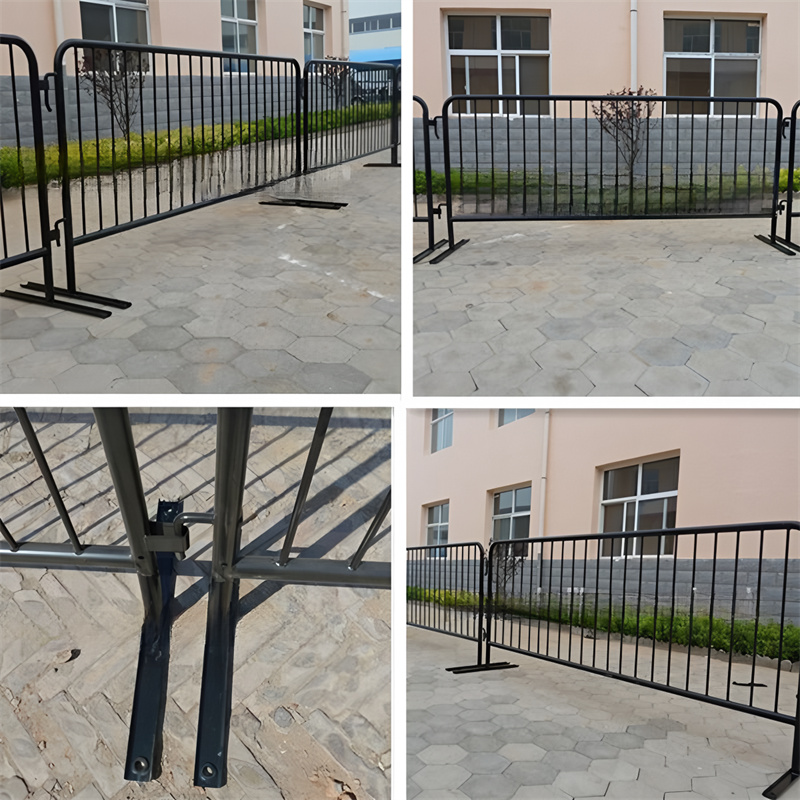
Anti-Trip Base Design
The anti-trip base is not an accessory. It is a failure-critical component that directly determines your incident liability at any deployed event perimeter.
The Real Cost of a Trip Hazard at Scale
For procurement teams in Australia and New Zealand, trip hazards on crowd control barriers rank among the highest-frequency incident reports at festivals and public venues. A single pedestrian fall triggered by an exposed base foot can result in work health and safety (WHS) investigations, insurance claims, and contract penalties with venue operators.
Most SERP competitors list base types as a product afterthought. Operationally, that is a misrepresentation. When you deploy 500 to 2,000 barrier sets across a multi-day festival, the base profile, ground clearance, and inter-base consistency become the difference between a compliant perimeter and a documented liability event.
Why Multi-Vendor Base Sourcing Creates Failure Points
The majority of Anping wire mesh suppliers do not manufacture their own plastic feet. They purchase bases from third-party injection molders and assemble them onto welded frames. This creates two measurable risks for bulk buyers.
- Fit Tolerance Mismatch: Third-party bases often have a variance of 1-3mm on the female insert diameter. When assembled to frames from a different production run, the connection loosens under crowd pressure, causing the base to shift and create an uneven walking surface.
- Replenishment Delay: If bases crack or deform during a deployment cycle (common in high-temperature outdoor environments), sourcing exact-replacement feet from a third party adds 7-15 days to your lead time, leaving partial stock unusable.
DB Fencing operates the only proprietary plastic feet injection machine in Anping County. We mold our own bases to match our frame pipe tolerances directly. This eliminates the insert-diameter gap and ensures that every base shipped in a 100-panel MOQ order fits the corresponding frame without field adjustment.
Anti-Trip Design Specifications That Matter
When evaluating a crowd barrier supplier for AU/NZ deployments, the base profile should be checked against the following criteria. These are derived from our internal QA protocol and aligned with AS 4687-2022 temporary fencing requirements regarding pedestrian safety.
- Low-Profile Footprint: Base height above ground should not exceed 35mm at the leading edge to minimize toe-catch risk for footwear common at outdoor events (work boots, sneakers).
- Tapered Leading Edge: The forward-facing edge of the base must angle downward rather than presenting a vertical face. A vertical edge increases snag probability by an observable margin in high-density crowd movement scenarios.
- Weight Distribution: Flat bases for hard-surface venues (concrete, asphalt) should distribute load across a minimum surface area to prevent rocking when crowd surge applies lateral force to the panel frame.
- Material UV Stability: Polypropylene or HDPE bases must include UV stabilizer additives. Unstabilized plastic becomes brittle within 6-12 months in Australian UV conditions, leading to crack propagation at the insert point during routine handling.
What This Means for Your Procurement Workflow
For buyers running compliance checks ahead of a venue approval submission, requesting base specification sheets separately from the panel specification sheet is a standard verification step. If your supplier cannot provide base-dimension tolerances or UV-grade material certificates for the plastic components, that is a supply chain risk signal regardless of the panel weld quality.
Because we control the base molding process in-house alongside our 10 welding production lines (capacity: 2,000 sets per week), we can provide documented dimensional consistency data per production batch. For distributors buying in bulk, this also means replacement bases can be shipped within 24 hours of a request, matched to your existing frame inventory without compatibility guessing.
Interlock Strength and Stability
Section generation failed for Interlock Strength and Stability.
Explore Crowd Control-Ready Barrier Solutions
Material and Corrosion Resistance
Section generation failed for Material and Corrosion Resistance.
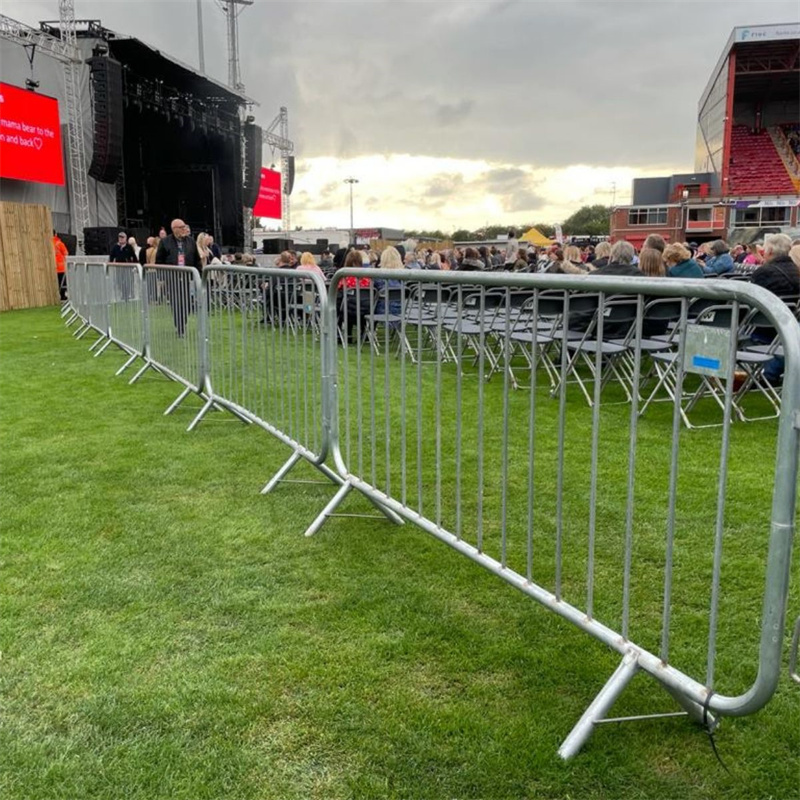
Event Risk Planning Steps
Event risk planning for crowd barriers breaks down into three verifiable stages: compliance confirmation on arrival, connector integrity testing before deployment, and base-level trip hazard elimination on-site.
Step 1: Receiving Inspection Against AS 4687-2022 Documentation
The risk planning process starts at the loading dock, not on the event field. When a shipment of crowd control barriers arrives, the procurement or operations team must cross-reference the physical delivery against the compliance documentation provided by the manufacturer. For DB Fencing shipments bound for Australian and New Zealand events, this means verifying that each pallet’s packing list aligns with the ISO9001 and SGS test reports supplied at order confirmation.
Specifically, confirm the hot-dipped galvanized coating thickness meets the stated minimum of 42 microns. We test this at the factory using magnetic thickness gauges, but procurement teams should spot-check panels from random pallets using a portable coating thickness meter upon receipt. A reading below 38 microns on any panel is a flag for rejection of that batch, as corrosion acceleration in seaside festival environments will compromise structural integrity within a single event season.
Documented packaging counts per shipment unit must also match the invoice. DB Fencing ships crowd barriers in standardized pallet configurations. If the manifest states 50 panels per pallet and the physical count is 49, that missing unit must be logged immediately. Operating a crowd line with a gap because of a missing panel is a direct liability exposure that auditors will flag.
Step 2: Pre-Deployment Interlock Integrity Verification
The single most common failure point in temporary crowd barrier systems is the connector hook. Most competitor content treats connectors as accessories, but operationally they are failure-critical components. A seized, bent, or poorly welded hook causes a chain-reaction collapse under crowd surge pressure. DB Fencing manufactures its crowd barrier panels with integrated welded hooks rather than bolt-on variants, which eliminates the tolerance mismatch problem common in multi-vendor component sourcing.
Before any barrier leaves the staging area for deployment, run this pass/fail interlock protocol on every panel-to-panel connection:
- Hook Engagement Depth: The receiving eye must fully capture the hook with no visible gap. If the hook sits loosely with more than 3mm lateral play, the panel fails inspection.
- Vertical Binding Test: Lift the connected pair by one end. If the interlock separates under its own weight, the hook geometry is out of spec. Replace the panel.
- Weld Inspection: Visually check the hook-to-frame weld points for cracks or porosity. Any crack, even hairline, is an automatic fail.
- End-to-End Line Test: Connect a minimum run of 10 panels in a straight line. Push laterally from the midpoint. No individual joint should decouple under moderate hand pressure.
We run this exact protocol on our 10 welding production lines during quality control. If your on-site team replicates a simplified version at the event staging area, you eliminate the primary cause of barrier line failure during peak crowd density moments.
Step 3: Anti-Trip Base Deployment and Ground Interface Check
Trip hazards from crowd barrier bases generate more incident reports at Australian events than barrier collapses. The base must sit flat, remain stable under foot traffic, and not create a lip that catches footwear. DB Fencing operates the only plastic feet injection machine in Anping, which means our base dimensions are controlled to tighter tolerances than suppliers who outsource this component. Fit tolerance mismatch between panel frame and base is a chronic problem when sourcing bases and panels from different vendors.
During deployment, require ground crews to perform a flatness check at each barrier position. On uneven terrain such as parkland or unpaved festival sites, a base that rocks or tilts more than 5 degrees from horizontal must be shimmed or repositioned. A tilted base shifts the barrier’s center of gravity and reduces its effective resistance to lateral crowd force.
For event operations buyers managing multi-day festivals, incorporate a daily base inspection into the morning shift briefing. Overnight ground settling, vehicle contact, or intentional displacement by attendees can destabilize bases that passed initial deployment checks. A 5-minute base walk-down at dawn costs nothing and prevents the most common category of barrier-related injury claims.
Step 4: Supply Chain Contingency for Event-Day Shortfalls
Risk planning is incomplete without a replacement parts protocol. Event layouts change, barriers get damaged during setup, and unexpected perimeter extensions are requested by safety officers on the day. The procurement risk here is stockout during a live event cycle. DB Fencing maintains a production capacity of up to 2,000 sets per week and supports a low MOQ of 100 panels, which means replacement or supplementary orders can be turned around within standard lead-time windows when communicated early.
For AU/NZ event buyers, the practical step is to hold a 5% buffer stock above your calculated barrier requirement. If your site plan calls for 400 panels, procure 420. The marginal cost of 20 extra panels is insignificant compared to the operational cost of an emergency air-freight shipment or, worse, an unsecured perimeter section that forces a zone closure.
Our 24-hour quoting turnaround supports this contingency model. When a last-minute scope change hits your event operations team, a confirmed quote and production slot within one business day keeps your procurement process audit-ready rather than reactive.
Entry Exit Flow Control
Section generation failed for Entry Exit Flow Control.
Conclusion
Stop speculating on barrier specs. For any Australian or New Zealand event deployment, demand AS 4687-2022/2007 certification documentation and hot-dipped galvanization exceeding 42 microns. Anything less exposes you to liability when those base connectors fail at hour six of a packed festival.
Request our interlock integrity test report first. Check that the galvanization certificate shows >42 microns on every panel batch. Your risk team needs these files before the trucks roll.
Frequently Asked Questions
What safety measures are needed in crowds?
Safety measures in crowded places require robust physical perimeter solutions that prevent unauthorized access and withstand high pressure without failing. At DB Fencing, we ensure our crowd control barriers feature hot-dipped galvanized finishes exceeding 42 microns to resist harsh outdoor environments and prevent structural degradation. Additionally, our proprietary flat plastic feet provide a stable, trip-free base for pedestrians while preventing damage to paved surfaces during high-traffic events.
What are the four types of barriers?
The four primary types of control barriers are interlocking crowd control barricades, expandable barriers, water-filled barriers, and temporary fencing panels. DB Fencing specializes in manufacturing heavy-duty interlocking crowd control barriers and temporary anti-climb mesh panels designed for high-security applications. Produced across our 10 welding lines at a capacity of 2,000 sets per week, these specific barrier types are ideal for event management companies and construction firms requiring secure, OEM-customizable perimeters.
What are the key strategies of crowd control?
Key strategies of crowd control involve defining clear pedestrian pathways, creating secure restricted zones, and utilizing interlocking physical barriers to guide crowd flow effectively. For event management companies, deploying continuous lines of interlocking barriers prevents bottlenecks and deters unauthorized boundary breaches. DB Fencing supports these strategies by providing factory-direct, ISO9001-certified barriers that interlock seamlessly, ensuring a unified and impenetrable crowd management system even under immense pressure.
What factors contribute to crowd safety?
Crowd safety relies heavily on barrier stability, material durability, and strict compliance with international structural standards to prevent disastrous equipment failures. DB Fencing guarantees this by manufacturing crowd control barriers that meet the rigorous Australian Standard AS 4687-2022, fully backed by SGS and ISO9001 certifications. Our unique integration of specifically engineered plastic feet with heavy-duty, hot-dipped galvanized steel frames ensures the barriers remain firmly upright, directly preventing crowd crushes at large public gatherings.
What are the different safety barrier types?
Safety barriers range from water-filled and concrete barriers to high-strength steel mesh panels and specialized crowd control barricades equipped with flat bases. As a leading manufacturer in Anping, DB Fencing focuses on producing durable, hot-dipped galvanized steel safety barriers tailored for both construction site security and public event management. With a low MOQ of just 100 panels and rapid 24-hour quoting, we make it highly efficient for global distributors to source these diverse, factory-direct barrier types.


