Skip to content
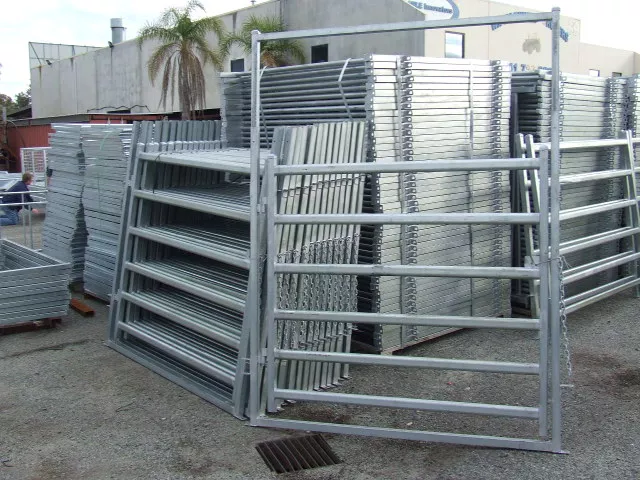
A drafting race fails at its corners, not at its rails. Buyers specify the panel carefully, then lay the race out with whatever the layout leaves over. The module is fixed: the Australian cattle panel this site builds is 1.8 m × 2.1 m, six 80 × 40 mm oval rails at 1.6 mm wall carried on a 50 × 50 mm square post frame. Everything about width, turning angle and holding capacity is a decision about which panels go where.
Flow is the part no order form carries. A mob moves according to what it can see and where it can safely put its feet, and a race built from the right panel with the wrong geometry will still back up at a bend. Here is how to lay one out from a fixed module, and what to have confirmed in writing before the panels ship.
Key Takeaways
- A fixed module decides the shape: 1.8 × 2.1 m panels, six oval rails, square post frame. A race is a polygon of those edges, so it closes on whole panels or it ends in a cut one.
- Joints are pre-decided: the stock panel page publishes two sets of double lugs and two single lugs per panel with 16 mm pins (per the product page), which constrains how a corner can meet.
- Width comes from panel length: the stock side publishes 2.1 m and 2.8 m lengths (per the product page).
- Sightline beats signage. The rails are open by design — the page calls them large, easily visible cross rails — so whatever stands at the end of the race is part of the geometry.
- Legs can cancel a good layout: loop and square or triangle legs behave differently on soft ground, and a race that sinks out of square stops drafting.
Count Corners Before You Count Metres
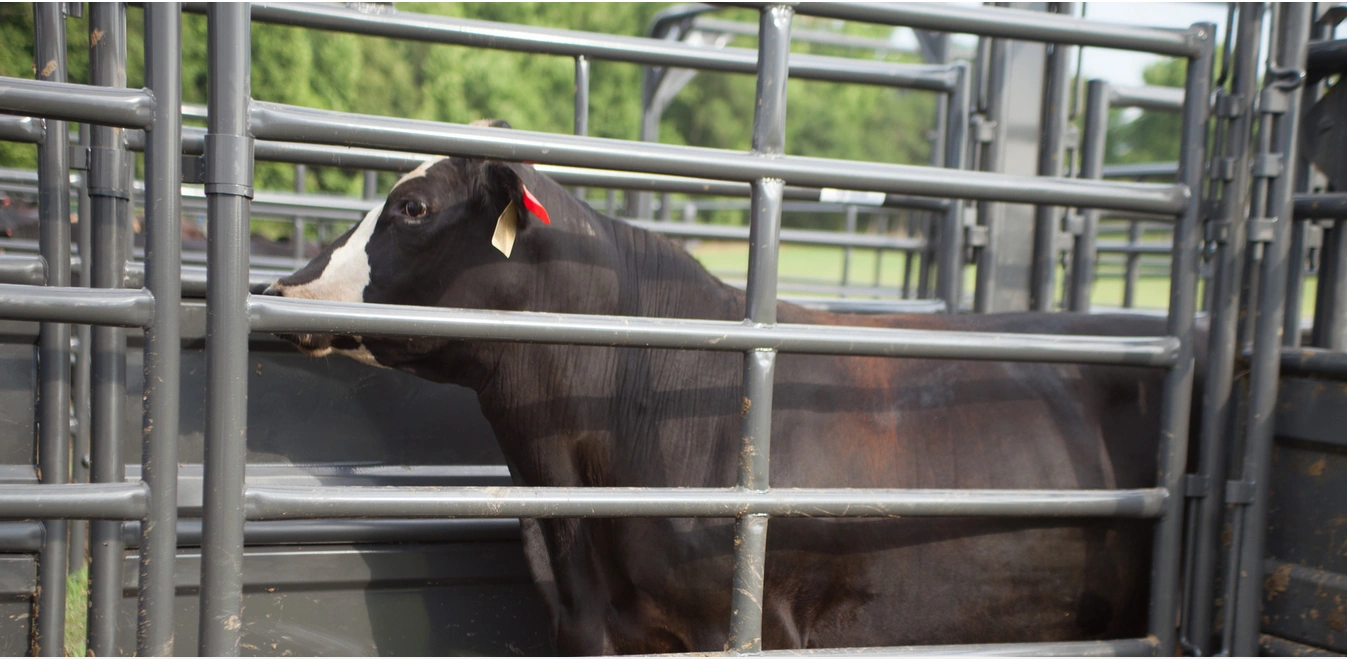
Start at the corner and work outward, because the corner is where a modular yard runs out of freedom. Straight panels meet at an angle set by panel length and by where the lugs sit, so a bend built from straight sections is a polygon, not a curve. A layout that closes on whole panels is planning. One that does not ends in a cut section on site, putting an uncoated edge back into a line bought galvanised. Panel selection and per-pen arithmetic have their own guide — the cattle panel sizing guide — and this one is about the shape those panels are dropped into.
The published joint shows how little room that leaves. The stock panel page describes two sets of double lugs and two single lugs welded to each panel, taking 16 mm pins, with the line ready to reposition seconds after a pin goes in (per the product page). Read that as a geometry constraint before it reads as a labour saving. Lug positions are fixed at the factory, so the stance between adjoining panels is largely fixed too, and a corner wanting a different stance wants a different fitting. Nothing published here lists a corner bracket or angle connector, so ask whether the yard is expected to turn on standard panels alone.

Width: What Makes a Race Single-File
Race width is not a free variable. Two parallel lines of panels define it, and a straight run only gives you the lengths you bought — 2.1 m on the cattle panel, or the 2.8 m length the stock panel page publishes (per the product page). Anything between them is a cut panel and the coating problem that comes with it.
Height changes the same decision from the other side. The cattle panel is built 1.8 m tall, while the stock panel page publishes a 1.0 m option (per the product page). A low race lets an animal see the yard beyond the exit, a tall one shuts that view off. Which suits depends on the stock and on what normally holds them, and no published figure settles it. The honest test is two panels on a yard that already works, watched with the mob your crew handles.
One position worth stating: spend on the corner and the exit before the rail. Extra panels to sweep a bend, and a gate to widen the mouth where animals bunch, usually move more stock through a day than a heavier section in a straight that already works.
The Bend a Mob Can Read
At a bend, stock decide on what they can see ahead, and what they see comes through the rails. The page describes elongated galvanised oval pipes forming large, easily visible cross rails (per the product page); no decision distance, field of view or handling rate is published for them anywhere on the site. That openness can help in a holding pen and can work against a race, depending on what stands at the exit.
The consequences are layout ones. A sharp polygonal corner presents a wall of rails at the point where an animal is deciding, and a drain, a shadow or a standing puddle crossing the race sits in the same sightline. On rail choice, the pages present round pipe, square tube and oval as differing in protection against stock bruising (per the product page), without publishing an impact figure, a wall-thickness comparison or bruising data to rank them by. That is a conversation for the factory and for the stockman who lives with the result.
Before You Order: What To Put In Writing
The panels only get you so far on paper. The range covers perimeter work, and the livestock list extends to panel gates and a crush ramp, whose internal specification and integration with a yard are a separate exercise — the cattle crush ramp guide takes that on. No yard bill of materials is published here at all, so the layout drawing has to come from whoever is designing the facility rather than from a product page.
Ground condition decides whether a laid-out race stays that way. The coating figure published for this line is 18–28 µm (per the product page), which belongs to the galvanised livestock range and is a different bracket from the outdoor and temporary fencing line — the two should not be compared across products. Below that, loop legs and square or triangle legs behave differently on soft ground, and that difference is settled per site rather than from a catalogue.
| Item | On the page | Ask for |
|---|---|---|
| Corner connector | Not listed | Whether bends run on standard panels |
| Lug centres | Pin size only | A spacing drawing, so width closes |
| Layout sign-off | Not offered | Who draws and approves the yard |
| Order floor | 100 panels | Whether gates and ramps count |
The last row surprises buyers. A small working yard sits well under the published 100-panel order floor, and the site does not say whether gates, ramps and pins count into it or sit on top. With ten welding lines running at up to 2,000 sets a week, 7-day stock dispatch and 20–25 days for a bulk run, the question is how your layout gets made up to the minimum — and what arrives if it cannot be.
Frequently Asked Questions
How wide should a drafting race be?
No width is published, and the right answer depends on the stock rather than the panel. What the catalogue fixes is the module: races close on 2.1 m or 2.8 m lengths, so choose a width you can build with whole panels and test it before ordering a fleet.
Can a portable yard be left standing all season?
The panels are portable by design, but nothing published states a service life, a ground-contact test or a footing requirement. On damp ground, leg choice and drainage matter more than rail section, and both should be confirmed against your site.
Are oval rails better than square tubes in a race?
The pages offer round, square and oval rails and describe the difference as a degree of protection against stock bruising, without publishing a figure for any of them. Choose on what you can observe, then ask which sections are stocked.
Does the site publish a standard for livestock yards?
AS 4687 appears here as the temporary fencing standard, not a yard layout standard, and no clause values are quoted for handling facilities. If an authority or insurer expects something specific, confirm it before the panels arrive.
Conclusion
A race is a shape before it is a product. The panels arrive identical, and the yard either closes on whole modules with a bend the stock can read, or it does not — and no catalogue line will catch that for you.
Draw the corner first, settle lug spacing against the width you actually want, and put those four unanswered rows in front of the factory with your layout attached. That sequence is what turns a container of 1.8 × 2.1 m panels into a yard that drafts without a fight.