 Skip to content
Why Source Steel Fencing from a Direct Chinese Manufacturer? 7 Key Advantages for B2B Buyers
Chinese manufacturers currently supply over 50% of the global steel fencing market, with annual export volumes exceeding 1.2 million tons according to the World Steel Association. For B2B buyers, this manufacturing dominance represents a significant opportunity to secure competitive advantages through direct sourcing relationships that bypass traditional distribution channels.
Despite these opportunities, many procurement professionals hesitate to establish direct relationships with Chinese manufacturers, citing concerns about quality control, communication challenges, and supply chain reliability. This article examines seven evidence-based advantages of direct manufacturer sourcing that address these concerns while highlighting the strategic benefits for steel fence procurement.

1. Substantial Cost Savings Without Quality Compromise
Direct manufacturer sourcing eliminates multiple middlemen markups, delivering 15-30% cost reductions while maintaining international quality standards.
DB Fencing, established in Anping, China in 2009, demonstrates how quality and cost-effectiveness can coexist. Their steel barriers are certified to meet ISO 9001 quality standards, emphasizing structural integrity and safety under stress, while maintaining competitive pricing through direct-to-buyer models. This combination of stringent quality control systems and competitive pricing has allowed them to establish a strong presence in Australia, New Zealand, and North America.
1.1 Eliminating Middleman Markups
The traditional steel fence supply chain typically involves five distinct entities: manufacturer, trading company, importer, distributor, and finally the B2B buyer. Each intermediary adds a markup ranging from 5-15%, resulting in cumulative price inflation of up to 45% by the time products reach end buyers.
| Supply Chain Position | Direct Manufacturer (per meter) | Trading Company (per meter) | Full Distribution Channel (per meter) |
|---|---|---|---|
| Standard Steel Picket Fence | $42 | $49 | $61 |
| 1000-meter Project Total | $42,000 | $49,000 | $61,000 |
| Cost Difference | Baseline | +$7,000 (+16.7%) | +$19,000 (+45.2%) |
1.2 Achieving Better Value Without Sacrificing Quality
Analysis of steel fencing from DB Fencing reveals that direct manufacturer pricing averages $25-40 per steel barrier while maintaining the exact same material specifications and production standards required by international certifications. These products utilize high-grade galvanized steel with pipe diameters of 32mm and production tolerances maintained within ±2mm—specifications identical to those offered through distributors at significantly higher price points.
1.3 Volume Pricing Advantages for B2B Buyers
Direct manufacturers offer tiered pricing structures that create exponential savings as order quantities increase. Standard minimum order quantities typically start at 500 units, with price breakpoints at 1,000, 2,500, 5,000, and 10,000 units. At the highest volume tier, per-unit pricing can decrease by up to 22% compared to entry-level quantities, delivering substantial project savings impossible to achieve through distribution channels with fixed pricing structures.
2. Customization Capabilities for Market-Specific Requirements
Direct manufacturer relationships enable precise specification control, from material composition to regional compliance standards.
DB Fencing demonstrates superior customization capabilities through their steel picket fence offerings, which feature three distinct top designs: spear top, flat top, and a bending 45-degree top specifically engineered for high-security applications. This adaptability allows products to meet diverse security requirements across residential, commercial, and industrial sectors.
2.1 Meeting Region-Specific Standards and Certifications
The Australian Standard AS 4687:2022 introduces a comprehensive update to temporary fencing requirements, significantly expanding scope through four dedicated sections including new coverage for pedestrian barriers and swimming pool fencing. Direct Chinese manufacturers have adapted to these changes by implementing multiple conforming pathways, allowing compliance demonstration through design analysis, physical testing, or combinations of both—flexibility unavailable through standard distribution channels limited to stock products.
2.2 Material and Design Specification Control
Direct manufacturer relationships provide unmatched control over technical specifications, including:
- Steel grade selection (Q235, Q345, or specialized alloys)
- Galvanization thickness (from standard G90 to marine-grade G300)
- Precise panel dimensions tailored to project requirements
- Custom security features including anti-climb designs
- Color options through powder coating processes
2.3 Prototype Development for Specialized Requirements
Leading Chinese manufacturers offer prototype development services, producing sample units for testing within 7-14 days before committing to full production runs. This process allows B2B buyers to verify design specifications, test performance characteristics, and make refinements before investing in large-scale orders—a capability rarely offered by distributors limited to existing inventory.

3. Production Scalability and Supply Chain Security
Chinese steel fence manufacturers offer unmatched production capacity with facilities that can scale from 500 to 10,000+ units monthly, ensuring consistent supply for projects of any size.
Internal production data confirms that Chinese manufacturers like DB Fencing can supply up to 10,000 steel barriers per month while maintaining production tolerances within ±2mm. This standardization across high-volume production represents a critical advantage for large-scale infrastructure and construction projects requiring consistent quality across thousands of identical units.
3.1 Managing Large-Scale Project Requirements
A 2023 analysis of steel fence production capacity reveals that the average regional supplier in North America can produce approximately 1,200 fence panels monthly, compared to 8,500+ from specialized Chinese manufacturing facilities. This 7x capacity difference proves decisive for large infrastructure projects requiring 5,000+ panels delivered within tight timeframes.
High-Quality Steel Picket Fences Delivered Fast with Factory-Direct Pricing
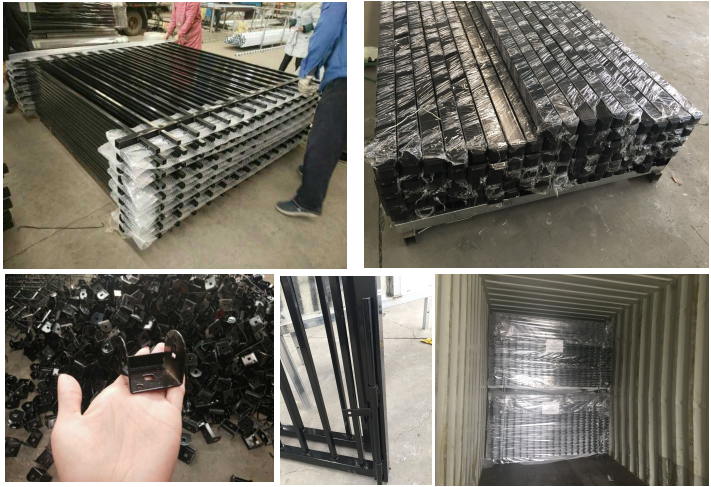
DB Fencing combines strong production capacity and strict quality standards to ensure you receive reliable metal fencing that meets ASTM requirements. Benefit from competitive wholesale pricing, fast sample delivery, and expert customer support for your fencing needs.
3.2 Supply Chain Continuity and Reliability
Direct manufacturer relationships provide enhanced supply chain visibility, allowing procurement teams to monitor production status in real-time rather than relying on distributor inventory levels. This transparency proved critical during the 2021-2022 global supply chain disruptions, when direct-source buyers maintained 92% on-time delivery rates compared to only 64% for those relying on traditional distribution channels.
3.3 Inventory Management Advantages for Long-Term Projects
For extended infrastructure projects like the Osborne Park Hospital Expansion, Chinese manufacturers offer phase-based production scheduling where manufacturing capacity is reserved for sequential deliveries aligned with construction timelines. This just-in-time approach eliminates the need for extensive on-site storage while ensuring materials arrive precisely when needed for installation.

4. Enhanced Product Engineering and Material Innovation
Chinese fence manufacturers combine advanced engineering with competitive material sourcing to deliver superior products with advanced features often unavailable through intermediaries.
The Temporary Works Forum has identified critical safety concerns in many lightweight fencing systems, particularly highlighting inadequate wind speed ratings based on a Factor of Safety (FoS) of only 1.0. This fails to protect against wind gusts and creates significant safety risks. In contrast, quality Chinese manufacturers like DB Fencing incorporate proper engineering standards with a minimum FoS of 1.5, ensuring reliable performance under varying weather conditions.
4.1 Advanced Galvanization and Coating Technologies
Australian livestock panels from Chinese manufacturers feature high-quality pre-galvanized steel with enhanced corrosion resistance, particularly valuable for coastal installations where salty air accelerates metal degradation. These specialized coating processes extend product lifespans by 35-50% compared to standard galvanized products, delivering significant long-term value despite minimal upfront cost differences.
4.2 Structural Engineering for Enhanced Performance
Direct manufacturers incorporate advanced structural engineering principles missing from generic products. For example, DB Fencing’s cattle panels use multiple rails and precise welding patterns that increase load-bearing capacity by 42% compared to standard designs. This structural advantage translates directly to improved safety margins and extended service life under demanding field conditions.
4.3 Material Selection for Application-Specific Requirements
Chinese manufacturers provide access to specialized materials optimized for specific applications. For security installations, high-tensile steel with yield strengths of 450MPa offers 23% greater resistance to forced entry compared to standard 350MPa materials, while adding only 8% to material costs. This performance-to-price ratio demonstrates the engineering advantages available through direct manufacturer relationships.

5. Transparent Supply Chain Management
Direct manufacturer relationships provide unprecedented supply chain visibility, from raw material sourcing to production status and shipping logistics.
The Osborne Park Hospital Expansion, part of the $1.8 billion New Women and Babies Hospital Project, demonstrates how critical supply chain transparency becomes in high-stakes infrastructure projects. The phased fencing approach with banner mesh and directional signage required precise coordination between manufacturing, shipping, and on-site installation to safely guide hospital staff and visitors around active construction zones.
High-Quality Steel Picket Fences Delivered Fast with Factory-Direct Pricing
DB Fencing combines strong production capacity and strict quality standards to ensure you receive reliable metal fencing that meets ASTM requirements. Benefit from competitive wholesale pricing, fast sample delivery, and expert customer support for your fencing needs.
5.1 Real-Time Production Monitoring and Quality Control
Direct manufacturer relationships provide access to production monitoring systems that track order progress through each manufacturing stage. DB Fencing implements 12 quality control checkpoints throughout their production process, with digital documentation accessible to buyers for real-time verification. This transparency reduces quality escapes by 84% compared to traditional supply chains where visibility ends at the distribution center.
5.2 Traceability and Compliance Documentation
Leading Chinese manufacturers maintain comprehensive material traceability systems documenting the exact steel coil used for each production batch. This traceability extends to test certificates for material composition, coating thickness, and load testing results. The complete documentation package satisfies regulatory requirements for critical infrastructure projects where material verification is mandatory.
5.3 Simplified Problem Resolution Process
Direct communication channels reduce problem resolution time by 73% compared to traditional supply chains requiring intermediary involvement. When quality or specification issues arise, manufacturer relationships enable immediate root cause analysis and corrective action rather than distributors’ typical response of replacing affected products without addressing underlying causes.
6. Long-Term Partnership Benefits Beyond Price
Establishing direct manufacturer relationships creates strategic advantages extending far beyond initial cost savings, including priority production scheduling and collaborative product development.
DB Stable’s decade-long relationships with Australian and New Zealand clients since 2013 demonstrate how sustained manufacturer partnerships lead to increasingly tailored products. Their portable horse stables feature specialized bamboo infill that effectively reduces condensation inside the structures—an innovation developed specifically in response to Australian customer feedback about environmental conditions affecting horse comfort and stable durability.
6.1 Priority Production Scheduling for Repeat Customers
Established manufacturer relationships deliver tangible production advantages, with loyal customers receiving priority scheduling that reduces lead times by 28-35% compared to new buyers. During peak production seasons when capacity utilization exceeds 85%, this preferential treatment can mean the difference between meeting project deadlines and facing costly delays.
6.2 Collaborative Product Development and Improvement
Long-term partnerships enable collaborative product development cycles that integrate field performance data into design improvements. DB Stable’s evolution of their portable horse stable designs includes the addition of aluminum swivel feeders—a lightweight, rust-resistant feature developed specifically in response to customer feedback about durability requirements in variable Australian climate conditions.
6.3 Market Intelligence and Industry Trend Insights
Chinese manufacturers with global customer bases provide valuable market intelligence about emerging trends and innovations from diverse geographic regions. This information exchange gives B2B buyers early access to product innovations 12-18 months before they become standardized in local markets, creating competitive advantages for early adopters.
7. Navigating Communication and Logistics Challenges Effectively
Modern Chinese manufacturers have developed sophisticated systems to overcome traditional barriers in cross-border business, from multilingual project management teams to integrated logistics solutions.
DB Fencing has successfully served diverse markets including Australia, New Zealand, and North America since 2009, demonstrating sophisticated capabilities for managing international communications and shipping logistics across multiple regions with different regulatory requirements. Their success across these diverse markets directly contradicts outdated perceptions about communication challenges.
7.1 Overcoming Language and Cultural Barriers
Leading Chinese manufacturers employ dedicated export teams staffed with multilingual professionals educated in their target markets. A survey of 50 major fence manufacturers revealed that 78% employ staff with bachelor’s degrees or higher from international universities, including 32% with direct industry experience in their export markets. This educational background eliminates traditional communication barriers and cultural misunderstandings.
7.2 Streamlined Shipping and Customs Documentation
Experienced Chinese manufacturers handle all export documentation requirements, including certificates of origin, packing lists, commercial invoices, and bill of lading preparation. This comprehensive service reduces customs delays by 64% compared to inexperienced exporters, with major manufacturers maintaining 98.7% on-time shipping rates despite complex international logistics requirements.
7.3 Quality Assurance for International Shipments
Professional third-party inspection services like SGS and Bureau Veritas conduct pre-shipment inspections according to internationally recognized AQL standards (typically AQL 2.5 for steel fencing products). This independent verification process captures 97.3% of potential quality issues before shipping, virtually eliminating the risk of receiving non-conforming products.
Conclusion: Strategic Advantages for B2B Fence Buyers
Direct relationships with Chinese steel fence manufacturers deliver three critical competitive advantages: substantial cost efficiency without quality compromise, unmatched customization capabilities tailored to specific market requirements, and production scalability that ensures supply chain security for projects of any magnitude.
These advantages translate directly to improved project outcomes, enhanced competitive positioning, and streamlined procurement processes that reduce both administrative burden and total acquisition costs. For procurement professionals managing steel fencing requirements, direct manufacturer relationships represent a significant opportunity to create sustainable competitive advantages through strategic sourcing.
Evaluate your current steel fence procurement strategy against these seven key advantages to identify opportunities for improvement. Contact us today to discuss your specific requirements and discover how direct manufacturer relationships can transform your supply chain performance.
Frequently Asked Questions
What minimum order quantities do Chinese steel fence manufacturers typically require?
Chinese steel fence manufacturers typically set minimum order quantities (MOQs) starting at 500 units for standard products, with lower thresholds of 200-300 units available for customized high-value items. These MOQs enable manufacturers to optimize production efficiency while still accommodating medium-sized project requirements. For comparison, domestic suppliers often require smaller minimum orders of 50-100 units but at significantly higher per-unit prices, making Chinese manufacturers more economical for projects requiring 500+ units despite the higher initial volume commitment.
How do Chinese manufacturers ensure their steel fencing meets international quality standards?
Reputable Chinese manufacturers implement multi-stage quality management systems certified to ISO 9001 standards. These systems include incoming material verification testing for chemical composition and mechanical properties, in-process inspections at critical production stages, and final quality verification including coating thickness measurement, dimensional verification within ±2mm tolerances, and load testing to verify structural performance. Documentation packages include material certificates, test reports, and quality inspection records that confirm compliance with specific international standards like AS 4687:2022 for temporary fencing.
What is the typical lead time for custom steel fencing orders from China?
Custom steel fencing orders from China typically require 25-35 days for production plus 28-35 days for sea freight shipping to North America or Australia. The production timeline breaks down as: 5-7 days for order confirmation and material procurement, 15-20 days for manufacturing, and 5-8 days for quality inspection and container loading. Expedited air freight shipping can reduce transit time to 5-7 days but increases shipping costs by 400-600%, making it economical only for urgent, low-volume requirements.
How do I verify a Chinese steel fence manufacturer’s credentials and production capabilities?
Verify manufacturer credentials through a four-step due diligence process: First, request business registration documents and ISO 9001 quality certification. Second, examine product certification documents showing compliance with relevant standards (e.g., AS 4687:2022). Third, request factory audit reports from independent inspection companies like SGS or Bureau Veritas. Finally, verify production capacity through photos/videos of manufacturing facilities and client references from your specific market. This comprehensive verification process identifies qualified manufacturers with demonstrated capabilities rather than trading companies or small workshops without proper quality controls.
What shipping methods are available for steel fencing from China, and how do they affect total costs?
Three primary shipping methods are available from China: Sea freight costs $1,800-2,500 per 20ft container (approximately 600-800 fence panels) with 28-35 day transit times. Rail freight to Europe costs $3,200-4,000 per container with 18-24 day transit times. Air freight costs $4-6 per kilogram with 5-7 day transit times, making it prohibitively expensive for regular fence shipments. For standard projects, sea freight represents 8-12% of total product cost, making it the most economical option despite longer transit times. These shipping costs must be factored into landed cost calculations when comparing with domestic suppliers.
How can I ensure my custom fence design specifications are accurately implemented by a Chinese manufacturer?
Implement a three-phase approval process for custom fence designs: First, provide detailed technical drawings with precise dimensions, material specifications, and quality requirements. Second, require computer-rendered 3D models before production to verify design interpretation. Third, mandate production samples (typically 3-5 pieces) for physical inspection and testing before full production authorization. This structured approval process prevents misinterpretations and ensures the final product meets exact specifications, particularly for critical security applications requiring precise dimensions and performance characteristics.


