 Skip to content
ASTM A123 compliance checks are where fence imports usually break down, and I watched a Brisbane civil package lose two weeks after inspectors flagged the galvanizing records as the wrong category for the steel supplied. The site team stood down. The buyer then paid demurrage, replacement freight, and rush local stock at nearly double the planned landed cost, all from one preventable paperwork-and-testing miss.
This piece gives you seven checks you can drop straight into your RFQ and PO terms, including picket/rail/post/hardware category mapping, minimum coating evidence by component type, pre-shipment inspection proof, and a tight defect-claim workflow with lot traceability. You’ll know exactly what to ask for before payment release, what to verify before dispatch, and how to avoid getting trapped by a low quote that fails at site gate.

ASTM A123 Scope Basics
For fence imports, ASTM A123 is valid for fabricated steel components, while hardware usually falls under ASTM A153. Wrong standard mapping is a common reason for approval rejection.
ASTM A123 Coverage for Galvanized Coatings on Fabricated Iron and Steel Products
ASTM A123/A123M covers hot-dip galvanized coatings on fabricated iron and steel products after fabrication. In fence procurement, this typically includes welded or formed steel items such as panels, posts, rails, and fabricated gate frames. It does not automatically cover every accessory in the shipment.
For Australia-facing buyers running an AS 4687 compliance workflow, A123 evidence should be read together with project specs, not in isolation. We verify coating category before dispatch because coating minimums depend on steel product form and measured thickness band, not a single universal micron number.
- Applicable standard: ASTM A123/A123M for fabricated steel items hot-dip galvanized after fabrication.
- Common companion standards: ASTM A153 for hardware, ASTM A385 for galvanizing design practice, ASTM A780 for coating repair practice.
- Operational reality: A commercial claim such as >42 microns is useful for durability screening, but final acceptance must match the correct A123 category requirement.
Application Boundaries in Steel Picket and Fencing Systems
The approval risk in a steel picket fence checklist for Australia is category confusion at component level. Buyers often submit one certificate for the full kit, but inspectors review by component type. If posts, pickets, rails, base plates, clamps, and fasteners are not split by standard pathway, rejection risk increases.
- Pickets and rails: Usually treated as fabricated steel members under ASTM A123 when hot-dip galvanized after fabrication.
- Posts and fabricated gate elements: Typically routed to ASTM A123, with coating verification tied to their thickness/form category.
- Clamps, bolts, nuts, and small fittings: Commonly assessed under ASTM A153 rather than ASTM A123.
- Repair spots after handling or welding touch-up: Assessed against ASTM A780 repair practice, not as primary evidence of full-batch galvanizing compliance.
This boundary discipline matters commercially. It protects compliance pass rate, prevents site-ready delays, and avoids post-arrival disputes over what was actually certified in bulk steel fence import compliance files.
How to Distinguish A123 Evidence from Other Specification Pathways to Avoid Wrong Approvals
Use a document stack that an auditor can follow in five minutes. The goal is legal defensibility, not a thick folder. If a report does not identify component category, test lot, and acceptance basis, treat it as marketing material, not compliance evidence.
- PO clause 1: Require a component-by-component standard map (ASTM A123 vs ASTM A153 vs ASTM A780 where relevant).
- PO clause 2: Require measured thickness records by lot with units and sampling position, linked to each component category.
- PO clause 3: Require pre-shipment inspection evidence: date-stamped photos/videos, pallet marks, and lot traceability IDs.
- PO clause 4: Require an aftersales claim window and replacement commitment for clamps, feet, and hardware shortages/damage.
- PO clause 5: State that quote claims (for example, >42 microns) do not override category-specific acceptance thresholds in the governing standard.
For risk-averse procurement teams, this is the practical ASTM A123 compliance check: correct standard per component, measurable evidence per lot, and claim workflow defined before payment release. That is how you avoid wrong approvals and unplanned landed-cost escalation.
A123 vs A153 Boundaries
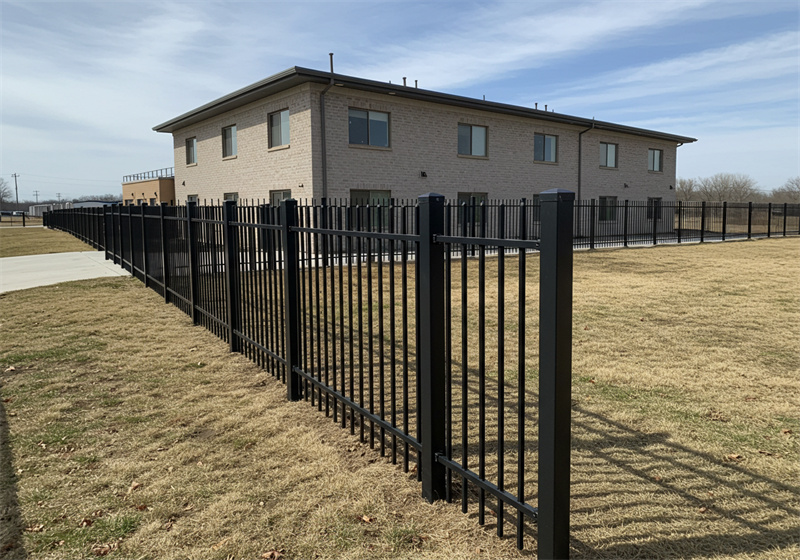
Use ASTM A123 for fence panels and tubes, but use ASTM A153 or ASTM F2329 for clamps, bolts, and threaded hardware. Mixing these is a common audit failure.
Panel/tube coating requirements vs hardware/fastener requirements
For procurement, the boundary is simple: main fabricated steel members are checked under ASTM A123/A123M, while accessory hardware is checked under ASTM A153 or ASTM F2329. If your supplier gives one A123 report for the full fence kit, that is not enough for compliance defensibility.
- Panels, posts, rails, pickets, fabricated gate frames: Evaluate as fabricated steel under ASTM A123/A123M by correct material category and thickness band (for example, pipe/tubing ranges can require Grade 75 minimum average coating).
- Clamps, couplers, brackets, hinges, latches, non-threaded hardware: Evaluate under ASTM A153 class requirements, not under panel-level A123 data.
- Bolts, nuts, threaded rods, threaded clamp sets: Evaluate under ASTM F2329 (or project-specified fastener standard), because thread condition and post-galvanizing fit are critical acceptance points.
- Commercial alignment for AU temporary fencing: AS 4687 system compliance does not replace component-level galvanizing evidence; both must be documented for site acceptance.
In our outbound checks for bulk orders, we separate test evidence by component family before dispatch. That prevents one report from being reused across parts that are governed by different standards.
When components must be evaluated under A153/F2329 instead of A123
Switch away from A123 the moment the component is purchased or inspected as hardware rather than as a fabricated panel member. The practical trigger is function and geometry: small parts, threaded items, and connection hardware need hardware/fastener standards.
- Use A153: For hardware articles supplied as accessories to the fence system, especially clamps and fittings that are not governed as primary fabricated members.
- Use F2329: For threaded fasteners where coating build affects thread tolerance, installation torque, and fit-up during site assembly.
- Keep A123: For the core fabricated steel units such as temporary fence panels, posts, and welded frames.
If a lot contains both panel steel and hardware, split the inspection file into separate acceptance lines. One mixed certificate creates dispute risk after arrival.
Common procurement failure mode: accepting A123 data for fasteners
The repeat failure mode is approving a shipment because panel galvanizing passes A123, while no valid A153/F2329 evidence exists for clamps and fasteners. Result: site assembly delays, missing-clamp claims, and argument over who pays replacement freight.
- PO clause 1: Supplier must declare each component’s governing standard (A123, A153, or F2329) line-by-line in the packing and QC file.
- PO clause 2: Pre-shipment records must include measured coating results by component category, not one summary value for the full container.
- PO clause 3: Fastener lots must include traceable lot IDs tied to cartons and loading photos/videos to support claims.
- PO clause 4: Non-conforming or missing hardware (clamps/feet/fasteners) requires replacement commitment with a defined response window to protect site readiness.
For risk-averse buyers, this is not paperwork overhead. It is the fastest way to protect compliance pass rate, avoid internal blame, and keep bulk temporary fencing projects on schedule.

2024 Revision Risk Points
Top 2024 risk is wrong category mapping, not lab failure. If forgings, castings, and hardware are misclassified, your claim position weakens after arrival.
New thickness requirements for forgings and castings
For 2024 ASTM A123 compliance checks, treat forgings and castings as independent material categories during bid, PO, and inspection. Do not let suppliers test them under tubing or structural-shape logic. That is where disputes start, especially when a shipment mixes posts, gate lugs, and cast connectors in one lot.
For Australian temporary fencing imports, AS 4687 checks system suitability, while ASTM A123/A123M and ASTM A153 control galvanized acceptance by component type. Our team verifies category before dispatch and keeps thickness records by part family, not by container average.
- Category lock: Declare each line item as tube, plate, structural shape, forging, or casting before production release.
- Test basis: Record base metal thickness and applicable ASTM A123/A123M table row for that category.
- Hardware split: Route clamps, bolts, and small fittings to ASTM A153 instead of ASTM A123.
Updated “intended use” definition and practical interpretation
The revised interpretation shifts acceptance toward service performance in the declared application, not showroom appearance. If your intended use is temporary site security, reject/accept criteria should prioritize corrosion protection, safety function, and fit-up with clamps and feet over cosmetic uniformity.
In practice, write intended use in procurement language: outdoor exposure class, handling frequency, and deployment cycle. If you need visual-grade areas, name them on drawings. If not named, appearance-only claims become hard to win.
Appendix clarifications that affect inspection decisions
The appendix notes are now more influential in claim outcomes because they explain how to inspect mixed-fabrication jobs. Buyers should align galvanizing inspection with ASTM A385 design guidance and ASTM A780 repair practice before pre-shipment sign-off, not after cargo lands.
- Sampling scope: Define sample quantity per lot and per component class, not one random sample for all parts.
- Repair boundary: State when zinc repair is allowed under ASTM A780 and when full replacement is required.
- Surface condition notes: Include accepted/non-accepted conditions for drainage marks, runs, and local texture variation.
How PO and inspection sign-off language should be updated
Procurement teams should move from generic “ASTM compliant” wording to clause-level acceptance language. This is where legal defensibility is built. For risk-averse AU buyers, this also protects site-readiness KPIs and lowers post-arrival argument cycles.
- Standards clause: “Panels/posts fabricated steel to ASTM A123/A123M; clamps and small hardware to ASTM A153; temporary fencing application aligned with AS 4687-2022/2007.”
- Evidence clause: “Provide measured steel thickness records, coating test records, lot IDs, and pre-shipment photos/videos tied to packing list numbers.”
- Sign-off clause: “Inspection approval is conditional on category-correct test evidence; container-level averages are not accepted as sole proof.”
- Claims clause: “Notify within defined evidence window after unloading; include traceable lot marks and defect media for replacement-part decision.”
- Commercial clause: “Confirm MOQ 100 panels, quote turnaround within 24 hours, and production capacity alignment (up to 2,000 sets/week) before PO release.”
Final practical point: if your project spec says hot-dip galvanized above 42 microns for temporary fencing lines, keep that requirement in the PO, but do not use it to override a higher ASTM minimum where category rules demand more.
Coating Thickness Acceptance and Grade Interpretation
For ASTM A123 acceptance, classify the material correctly first, then apply the correct thickness band and grade rule. Most failed inspections come from category errors, not zinc defects.
Acceptance Matrix Logic: Material Category + Measured Thickness + Minimum Grade + Pass/Fail
Procurement teams should lock this sequence into the PO and inspection plan: category declaration, measured base-steel thickness, required ASTM A123 coating grade, then lot acceptance rule. At DB Fencing, we verify this before dispatch because category mistakes create avoidable port-side disputes.
- Pipe and tubing: For measured steel thickness above 1/8 in and below 1/4 in (3.2-6.4 mm), use minimum coating grade 75. Pass only when the lot average meets grade 75 and individual specimens meet the single-specimen rule.
- Structural shapes: In thicker bands, minimum requirements can step up to grade 100. Inspect against the Structural Shapes row, not by visual similarity to plate sections.
- Plate: Plate uses its own category line and can differ from Structural Shapes at the same measured thickness. Pass/fail must follow the Plate line only.
- Lot decision: Accept only when category, thickness records, and coating grade evidence are internally consistent on the same lot ID.
Dispute-Reduction Examples: Pipe/Tubing and Plate
- Pipe/tubing example: Temporary fence post measured at 3.6 mm wall thickness is in the above-1/8 to below-1/4 in band. If the PO sets ASTM A123 grade 75 minimum, inspector must not reject it using a thicker-band grade 100 rule.
- Plate example: Base plate and bracket plate may look like structural members after fabrication, but they are still evaluated under the Plate category line. Rejecting plate by Structural Shapes thresholds is a category error.
Also separate standards correctly: fence clamps, small fasteners, and similar hardware are typically checked under ASTM A153, not ASTM A123. Mixing A123 and A153 in one rejection memo is a common third-party inspection mistake.
Material Misclassification Risk from Visual Similarity
Fabricated fence assemblies often combine posts, rails, pickets, plates, and hardware in one unit. Visual similarity after galvanizing can hide the original material form, which is exactly why intended material category must be documented before galvanizing and kept with traceable lot records.
- Pickets and rails: Usually treated as pipe/tubing when supplied as hollow sections.
- Posts: Usually pipe/tubing, but verify by mill certificate and measured wall thickness.
- Foot or connection plates: Plate category, not Structural Shapes by default.
- Clamps and bolts: Hardware route, typically ASTM A153, not ASTM A123.
- Fabricated gate frames: Mixed-category assemblies; inspect each component by its own category rule.
QC Control Requirement: Declare Category and Measured Thickness per Lot
If you want legal defensibility, put this in the RFQ and PO instead of relying on inspector interpretation at destination. This is the missing step that prevents post-arrival arguments and delayed site readiness.
- PO clause 1: Supplier must declare ASTM material category for each component line item before galvanizing.
- PO clause 2: Supplier must provide measured base-steel thickness records per lot (not nominal drawing thickness only).
- PO clause 3: Coating test report must show lot average and individual specimen results against the declared category line.
- PO clause 4: Pre-shipment dossier must include heat/lot traceability, photos, and inspection sampling plan.
How to Apply the “One Coating Grade Below” Rule Using Table 2 Order
Interpret “one coating grade below” strictly by the grade sequence in ASTM Table 2, not by arbitrary micron subtraction. In practical audit terms, move one step down in grade order only. Example sequence: 100 to 85 to 75 to 65 to 55 to 45.
- If required minimum is grade 75: Single-specimen floor is grade 65 (one step down), while lot average must still meet grade 75.
- If required minimum is grade 100: Single-specimen floor is grade 85, with lot average at or above grade 100.
Inspector-Alignment Example: Clear Acceptance Threshold
Example for an AU temporary fencing import lot: posts are declared as pipe/tubing, measured thickness 3.4-4.1 mm, contractual minimum ASTM A123 grade 75. Third-party report shows lot average grade 78 and lowest individual specimen grade 66. Result: pass under ASTM grade logic, because average is at or above 75 and individual result is above the one-step-down floor (65). If your PO also requires hot-dip galvanized coating above 42 microns for project durability, treat that as an additional contractual check, not a replacement for ASTM category-grade acceptance.

Intended Use and Masking
For ASTM A123 compliance checks, reject on functional nonconformance, not cosmetic preference. Masking is acceptable only if declared, quantified, and approved before galvanizing and inspection.
Difference Between Intended Use and Intended Appearance
In procurement terms, intended use means the fence must perform on site: corrosion protection, structural service, and safe handling. Intended appearance means visual expectations such as color tone variation, drip marks, or surface texture consistency. ASTM A123/A123M is a corrosion-coating standard for fabricated steel; it is not a decorative finishing standard.
So your pass/fail baseline should prioritize measurable coating compliance and service function. If your project also requires appearance controls, write them as separate contractual tolerances. That separation is what prevents a compliant lot from being rejected for subjective visual reasons after arrival.
How Masking Changes Accessible Surface Area Calculations
Masking removes selected zones from zinc exposure, so those zones are not part of the coated, assessable area for acceptance. If masking is not declared in advance, inspectors and buyers may calculate coating results against the full fabricated surface and trigger avoidable disputes.
- Component scope: State which parts are under ASTM A123 (for example, pickets, rails, posts, gate frames) and which hardware is under ASTM A153 (for example, clamps and small fittings).
- Masked zone definition: Record each masked location with dimensions in mm and area share in % of total part surface.
- Reason for masking: Declare fit-up, thread engagement, grounding contact, or other engineering reason; “appearance” alone is not enough.
- Post-process treatment: If repair is required, define method and acceptance to ASTM A780 before shipment.
We verify category mapping and masking declarations before dispatch documents are issued, because most claims start from missing pre-agreement, not from metallurgical failure.
Bid-Stage Wording to Prevent Aesthetic-Only Rejection Disputes
Use bid and PO language that forces objective acceptance evidence. For risk-averse Australian procurement teams, this is the cleanest way to protect compliance pass rate, delivery schedule, and claim resolution speed.
- Acceptance basis clause: “Lot acceptance is based on declared standard conformance (ASTM A123/A153 as applicable), measured coating records, and functional serviceability; visual non-uniformity alone is not grounds for rejection unless separately specified.”
- Category declaration clause: “Supplier shall provide component-by-component material category mapping at bid stage, including pickets, rails, posts, gate elements, and hardware, with the applicable standard identified for each.”
- Inspection evidence clause: “Pre-shipment dossier must include lot ID traceability, coating thickness test records, masking map (if any), and dated photo/video evidence.”
- Claims workflow clause: “Buyer to submit defect notice within an agreed evidence window, with lot number, photos, and quantity impact; supplier to issue corrective action and replacement-part commitment for affected clamps/feet/hardware within a defined response period.”
This wording closes the common loophole where a shipment passes technical criteria but is later challenged on undefined appearance expectations. It also creates legal defensibility for both parties during import and site inspection.
Discover Compliant Temporary Fencing Systems Built for AU/CA Standards.

AU Project Compliance Crosswalk
For AU projects, ASTM verifies galvanizing quality, while AS 4687-2022 governs site acceptance. Put both into RFQ and PO clauses before production starts.
Mapping ASTM A123 checks to AS 4687-2022 project expectations
If you want legal defensibility in Australia, treat this as a crosswalk, not a single-standard pass. ASTM A123/A123M confirms hot-dip galvanized coating quality on fabricated steel items, and AS 4687-2022 confirms whether the temporary fencing system is acceptable for project use. For import procurement, the risk is usually category mismatch, especially when hardware is tested under the wrong standard.
- Panels, posts, rails, fabricated gates: Check under ASTM A123/A123M using the correct material category and measured steel thickness band before galvanizing.
- Clamps, bolts, nuts, small fittings: Check under ASTM A153, not ASTM A123, because hardware uses a different galvanizing standard.
- Design-for-galvanizing controls: Apply ASTM A385 for venting, drainage, and intended-use masking decisions before dipping, so coating quality is auditable.
- Repair after damage: Use ASTM A780 as the defined method when coating is damaged during handling or installation.
- AS 4687-2022 acceptance alignment: Confirm that the delivered temporary fence system meets the project’s specified performance and configuration requirements under AS 4687-2022, not only zinc-coating test results.
We usually write these checkpoints directly into the PO: component category declaration, measured base-metal thickness records, coating test method, and pre-shipment evidence pack. That is what prevents post-arrival disputes.
Coastal durability and local acceptance considerations
For coastal Australian jobs, minimum compliance is not the same as practical service life. DB Fencing offers hot-dip galvanized coating above 42 microns for outdoor durability, but salty environments can still require tighter project-side acceptance and maintenance rules. Procurement teams should separate “standard pass” from “site exposure risk.”
- Internal coating baseline: Hot-dip galvanized finish is specified at more than 42 microns for temporary fencing applications.
- External benchmark context: The American Galvanizers Association cites that 3.9 mils (about 99 microns) on 1/4-inch steel to ASTM A123 can reach about 72 years in industrial exposure; this is a reference point, not a direct one-to-one forecast for every fence component.
- Local acceptance control: Require project-specific approval criteria at RFQ stage, including exposure zone, coating evidence format, and rejection thresholds for visible damage on arrival.
In practice, local inspectors care about whether the delivered product matches contract evidence. If your documents are weak, even technically acceptable material can face delays at site handover.
Traceability and documentation checklist (coating report, ISO9001 process evidence, SGS/third-party certificates, claims workflow)
This is where most procurement failures happen. Veteran buyers do not lose money on price; they lose money on missing proof when defects or delays hit. Build a document bundle that ties each batch to each component and each claim path.
- Coating report pack: Heat/lot ID, component name (picket, rail, post, gate, clamp), applicable ASTM standard (A123 or A153), measured values, units, and test date.
- ISO9001 process evidence: Controlled inspection records from incoming steel to welding, galvanizing, packing, and pre-shipment release.
- SGS or third-party certificates: Attach valid certificate scope and the tested SKU or lot reference, not a generic company-level PDF without batch linkage.
- Packaging accountability: Pallet/carton count list for panels, clamps, and feet, with loading photos to reduce missing-hardware disputes at destination.
- Claims workflow in contract: Define evidence window, required photo/video angles, lot label visibility, root-cause timeline, and replacement commitments for clamps, feet, and hardware.
- Commercial continuity data: Record supplier capacity and response terms in the file: 10 welding lines, up to 2,000 sets/week, 24-hour quotation response, and MOQ 100 panels.
For Australian procurement teams, this checklist is the difference between a manageable defect event and a site shutdown. The goal is simple: every acceptance decision and every claim decision must be traceable to pre-agreed evidence.
Supplier Verification Workflow
For ASTM A123 compliance checks, control risk in four steps: lock specs, verify in-line, reconcile dispatch evidence, and enforce a time-bound arrival claims protocol.
Pre-production specification lock before manufacturing
Before any welding starts, we freeze a PO-level specification pack. This is the legal baseline for AS 4687 and ASTM A123 compliance checks, and it prevents the usual dispute: “we thought this coating level was acceptable.” For Australian temporary fencing imports, this step is where procurement removes ambiguity before money and lead time are committed.
- Component declaration: Map each item to the correct standard path: fabricated steel panels/posts/gates under ASTM A123/A123M, hardware such as clamps and fasteners under ASTM A153, repair areas under ASTM A780.
- Category lock: State material category on the PO (pipe and tubing, structural shape, or plate) so coating acceptance is checked against the correct ASTM A123 category requirement.
- Coating requirement: Record contract minimum clearly in microns, including the commercial baseline of hot-dip galvanized coating above 42 microns where specified.
- Commercial controls: Confirm MOQ 100 panels, quote validity, agreed lead time window, and any private-label/OEM marking rules before production release.
In-line QC checkpoints with measurable acceptance criteria
In-line control is where schedule reliability and defect prevention actually happen. A supplier can claim capacity, but procurement should only trust checkpoint records tied to lot IDs. DB Fencing runs 10 welding lines with up to 2,000 sets per week capacity, so checkpoint discipline is the control point that protects bulk-order consistency.
- Weld and geometry check: Verify panel dimensions, mesh spacing, and weld integrity against drawing tolerances at first-off and scheduled sampling points per lot.
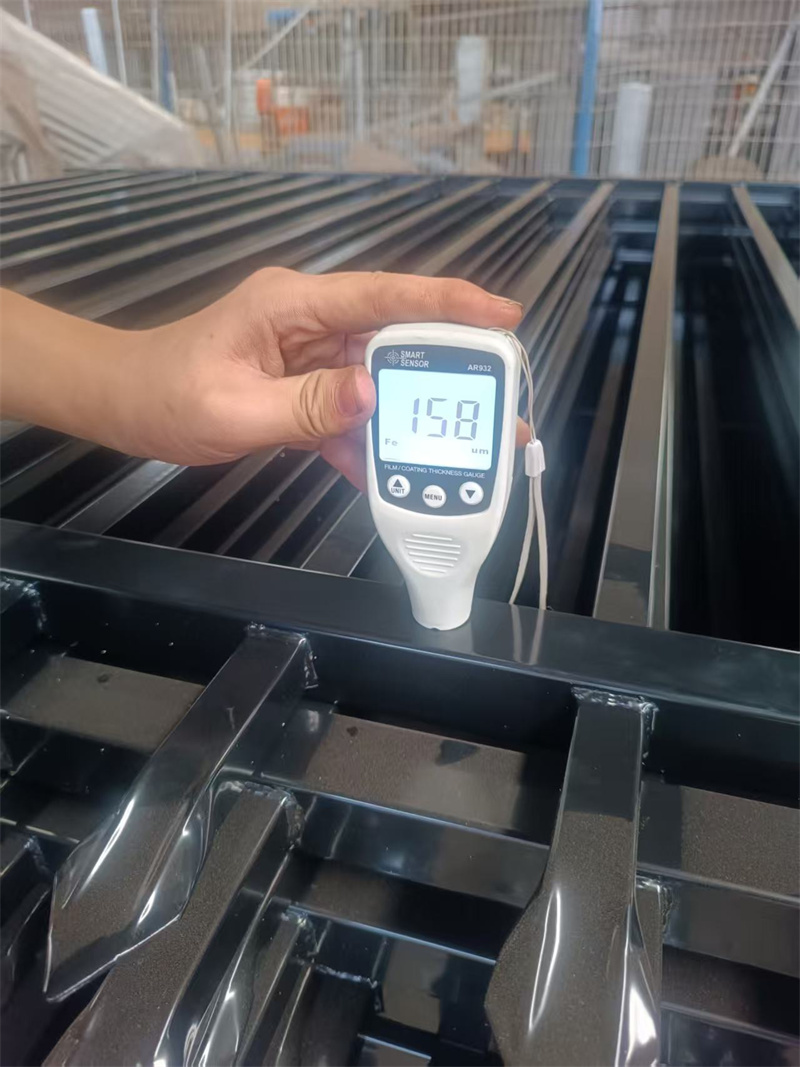
- Galvanizing check: Measure zinc coating thickness with calibrated gauges and record micron values by lot, then match pass/fail to the declared ASTM category and PO threshold.
- Hardware fit check: Test clamp, foot, and joint fit on physical assemblies to prevent site-install delays caused by mixed or out-of-tolerance parts.
- Traceability check: Keep heat/lot references, inspection timestamps, and inspector sign-off linked to pallet or bundle IDs for defensible audits.
Final inspection and packing list verification before container dispatch
Most costly disputes are not coating failures; they are quantity mismatch, missing hardware, and weak dispatch evidence. Final inspection must tie physical counts to a container-specific packing file. This is the practical core of a temporary fencing missing clamps prevention packaging checklist.
- Count reconciliation: Match ordered versus packed quantities for panels, clamps, plastic feet, braces, and gates, then sign a final variance report at zero unexplained shortage.
- Packing evidence: Capture pallet labels, bundle counts, loading sequence photos, and container seal number in one dispatch file shared before vessel departure.
- Document set release: Issue packing list, inspection summary, and coating test records together so goods release is tied to evidence, not verbal confirmation.
- Lead-time control: Confirm ex-factory date versus agreed bulk-order window and escalate immediately if risk appears, rather than after missed ETD.
Arrival damage protocol and release/claim handling
A strong claims workflow protects site readiness and internal accountability. If damage is real, the buyer should not fight for weeks to prove obvious loss. The protocol below is built for faster release decisions and cleaner replacement or credit outcomes.
- Evidence window: Submit claim notice within the agreed time after unpacking, with dated photos and short videos showing container condition, pallet labels, and damaged items.
- Lot traceability: Include packing list line, bundle ID, and seal reference so supplier and buyer investigate the same shipment unit.
- Release rule: Undamaged stock is released immediately for project use; only disputed lines are quarantined to avoid full-site delay.
- Claim closure: Resolve by pre-agreed remedy path: replacement parts (including clamps, feet, and hardware), replacement panels, or commercial credit with documented approval timing.
This workflow is what veteran procurement teams use to reduce non-compliance risk, landed-cost surprises, and blame cycles. It turns supplier verification from a sales promise into auditable operational control.
Cost and Lifecycle Impact
For temporary fencing, the lowest unit price usually increases lifecycle cost. Compliance-grade galvanizing and documentation reduce replacement, downtime, and inspection failure risk.
TCO comparison: compliant HDG fencing vs low-spec alternatives
For AU procurement, TCO is driven by replacement events, inspection holds, and labor rework, not just panel price. A compliant HDG package aligned to AS 4687 and ASTM coating logic is usually cheaper over the full project cycle than a low-spec quote that cannot pass verification.
- Compliant baseline: Panels and fabricated steel checked to ASTM A123/A123M logic, hardware checked to ASTM A153 logic, with repair handling aligned to ASTM A780 and project context aligned to AS 4687-2022/2007.
- Durability input: DB Fencing offers hot-dip galvanized coating above 42 microns for outdoor exposure, which is a stronger lifecycle position than unverified low-coating supply.
- Cost reality: A low initial quote can be erased by one extra replacement cycle, extra freight, and re-inspection labor; this is where procurement budgets usually drift.
If you manage by landed cost per meter across the full contract period, compliant HDG supply is the safer commercial decision. If you manage by ex-works unit price only, low-spec offers look cheap until failure starts.
Impact across replacement cycles, downtime risk, and inspection failure exposure
Replacement cycle risk is cumulative. Every premature panel or hardware failure creates a chain: site access delay, crew rescheduling, and often an additional inspection window. For civil projects, that delay cost usually exceeds the price delta between compliant and low-spec fencing.
- Replacement cycles: Lower coating integrity increases corrosion probability, especially in coastal or high-moisture zones, which pulls replacement spend forward.
- Downtime risk: Missing or failed clamps/feet/hardware can make installed runs non-operational, forcing immediate rework and site disruption.
- Inspection failure exposure: If coating category, thickness records, or lot traceability are incomplete, buyers carry rejection risk at arrival or on-site compliance checks.
This is why experienced buyers require evidence before shipment, not after claims start. We verify coating category by component before dispatch and keep records ready for PO-level audit.
KPI linkage: fewer rework events and lower total replacement spend
For Procurement Pete-style KPI control, the right metric is stable site readiness with low defect churn. Compliance-ready supply improves pass rate and reduces avoidable touchpoints across QA, logistics, and field crews.
- On-time site readiness: 10 welding lines and up to 2,000 sets per week support bulk schedule reliability, reducing emergency split shipments.
- Compliance pass rate: AS 4687 context plus ISO9001/SGS process discipline lowers documentation-related rejection risk.
- Lifecycle cost per meter: Fewer replacements and fewer rework call-backs reduce total replacement spend versus lowest-quote sourcing.
- Defect claim resolution speed: Predefined evidence workflow (photo/video window, lot traceability, and replacement-part commitment) cuts dispute time and restores site continuity faster.
In short: compliant HDG procurement is a KPI protection strategy, not a premium add-on. It protects margin by preventing predictable failures that low-spec procurement tends to hide until deployment.
| Cost and Lifecycle Impact | What to Verify | Lifecycle Impact | Risk if Ignored | Evidence / KPI |
|---|---|---|---|---|
| Standards fit at RFQ stage | Cross-reference AS 4687-2022/2007 with ASTM A123/A123M for fabricated fence steel, ASTM A153 for clamps and small hardware, and ASTM A780 for repair limits before PO release. | Prevents non-compliance rework, site rejection, and emergency replacement costs; improves compliance pass rate on first inspection. | Misapplied standard leads to failed audits, delayed site readiness, and budget variance from corrective galvanizing or re-supply. | Signed compliance matrix attached to PO; first-pass inspection approval rate. |
| Galvanizing thickness and corrosion life | Supplier claim: hot dipped galvanized temporary fence >42 microns; request lab/inspection readings by component and lot. For higher-corrosion projects, benchmark against ASTM A123 thicker-coating expectations (e.g., PAA reference: ~99 microns can materially extend service life). | Higher coating integrity lowers repainting, rust claims, and premature panel retirement; reduces lifecycle cost per meter versus lowest upfront quote. | Early corrosion in coastal or industrial exposure increases replacement frequency and downtime. | Third-party coating test report with micron readings and sampling method; corrosion-related claim rate. |
| Component category mapping (plate vs tubing vs fabricated parts) | Map pickets, rails, posts, and gate elements to correct ASTM A123 material category and required coating grade range; separate hardware under ASTM A153. | Avoids under-coated critical components and unequal wear patterns that shorten fence system life. | Category confusion causes disputes after arrival and hidden spend on sorting, testing, and replacements. | PO annex listing component-by-component standard category; pre-shipment category-coded inspection sheet. |
| Production capacity and lead-time reliability | Capacity proof for bulk orders (10 welding lines, up to 2,000 sets/week) and written temporary fence panel lead time guarantee bulk order terms. | Improves on-time site readiness and reduces liquidated-damages exposure from late fencing deployment. | Supplier overcommitment creates shipment slippage and costly project resequencing. | Confirmed production schedule by week, ex-factory date commitment, and on-time delivery %. |
| MOQ and inventory cash efficiency | Temporary fencing low MOQ 100 panels factory direct China terms, mixed-SKU allowance, and container utilization plan. | Reduces cash tied in excess stock while maintaining buffer availability for phased projects. | Overbuying raises carrying cost; underbuying triggers expensive split shipments. | MOQ clause in quotation, fill-rate plan, and landed-cost-per-panel scenario sheet. |
| Packaging control for transit losses | Temporary fencing missing clamps prevention packaging checklist: count-per-bundle, sealed hardware cartons, pallet labeling, and loading photos/video by container zone. | Cuts field delays caused by missing accessories; lowers emergency local procurement at premium prices. | Short-shipped clamps/feet/hardware stop installation crews and inflate indirect labor cost. | Pre-shipment packing list with counted hardware, container loading record, and shortage incident frequency. |
| Contract-ready acceptance and claims workflow | PO clauses for measured thickness records, lot traceability, inspection evidence pack, photo/video claim window, and replacement-part SLA (clamps/feet/hardware). | Speeds defect resolution and limits downtime cost when issues occur post-delivery. | Unclear liability increases dispute cycle time and internal admin/legal cost. | Average defect claim resolution days; % claims closed within agreed SLA. |
| Certification credibility and audit defensibility | Current ISO9001 and SGS documents, test report authenticity, and consistency between cert scope and supplied SKUs. | Strengthens legal defensibility in procurement audits and reduces compliance-related approval friction. | Invalid or mismatched documents can trigger internal nonconformance and payment holdbacks. | Verified certificate IDs and expiry dates; audit nonconformance count. |
| OEM/private-label control for distributors | OEM private label temporary fencing for distributors with fixed spec baseline (steel grade, coating threshold, weld points, hardware standard) and change-control approval process. | Prevents quality drift across batches, protecting warranty cost and brand reputation over multi-order cycles. | Spec drift causes inconsistent field performance and recurring returns. | Approved master sample, revision-controlled spec sheet, and batch-to-batch variance reports. |
| Total cost of ownership comparison discipline | Evaluate temporary fencing total cost of ownership vs lowest quote using landed cost, expected service life, failure rate, claim handling speed, and replacement cycle assumptions. | Enables commercially pragmatic supplier selection aligned with lifecycle cost per meter KPI, not just unit price. | Lowest initial quote can become highest 24-month cost due to defects, corrosion, and delivery risk. | TCO model approved at sourcing gate; variance between forecast and actual lifecycle cost per meter. |
Conclusion
I’d approve a steel picket fence order only after the full ASTM A123 compliance checks are documented in writing for each part: pickets, rails, posts, and gates. At 99 microns, galvanized steel can reach about 72 years in industrial exposure, so a vague “hot-dip galvanized” claim does not protect your project. Anything less creates avoidable rejection risk.
Send both shortlisted suppliers the same purchase clauses now: material category by component, measured coating records by lot, pre-shipment inspection evidence, and repair method matched to ASTM A780. Then run one pre-shipment witness check against AS 4687 dimensions before final payment. If a supplier won’t commit to timed defect handling and replacement hardware in writing, remove them from the order.
Frequently Asked Questions
ASTM A123 vs A153?
ASTM A123 covers hot-dip galvanizing for larger fabricated steel products such as fence panels, posts, rails, and structural assemblies after fabrication. ASTM A153 is focused on smaller steel hardware and fasteners, including bolts, nuts, clips, and wire components, with different coating classes and inspection criteria. For steel picket fence systems exported to Australia, main frames and posts are typically assessed to ASTM A123, while associated hardware may be checked to ASTM A153 where specified. In B2B procurement, using the correct standard by component type prevents compliance disputes at inspection and site handover.
Service life of ASTM A123 coating on 1/4-inch steel?
For 1/4-inch (about 6.35 mm) steel galvanized to ASTM A123, expected service life is commonly measured in decades, not years, because thicker steel typically receives a heavier zinc coating. In inland or low-corrosion environments, first-maintenance life can often exceed 50 years, while aggressive coastal or industrial exposure may reduce that range to roughly 20-40+ years depending on chloride and pollution levels. Actual durability should be validated against local Australian exposure class, coating thickness test reports, and installation conditions such as cut-edge treatment. For buyers in AU/NZ, requesting batch coating-thickness records and salt-environment project references is the most practical way to forecast real service performance.
ASTM A385 vs A123?
ASTM A123 is the acceptance standard: it defines what a compliant galvanized coating must achieve, including minimum thickness, finish quality, and inspection criteria. ASTM A385 is a preparation and design practice: it explains how steel should be designed, fabricated, vented, and cleaned to achieve a sound hot-dip galvanized result. In simple terms, A385 helps manufacturers avoid defects before galvanizing, while A123 is used to verify the final coating after galvanizing. For export fence projects, applying both standards together improves first-pass quality and reduces rework risk on bulk shipments.
What is ASTM A123?
ASTM A123 is the core specification for hot-dip galvanizing on iron and steel products made from rolled, pressed, or fabricated shapes. It sets technical requirements for zinc coating thickness, coating continuity, appearance, and adhesion so corrosion protection is measurable and consistent. This standard is widely referenced in international B2B projects where long outdoor service life is required, including fencing and site-security infrastructure. For professional buyers, ASTM A123 compliance provides an objective benchmark during factory QA, pre-shipment inspection, and contract acceptance.
What does ASTM A123 specify?
ASTM A123 specifies how hot-dip galvanized coatings on fabricated steel must be evaluated, including minimum average coating thickness by steel category and section thickness. It also defines inspection methods, sampling rules, finish expectations, and acceptance criteria for coating quality. The specification applies to full-size fabricated components such as fence posts and welded panels, not just small fasteners. In tender and supply-chain terms, quoting ASTM A123 in the technical schedule helps align manufacturer output, third-party inspection, and buyer compliance requirements.


