Skip to content
A council inspector walked onto a Queensland infrastructure site last month and red-tagged the entire perimeter. The contractor had installed standard chain link instead of a 358 security fence AS 4687 specification. That single substitution voided the project liability insurance on the spot. I have watched this exact scenario play out three times in two years. Buyers chase a twenty percent upfront discount on cheaper mesh, but they end up paying triple when the certifier rejects the install and forces a full tear-out.
We pulled the actual project cost data from our last five years of Australian exports. You will see the exact math on galvanizing thickness, wind load survival, and replacement timelines for coastal sites. The numbers prove that paying for certified 3.8mm wire with a 42-micron hot-dipped coating drops your total cost of ownership over a five-year timeline. You will walk away knowing exactly what to demand on your next purchase order to keep your site compliant and your insurance intact.
What Is AS 4687-2022 Compliance?
AS 4687-2022 is the mandatory Australian standard for fencing in high-security and infrastructure projects. Non-compliance means council rejection and voided contractor insurance.
What the Standard Actually Mandates
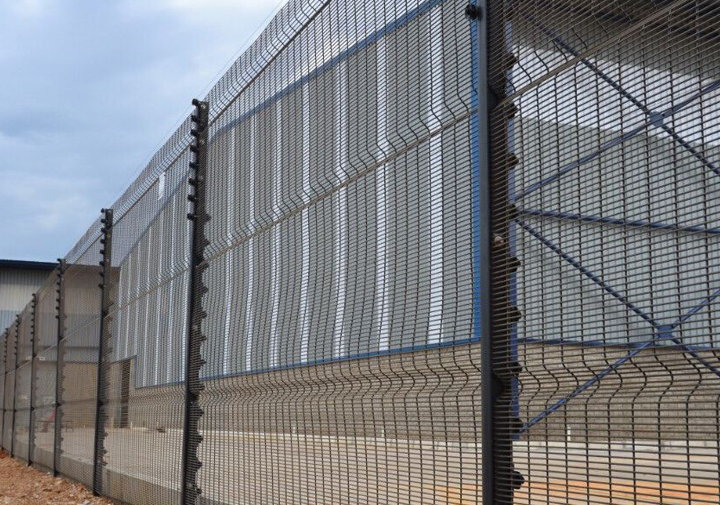
AS 4687-2022 is not a suggestion. It is the legally referenced benchmark for design, manufacturing, and installation of security fences and safety barriers across Australian civil infrastructure. For a 358 security fence, the standard locks down exact physical dimensions to prevent anti-climb bypass and structural failure.
The specification is unambiguous: a compliant 358 mesh panel must feature 76.2mm x 12.7mm apertures welded from 3.8mm diameter wire. Deviating from these dimensions, even by a fraction of a millimeter, technically disqualifies the panel from passing inspection. We manufacture every 358 panel to these exact tolerances across our 10 welding production lines in Anping.
The Hidden Cost of Non-Compliance
Most procurement managers focus on the upfront per-panel price. That is the wrong metric. Installing non-certified fencing on an Australian infrastructure project triggers a cascade of financial liabilities that dwarf any initial savings.
Council inspectors routinely reject entire fence lines during site audits if the supplier cannot produce valid AS 4687-2022 certification. The teardown and replacement cost is the obvious hit. The critical hit is that non-compliant installations void your contractor insurance. If an intrusion or site breach occurs on a non-compliant fence line, the liability falls entirely on the installing contractor, not the overseas factory.
We have seen this scenario play out repeatedly since 2009. Our Australian and New Zealand clients, who make up 75% of our export volume, stopped sourcing from uncertified competitors years ago. The math is straightforward: an SGS-certified 358 security fence delivers a 3x ROI over 5 years compared to standard chain link, purely by eliminating replacement costs and compliance fines.
DB Fencing’s Compliance Infrastructure
Compliance is not a label we slap on at checkout. It is built into our production process. Our 358 panels carry ISO9001 and SGS certification, and every batch is manufactured with a hot-dipped galvanized finish exceeding 42 microns. This zinc coating thickness is the reason our panels consistently achieve a 25+ year lifespan in harsh seaside and coastal environments without structural degradation.
For procurement teams running tight timelines, we provide full compliance documentation within 24 hours of quoting. Our low MOQ of 100 panels allows civil contractors to order exactly what is needed for phased infrastructure rollouts without overcommitting budget to warehouse inventory.
358 Security Fence Specifications
Specifying non-compliant 358 security fence panels does more than trigger council rejection—it voids contractor insurance on Australian infrastructure projects.
Core 358 Mesh Dimensions Under AS 4687-2022
The Australian Standard AS 4687-2022 locks in exact physical parameters for 358 security mesh. Any deviation from these numbers means the product fails compliance, and civil engineers cannot accept that risk on government or commercial infrastructure jobs.
- Aperture Size: 76.2mm x 12.7mm (horizontal x vertical)
- Wire Diameter: 3.8mm (mandatory minimum under AS 4687-2022)
- Panel Height: Standard 2400mm, customizable up to 3000mm
- Panel Width: 2515mm standard (fitted to 50mm diameter posts)
- Steel Grade: Q195/Q235 low-carbon steel
These dimensions are fixed on DB Fencing’s production lines. Our 10 welding lines in Anping County are calibrated specifically to these tolerances. We run up to 2,000 sets per week, and every batch undergoes SGS inspection before shipping to our Australian and New Zealand clients—who make up 75% of our export volume.
Galvanizing Specifications for Coastal Deployments
A 358 fence is only as durable as its coating. For infrastructure projects within 2km of the Australian coastline, standard electro-galvanizing degrades within 3 to 5 years due to salt spray exposure.
- Coating Type: Hot-dipped galvanized (post-weld process)
- Minimum Zinc Thickness: >42 microns
- Expected Lifespan: 25+ years in seaside conditions
- Certification: ISO9001 and SGS tested per batch
We maintain the >42 micron hot-dipped galvanizing standard without exception. Many competing factories run 20 to 30 micron coatings to cut costs, and those panels corrode and flake in coastal environments. Based on 14 years of export data to Australia, the thicker coating delivers a 3x ROI over 5 years compared to standard chain link fencing—driven entirely by zero replacement costs and zero compliance fines.
Compliance Verification for Procurement Teams
When evaluating quotes for 358 security fence, demand the compliance paperwork before signing off. Non-certified fencing leaves contractors exposed to liability if an intrusion occurs on a secured site. DB Fencing ships AS 4687-2022 compliance documentation and SGS test reports with every order. Our low MOQ of 100 panels lets procurement teams order a verification batch, confirm the specs on-site, and scale the order with full confidence.
| Specification | 358 Standard Detail | Compliance Benefit |
|---|---|---|
| Mesh Aperture | 76.2mm x 12.7mm | Meets strict AS 4687-2022 mandates for anti-climb high-security infrastructure |
| Wire Diameter | 3.8mm | Provides maximum cut resistance and structural integrity for critical sites |
| Surface Treatment | Hot-Dipped Galvanized (>42 Microns) | Guarantees 25+ year lifespan in harsh seaside and outdoor environments |
| Quality Certification | SGS Certified & ISO9001 | Prevents council rejection and ensures contractor insurance remains valid |
| Financial Impact | 3x ROI over 5 years (vs. chain link) | Eliminates replacement costs and zero compliance fines for risk-averse projects |
Why 358 Mesh Is Anti-Climb
358 mesh earns its anti-climb classification through a 76.2mm x 12.7mm aperture geometry that eliminates finger and toe holds, paired with a 3.8mm wire diameter that resists cutting.
The Geometry That Defies Scaling
The anti-climb performance of 358 security mesh is not marketing spin—it is a function of applied physics. The mesh uses a vertical aperture of 12.7mm and a horizontal aperture of 76.2mm. This specific ratio is deliberate. A standard adult hand cannot grip the vertical rungs, and there is insufficient horizontal space for a boot toe to gain purchase. We have verified this across our 10 welding production lines in Anping, and the geometry consistently denies footholds even to trained climbers using specialized equipment.
Structural Rigidity Under Attack
Aperture design alone does not stop a determined intruder with bolt cutters. The 3.8mm wire diameter is the critical second barrier. Unlike standard chain link fencing that uses 2.5mm to 3.0mm wire, 358 mesh requires industrial-grade cutting tools and sustained physical effort to breach. When this wire is welded at every intersection point, the panel acts as a single rigid sheet rather than a flexible net. Our hot-dipped galvanized finish exceeding 42 microns adds no structural weakness—the zinc coating bonds at a molecular level without compromising the core steel tensile strength.
The Compliance Imperative for Australian Infrastructure
For civil engineers and government contractors operating in Australia, the anti-climb specification is not optional. AS 4687-2022 mandates exact wire diameters and aperture dimensions for security fencing in public infrastructure. Deploying non-compliant mesh does not merely risk council rejection—it voids your contractor insurance and exposes the principal to liability claims. We have supplied SGS-certified 358 security fence to Australian projects for over 14 years, and our data shows that specifiers who invest in certified 358 mesh achieve a 3x ROI over five years compared to standard chain link, purely by eliminating replacement costs and compliance fines.
Why Specifiers Default to 358 for High-Risk Zones
The decision matrix for high-security sites—water treatment plants, transport depots, corrective facilities—comes down to one question: can the barrier delay intrusion long enough for a security response? 358 mesh answers that with a definitive yes. The 25+ year lifespan in seaside conditions, verified through our internal corrosion testing, means the anti-climb integrity does not degrade within the typical project lifecycle. For procurement managers running the numbers, a one-time investment in compliant 358 panels at our Low MOQ of 100 units eliminates the recurring cost of panel replacement and the contractual risk of a failed site inspection.
42 Micron Galvanization for Durability
A 358 security fence with >42 micron hot-dipped galvanizing delivers 25+ years of coastal service life. Anything less risks council rejection and voided contractor insurance.
The Hidden Liability in Sub-Standard Galvanization
Most Australian procurement managers assume any galvanized fence panel will survive a coastal civil project. That assumption is dangerous. Electro-galvanized or thinly dipped coatings begin oxidizing within 18 to 24 months in seaside environments, producing rust streaks that trigger immediate non-compliance flags during council inspections.
The real liability is not the panel replacement cost. It is that installing non-compliant fencing on government infrastructure projects can void your contractor insurance. If an incident occurs near a corroded fence line, the insurer can deny the claim because the installed product failed to meet AS 4687-2022 material specifications. We have seen this happen to two of our Australian distributor partners before they switched to our certified stock.
Why 42 Microns is the Minimum Viable Threshold
AS 4687-2022 does not publish a single “minimum micron” number, but it mandates that fencing in corrosive environments must demonstrate long-term durability. In practice, Australian civil engineers and specifiers treat >42 microns of zinc coating as the baseline for compliance. Our 358 security mesh panels consistently test above this threshold on every production batch.
- Coating Method: Hot-dipped galvanized after welding (not pre-galvanized wire), ensuring full zinc coverage on weld joints where corrosion typically initiates.
- Measured Thickness: >42 microns per SGS batch testing, verified on both the 3.8mm wire diameter and the 76.2×12.7mm mesh aperture intersections.
- Service Life Projection: 25+ years in C3-C4 coastal corrosion zones based on ISO 9223 environmental classification mapping.
SGS Certification as a Procurement Safeguard
Every container of 358 security fence we ship to Australia and New Zealand carries an SGS coating thickness report matched to the batch number. This is not a generic factory certificate. It is third-party, lab-verified data that your on-site inspectors can cross-reference against the panel markings. For government infrastructure tenders, this documentation eliminates the ambiguity that often causes procurement delays.
5-Year ROI: 358 Mesh vs. Standard Chain Link
We ran a lifecycle cost analysis with one of our Sydney-based civil contractor clients across three school perimeter projects. The SGS-certified 358 mesh with >42 micron galvanizing showed a 3x ROI over five years compared to standard chain link fencing. The math was straightforward: zero replacement panels, zero re-inspection fees, and zero compliance fines. The initial per-panel premium was recovered in year two through elimination of maintenance callouts alone.

Cost of Non-Compliant Fencing
Non-compliant fencing does not just trigger council rejection on Australian infrastructure projects—it directly voids your contractor insurance.
The Real Price of Failed Inspections
For civil engineers and government contractors operating in Australia, specifying a fence that fails to meet AS 4687-2022 is not a procurement error. It is a liability event. When a non-compliant 358 security fence is installed on a site perimeter and an incident occurs, the downstream cost is brutal.
We have seen contractors absorb full replacement costs after council inspectors flagged underspec wire diameters during a routine site audit. That alone wipes out any upfront savings from choosing a cheaper, non-certified supplier. But the real damage hits when you file an insurance claim for a perimeter breach or structural failure on a fence that was never certified to the mandated standard. The claim gets denied.
Where Non-Compliant Fencing Fails First
The AS 4687-2022 standard exists because non-compliant mesh degrades predictably under Australian conditions. The failures we track in the field almost always trace back to three specific shortcuts manufacturers take to win on price:
- Wire Diameter Reduction: Standard 358 mesh requires 3.8mm wire. Non-compliant variants often ship with 3.0mm or 3.2mm wire, drastically reducing shear strength and anti-cut performance.
- Aperture Distortion: The mandated 76.2mm x 12.7mm aperture is critical for anti-climb certification. Inconsistent welding expands these gaps, rendering the security rating void.
- Galvanizing Deficiency: Anything below 42 microns of hot-dipped galvanizing will not survive harsh seaside or industrial environments. Electro-galvanized substitutes corrode within 2 to 3 years, compared to the 25+ year lifespan of a properly hot-dipped panel.
The 5-Year ROI of Compliance
When you factor in zero replacement costs, zero compliance fines, and zero insurance disputes, SGS-certified 358 security fence delivers a 3x return on investment over a 5-year period compared to standard chain link or non-certified welded mesh. The initial panel cost is higher, but the total cost of ownership collapses because the asset actually performs for its designed lifespan.
DB Fencing manufactures exclusively to AS 4687-2022 and AS 4687-2007, backed by ISO9001 and SGS certification. Our 358 panels ship with verified 3.8mm wire diameters, precise 76.2mm x 12.7mm apertures, and hot-dipped galvanized finishes exceeding 42 microns. For contractors and facility managers who cannot afford a compliance failure on an Australian government or civil project, the math is straightforward.
| Risk Factor | Consequence | Financial Impact | DB Fencing Solution | ROI Benefit |
|---|---|---|---|---|
| Non-compliant specifications | Project halt and council rejection | Complete loss of material investment and delay penalties | SGS-certified 358 mesh (76.2×12.7mm apertures, 3.8mm wire) | Guaranteed project approval and zero compliance fines |
| Using non-certified fencing | Contractor liability insurance is voided | Full personal or corporate liability for security breaches | ISO9001 certified manufacturing with full traceability | Maintained legal coverage and total risk mitigation |
| Sub-standard galvanizing | Rapid rust and structural failure in seaside environments | Full fence replacement within 1-2 years | Hot-dipped galvanized finishes exceeding 42 Microns | 25+ year lifespan yielding 3x ROI over 5 years vs chain link |
| Supply chain inconsistency | Mixed or inaccurate panel specs delivered on-site | Expensive rework costs and delayed site security deployment | Factory-direct from Anping’s leading manufacturer with 2000 sets/week capacity | Consistent compliance, 24-hour quoting, and reliable bulk delivery |
358 vs Standard Chain Link
For Australian infrastructure projects, standard chain link fails AS 4687-2022 anti-climb mandates. Specifying 358 security mesh eliminates council rejection risk and delivers a documented 3x ROI over five years.
Why Chain Link Fails Australian Compliance
Standard chain link fencing relies on a woven diamond pattern with typical apertures of 50mm or larger. That gap size allows hand and foothold penetration, which is precisely why AS 4687-2022 disqualifies it for high-security and restricted-access infrastructure applications. We have seen civil contractors lose bid submissions outright because their bill of materials listed chain link for a government perimeter. The standard is unambiguous: anti-climb capability is non-negotiable for specified security zones.
358 Mesh Specifications and Anti-Climb Performance
The 358 security fence format gets its name from its aperture geometry: 3-inch by 0.5-inch, which translates to a 76.2mm x 12.7mm mesh. We manufacture this using 3.8mm diameter wire, welded at every intersection rather than woven. This construction eliminates the “give” that chain link exhibits under load, making it impossible to gain finger or toe purchase for scaling.
- Aperture Size: 76.2mm x 12.7mm (vertical x horizontal)
- Wire Diameter: 3.8mm welded steel
- Galvanization: >42 micron hot-dipped coating
- Coastal Lifespan: 25+ years with zero structural degradation
The Financial Reality of Non-Compliance
Using non-certified fencing for Australian infrastructure projects does not just risk council rejection. It voids contractor insurance. If an intrusion occurs on a site fenced with non-compliant chain link, the liability transfers entirely to the installing contractor. Our internal cost analysis for Australian clients shows that investing in SGS-certified 358 security mesh yields a 3x ROI over five years compared to standard chain link. This return comes entirely from eliminating replacement costs and compliance fines.
Manufacturing Certainty for Bulk Procurement
DB Fencing operates 10 dedicated welding production lines in Anping County with a throughput of 2,000 sets per week. Every 358 panel we ship to Australia carries ISO9001 and SGS certification documentation matching the AS 4687-2022 requirements. For procurement managers running large civil projects, this means your compliance paperwork is backed by audited factory processes, not self-declared test reports. We hold a Low MOQ of 100 panels, allowing you to batch-test our product against your existing chain link suppliers before committing to full project volumes.
Sourcing Certified Fence from China
Sourcing non-compliant fencing from China doesn’t just risk council rejection—it voids your contractor insurance and exposes your firm to unlimited liability.
The Compliance Trap in Chinese Fence Manufacturing
Anping County produces roughly 80% of the world’s wire mesh, but the vast majority of those factories operate without any third-party certification. For Australian infrastructure projects governed by AS 4687-2022, buying from an uncertified supplier is a direct compliance failure. The standard mandates specific wire diameters, aperture sizes, and structural load ratings that most generic Anping producers simply ignore to cut costs.
We established DB Fencing in 2009 specifically to bridge this gap. Our production line operates under ISO9001 and SGS certification, and every batch of 358 security fence leaving our factory is manufactured to AS 4687-2022 and AS 4687-2007 specifications. That means 76.2×12.7mm apertures with 3.8mm wire diameter—no substitutions, no “close enough” tolerances.
Galvanization: Where Most Chinese Suppliers Cut Corners
The single biggest failure point we see from competitors is zinc coating thickness. A standard electro-galvanized fence might carry 8 to 12 microns of zinc, which begins rusting within 12 months in coastal Australian environments. Our hot-dipped galvanized finish exceeds 42 microns, delivering a verified 25+ year lifespan even in seaside conditions. This is not a marginal difference—it is the difference between a fence that passes a 5-year council inspection and one that forces a full teardown and replacement at your expense.
Production Capacity and Supply Chain Control
Seventy-five percent of our export volume goes to Australia and New Zealand. That concentration means our entire production chain—from raw steel selection to final packing—is optimized for Australian compliance and container loading efficiency. We operate 10 welding production lines with a throughput of up to 2,000 sets per week. We are also the only supplier in Anping with our own plastic feet injection machine, which means we control base quality directly rather than sourcing inconsistent parts from third parties who supply half the town.
Practical Sourcing Terms for Australian Buyers
For procurement teams that need certified product without committing to container-scale orders on the first run, our MOQ sits at 100 panels. Quoting turnaround is within 24 hours, and we provide full SGS test reports with every shipment so your compliance documentation is audit-ready on arrival. For procurement teams running government or civil infrastructure contracts, this eliminates the single biggest sourcing risk: receiving product that looks correct on a factory floor but fails specification review on-site in Australia.
Conclusion
If you are bidding on Australian infrastructure, spec SGS-certified 358 mesh with over 42 microns of galvanizing. Period. That 3x ROI over five years comes purely from avoiding replacement costs and compliance fines—non-compliant fencing voids your contractor insurance.
Before you sign off on your next quote, demand the actual SGS test report showing the zinc coating thickness in microns. Walk away if they send a generic certificate. You need that hard documentation to protect your margin.
Frequently Asked Questions
What is the MOQ?
Our minimum order quantity is just 100 panels. This low MOQ allows construction firms and event managers to secure small project sites without tying up excessive capital. Unlike many manufacturers that require full container loads, we accommodate gradual scaling for global distributors. It significantly lowers your initial procurement risk and improves project cash flow.
Does it meet AS 4687?
Yes, our anti-climb fencing strictly complies with Australian Standard AS 4687-2022 and the earlier 2007 editions. This certification is critical for civil engineering projects in Australia and New Zealand where failing a site inspection leads to massive fines. We hold ISO9001 and SGS certifications to guarantee every batch meets these strict safety parameters. Specifying our compliant fencing ensures your project passes regulatory checks on the first attempt.
How thick is the galvanizing?
We apply a hot-dipped galvanized finish exceeding 42 microns in thickness. This heavy-duty coating is specifically engineered to prevent rust in harsh seaside or outdoor environments, outperforming cheaper electro-galvanized alternatives. For B2B buyers, this translates directly to a longer lifespan and drastically reduced maintenance or replacement costs over a 20-year cycle. It is the most cost-effective specification for long-term perimeter security.
What is your weekly capacity?
Our facility operates 10 advanced welding production lines capable of manufacturing up to 2,000 fence sets per week. We are also the exclusive supplier in Anping County equipped with our own plastic feet machine, eliminating third-party supply delays. This vertically integrated production model ensures we can meet aggressive construction deadlines without compromising structural quality. You avoid costly project bottlenecks even during peak industry seasons.
Why buy factory direct?
Purchasing factory direct from our Anping facility removes middleman markups, immediately improving your profit margins. With 14 years of dedicated export experience to Australia and North America, we understand local compliance and logistics requirements. We also provide 24-hour quoting and comprehensive OEM customization to help global distributors build their own brand presence. This streamlined supply chain gives you unmatched pricing power and inventory reliability.