Skip to content
A recycled rubber base is the cheapest line on a temporary fencing quote and the one most likely to fail in the sun. Buy an under-formulated batch and the first panels to tip in a summer wind gust will be the ones standing on bases that have gone chalky, stiff and prematurely cracked — with the rest of the run following, panel by panel.
Here is the honest part: there is no single cracking timeline for a recycled rubber base. How long one resists UV depends on the crumb source, the binder, the additive package and the ultraviolet intensity where the panels stand — a base cycling through an Australian summer takes a different dose from one in a temperate climate, and no honest supplier will convert that into a fixed number of years. What a buyer can do is verify the formulation before ordering. This guide sets out what UV actually does to recycled rubber, what goes into a UV-stable compound, and exactly which documents and answers to demand from a supplier.
Key Takeaways
- No single cracking timeline exists: UV life depends on the crumb source, binder, additive package and local UV intensity — treat any supplier quoting a firm service life in years as a red flag, not a specification.
- Recycled tyre crumb starts with some protection: the carbon black in tyre rubber screens UV, but the binder and any supplementary stabilisers decide how the finished base performs.
- Demand three verifications: the UV stabiliser type and how it is dosed, an accelerated weathering test report, and a physical sample from the actual production batch.
- Compare weathering reports like for like: accelerated weathering (xenon-arc or UV-fluorescent exposure testing) compresses years of sunlight into weeks; compare results from the same method only.
- Rubber and plastic feet do different jobs: rubber bases carry ballast and survive traffic; plastic feet are lighter and cheaper to handle — DB Fencing is the only Anping supplier with its own plastic feet injection machine.
- Buy the system, not the component: bases, clamps and bracing ship with the panels from one factory, with quotes back within 24 hours.
What UV Exposure Actually Does to a Rubber Base
Ultraviolet degradation in rubber is a surface process that works inward. The UV component of sunlight breaks polymer chains at the exposed faces; the base first loses its surface sheen and takes on a chalky, grey look, then develops fine surface checking — shallow crazing that reads as a matte finish. Left in the sun, those checks deepen into genuine cracks, the compound loses elasticity and turns brittle, and a base that once gripped the panel leg and absorbed a forklift nudge starts shearing and shedding chunks at the corners.
The failure is structural, not cosmetic, because a base works by being heavy and slightly compliant. It damps the panel against wind flutter, holds the leg pocket in shape, and keeps the footprint that stops the run tipping. A cracked base transfers every one of those loads through a reduced cross-section, so the failure mode in the field is not the base dissolving quietly — it is the panel going over in the first decent wind after the cracks connect. And because a batch degrades together, the failures arrive together. That is why the specification stage, not the warranty stage, is where you manage UV risk.
Inside the Additive Package: Why Formulation Beats the Recycled Label
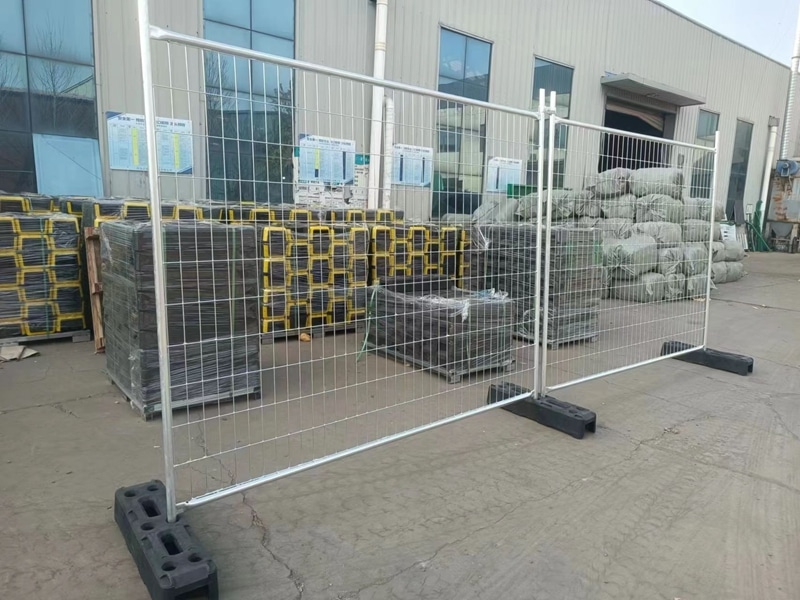
Recycled rubber bases are typically compounded from tyre crumb — ground end-of-life tyres — bound with a rubber or polyurethane binder and pressed into blocks. The tyre rubber brings one advantage for free: tyre compounds are loaded with carbon black, the same pigment that makes the bases black, and carbon black is an effective UV-screening agent. This is why a black recycled rubber base generally outlasts an unstabilised light-coloured plastic part in the same sun. But “generally” is doing heavy lifting in that sentence, because the recycled stream is variable and the binder is new material with its own UV behaviour.
That is where the additive package earns its place in your specification. A formulator can compensate for a variable crumb stream by dosing UV stabilisers and antioxidants into the binder, choosing binder chemistry with better UV resistance, and adjusting the carbon black loading of the surface layer. Those choices are invisible in the finished product — two identical-looking black bases can sit at opposite ends of the UV spectrum — which is precisely why the recycled label on its own tells you nothing about outdoor life. The formulation tells you; the test report proves it; and a supplier who can describe neither is selling you the colour black, not a weathering specification.
How to Verify a Supplier’s UV Claims
Verification is a conversation with four questions in it, and the way a supplier answers matters as much as the answer. The table below pairs the claim you will hear with the document or answer that turns it into something you can hold a batch to.
| The claim | What to demand | Why it matters |
|---|---|---|
| “UV stabilised compound” | Stabiliser type and how it is dosed into the binder | Separates a formulated batch from a generic black block |
| “Tested for outdoor use” | Accelerated weathering report (xenon-arc or UV-fluorescent) | Shows the method, conditions and measured change, not a slogan |
| “Lasts for years outdoors” | The basis of the number, or withdrawal of the claim | A fixed year figure cannot be honest across climates and formulations |
| “Same as the samples you saw” | A production-batch sample before dispatch | Confirms the shipped compound matches what was tested |
Two practical notes on reading the reports. First, accelerated weathering compresses years of sunlight into weeks of controlled exposure, but results from xenon-arc and UV-fluorescent methods are not interchangeable — compare like with like, and look for what was measured after exposure: crack initiation, surface change, retained properties. Second, the same questions apply to the finish chain; our guide to powder coating quality tests covers the cross-hatch and salt spray reports to hold alongside the rubber data — a UV-stable base under a failing coating is a wasted specification.
Recycled Rubber Bases vs Plastic Feet
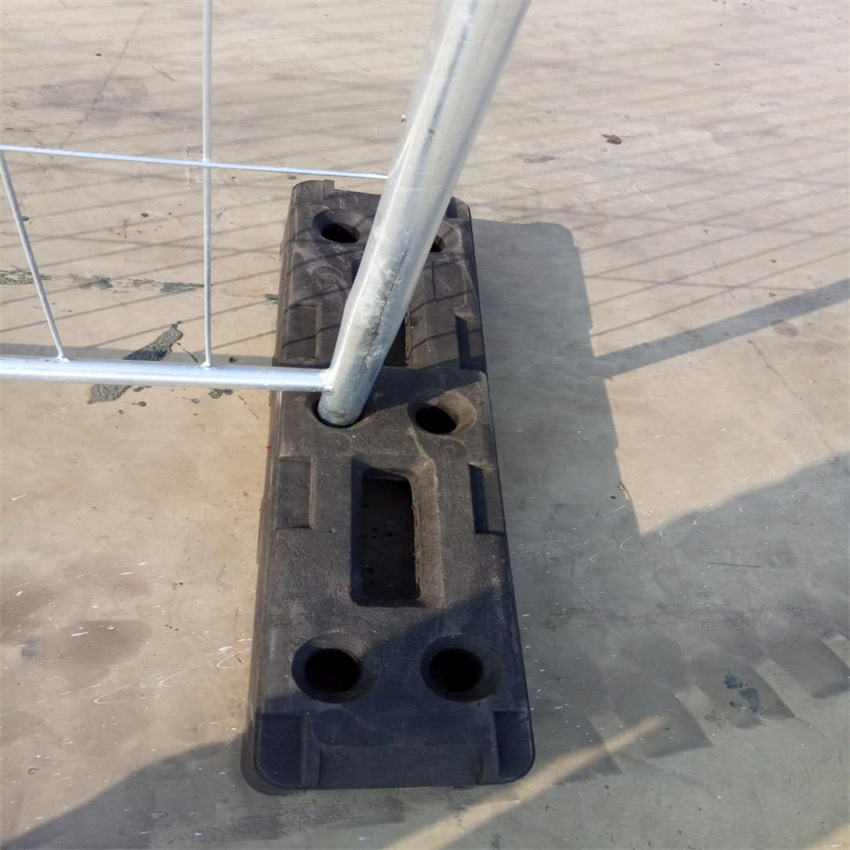
The two base families answer different questions. Recycled rubber bases bring mass and grip — they resist sliding, shrug off vehicle and forklift contact, and their weight keeps a run planted where wind loading is the design driver. Plastic feet bring handling: they are lighter for a crew to move all day, cost less to freight, and suit sites where the fence is repositioned constantly and ballast is added separately when needed. Neither is the better product; each is the better product for a duty cycle, and our comparison of plastic feet and recycled rubber bases works through the selection logic in detail.
Supply-side capability matters here more than buyers usually check. DB Fencing operates its own plastic feet injection machine — the only supplier in Anping that does, and the factory that supplies feet to many other local fence makers — which means plastic feet are produced in-house to matched cavity dimensions rather than bought in from a third party. Recycled rubber bases run alongside them in the same accessories programme. When the panel, the foot and the clamp come from one factory, the compatibility question is answered by the people who make all three parts, which is cheaper than answering it on site with a file and a shim.
Specifying Bases as Part of the Fence System
A base only performs as part of a matched system: the leg pocket dimension must fit the panel’s frame tube, the base footprint must suit the surface, and the run needs bracing at the intervals wind exposure demands. Our temporary fence foot compatibility chart covers the matching logic between feet and panel weights. Order the accessories with the panels — bases, clamps, bracing and gates in the same container — and the whole run arrives consistent, from one quality system: the factory is ISO9001 certified and SGS audited, and its temporary fencing systems are built to AS 4687-2022/2007 for the Australian market that takes the largest share of its exports.
On the commercial side, the same terms that govern a panel order govern the accessories: flexible, negotiable payment terms, bulk production at 20–25 days with stock configurations dispatching in 7 days, and a quote on a written specification within 24 hours. Ask the UV questions early in that exchange — the answers belong in the order documents, not in a post-delivery email chain after the first cracked base appears on a summer site.

Frequently Asked Questions
How long does a recycled rubber base last in the sun?
There is no single number: UV life depends on the crumb source, the binder, the additive package and local UV intensity. Verify the formulation instead — stabiliser type, accelerated weathering report and a production sample — rather than accepting a fixed year figure.
Why is black rubber more UV resistant than light-coloured plastic?
Tyre crumb is loaded with carbon black, a pigment that screens ultraviolet light. That gives recycled rubber a head start, but the binder and any supplementary stabilisers still decide how the finished base performs outdoors.
What test report should I ask for when buying rubber fence bases?
An accelerated weathering report — xenon-arc or UV-fluorescent exposure testing — showing the method, conditions and measured change after exposure. Compare results from the same method only, and pair it with a production-batch sample before dispatch.
Should I choose recycled rubber bases or plastic feet?
Rubber bases suit wind-exposed runs and traffic contact, where mass and grip matter; plastic feet suit constantly repositioned fences where handling weight and freight cost dominate. DB Fencing moulds its own plastic feet in-house and supplies both families from one accessories programme.
Conclusion
UV risk in a recycled rubber base is managed at the specification stage, not the warranty stage. Because no honest cracking timeline exists across formulations and climates, the specification that protects you is the one that names the stabiliser approach, attaches an accelerated weathering report, and locks a production-batch sample into the order documents. Pair that with bases matched to your panels’ frame tubes from a factory that moulds its own feet, and the cheapest line on the quote stops being the most likely failure.
Before your next order, put the four verification questions to your current supplier and see how far you get — then send the same list, your panel specification and your base quantities to DB Fencing for comparison. The quote comes back within 24 hours.