Skip to content
A powder coated fence panel can look flawless on the day the container opens and fail within two wet winters, and the difference between those outcomes is measurable before shipment. Two tests decide it: the cross-hatch adhesion test, which tells you whether the coating is bonded to the steel or merely sitting on it, and the salt spray test, which tells you how the whole system — pretreatment, zinc layer and powder — survives corrosive exposure. Buyers who ask for these test results at order stage get a different product from buyers who ask for photos.
This guide explains what each test actually measures, what a good result looks like, and how to write the requirement into a purchase order so it survives contact with a factory’s shipping schedule. The backdrop: powder coating over hot-dip galvanised steel — a duplex system — is the premium finish for tubular steel fencing, and the factory behind this range is ISO9001 certified and SGS audited, producing on 10 welding lines at up to 2,000 sets per week. Certification describes the system; the tests verify the batch.
Key Takeaways
- Cross-hatch adhesion (ISO 2409): a lattice cut through the coating, tape-pulled and rated 0 to 5 — rating 0 or 1 is what you want on a fence panel.
- Salt spray (ISO 9227): accelerated corrosion exposure in a neutral salt fog; the hours to first red rust is the headline number that separates coatings.
- The zinc does the heavy lifting: hot-dip galvanising above 42 microns under the powder is the base layer of protection; powder adds barrier and colour.
- Ask for reports, not adjectives: put test type, standard and pass criteria on the purchase order, and inspect against it before balance payment.
- Storage discipline is part of adhesion: panels stacked wet, or with coating cured on contaminated surfaces, fail cross-hatch regardless of chemistry.
Cross-Hatch Adhesion: Testing the Bond
Adhesion is the question that decides whether a coating is a skin or a sticker. The cross-hatch test, standardised as ISO 2409, cuts a lattice of six-by-six parallel lines through the coating to the substrate, applies pressure-sensitive tape over the grid, and pulls. If the coating stays in the squares, it is bonded. If flakes lift with the tape, the coating was never attached to the steel in the first place — and every square millimetre that lifts becomes a corrosion starting point in service.
Results are rated 0 to 5, and the scale is inverted from what intuition suggests: ISO 2409 rating 0 means the cut edges are completely smooth, no detachment — the best result. Rating 1 allows minor flaking at intersections, still acceptable for most fencing service. By rating 3, coating flakes are peeling from the cut edges and intersections across 5-15% of the test area, and anything below that is a batch that should not ship. When a supplier quotes “adhesion passed” without a rating, ask the follow-up question: passed at which rating? The number is the whole answer.
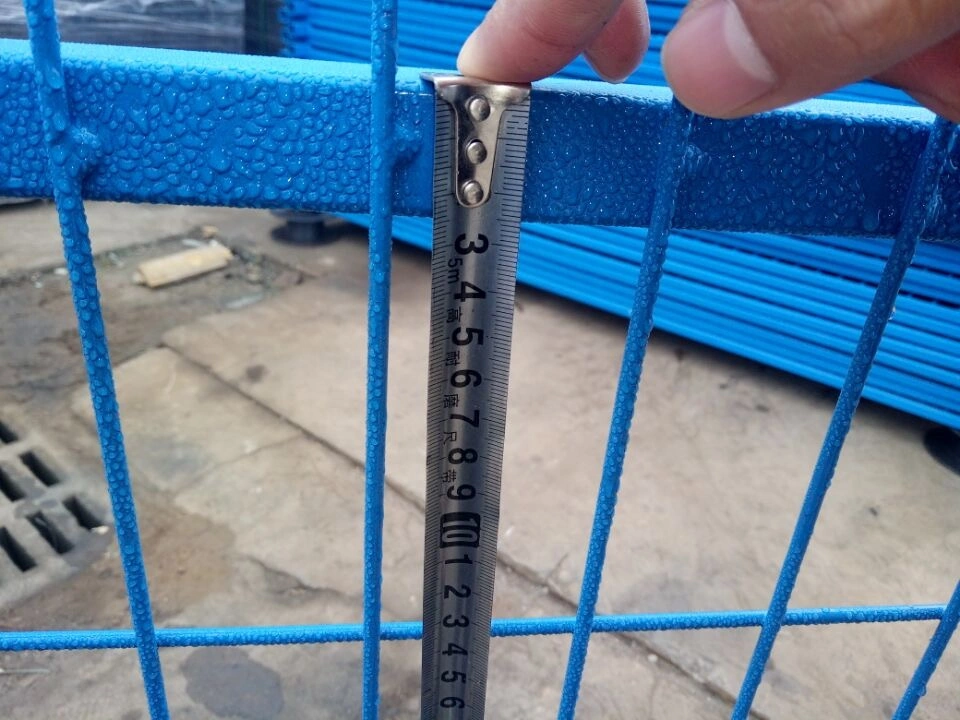
What makes a batch fail a test this simple? Almost always process, not chemistry: surface contamination left by inadequate cleaning, conversion coating applied to a damp or oily substrate, or powder cured at the wrong temperature or time. This is why the test earns its place in an inspection regime — it does not measure the paint, it measures the discipline of the line that week. An engineer verifying wire gauge with calipers on the same line is verifying the same thing from another angle.
Salt Spray Hours: Testing the System
Where cross-hatch measures the bond, salt spray measures survival. The neutral salt spray test, ISO 9227, exposes coated samples to a continuous fog of 5% sodium chloride solution at 35°C, hour after hour, and the reported result is the hours of exposure before defined failure signs appear — typically white corrosion products (zinc oxides) or red rust (steel corroding through). It is an accelerated test, not a weather forecast: it ranks systems against each other rather than predicting fence life in years.
A practical way to read a salt spray report for galvanised-plus-powder fencing: a bare hot-dip galvanised coating above 42 microns already delivers substantial corrosion protection on its own — the specification this factory ships as standard on its steel. The powder layer’s job is barrier and appearance; its adhesion determines whether it helps or traps moisture at the steel. When a supplier quotes salt spray hours, check which system the hours describe — powder alone on bare steel, powder over galvanising, or the zinc by itself. Comparing hours across different systems is the most common way meaningless numbers enter a negotiation.
One caution on comparing numbers: salt spray results depend on coating thickness, pretreatment chemistry and cure, so two suppliers quoting identical hours may deliver different fences. Use the number as a floor for comparison, then verify with the cross-hatch rating and, for high-stakes coastal orders, a pre-shipment sample test rather than a certificate PDF alone.
Why Zinc Under the Powder Changes Everything
A duplex system — hot-dip galvanising with a powder coating over it — protects better than either layer alone, and the mechanism is worth understanding before you pay for it. The zinc sacrifices itself electrochemically to protect any steel exposed at cut edges and scratches; the powder shields the zinc from the environment, slowing its consumption dramatically. The same fence that loses a bare galvanised coat over a given exposure period can retain most of its zinc under a well-adhered powder layer — the two layers extend each other.
This is also why adhesion is not a cosmetic check. A powder layer that passes cross-hatch at rating 0-1 keeps doing its shielding job for years; a layer at rating 3 blisters, cracks and lifts in sheets, trapping water against the zinc — worse, in some ways, than no powder at all, because the failed coating holds moisture exactly where it does the most harm. For the coating thickness conversation on the zinc side, including the 42-micron specification and what it means for coastal service, see our hot-dip versus pre-galvanised comparison.

Writing Tests Into Your Purchase Order
Test requirements that live in an email thread die at production scheduling. Test requirements written into the purchase order survive, because they attach to payment. A workable specification clause needs four elements:
- Test and standard: cross-hatch adhesion to ISO 2409, salt spray exposure to ISO 9227 (neutral, NSS).
- Pass criteria: adhesion rating 0 or 1; salt spray hours appropriate to your service environment — with the coating system explicitly described (powder over hot-dip galvanising above 42 microns).
- Evidence: test reports per production batch, or third-party inspection verifying the tests, before balance payment.
- Remedy: batches that fail are reworked or rejected at the factory, not shipped “for evaluation”.
Commercially, none of this is exotic. This factory quotes within 24 hours, ships on FOB / CIF / CFR / DDU / DDP terms, runs a 20-25 day production lead and takes orders from 100 panels — a scale at which batch test documentation is routine. The buyers who get the best coating outcomes are not the ones who negotiate hardest on price per panel; they are the ones whose purchase order makes the test results a condition of the balance payment. For the wider sourcing framework, our guide to buying fencing from China covers verification and payment protection end to end.
Frequently Asked Questions
What is a good cross-hatch adhesion result for a powder coated fence?
Under ISO 2409, rating 0 (no detachment at the cut edges) or rating 1 (minor flaking at intersections) is the pass zone for fencing. Rating 3 or worse — flakes peeling from 5-15% or more of the test area — means the batch should be reworked, not shipped.
How many salt spray hours should a powder coated fence achieve?
It depends on the system being tested — powder alone, or powder over hot-dip galvanising above 42 microns. Always compare hours quoted for the same coating stack, and treat the number as a comparative floor, verified alongside a cross-hatch rating, rather than a standalone guarantee.
Why put powder coating over galvanised steel?
The duplex effect: zinc protects the steel at scratches and cut edges, while the powder shields the zinc from the environment and slows its consumption. The two layers together outlast either one alone — provided the powder passes adhesion testing.
Can I verify coating quality at pre-shipment inspection?
Yes — cross-hatch kits are cheap and a third-party inspector can run the test on random panels alongside dimensional checks. Write the test, the standard and the pass rating into the purchase order so the results gate the balance payment.
Conclusion
Coating quality is a two-test story: ISO 2409 cross-hatch confirms the powder is bonded, ISO 9227 salt spray confirms the system survives, and a hot-dip galvanised layer above 42 microns under the powder is what makes both results worth having. None of it helps unless the requirements sit in the purchase order where payment can see them.
Before your next order, request the batch test regime with the quotation — a 24-hour quote turnaround leaves time to negotiate the clause. Start with the powder coated steel fence range, and pair it with the 42-micron galvanising guide for the zinc half of the system.