Skip to content
A steel picket fence comes in two dominant top profiles, and the choice between them is not cosmetic. Spear tops — the pressed, pointed finials that give security fencing its unmistakable silhouette — and flat tops, the clean horizontal rail that defines pool fencing and front-boundary installations, behave differently in three dimensions buyers actually pay for: how hard the fence is to climb, how safely it sits near people and animals, and what it costs to manufacture and ship. Getting the profile right at order stage is cheaper than learning the difference after installation.
Both profiles share the same underlying build from a manufacturing point of view: welded tubular steel pickets in a framed panel, hot-dip galvanised to a coating above 42 microns, with powder coating available as a coloured finish over the zinc. The fork in the road is the top of the picket. This comparison sets out what each profile does well, where each one belongs, and how the cost structure differs — so your specification sheet reflects a decision, not a default.
Key Takeaways
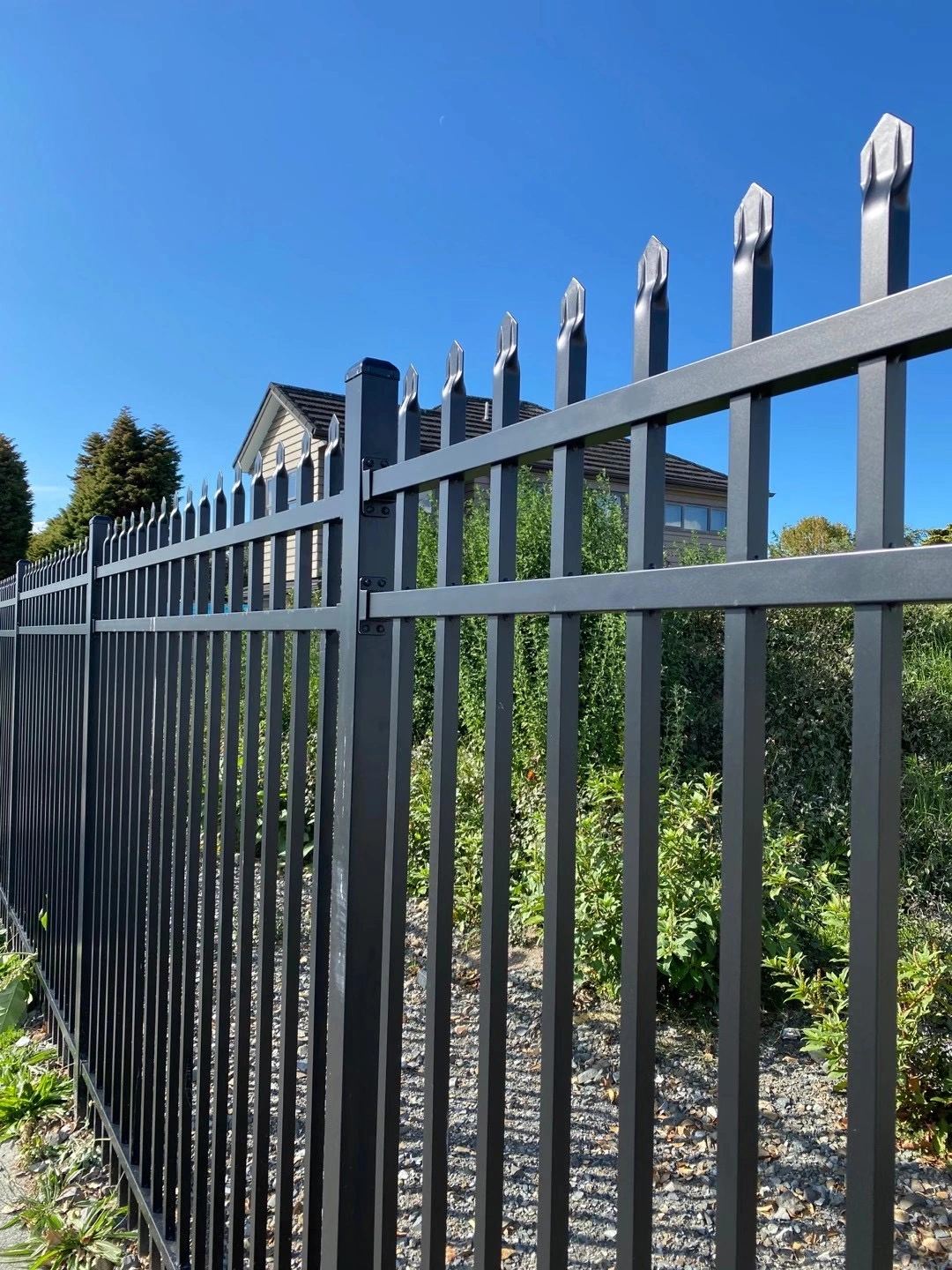
- Spear tops deter climbing: the pressed point at the top of each picket makes the fence uncomfortable to grip and scale — the reason spear profiles dominate security perimeters.
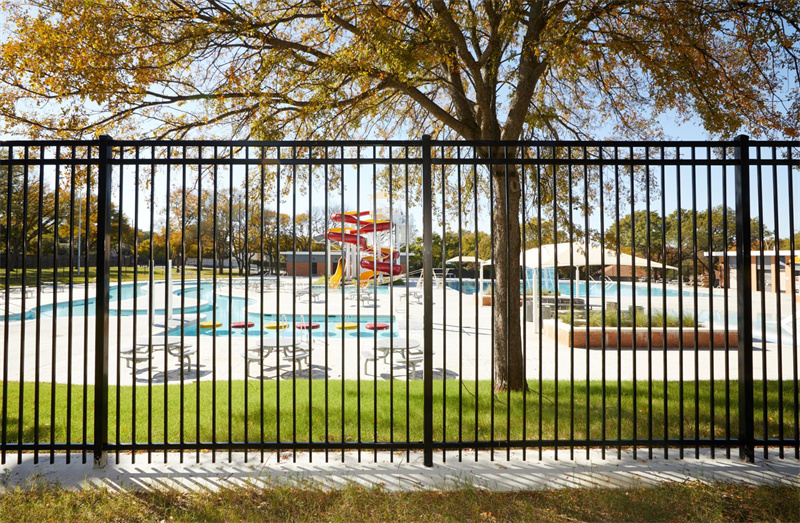
- Flat tops prioritise safety and sightlines: a finished horizontal rail removes sharp points near children, pets and public footpaths, which is why flat-top profiles are common around pools and residential frontages.
- Same substrate, different labour: both profiles run on hot-dip galvanised steel above 42 microns; spear tops add forming steps that flat tops skip.
- MOQ and lead time are profile-independent: from this factory both start at 100 panels with a 20-25 day production lead, on FOB / CIF / CFR / DDU / DDP terms.
- Pick one, not both: mixed profiles on one site read as an afterthought — decide by boundary function, zone by zone.
Security: How Each Profile Fights a Climber
Most perimeter breaches are not sophisticated. A person looks for the easiest route over the fence, and the top of the picket is the last thing their hands touch. On a spear-top panel, that final handhold is a pressed point — uncomfortable to grip, awkward to swing a leg over, and slow enough to cross that it pushes opportunistic intruders toward softer targets. That deterrent effect is why spear-top tubular steel fencing is the default for commercial yards, substations, schools and asset storage, where the fence is doing genuine security work rather than marking a line.
A flat top presents a horizontal rail instead. It is climbable with intent — a determined adult with a boost will get over it — but so, honestly, is any fence below a certain height. What the flat rail buys is predictability: nothing catches clothing or skin on the way over or through, which matters more in public settings than the marginal deterrence of a point. If your risk assessment is about liability and controlled access rather than intrusion, the flat top is the rational choice, and pretending otherwise buys you nothing but aggravated parents and snagged jumpers.

Safety: Points, Rails and Who Shares the Boundary
Safety considerations track who can reach the fence. Around pools, play areas and residential front boundaries, a flat-top profile is the usual specification precisely because it removes sharp finials at hand height — and pool barriers in Australia are regulated, with requirements that vary by state (the AS 1926 series covers pool fencing in most jurisdictions; confirm the current standard and your local council’s requirements with a licensed certifier before ordering). The same logic applies anywhere the public runs parallel to the fence: footpaths, school runs, customer parking.
There is also an animal dimension that livestock and equine buyers know well. Horses and cattle test fences with noses, necks and hooves, and a spear point that deters a burglar can lacerate a curious yearling. Flat-top and rolled-top profiles are kinder to animals in shared paddock or arena margins — though for genuine livestock containment, purpose-built corral and horse panels with rounded profiles are the better tool, not a repurposed security fence. Match the fence to the animal, not the brochure.
Cost Structure: Where the Money Actually Differs
Both profiles use the same steel tube, the same welding lines and the same hot-dip galvanising bath. The cost difference is in forming: a spear top requires the picket tip to be pressed or folded into shape — an extra die step per picket, across every picket in every panel. A flat top terminates the picket into the horizontal rail with no tip forming. More forming steps mean more tooling time and slightly more handling, which is why spear-top panels typically price above an equivalent flat-top panel in the same tube gauge and height.
The commercial terms, however, do not change with the profile. From this factory, the minimum order is 100 panels in either profile, production runs 20-25 days, and shipping quotes on FOB, CIF, CFR, DDU or DDP terms as you prefer. Two cost levers matter more than the profile itself: tube gauge and height, which drive steel mass, and finish — plain hot-dip galvanised versus powder coating over the zinc. Decide those three variables first, because they move the invoice far more than spear versus flat.
| Factor | Spear Top | Flat Top |
|---|---|---|
| Climb deterrence | High — pressed point at final handhold | Moderate — smooth rail, climbable with intent |
| Safety near children/animals | Requires care — points at hand height | Preferred — no exposed points |
| Typical applications | Security perimeters, yards, assets | Pools, frontages, public-facing boundaries |
| Manufacturing cost driver | Extra tip-forming step per picket | Simpler termination into rail |
| MOQ / lead time | 100 panels / 20-25 days | 100 panels / 20-25 days |
Materials and Finish: What Both Profiles Share
Whichever profile you choose, the corrosion protection is the same story, and it is worth getting right once for the whole order. The substrate is welded steel tube, hot-dip galvanised to a coating above 42 microns — thick enough for coastal and harsh-outdoor service. Powder coating can be applied over the zinc for a colour finish, and a zinc-plus-paint duplex system protects better than either coating alone; if you are specifying colour, ask for the coating test regime up front. The factory behind this range is ISO9001 certified and SGS audited, and runs 10 welding production lines with output capacity up to 2,000 sets per week, so a 100-panel order in either profile is a small slot in a large schedule rather than a favour.
For coastal installations, ask about aluminium alternatives in the flat-top family: aluminium picket panels trade some strength for corrosion immunity in salt air, and mixing materials by zone — aluminium at the seaward boundary, galvanised steel elsewhere — is a legitimate strategy. The deeper dive on the zinc itself, including why coating thickness separates serious suppliers from hopeful ones, is in our 42-micron hot-dip versus pre-galvanised comparison.
Specifying Your Order: A Decision Framework
Work the boundary in zones rather than choosing one profile for the whole site. The framework we use with buyers is simple: what is on the other side of the fence, and what happens if someone crosses it? Where the answer is “assets at risk and few legitimate visitors,” specify spear tops — the deterrence is worth the forming cost. Where the answer is “the public, children, or animals, all day, every day,” specify flat tops and spend the saving on tube gauge. Gates, being the functional weak point of any fence, deserve the same logic as their adjoining panels.
Put the profile in writing on the purchase order, next to tube gauge, panel height, coating specification and the incoterms you agreed. A one-line specification of “spear top” or “flat top” costs nothing to add and prevents the most frustrating failure mode in imported fencing: a container of beautifully galvanised panels with the wrong silhouette for their job. For the broader sourcing process, our guide to buying fencing from China covers factory verification and payment protection.
Frequently Asked Questions
Are spear top fences more secure than flat top?
Against opportunistic climbing, yes — the pressed point removes the comfortable final handhold a flat rail provides. Against a determined intruder neither profile is absolute; pair the profile with height, gate hardware and site lighting.
Which profile should I use around a pool?
Flat top, in most cases — pool barriers are regulated and a finished rail avoids exposed points near children. Confirm the current standard and council requirements with a licensed certifier before ordering.
Is a spear top steel picket fence more expensive than flat top?
Typically slightly more, because each picket tip needs an extra forming step. The bigger cost levers are tube gauge, height and finish — MOQ (100 panels) and lead time (20-25 days) are the same for both profiles.
Can I mix spear and flat top panels on one site?
You can, and zoning by risk is legitimate — spear tops on asset boundaries, flat tops on public-facing runs. Keep each run visually consistent so the variation reads as design intent rather than a supply mistake.
Conclusion
The spear versus flat decision comes down to what the fence is defending and who is standing next to it: pressed points where deterrence earns its keep, finished rails where safety and compliance set the spec. Both profiles deliver the same 42-micron-plus hot-dip galvanised protection, the same 100-panel MOQ and the same 20-25 day production window — so make the profile a deliberate line on the purchase order, not an afterthought.
Next step: map your boundary into zones and match a profile to each. The steel picket fence range shows both profiles in production, and the coating comparison guide covers the zinc specification that protects either choice.