Skip to content
A stillage cage welded mesh datasheet normally carries one figure that decides whether the purchase works: the load rating. In the model table on our warehouse cage page that column runs from 300 kg on B-8 to 2000 kg on C-4 across twenty-two rows, and buyers compare quotations on it.
Below the table the same page lists another set of models, uses different names for the identical number, gives folded dimensions the table has no column for, and prints inner sizes that break the table’s own pattern. None of that is a defect you only find after delivery.
Key Takeaways
- The table rates twenty-two rows from 300 kg to 2000 kg, at 5.0, 6.0 or 6.4 mm wire and 50×50, 50×100 or 100×100 mm openings.
- Widen the grid at the same 6.0 mm wire and family B falls from 1200 kg to 800 kg, then to 600 kg.
- Wire gauge does not rank the range: E-1 uses the thinnest wire in the table and is still rated 1800 kg on a 78 kg tare.
- Rows printing both dimension sets differ by the same amount every time — 50 mm shorter, 30 mm narrower, 140 mm lower inside.
- Capacity appears under three names: Loading Capacity in the table, Working Load Limit on PCDW rows, Safe Working Load on STILLAGE rows.
- Only PCDW-03 states a condition — 2000 kg “evenly distributed”. Folded heights, 190 to 425 mm, appear in prose only.
What the Capacity Column Actually Covers
One number per model, a unit, no conditions. A cage in service sees three loads and one figure cannot cover all three: static weight on a shelf, shock and side-loading in handling, and the compression a bottom frame carries under a loaded stack. The product page lists forklift and pallet-jack handling as an intended use, so the middle case is in scope.
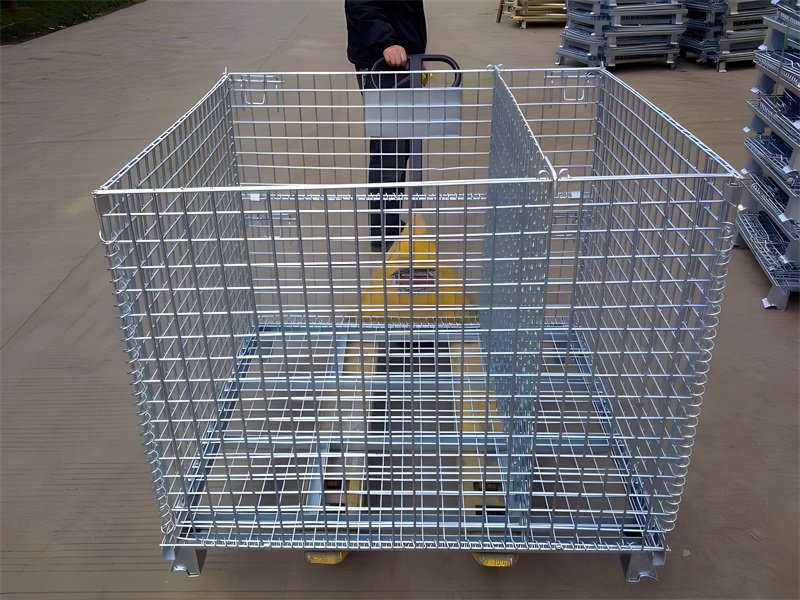
Nothing in the model table says which of those its figures answer. Across the whole page exactly one rating carries a condition: PCDW-03, stated at 2000 kg “(evenly distributed)”. The published question-and-answer block replies only that capacity can vary and that heavy-duty models are built to carry weight; it names no test, no deflection limit and no safety factor. A rack supplier normally splits a nominal figure into static and dynamic ratings with a stated factor of safety, so ask for the same split on your row — load case, permissible bottom-frame deflection, and whether the figure assumes contents spread evenly.
Then ask what the rating assumes about the doors. The page lists removable front and rear gates that stay usable when cages are stacked, and a gate is an interruption in the side panel. Production figures behind the line are published, ten welding lines and a weekly ceiling of 2,000 sets, but nothing on the cage page ties that output to a load test.
Grid Opening Versus Wire Diameter
Read the codes before the ratings. The letter marks the footprint family, A through E. Rows 1 to 3 are the same three openings — 50×50, 50×100 and 100×100 mm — at 6.0 mm wire in families A to D. Only B and C run past row 3: rows 4 and 5 are 50×50 and 50×100 at 6.4 mm, and rows 6 to 8 return to all three openings at 5.0 mm. A, D and E stop at row 2, and E is 5.0 mm throughout.
| Model | Wire | Grid | Tare | Rated | Load per kg |
|---|---|---|---|---|---|
| B-1 | 6.0 mm | 50×50 | 44 kg | 1200 kg | 27.3 |
| B-2 | 6.0 mm | 50×100 | 39 kg | 800 kg | 20.5 |
| B-3 | 6.0 mm | 100×100 | 33 kg | 600 kg | 18.2 |
| B-4 | 6.4 mm | 50×50 | 50 kg | 1500 kg | 30.0 |
| B-6 | 5.0 mm | 50×50 | 37 kg | 600 kg | 16.2 |
| B-8 | 5.0 mm | 100×100 | 28 kg | 300 kg | 10.7 |
| E-1 | 5.0 mm | 50×50 | 78 kg | 1800 kg | 23.1 |
Hold the wire at 6.0 mm and widen the grid once, and family B falls from 1200 kg to 800 kg — a third. Widen again and B loses a further quarter, to 600 kg. In family C the second widening changes nothing: C-2 and C-3 both stay at 1000 kg.
Shortlist on the ratio in the last column and on what could fall or shift through the opening, not on wire gauge. B-6 makes the point: the same 50×50 opening as B-1, wire a millimetre thinner, half the rating. The spread runs from 10.7 kg of load per kilogram of cage on B-8 to 30.0 on B-4.
Outer Minus Inner: the 50/30/140 Pattern
Five rows print both dimension sets: A-1, B-1, C-1, D-1 and E-1. Subtract one from the other and the same three gaps return every time — 50 mm off the length, 30 mm off the width, 140 mm off the height. That is where frame, base and any fitting over the top have to sit.
| Model | Outer (mm) | Inner (mm) | Usable share |
|---|---|---|---|
| A-1 | 800 x 600 x 640 | 750 x 570 x 500 | about 70% |
| B-1 | 1000 x 800 x 840 | 950 x 770 x 700 | about 76% |
| C-1 | 1200 x 1000 x 890 | 1150 x 970 x 750 | about 78% |
| D-1 | 800 x 500 x 540 | 750 x 470 x 400 | about 65% |
| E-1 | 1550 x 1120 x 990 | 1500 x 1090 x 850 | about 81% |
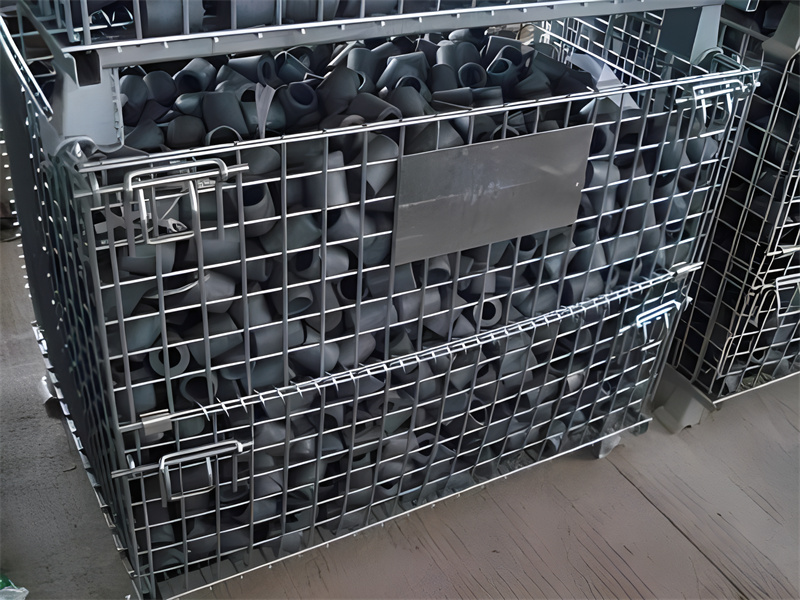
Frame cost does not scale down with footprint, so the penalty lands hardest on small cages. D-1 encloses 0.216 cubic metres outside and 0.141 inside — about a third of the space you pay to ship is steel. E-1 gives back roughly four fifths.
Only five of the fifteen outer dimension options listed under the table carry a rated row. The prose covers others: PCDW-01 at 1205 x 1160 x 992 mm is 1000 kg working load limit, PCDW-03 at 1205 x 1165 x 1028 mm is 2000 kg, STILLAGE1 at 1150 x 1150 x 850 mm is 800 kg safe working load. The rating for your footprint usually exists somewhere on the page, under a name the table does not use. Ask which line governs before comparing two suppliers.
The two conventions also disagree about the frame. STILLAGE2 prints 1200 x 1000 mm outside and 960 x 960 mm inside — 240 mm off one axis, 40 mm off the other — where every table row takes 50 and 30. Ask for the inner dimension of the model you are buying, drawn or measured.
Stacking, Folded Heights and Wheel Kits
Stacking is where a single capacity figure is misread most often. Four C-1 cages, each loaded to its stated 1500 kg: the bottom frame carries the contents of the three above plus three tares, 4500 kg plus 177 kg, so 4677 kg pressing on a model rated at 1500 kg for its own base. The stack puts 6236 kg on a 1.2 x 1.0 m floor patch, close to 5200 kg per square metre. Slab and rack capacity is your structural engineer’s number, not ours; the rating column never claimed to answer stacking.
Ask instead for tiers permitted with loaded cages above, the load at which deflection is measured, and an empty-tare stack height. Folded dimensions are the other thing the table omits and the prose supplies: 200 mm on STILLAGE1, 190 mm on STILLAGE2, 300 mm on the 1150 x 1150 x 890 mm galvanised mesh cage, 425 mm collapsed on the 1150 x 750 x 1170 mm rectangular cage. None is attached to a model row.
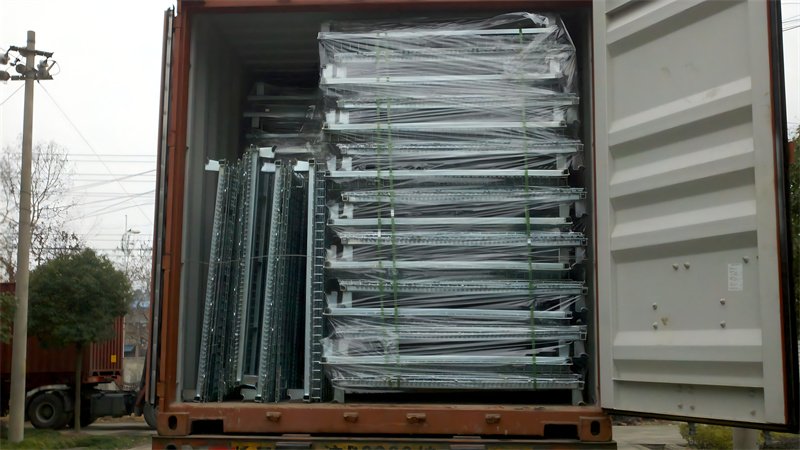
Ask for the folded height of the model you are quoting, not the nearest prose line, and put it against the container loading maths you already run on fencing: the difference between 190 mm and 425 mm folded is the difference between two usable return loads and one. The page also carries a rare explicit derating — the optional wheel kit on the 1125 x 1125 mm model is listed at 800 kg against that cage’s 1200 kg capacity. Ask whether your model drops the same way with castors fitted.
Coating needs the same treatment. The cage page says galvanised steel wire mesh and stops there, with no micron figure for this product. The >42 micron hot-dip basis recorded for the outdoor temporary fencing line is not a cage specification, and neither is the 18-28 micron figure printed on the Australian livestock panel page. Name the coating in microns for the cage line specifically. Our hot-dip versus pre-coated comparison shows why the unit matters, and the cage page holds table and prose side by side.
Frequently Asked Questions
What does the Loading Capacity column actually cover?
One figure per model — 300 kg to 2000 kg in the table — with no load case attached. Only PCDW-03 states its 2000 kg as evenly distributed. Ask which case your row answers: static shelf, forklift-dynamic, or bottom-frame compression.
How many cages can be stacked loaded?
No tier count can be answered from the page, because no stacking column is printed. Run the arithmetic anyway: four C-1 cages at full rating put 4677 kg on the bottom frame, more than three times that model’s own figure.
Is a 50×50 mm grid worth the penalty over 100×100 mm?
Choose by what could fall or shift through the opening, then check what you gave away. At 6.0 mm wire in family B, 50×50 is rated 1200 kg and 100×100 is rated 600 kg.
Do collapsible cages really save money on the return leg?
That is the reason to buy them, and the figure you need sits outside the model table. Folded heights on the page run from 190 mm to 425 mm across four prose models. Ask for the folded height of the exact model you are quoting.
What lead time should a cage order be planned around?
The company publishes 20-25 days for bulk production and a 7-day dispatch claim for stocked items, with quotations answered within 24 hours. The recorded 100-panel minimum belongs to panel lines, so confirm the cage minimum separately.
Conclusion
The table is straight about twenty-two ratings; the prose is useful but differently worded. Between them sit the three things a warehouse decision needs: which capacity name governs your row, how many loaded tiers a bottom frame survives, and the folded height of the model you are quoting.
Send your footprint, your target rating and your stack height, and ask for those answers inside the same document as the quotation. Mesh has been welded in Anping since 2009, and the site states ISO9001 certification and SGS audit without publishing certificate numbers — so the sheet that names your row is the document worth requesting by name.