 Skip to content
What You Must Remember
- A structured maintenance program with regular inspections and preventive actions is essential to maximize steel fence lifespan.
- Documenting all maintenance activities and training staff ensures consistent upkeep and cost-effective repairs.

Introduction to Steel Fence Maintenance
Steel fencing stands as a stalwart choice for commercial, industrial, and high-security properties, prized for its formidable strength and imposing presence. It effectively delineates boundaries, secures assets, and controls access with a reliability that few other materials can match. However, this strength is not an excuse for neglect. A well-designed steel fence maintenance program is not a luxury but a critical operational necessity. Without a structured approach to upkeep, the very properties that make steel desirable can be undermined, leading to costly failures and compromised security.
The core challenge with steel is its inherent susceptibility to corrosion, commonly known as rust. When steel is exposed to oxygen and moisture, an electrochemical process begins that degrades the metal, weakening it from the outside in. This process is significantly accelerated by environmental factors like humidity, salt spray, and industrial pollutants. Furthermore, mechanical damage from impacts, ground settlement, or even aggressive vegetation growth can compromise protective coatings, creating entry points for corrosion. Over time, what begins as a minor aesthetic issue can escalate into a severe structural deficiency, impacting the fence’s performance and driving up the total cost of ownership through expensive, reactive repairs.
Why Steel Fencing Needs Maintenance
Steel’s primary advantage in fencing is its exceptional durability and rigidity, providing a high level of security. However, its Achilles’ heel is its iron content, which makes it prone to oxidation, or rust. This vulnerability is exacerbated by common environmental stressors. In coastal areas, airborne salt particles create a highly corrosive saline environment. In humid climates, constant moisture provides the perfect catalyst for rust. Even inland, acid rain, industrial pollutants, and something as simple as overgrown vegetation trapping moisture against the fence can accelerate its degradation. This makes understanding your local environment the first step in creating effective steel fencing care procedures.
The impact of neglect is both financial and functional. A fence riddled with corrosion is not just an eyesore; it’s a compromised security barrier. Posts can weaken at the base, rails can sag, and gate mechanisms can fail. Industry data consistently shows that a proactive maintenance approach is far more cost-effective than reactive repairs. A report from a leading steel manufacturer suggests that routine maintenance and timely rust prevention can extend the lifespan of steel fences by up to 50%. This proactive stance allows for scheduled, budgeted interventions rather than expensive, emergency repairs that often involve significant downtime and higher labor costs. Compared to materials like aluminum, which is naturally rust-resistant but less strong, or wood, which requires staining and is susceptible to rot and pests, steel offers a unique balance of strength and longevity, provided its specific maintenance needs are met.

Components of Steel Fence Maintenance Programs
An effective steel fence maintenance program is a multi-faceted strategy built on several core components, with routine inspection schedules serving as its foundation. These systematic checks form the backbone of the program, designed to proactively identify potential issues before they escalate into costly problems. This forward-looking approach allows for planned interventions, providing a clear advantage over reactive, emergency-based repairs.
Beyond inspections, the program must detail preventive maintenance procedures designed to actively preserve the fence. These proactive actions, such as regular cleaning and immediate coating touch-ups, directly mitigate environmental wear and tear. By interrupting the corrosion cycle at its earliest stages, these steps are crucial for prolonging the fence’s structural integrity.
When issues are discovered, the program must provide clear protocols for common repairs and replacements to ensure a swift, effective response. In parallel, all inspection findings and subsequent actions must be logged in robust maintenance documentation to track the fence’s condition over time. This historical data becomes invaluable for identifying recurring problems, refining maintenance strategies, and justifying future budgets.
The program is only as good as the team executing it, so comprehensive training on procedures and safety protocols for maintenance staff is a non-negotiable final component. Ultimately, each of these elements works in concert to guarantee the fence’s longevity and performance.
Developing Inspection Schedules
As a facility manager at a sprawling logistics park near the coast, I once inherited a five-year-old steel perimeter fence that was already showing advanced signs of corrosion. The previous team had no formal fence inspection schedule, only reacting when a gate seized or a panel looked visibly weak. By implementing a rigorous monthly inspection checklist, we were able to halt the rapid decay. We discovered that morning dew combined with salt spray was pooling at the base of over 30% of the posts, a problem invisible from a distance. This is a perfect example of how environmental factors directly influence inspection frequency; what might be a quarterly task in a dry, inland climate becomes a monthly necessity in a more aggressive environment. The physical conditions your fence endures dictate the pace of your vigilance.
The primary goal of a structured inspection schedule is to move from a reactive to a proactive maintenance posture. This shift is rooted in understanding how different environmental and operational factors accelerate corrosion and mechanical wear. For instance, the chloride ions in salt spray act as an electrolyte, dramatically speeding up the electrochemical reaction that causes rust. Similarly, industrial pollutants can introduce acidic compounds that eat away at protective coatings. High-traffic areas or high-security sites also demand more frequent checks due to the increased risk of accidental impacts or deliberate tampering. A Facility Management Association whitepaper found that quarterly inspections can reduce total fence repair costs by an average of 30% compared to reactive maintenance, highlighting the clear financial benefit of a well-planned schedule.
Factors Influencing Inspection Frequency
The cornerstone of a successful commercial fence maintenance best practice is tailoring the inspection frequency to specific risk factors. Climate is the most significant variable; a fence in a dry, mild inland area may only require quarterly checks, while one in a coastal or highly humid region needs monthly attention to catch salt-induced corrosion early. The fence’s immediate location also plays a role. Is it shaded by dense vegetation that traps moisture? Is it adjacent to a road that gets salted in the winter, leading to corrosive spray? These micro-environmental risks warrant more frequent observation.
Beyond environmental factors, usage intensity and security requirements are key. A fence around a high-security data center or airport perimeter demands monthly checks to ensure its integrity is never compromised. In contrast, a decorative fence in a low-traffic area might be sufficiently managed with a less frequent schedule. Furthermore, facility managers must be aware of any legal or contractual mandates. Insurance policies or service level agreements for certain commercial properties may stipulate a minimum inspection frequency. Ultimately, the decision on frequency is a cost-benefit analysis: the expense of more frequent inspections must be weighed against the much higher potential cost of a structural failure or security breach.

| Environment | Inspection Frequency | Key Considerations |
|---|---|---|
| Mild Climate | Quarterly | Standard visual and mechanical checks |
| Coastal/Humid | Monthly | Increased corrosion risk, salt exposure |
| Industrial Areas | Monthly to Bi-monthly | Pollution and physical damage concerns |
| High-Security Sites | Monthly | Critical integrity and operational checks |
Creating an Inspection Checklist
To ensure inspections are thorough and consistent, a detailed inspection checklist is non-negotiable. This document guides your maintenance team, guaranteeing that no detail is overlooked. The checklist should be broken down into distinct categories. Start with visual checks, systematically scanning for any signs of rust, bubbling paint, or coating discoloration, paying special attention to welds, joints, and areas near the ground. Next, perform a mechanical assessment. This involves physically checking the tension on bars and wires, ensuring all bolts and fasteners are tight, and verifying that posts are plumb and secure in their footings.
The checklist must also include specific points for gates and access points. Are the hinges operating smoothly? Do the locks and latches engage correctly? For automated gates, are the rollers and tracks free of debris? Another critical area is the condition at the base of the fence. Your team should check for proper grounding, which is essential for safety and can be compromised by corrosion. They must also assess drainage around the posts, looking for areas where water pools. Finally, the checklist should prompt an evaluation of the surrounding environment, noting any encroaching vegetation or debris buildup that could trap moisture and create a corrosion hotspot.
Preventive Maintenance Procedures
The most effective way to manage a steel fence is to actively prevent its degradation. This begins with understanding the science of rust. Corrosion is an electrochemical process where iron atoms lose electrons in the presence of oxygen and an electrolyte (like water), forming iron oxide. Preventive coatings, such as paint or powder coating, act as a physical barrier, isolating the steel from the oxygen and moisture it needs to corrode. When this barrier is breached by a scratch or impact, the corrosion process begins. A structured preventive maintenance program is designed to vigilantly maintain this barrier and address the small breaches before they blossom into large-scale decay.
These preventive maintenance steel fence procedures are the hands-on work that directly extends fence lifecycle. They are not one-time fixes but a recurring cycle of care. This includes methodical rust removal, meticulous surface preparation, and the correct application of protective coatings. It also extends beyond the fence itself to encompass management of its immediate environment, such as ensuring proper drainage and controlling vegetation. By interrupting the corrosion cycle and minimizing environmental stressors, you can dramatically slow the aging process of your steel assets and maximize your initial investment.
Rust Removal & Surface Preparation
When surface rust is identified, its prompt removal is paramount. The most common tools and techniques include manual wire brushing for small, localized spots and power tools like angle grinders with wire wheels for more extensive areas. For large-scale restoration projects, sandblasting is highly effective, as it strips away rust and old coatings, creating a perfectly profiled surface for a new coating to adhere to. Regardless of the method, safety is a top priority. Personnel must wear appropriate PPE, including safety glasses, gloves, and respiratory protection, to guard against airborne particles and debris.
After the rust is removed, surface preparation is the most critical step for ensuring the longevity of the new coating. The surface must be thoroughly cleaned with a mild detergent and water to remove any dust, grease, or contaminants, then rinsed and allowed to dry completely. A clean, dry, and slightly abraded surface provides the ideal foundation for the primer to bond securely. It’s also important to consider the environmental impacts of these methods; containment measures may be necessary during sandblasting to collect debris, and proper disposal of waste materials is essential for compliance.
Protective Coatings Application
With the surface properly prepared, the application of protective coatings provides the next essential line of defense against corrosion. This is typically a two-stage process involving a primer and a topcoat, with each layer serving a distinct and critical purpose in the overall fence care procedure. Understanding the role of each stage and applying them correctly is fundamental to creating a durable barrier that maximizes the fence’s lifespan.
Primer Selection and Application
The primer is the foundation of your coating system, and its primary job is to inhibit rust and bond tenaciously to the steel surface. For steel fences, a high-quality, rust-inhibiting primer is essential. These are typically zinc-rich or epoxy-based formulations designed to provide active corrosion protection. The primer should be applied evenly according to the manufacturer’s specifications, ensuring complete coverage, especially over welds, edges, and corners where coatings tend to be thinnest. Proper application ensures maximum adhesion for the topcoat. Pay close attention to the recommended drying and curing times before proceeding to the next step, as applying a topcoat too soon can compromise the entire system.
Topcoat Options: Paint vs. Powder Coating
The topcoat provides the final barrier against the elements, particularly moisture and ultraviolet (UV) radiation from the sun, which can degrade coatings over time. The two most common options for steel fences are high-performance industrial paint and powder coating. High-performance paints (like industrial enamels or urethanes) offer good durability and UV resistance, and they have the advantage of being applicable in the field. Powder coating involves electrostatically applying a dry powder that is then cured with heat in a factory setting, creating an extremely hard, durable, and uniform finish. Technical data from coating manufacturers indicates that protective coatings require renewal every 5-7 years for paint and 10-15 years for powder coating to maintain optimal corrosion resistance. While powder coating has a higher upfront cost and is difficult to repair on-site, its superior durability and longer lifespan often result in a lower total cost of ownership.
| Coating Type | Lifespan | Maintenance Frequency | Cost | UV Resistance |
|---|---|---|---|---|
| Rust-Inhibiting Primer | N/A (base) | N/A | Low | N/A |
| High-Performance Paint | 5-7 years | Every 5-7 years | Moderate | Good |
| Powder Coating | 10-15 years | Every 10-15 years | High | Excellent |
Drainage and Vegetation Control
One of the most overlooked aspects of fence maintenance is managing the area at the base of the posts. This is where moisture collects, making it the most vulnerable point for corrosion. Proper drainage is critical. The soil should be graded to slope away from the fence line, preventing water from pooling around the posts. In areas where pooling is persistent, installing a gravel bed or a small concrete footpad around the post base can be an effective solution, allowing moisture to drain away quickly rather than saturating the ground.
Vegetation management is equally important. Weeds, vines, and overgrown shrubs that press against the fence trap moisture, block air circulation, and can physically abrade the protective coating. A regular schedule for trimming back all vegetation to create a clear buffer zone around the fence is a simple but highly effective preventive measure. This not only mitigates corrosion risk but also improves visibility for security patrols and prevents plants from causing mechanical damage as they grow.
Reliable Metal Fencing Built to Last
Choose DB Fencing for quality metal fences crafted to meet international standards. Fast sample delivery, competitive prices, and expert support make your next fencing project seamless and strong.
Steel Fence Repair Protocols
Even with the best preventive program, repairs will eventually be necessary. The key is to address them systematically and swiftly. Common failure modes in steel fences often create a domino effect; a single loose post can cause adjacent panels to sag, putting undue stress on their connections and leading to further failures. A bent rail from a minor vehicle impact compromises the coating, creating a new focal point for deep corrosion that can spread along the entire section. Timely repairs are not just about fixing a single issue; they are about preventing localized problems from escalating into widespread structural failures that threaten the security and integrity of the entire perimeter.
Identifying Common Fence Issues
Your inspection team must be trained to recognize the telltale signs of fence degradation. This includes spotting rust that has penetrated beyond a surface-level stain, indicated by flaking, pitting, or blistering of the metal. They need to identify loose or damaged components, such as tension bars that have lost their taughtness or chain-link fabric that is sagging. Other common issues include bent or broken posts, often from impacts or ground heave, and deformations in gate frames that prevent proper closure. On gates, malfunctioning hinges, broken locks, and debris-filled rolling mechanisms are frequent points of failure. Finally, inspectors should always check the base of posts for advanced corrosion and any signs of grounding failures, which present a serious safety hazard.
Repair Procedures and Best Practices
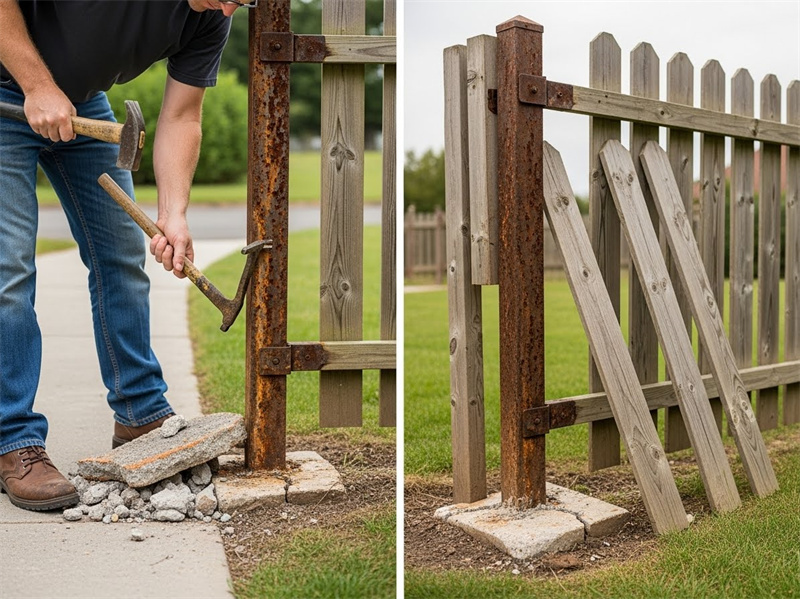
Once an issue is identified, your fence repair protocols should dictate the appropriate response. A critical decision is whether to repair or replace a corroded component. If corrosion is superficial, it can often be ground down and recoated. However, if the metal’s structural integrity is compromised, replacement is the only safe option. For issues like loose tension members, having the right tensioning tools and techniques is crucial to restoring the fence’s rigidity without over-stressing the components.
For more significant structural damage, such as a broken rail, welding and patching can be effective repair procedures, but they must be performed by a qualified technician and the repaired area must be meticulously prepared and recoated to prevent future corrosion at the weld site. Regular lubrication of all moving parts, including gate hinges, rollers, and lock mechanisms, is a simple but vital task. Always use lubricants recommended for outdoor exposure. Throughout any repair work, stringent safety protocols must be followed, including securing the work area and using appropriate PPE for welding, grinding, or handling chemicals.
Budgeting for Repairs
Effective budgeting for repairs transforms unplanned expenses into predictable operational costs. By analyzing data from your inspection logs, you can begin to estimate your annual repair needs. A fence in a harsh environment with a history of minor impacts will naturally require a larger repair budget than one in a mild, protected location. Repairs should be prioritized based on risk. A malfunctioning gate at a primary entrance or a severely corroded post compromising a section’s stability are critical repairs that take precedence over minor cosmetic issues.
Your budget should include a line item for routine repairs as well as a reserve fund for long-term component replacement, such as a complete gate system or a section of fence reaching the end of its service life. This long-term thinking is central to fence lifecycle maintenance. A cost-benefit analysis will almost always show that the accumulated cost of consistent preventive maintenance and minor repairs is significantly lower than the massive capital outlay required for a full-scale replacement prompted by neglect.
| Maintenance Activity | Frequency | Estimated Cost Range |
|---|---|---|
| Inspection | Quarterly | $200 – $500 |
| Rust Removal & Painting | Every 5-7 years | $1,500 – $3,000 |
| Component Replacement | As needed | $100 – $500 per component |
| Lubrication & Minor Repairs | Monthly | $100 – $300 |
Maintenance Documentation Systems
If an action isn’t documented, for all practical purposes, it didn’t happen. A maintenance documentation system is the brain of your program, providing a historical record that is invaluable for operational efficiency and strategic planning. Detailed maintenance logs allow you to move beyond simple preventive care toward predictive upkeep. By tracking the rate of coating degradation or the frequency of gate repairs in a specific area, you can accurately predict when major interventions will be needed, allowing you to schedule and budget for them well in advance. This data-driven approach enhances budgeting accuracy, justifies expenditures, and creates a clear line of accountability for all maintenance activities.
Essential Records to Keep
Your maintenance documentation should be comprehensive. Every record should start with the basics: inspection dates, the completed checklist, and detailed notes on all findings, supported by photographs where possible. For every action taken, log the date, the specific repair or maintenance procedure performed, and a list of all materials and parts used. This is particularly important for coating applications, where you must record the product details (brand, color, batch number) and the application date to track its performance and schedule the next renewal.
The records should also note the staff or contractor who performed the work, confirming their qualifications and creating a chain of accountability. Safety compliance records, such as pre-work safety briefings or incident reports, are also a critical component of your documentation. Finally, link all this data back to your budget. Track all expenditures against your maintenance forecasts to refine future budget planning and demonstrate the financial value of your program.
Choosing Maintenance Management Tools
While manual logs on paper or in spreadsheets can work for very small sites, most commercial properties benefit immensely from adopting digital tools for greater efficiency and accuracy. A Computerized Maintenance Management System (CMMS) is a powerful platform specifically designed for orchestrating a comprehensive maintenance program. This software centralizes data, automates scheduling, and provides powerful reporting tools that transform raw data into actionable insights for better long-term planning.
Robust reporting features are essential for analyzing trends and generating summaries for stakeholders. For facilities with large perimeters, a CMMS with a mobile app is a game-changer. It allows field staff to complete checklists, log repairs, and upload photos directly from their location on the fence line, eliminating paperwork and ensuring data is captured accurately and in real-time. Look for systems that can integrate with your broader property management software for seamless operational oversight.
Training and Safety for Maintenance Teams
A well-designed maintenance program is only as effective as the people who execute it. Proper training and an unwavering commitment to safety are essential to reduce liability, prevent accidents, and ensure the quality of work. The safety risks specific to steel fence maintenance are significant and varied. They include cuts and lacerations from sharp metal edges or broken wires, eye injuries from grinding or wire brushing, respiratory damage from inhaling dust or chemical fumes from coatings, and electrical shocks from improperly grounded fences or contact with power lines. A robust training program directly addresses these hazards, equipping your team with the knowledge and skills to perform their duties safely and effectively.
Essential Training Topics
Your training curriculum must be comprehensive. It should begin with the proper and safe use of all tools and equipment, from hand tools to power grinders and welders. A key module should focus on hazard identification, teaching team members how to spot risks like sharp edges, unstable components, or damaged electrical grounding. For tasks involving coatings, training must cover correct application techniques as well as chemical safety, including reading Safety Data Sheets (SDS), ensuring proper ventilation, and handling materials correctly.
The most critical topic is the mandatory use of Personal Protective Equipment (PPE). This includes, at a minimum, safety glasses, heavy-duty gloves, and steel-toed boots, with additional requirements like respirators, face shields, or fall protection depending on the specific task. Finally, all personnel must be trained on your facility’s emergency procedures and incident reporting protocols, ensuring a clear and swift response in the event of an accident.
Implementing Consistent Safety Practices
Training is not a one-time event; it’s part of an ongoing culture of safety. This culture is reinforced through consistent practices. Conduct regular safety audits during maintenance work to observe procedures in action and correct any unsafe behaviors on the spot. Your training materials and protocols must be living documents, updated whenever new equipment is introduced, new chemicals are used, or procedures are refined. Encourage open communication within the team, creating an environment where anyone feels comfortable reporting a near-miss or pointing out a potential hazard without fear of reprisal. Documenting all training sessions and safety compliance records is crucial for due diligence and demonstrating your commitment to a safe workplace.
Budgeting for Fence Lifecycle Maintenance
Failing to budget for ongoing fence upkeep is a surefire way to turn small, manageable costs into major capital expenditures. This is because delayed maintenance leads to exponential cost escalation. For instance, a small scratch in a fence’s coating might cost $50 to repair with a wire brush and touch-up paint if caught during a quarterly inspection. If ignored for a year, that same scratch can allow rust to creep under the coating, requiring a full panel to be stripped and repainted for $500. After several years of neglect, the corrosion could compromise the structural integrity of the post itself, turning a simple fix into a $1,500 replacement project involving concrete work and fence realignment. Planning financial resources for the entire fence lifecycle is not about spending more money; it’s about spending money smartly to prevent these predictable failures and avoid budget-breaking emergencies.
Estimating Maintenance Budgets
A comprehensive maintenance budgets must account for both routine and long-term costs. Annually, you should incorporate line items for scheduled inspections, preventive care like vegetation management, and an allowance for minor repairs based on historical data. Crucially, your budget must also look ahead by setting aside funds for major periodic tasks, such as the complete renewal of protective coatings every 5 to 15 years, depending on the material. These budgets should be dynamic, adjusted based on the fence’s environmental exposure and usage intensity, with a contingency fund reserved for unexpected damage from storms or accidents.
Cost Savings from Preventive Programs
The financial argument for preventive maintenance is compelling, consistently showing a significant cost savings. Case studies from facility management associations often demonstrate that for every dollar spent on proactive care, three to five dollars are saved on reactive repairs. For example, the total lifecycle cost of a fence maintained proactively is often 30-50% lower than an identical fence that is only repaired when a failure occurs. You can justify budget allocations to stakeholders by presenting a simple lifecycle analysis that contrasts the low, predictable costs of a preventive program against the high, unpredictable costs of emergency replacements and potential security breaches.
Reliable Metal Fencing Built to Last
Choose DB Fencing for quality metal fences crafted to meet international standards. Fast sample delivery, competitive prices, and expert support make your next fencing project seamless and strong.
Conclusion: What You Must Remember
Protecting your property’s perimeter with a steel fence is a significant investment. Safeguarding that investment requires a strategic, ongoing commitment. A well-structured steel fence maintenance program is the key to extending fence lifespan, ensuring its continued performance, and controlling long-term costs. It’s time to shift your approach from reactive repair to proactive care by implementing these best practices.
- A well-structured steel fence maintenance program is key to extending fence lifespan and reducing repair costs.
- Regular inspections tailored to environmental conditions catch problems early.
- Preventive maintenance, especially rust prevention and vegetation control, slows degradation.
- Timely repairs protect structural integrity and security.
- Keeping detailed maintenance records improves budgeting and operational decisions.
- Training maintenance personnel on proper procedures and safety ensures consistent quality and risk reduction.
Now is the time to translate knowledge into action. Start implementing a customized steel fence maintenance program today to protect your property and your investment from progressive decay. By establishing a proactive cycle of inspection, prevention, and documentation, you can avoid the costly, disruptive repairs that result from neglect and ensure your perimeter remains secure for years to come.
Frequently Asked Questions
- How often should steel fences be inspected?
- Inspection frequency depends heavily on the environment. As a baseline, plan for quarterly inspections in mild, dry climates. For coastal areas with salt spray or regions with high humidity, monthly inspections are necessary to detect corrosion early. High-security sites or high-traffic areas also benefit from a monthly schedule to ensure integrity.
- What are the most common steel fence problems to watch for?
- The most common issues are surface rust and coating failures (peeling, bubbling). Also, look for loose fittings, bolts, and fasteners; bent or damaged posts and rails; sagging or torn fabric; and corrosion concentrated at the base of posts where moisture gathers. For gates, check for malfunctioning hinges, latches, and rollers.
- What preventive maintenance procedures effectively extend steel fence life?
- The most effective procedures are those that prevent corrosion. This includes promptly removing any surface rust and touching up the area with a rust-inhibiting primer and topcoat. It’s also critical to maintain proper drainage at the fence base to prevent water from pooling, regularly trim vegetation away from the fence line, and lubricate all moving parts like gate hinges and rollers.
- How should I document fence maintenance activities?
- Use a detailed logbook or a digital CMMS to record every activity. For each entry, include the date, the specific tasks performed (e.g., “Inspected Section B,” “Repaired Gate 3 hinge”), any findings or issues noted, materials used, and the personnel involved. Attaching photos to inspection reports is also a highly effective practice for tracking changes over time.
- What safety precautions are important during steel fence maintenance?
- Safety is paramount. Always ensure staff wear appropriate Personal Protective Equipment (PPE), such as safety glasses, gloves, and sturdy boots. When grinding or sanding, respiratory and eye protection are non-negotiable. Be aware of hazards like sharp metal edges and ensure any electrical grounding is intact. Proper training on tool use and chemical handling is essential to prevent accidents.
- How can I budget effectively for steel fence maintenance?
- Create an annual budget that includes line items for routine inspections, preventive tasks like vegetation control, and an estimated amount for minor repairs based on historical data. Crucially, also include a capital reserve for long-term, predictable expenses like the periodic renewal of paint or powder coatings (e.g., every 5-15 years) to avoid sudden, large expenditures.


