 Skip to content
The Essential Fence Pricing Insights
- Steel fence cost per meter varies widely based on material grade, coating, panel height, and installation requirements.
- Applying value engineering and strategic bulk purchasing can cut steel fence project costs by up to 20% without compromising quality.

Steel Fence Cost Components
Understanding the final steel fence cost per meter requires a detailed breakdown of its constituent parts. It’s not a single line item, but a complex interplay of material choices, design specifications, and logistical considerations. For project estimators and procurement managers, dissecting these components is the first step toward effective budget control. Far from being independent variables, these factors are deeply interrelated; for instance, opting for a thicker-gauge steel not only increases the raw material cost but also impacts fabrication labor, the amount of protective coating required, and ultimately, the shipping weight. In this section, we will unpack each cost driver to provide a comprehensive view of what truly influences the price tag on your next commercial fencing project.
Material Grades & Steel Types
The foundation of any steel fence’s cost and longevity is the material itself. The grade and type of steel specified directly influence durability, corrosion resistance, and price. Common choices in commercial fencing include 12-gauge and 10-gauge steel. A 12-gauge (approximately 2.65 mm thick) panel serves as a cost-effective baseline for many applications, offering adequate strength for standard demarcation. However, for high-security or high-impact areas, upgrading to a thicker 10-gauge (approximately 3.40 mm) steel is a wise investment, though it typically increases material costs by 20-30%. This added thickness provides superior rigidity and resistance to vandalism or accidental damage, a trade-off that is crucial in long-term value assessment.
Corrosion resistance is another critical factor tied to material selection. While standard mild steel is the most basic option, it is highly susceptible to rust without a robust protective coating. For this reason, hot-dip galvanized steel is the industry standard for commercial projects. This process involves immersing the steel in molten zinc, creating a bonded alloy that offers decades of protection against the elements. While it carries a higher upfront cost than untreated steel, it drastically reduces future maintenance and replacement expenses. The decision between imported and domestic steel also introduces a significant variable. Domestic steel often provides more reliable quality control and shorter supply chains, but imported steel can sometimes offer a cost advantage of up to 25%, albeit with potential risks in material consistency and shipping delays.
Finally, for projects with sustainability goals or tighter budgets, reclaimed or recycled steel presents a viable alternative. Where building codes and structural requirements permit, using recycled steel can reduce material costs by 10-15%. It’s essential to ensure the reclaimed material meets quality specifications and is properly treated for corrosion resistance, but it can be an effective value engineering tactic.
| Steel Grade | Thickness (Gauge) | Corrosion Resistance | Approx. Cost Impact |
|---|---|---|---|
| 12-gauge | 2.65 mm | Standard galvanizing | Baseline |
| 10-gauge | 3.40 mm | Enhanced corrosion resistance | 20-30% higher |
| Recycled Steel | Varies | Depends on treatment | 10-15% lower |
| Imported Steel | Varies | Variable quality | Up to 25% higher or lower |
Fabrication and Panel Design
Once the raw material is selected, the next major cost center is fabrication—the process of transforming steel into finished fence panels. The complexity of the panel design is the single largest driver of fabrication costs. A standard industrial panel design, such as a simple picket or welded mesh, involves straightforward cutting, welding, and assembly, resulting in lower labor costs. Conversely, ornamental designs featuring intricate scrollwork, custom logos, or complex patterns demand significantly more skilled labor, specialized equipment for bending and forming, and a higher degree of quality control, all of which elevate the price per linear meter substantially.
The choice between modular and customized dimensions also has profound financial implications. Specifying standard-sized modular panels (e.g., 2.4 meters wide) allows fabricators to optimize material usage, minimize waste from steel coils or sheets, and streamline production through jigs and automated processes. This standardization can lead to significant savings. In contrast, requesting custom-sized panels to fit an exact, non-standard perimeter requires individual cutting and fitting for each section, increasing both material waste and labor hours. The complexity multiplies with fence height and post spacing; taller panels may require additional horizontal rails for stability, and non-standard post spacing necessitates custom panel widths, further complicating the fabrication workflow.

Coating & Finishing Costs
A fence’s protective coating is not just an aesthetic choice; it’s a critical investment in its operational lifespan. The type of coating applied directly impacts both the upfront project cost and the long-term maintenance budget. The industry baseline, hot-dip galvanizing, provides excellent, long-lasting corrosion protection by metallurgically bonding zinc to the steel. While often used as a standalone finish in purely industrial settings, it typically serves as the primer for a powder coat finish in commercial applications.
Powder coating is the most common and versatile finishing option. A single-coat powder finish offers good durability and a wide range of color choices at a moderate cost. For harsher environments, such as coastal areas with salt spray or industrial zones with chemical exposure, a dual-coat system is recommended. This involves an epoxy-based primer powder coat followed by a polyester-based top coat, providing superior resistance to chipping, fading, and corrosion. This dual-coat system, however, can increase finishing costs by 30-50% compared to a single coat. Further up the cost ladder are specialty coatings, such as anti-graffiti finishes that allow for easy paint removal, or advanced UV-resistant formulas for color-critical projects. While these add to the initial expense, they can prevent costly cleaning or repainting efforts down the line, demonstrating the classic trade-off between capital expenditure and operational expenditure.
Shipping & Logistics
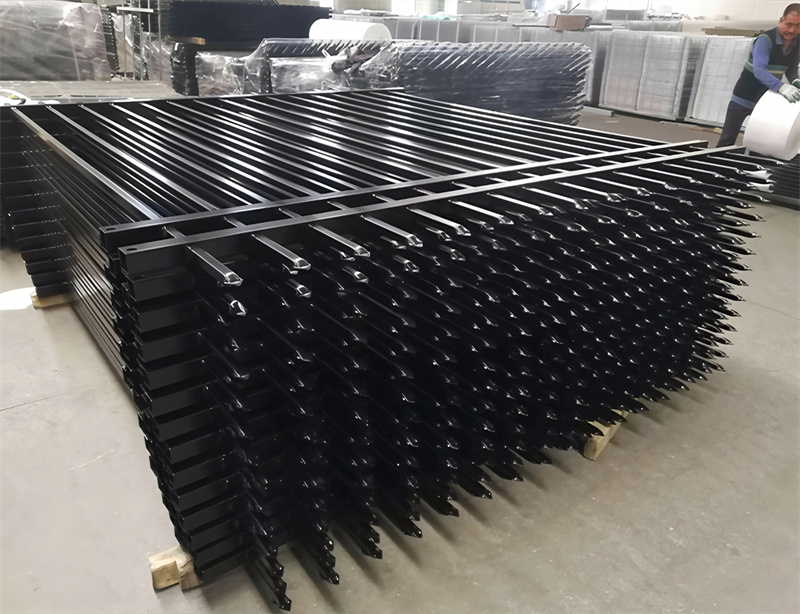
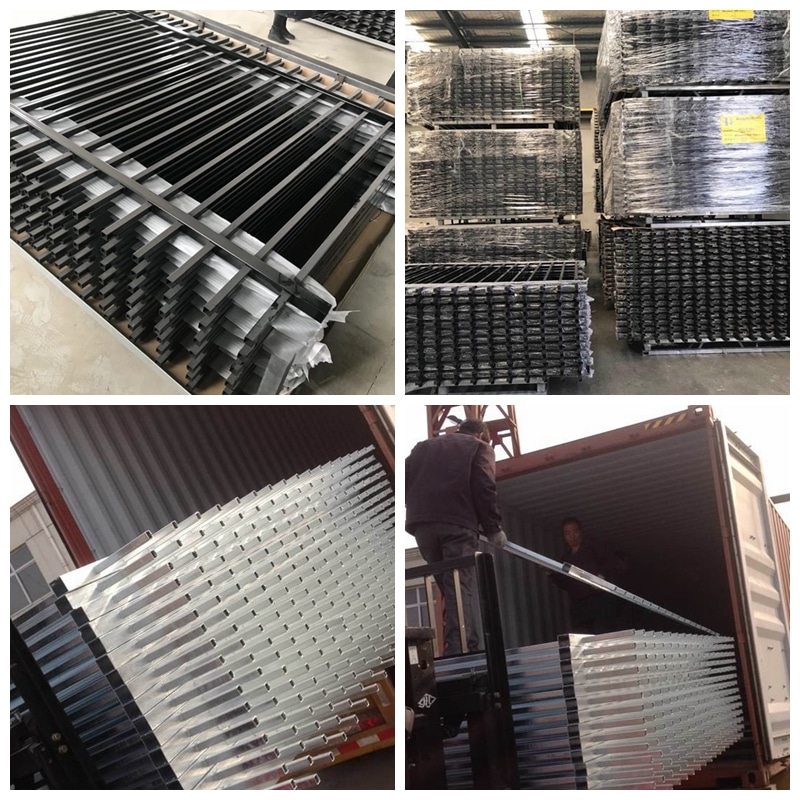
The journey from the fabrication shop to the project site represents a significant and often underestimated cost component. Key factors influencing shipping costs include the total weight of the panels and posts, the overall volume of the shipment, and the distance from the supplier to the site. Heavier, thicker-gauge steel and taller panels naturally increase freight charges. Project managers can achieve substantial savings by sourcing from regional fabricators, which drastically cuts down on mileage and transportation time. This strategy also mitigates risks associated with long-haul transit, such as damage or delays.
Bulk shipments are another effective cost-control measure. Consolidating the entire fence order into a single, full truckload is far more economical than multiple less-than-truckload (LTL) shipments. However, this requires careful planning and adequate, secure storage space on-site. For large-scale projects, a phased shipment and installation plan can be an excellent budget optimization tactic. By aligning material deliveries with the installation schedule, you can spread out expenses and reduce the need for extensive on-site storage, though it requires precise coordination to avoid work stoppages.
Installation Labor & Site Preparation
Even the highest-quality fencing is only as good as its installation. Labor costs, typically calculated per linear meter, are highly variable and depend heavily on local wage rates, site conditions, and project complexity. According to government labor statistics, installation can account for 15-25% of the total project budget. A flat, clear, and easily accessible site allows for efficient work, whereas difficult terrain—such as slopes, rocky ground, or areas with dense vegetation—dramatically increases labor hours for excavation and post-setting.
Foundation work is a major part of the installation cost. Standard concrete footings for posts are a baseline, but challenging soil conditions may necessitate deeper or wider footings, adding to material and labor expenses. The installation of security features also carries a labor premium. Integrating automated gates, access control systems, or anti-climb toppings like barbed or razor wire requires specialized skills and more time on-site. Poor site access, requiring materials to be moved long distances by hand or smaller equipment, can also lead to significant cost overruns. Thorough site evaluation during the bidding phase is essential to accurately forecast these potential challenges.
Steel Fence Pricing Per Meter by Type
The type of steel fence selected is a primary determinant of its final cost per meter. Different designs serve distinct purposes, from basic perimeter demarcation to high-security containment, and their pricing reflects their varying material consumption, fabrication complexity, and installation requirements. To illustrate this, let’s explore a pricing calculator example. A project requiring 300 meters of 1.8m high fencing could see a base material cost of $40/meter for standard pickets, which then gets modified by factors like a +25% for 10-gauge steel, +15% for a dual powder coat, and +$15/meter for complex site labor, demonstrating how specifications directly drive the final bid. In this section, we provide detailed pricing breakdowns for common commercial steel fence types, helping you align your choice with both your budget and your functional needs.
Standard Steel Picket Fence Costs
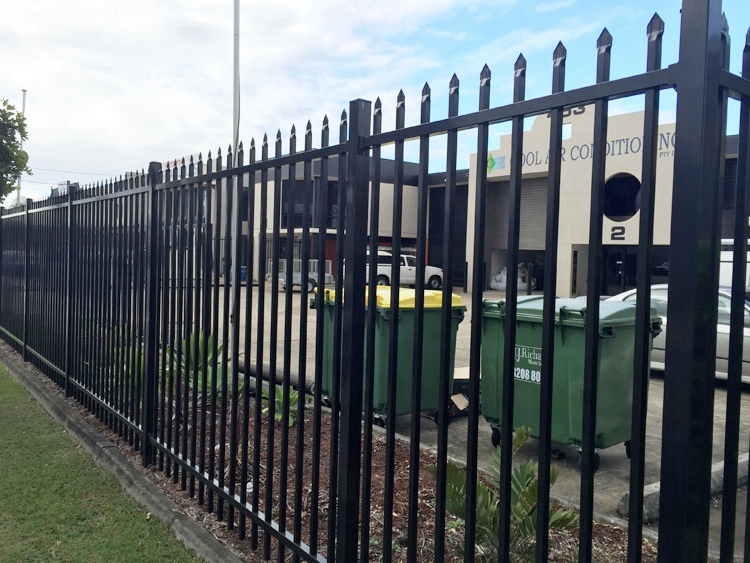
The steel picket fence is a ubiquitous choice for commercial properties like office parks, schools, and multi-family housing complexes. It offers a clean, professional appearance while providing a robust physical barrier. The cost is primarily driven by height and material thickness. As a general rule, a taller fence requires more steel and often thicker posts to maintain structural integrity against wind loads, directly increasing the price. Post spacing is another factor; while wider spacing (e.g., 2.4 meters) reduces the number of posts and associated labor, it may require heavier-gauge horizontal rails to prevent sagging.
Installation costs for standard steel picket fences are generally predictable, especially when dealing with well-prepared, level sites. However, these costs are heavily influenced by local economic factors, with regional price variations being quite significant. For example, labor rates in major metropolitan areas can often be 20-30% higher than those in more rural locations due to different wage scales and operational costs. To effectively navigate these variables, it is crucial for project managers to request quotes that clearly separate material and installation charges. This level of detail allows for a true apples-to-apples comparison between bids from different suppliers and contractors, ensuring better budget accuracy.
| Fence Height | Material Grade | Cost Range (USD/m) | Installation Included |
|---|---|---|---|
| 1.2 meters | 12-gauge | $30 – $40 | Yes |
| 1.8 meters | 12-gauge | $40 – $55 | Yes |
| 2.4 meters | 10-gauge | $55 – $70 | Yes |
Ornamental & Custom Steel Fencing
For properties where aesthetics are paramount, such as corporate headquarters, luxury hotels, or historic districts, ornamental and custom steel fencing becomes the preferred choice. These fences move beyond pure function to become architectural statements. Features that define this category include decorative elements like finials, rings, and scrollwork, as well as unique picket designs and custom-forged components. Customization can also include curved panels to follow landscape contours, arched tops, or integrated branding elements like company logos cut into steel plates.
The cost for ornamental fencing is significantly higher than for standard picket designs, often starting at 50-100% more per linear meter and climbing from there based on complexity. The premium is driven by three main factors: specialized design work, intensive fabrication labor by skilled artisans, and the use of more, often heavier, materials. We recently consulted on a project for a boutique hotel where the architect specified a fence with a complex, repeating geometric pattern across curved sections. The fabrication cost alone was nearly double that of a standard design due to the need for custom jigs and the high degree of precision welding required. This case highlights how seemingly small design choices can have large budgetary consequences.
Security & High-Security Steel Fences
When the primary objective is asset protection and access control, standard fencing gives way to security-grade solutions. These security fences are differentiated by features specifically designed to deter, delay, and deny unauthorized entry. Common additions include anti-climb tops (such as curved pales, spiked finials, or razor/barbed wire), closely spaced pickets that prevent handholds, and heavier-gauge steel that resists cutting or breaching. Materials are typically 10-gauge or thicker, and panels are often designed with tamper-resistant hardware.
The cost impact of these security features can add 25-75% to the base price per meter. For example, adding an anti-climb pressed steel top might add $10-$15 per meter. Integrating high-security gates with automated operators and access control systems is another major cost driver, often priced separately from the linear fence footage. Furthermore, the installation of high-security fencing is more demanding. It often requires more substantial footings to support the heavier panels and may be subject to more rigorous inspection protocols to ensure it meets specified security ratings, all of which elevate labor costs beyond the standard installation rate.
Reliable Metal Fences Crafted for Global Standards
From China to North America and Australia, DB Fencing delivers high-quality steel fences with fast sample delivery and competitive prices. Trust our expert team for durable products backed by international quality and responsive support.
Fence Value Engineering Strategies
Value engineering (VE) is a systematic method to improve the “value” of goods or products and services by using an examination of function. As defined in peer-reviewed construction journals, value can be increased by either improving the function or reducing the cost. In the context of commercial fencing, it’s about achieving the necessary security, aesthetic, and durability outcomes at the lowest possible lifecycle cost. I recently worked with a developer on a large logistics park perimeter who was facing a 15% budget overrun on their fencing package. By applying VE principles, we were able to bring the project back on budget without compromising the security specifications. This section explores actionable VE strategies tailored specifically for steel fencing projects, providing a roadmap to significant cost savings.
Modular Panels & Standardization
One of the most effective value engineering tactics is to embrace standardization. By designing the fence layout around standard, modular panel sizes (e.g., 2.4m or 2.5m wide), you enable the fabricator to maximize efficiency. This approach minimizes material off-cuts and waste, which directly translates to lower material costs. Furthermore, it allows for the use of automated production lines and standardized jigs, reducing the labor time required for fabrication. This efficiency can yield cost savings in the range of 5-10% on the material and fabrication portion of the budget. Modularity also simplifies procurement and on-site logistics, as panels are uniform, stackable, and interchangeable, reducing handling time and the risk of installation errors.
Simplified Post Layouts
Thoughtful design of the post layout can yield surprising savings. The goal is to use the fewest posts necessary to maintain the fence’s structural integrity. Optimizing post spacing—for instance, using a standard 2.4-meter span instead of a custom 2.2-meter span—directly reduces the total number of posts required, the amount of concrete needed for footings, and the labor for excavation and setting. For a 500-meter fence line, switching from a 2.0m to a 2.4m post spacing eliminates 42 posts and their associated footings and labor. While it’s critical not to over-simplify to the point of compromising strength—wind load calculations and fence height must be considered—a well-engineered, simplified layout is a powerful cost-reduction tool. On one project, we balanced cost and performance by specifying heavier-gauge horizontal rails, which allowed us to increase post spacing without risking panel sag, achieving a net cost reduction of 7%.

Coating & Finish Selection
Careful selection of the protective coating offers another avenue for value engineering. While a dual-powder coat system provides maximum durability, it may be overkill for fences in temperate, dry climates with low pollution. In such environments, a high-quality single-coat polyester powder finish over galvanizing may offer a 20+ year lifespan at a significantly lower upfront cost. The key is to match the coating specification to the specific environmental challenges of the site. A thorough cost-benefit analysis should compare the initial savings of a single coat against the potential for earlier repainting or replacement. By avoiding over-specification—such as choosing a standard black or green finish instead of a premium custom color—project managers can trim another 5-10% off the finishing costs without impacting the fence’s protective qualities.
Bulk Purchasing & Volume Discounts
For large-scale commercial projects, consolidating the entire fencing requirement into a single, large order is a fundamental procurement strategy. Steel suppliers and fabricators almost universally offer volume discounts, as larger orders allow them to secure better pricing on raw materials and optimize production schedules. These discounts are typically tiered, and a procurement manager with a sizable order is in a strong negotiating position. For a project exceeding 600 linear meters, it’s reasonable to negotiate a discount of 15-20% off the standard per-meter rate. The key is to provide a clear, finalized specification and a firm order quantity to the supplier. However, it’s important to balance the benefits of bulk purchasing against potential inventory holding costs and the risk of damage to materials stored on-site for extended periods.
| Order Size (Meters) | Discount % | Notes |
|---|---|---|
| <100m | 0% | Standard pricing |
| 100-300m | 5-8% | Small bulk discount |
| 300-600m | 10-15% | Medium project discount |
| >600m | 15-20% | Large project/bulk pricing |
Optimizing Commercial Fence Project Budgets
Effective commercial fence project budgeting goes beyond simply calculating the cost per meter; it’s a strategic process of planning, forecasting, and management designed to maximize value and control expenditures from start to finish. The core principle of budget optimization is proactive, not reactive, control. It begins with a granular understanding of all cost drivers and integrates value engineering from the earliest design stages. By creating a detailed cost forecast, exploring intelligent scheduling options like phased installation, and optimizing the supply chain, project managers can steer their projects to a successful, on-budget completion. This section provides an end-to-end framework for this process.
Budget Forecasting & Cost Breakdown
A robust budget is built on detail. The first step is to create a comprehensive cost breakdown that accounts for every component discussed earlier. A reliable template for estimating total project cost involves summing the costs of materials, fabrication, coating, shipping, and installation, then adding a contingency. A common mistake is to focus solely on the material quote per meter, ignoring the significant impact of labor and logistics. Early validation with suppliers is critical. By providing preliminary specifications to a few trusted fabricators, you can get realistic cost estimates that ground your budget in current market pricing. Always allocate a contingency fund of 10-15% of the total estimated cost to cover unforeseen expenses, such as unexpected ground conditions, material price fluctuations, or weather-related delays.
| Cost Component | Percentage of Total Budget |
|---|---|
| Materials | 40-50% |
| Fabrication | 15-20% |
| Coating & Finish | 10-15% |
| Shipping & Logistics | 5-10% |
| Installation Labor | 15-25% |
Phased Installation Planning
For large perimeter projects, a phased installation plan can be a powerful financial tool. Instead of incurring the total material and labor cost at once, phasing allows the project to be broken into manageable sections. This approach provides significant cash flow benefits, spreading expenditures over several months or quarters. It also allows for smoother labor management, preventing the need to mobilize a massive crew for a short period. However, phasing requires meticulous planning. Risks include potential material price increases between phases and the need for multiple site mobilizations by the installation contractor, which can add cost if not negotiated upfront. Effective coordination is key, especially when fencing installation must align with other construction activities like paving or landscaping.
Supplier & Fabricator Selection
Choosing the right supplier is one of the most critical decisions in project budgeting. Evaluation criteria should extend far beyond the lowest price. Assess suppliers based on their reputation for quality, material sourcing transparency, production capacity, and on-time delivery record. As previously mentioned, favoring regional fabricators can offer significant advantages by reducing transportation costs and lead times. Building long-term relationships with reliable suppliers can also lead to better pricing, preferential treatment on production schedules, and more flexible terms. When finalizing contracts, be sure to include clauses that protect against unexpected cost escalations and define clear terms for delivery schedules and quality assurance.
Cost Reduction Without Quality Loss
This is the essence of value engineering applied during the budgeting phase. It involves a systematic review of the fence specifications to identify and eliminate unnecessary cost drivers. Create a checklist: Is the specified steel gauge higher than what is structurally required? Is a dual-powder coat necessary for the climate? Can the design be modified to use standard panel sizes without altering the aesthetic intent? This process is about optimization, not compromise. For example, you might reduce the steel gauge on low-risk fence lines while maintaining a heavier gauge at critical access points. This targeted approach preserves structural integrity and security where it matters most while cutting costs elsewhere. Finally, investing in rigorous quality inspection during and after installation is crucial to avoid the immense cost of rework or premature failure.
Steel Fence Pricing Calculator Example
To demystify the budgeting process, it’s helpful to walk through a practical calculation. While a simple online calculator can provide a rough estimate, a professional budget requires a more detailed formula that accounts for the key variables driving the final cost. The underlying formula is essentially: Total Cost = [(Base Material Cost + Fabrication Cost + Coating Cost) x Length] + Shipping Cost + (Labor Rate x Length) + Contingency. By understanding how to plug in accurate values for each parameter, procurement managers can build a much more reliable cost forecast for their specific project.
Input Parameters Explained
Building an accurate estimate begins with gathering the right data. The most essential inputs include the steel gauge (e.g., 12 or 10), fence height (e.g., 1.8m or 2.4m), coating type (single or dual powder coat), panel design complexity (standard picket vs. ornamental), post spacing (e.g., 2.4m), and installation complexity (e.g., flat/clear site vs. sloped/rocky). Each of these inputs acts as a multiplier on a base cost. For instance, upgrading from 12-gauge to 10-gauge steel might increase the material cost component by 25%. The biggest cost swings are often caused by just a few variables: panel design complexity, fence height, and site conditions, so sourcing accurate information for these is paramount.
Sample Calculation Walkthrough
To provide a clear, practical illustration of these principles, we will now walk through a sample cost calculation. This example uses a common commercial fencing scenario to demonstrate how different cost components like materials, labor, and logistics come together in a final estimate. By following these steps, you can create a more accurate preliminary budget for your own project and better understand the financial impact of each specification choice.
- Fence Type: Standard steel picket fence, 1.8 meters high.
- Material: 12-gauge galvanized steel.
- Coating: Single-coat black powder coat.
- Location: Midwest USA (moderate labor rates).
- Site: Flat, clear, and accessible.
- Material, Fabrication & Coating Cost: Based on our earlier tables, a standard 1.8m picket fence might have a base supplied cost (materials, fab, coating) of around $35 per linear meter.
Total Supplied Cost: 200m * $35/m = $7,000 - Shipping & Logistics Cost: Assuming a regional supplier, a reasonable estimate is 8% of the material cost.
Shipping Cost: $7,000 * 0.08 = $560 - Installation Labor Cost: For a straightforward site with moderate labor rates, let’s assume $20 per linear meter.
Total Labor Cost: 200m * $20/m = $4,000 - Subtotal: $7,000 + $560 + $4,000 = $11,560
- Contingency (10%): To cover unforeseen issues.
Contingency: $11,560 * 0.10 = $1,156 - Estimated Total Project Cost: $11,560 + $1,156 = $12,716
This results in a final estimated cost of approximately $63.58 per linear meter. This formula can be easily adapted by adjusting the per-meter costs and percentages based on your specific project’s complexity and scale.
Reliable Metal Fences Crafted for Global Standards
From China to North America and Australia, DB Fencing delivers high-quality steel fences with fast sample delivery and competitive prices. Trust our expert team for durable products backed by international quality and responsive support.
Conclusion: Key Takeaways
Mastering the steel fence cost per meter is a crucial skill for any project or procurement manager. As we’ve detailed, the final price is not a single number but a dynamic total influenced by a host of interconnected factors.
- The cost of a steel fence is fundamentally dependent on a multi-layered equation including material grade, panel design, protective coating, labor rates, and complex logistics.
- Strategic implementation of value engineering principles and savvy procurement tactics, such as bulk purchasing and design standardization, can yield cost reductions of up to 20% without sacrificing essential quality or security.
- The most successful projects are underpinned by meticulous budgeting, which includes detailed cost breakdowns and contingencies, and are often managed through intelligent strategies like phased installation to optimize cash flow and resource allocation.
By applying these insights, you can move beyond simply accepting quotes and begin to strategically shape the cost and value of your next commercial fencing project. Use this guide as a practical framework for your planning and procurement process to ensure all cost drivers are considered. Ultimately, consulting with experienced fencing experts remains the best way to develop a final solution perfectly tailored to your specific budget and performance requirements.
Frequently Asked Questions
What is the average steel fence cost per meter for commercial projects?
While prices fluctuate, the average cost for a commercial steel fence generally falls between $30 to $70 per linear meter, a price that typically includes standard installation. This range applies to common specifications, such as a 1.2m to 2.4m high picket fence made from 12-gauge steel with a single powder coat finish. It is important to treat this as a baseline, as costs can easily exceed $100 per meter. Factors like intricate ornamental designs, integrated high-security features, or an upgrade to heavier 10-gauge steel will significantly increase the final price.
How can I reduce steel fence installation costs effectively?
The most effective tactics include designing the fence layout to use standard-sized modular panels, which reduces fabrication waste and time. Simplifying the post layout to maximize spacing (while maintaining structural integrity) minimizes excavation and material costs. Additionally, ensuring the site is clear and accessible before the installation crew arrives can significantly reduce labor hours. Sourcing from local or regional fabricators will also cut down on shipping expenses.
What factors influence the coating cost for steel fences?
The primary factors are the type and complexity of the coating system. A standard hot-dip galvanized finish is the baseline. A single polyester powder coat adds moderate cost but provides color and extra protection. A dual-coat system (epoxy primer + polyester top coat), designed for harsh environments, is the most expensive but offers the longest service life. Specialty colors or anti-graffiti finishes also increase the cost per meter.
Are there volume discounts available for large commercial fence orders?
Yes, absolutely. Volume discounts are standard in the industry. While specific tiers vary by supplier, you can typically expect a 5-8% discount for orders of 100-300 meters, 10-15% for 300-600 meters, and potentially 15-20% for projects exceeding 600 meters. Strong negotiation and a clear, large-volume order are key to securing the best possible pricing.
How to budget for unforeseen expenses in steel fence projects?
The most reliable method for handling unforeseen expenses is to build a contingency fund directly into your budget. Industry best practice suggests allocating 10% to 15% of the total estimated project cost for this specific purpose. This fund acts as a crucial buffer for issues such as discovering difficult ground conditions during excavation, sudden material price volatility, or weather-related work delays. To further minimize surprises, you should also obtain validated cost estimates from suppliers early in the planning stage, which helps ground your budget in current market realities.
SEO
Title:
Description: Learn steel fence cost per meter, pricing factors, and strategies to optimize commercial fence project budgets effectively.
URL: steel-fence-cost-per-meter-pricing-budget-tips
Keywords: steel fence cost per meter


