 Skip to content
Last year a distributor in Texas ordered a full container of 16ft farm gates because one large rancher requested them. That inventory sat for 14 months. The reality is 10ft and 12ft standard farm gate sizes make up roughly 65 percent of North American wholesale volume, but width is not where distributors actually get burned. The hidden margin killer is the wall thickness. A factory will quote you a heavy duty 1.5 inch gate, but if your PO does not specify 14-gauge (2.0mm) steel, they will ship 16-gauge (1.6mm) tube that fails at 1,200 lbs of lateral pressure instead of holding 2,500 lbs. Your local contractors will figure that out the first time a bull leans on it, and you eat the return.
We pulled the actual factory specs and container loading math that most suppliers keep off the packing list. You will see exactly why a 12ft gate loads 180 to 200 units in a 40ft HC container compared to 110 to 130 units of a 16ft gate, the exact zinc coating required to push field life past 8 years, and why a 5/8 inch drop-pin latch in a 3/4 inch receiver hole is responsible for 15 to 20 percent of your field complaints.
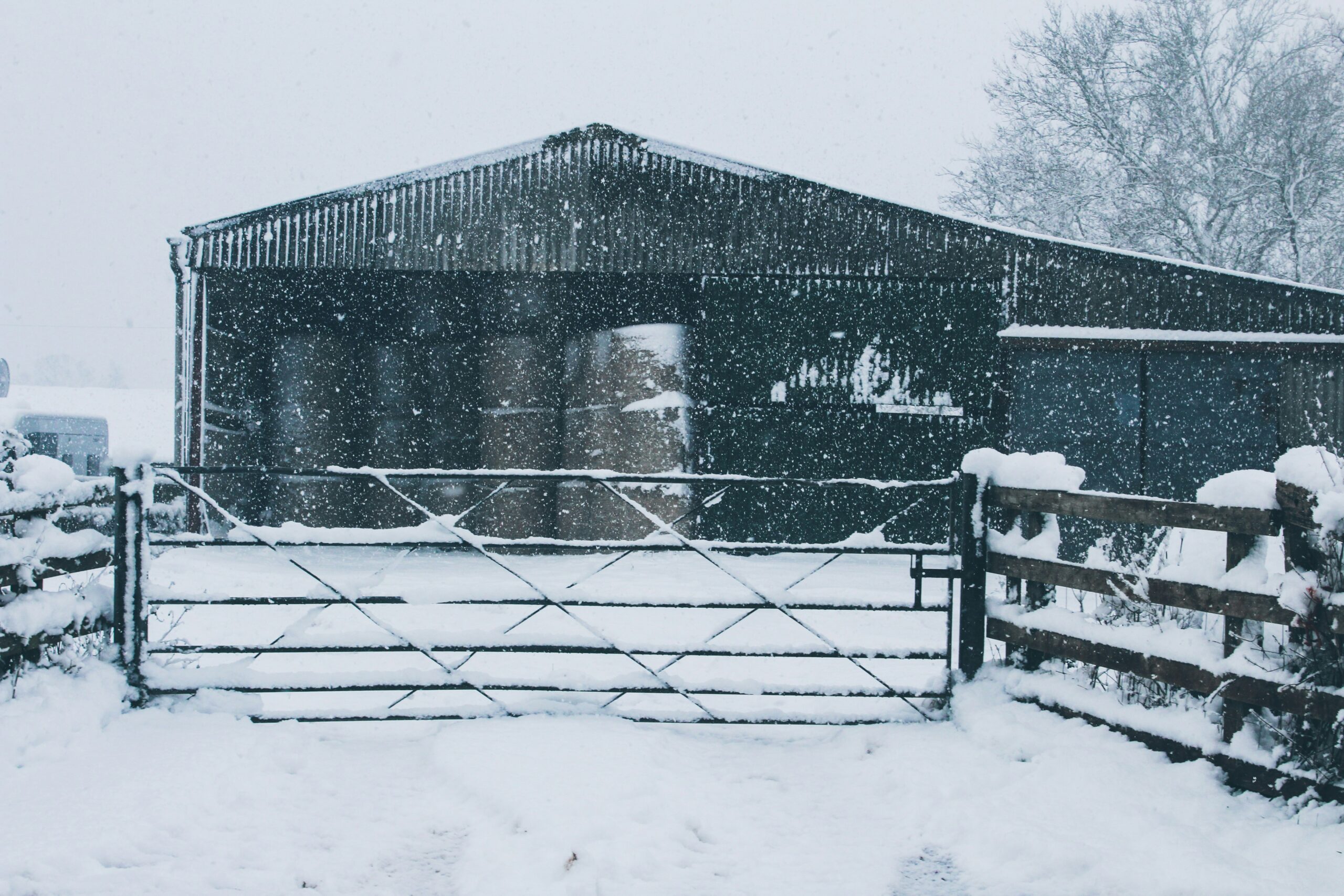
Standard Farm Gate Width Breakdown
10ft and 12ft gates account for roughly 65% of North American farm gate wholesale volume. Stocking only 12ft units leaves 20-30% of potential orders on the table for your rancher customers.
Width-to-Use-Case Mapping: 4ft Through 16ft
- 4ft (1.2m): Pedestrian access and garden utility passages. Negligible wholesale demand — do not allocate container space to this width unless a specific customer commits to a prepaid order.
- 6ft (1.8m): ATV and side-by-side vehicle access. Small niche in hobby farm retail, representing under 5% of B2B volume.
- 8ft (2.4m): Compact tractor and pickup truck access. Common as a secondary SKU, roughly 10-12% of wholesale orders. Ranchers use these for internal paddock divisions where full-width entry is unnecessary.
- 10ft (3.0m): The workhorse for cattle corral entries and pasture access points. Single-leaf configuration keeps hardware simple. Accounts for approximately 25-28% of total wholesale volume. A 10ft gate in 14-gauge weighs 38-42 lbs — manageable for one-person installation.
- 12ft (3.6m): The single most-ordered farm gate width in North America. Fits full-size trucks and loaded stock trailers. Represents 37-40% of wholesale volume. A 12ft galvanized farm gate weighs 45-55 lbs depending on steel gauge. This is the SKU that moves fastest and turns inventory.
- 14ft (4.2m): Required for wide equipment access — combines, large tractors, and dual-wheel setups. Approximately 8-10% of volume. At this width, hinge stress becomes a real concern; insist on 14-gauge (2.0mm) minimum wall thickness.
- 16ft (4.8m): Specialized application for large machinery and commercial livestock transport. Only 4-6% of wholesale demand. A 40ft HC container holds 110-130 units of 16ft gates versus 180-200 units of 12ft gates — your per-unit freight cost jumps roughly 35% because 16ft gates nest poorly during container loading.
The Volume Reality Behind 10ft and 12ft
Our shipping logs across 14 years of exports to North America show that 10ft and 12ft widths consistently make up 63-67% of total farm gate units per container. This is pulled from actual bill of lading data, not estimates. The reason is straightforward: these two widths cover the vast majority of pasture entry, corral access, and driveway crossover scenarios that your rancher and contractor customers encounter daily. According to Penn State Extension’s livestock fencing guidelines, gate placement should match the primary traffic pattern of the operation, and for most cattle operations that
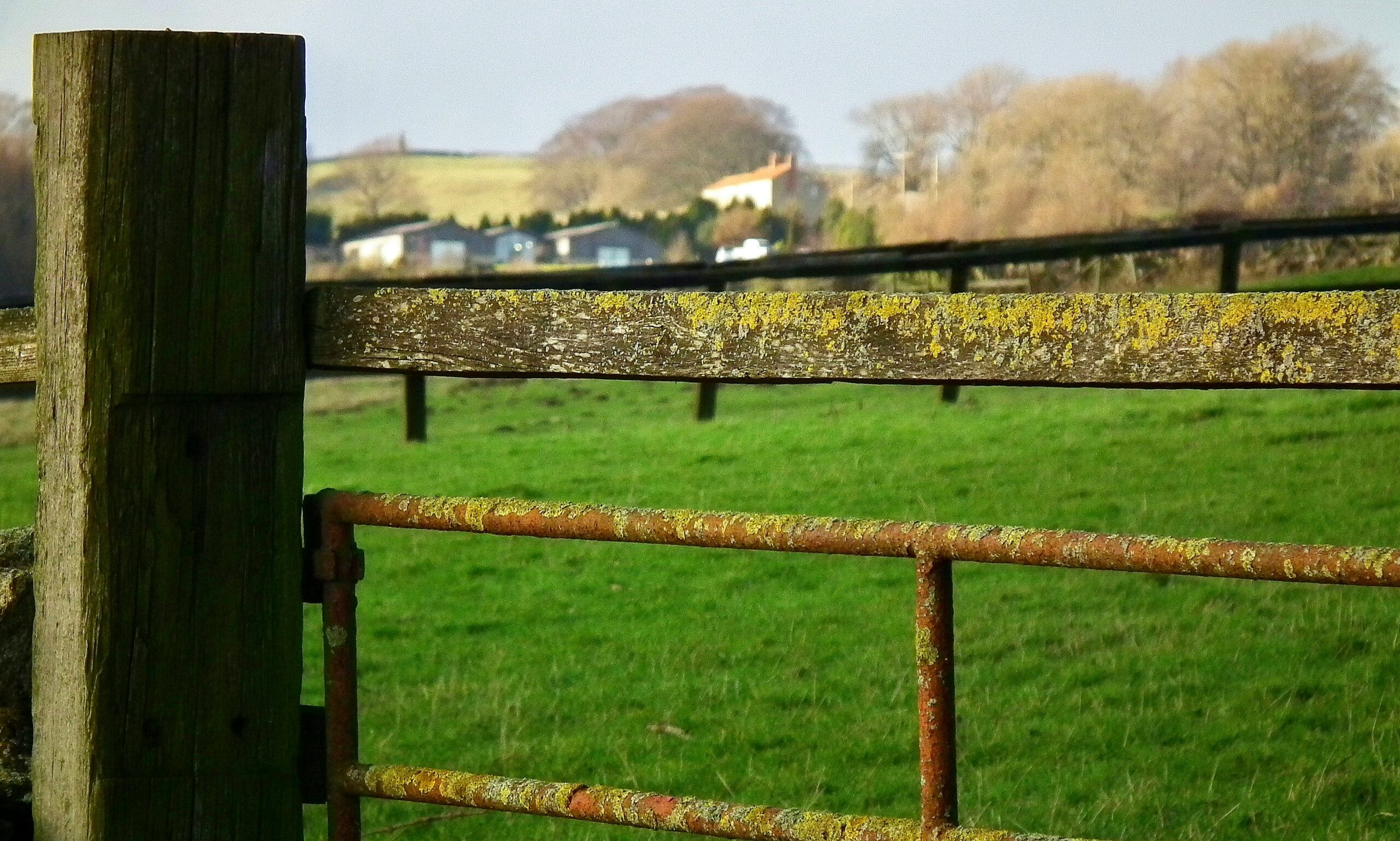
Height Requirements by Livestock Type
A 4.5ft “cattle gate” holds cows but fails on bulls. Stock the wrong height mix and you’re sitting on dead inventory your rancher customers will not reorder.
Containment-Driven Height Thresholds by Species
Every livestock gate sizing guide on Google gives you a generic range. What they omit is the consequence of being wrong: a distributor who stocks 4ft panels for a cattle-running region loses the account after the first containment failure. Height selection is not about the average animal in the herd. It is about the largest, most aggressive animal your customer will ever put behind that gate on their worst day.
- Poultry: 3.5ft to 4ft (42-48 inches). The height is driven by predator exclusion, not bird containment. A 4ft gate with 6-inch vertical stay spacing stops coyotes and roaming dogs.
- Sheep: 4ft to 4.5ft (48-54 inches). Sheep do not jump but they crowd and pile. The gate strength under lateral pressure matters more than height.
- Goats: 5ft to 5.5ft (60-66 inches). Goats climb. A 4ft goat gate is a wasted SKU. Your customers know this and will not buy from you twice if you suggest otherwise.
- Calves (under 400 lbs): 4ft (48 inches) minimum. Adequate for weaning pens and backgrounding operations.
- Mature Cattle (cows/heifers): 4.5ft to 5ft (54-60 inches). This is the single most common wholesale SKU in North America, representing roughly 65% of farm gate volume.
- Horses: 5ft to 5.5ft (60-66 inches). Driven by spook-jump behavior, not standing height.
The Bull Shoulder Height Problem
This is where most distributor inventories quietly fail. A mature Angus bull stands 58-60 inches at the shoulder. A Charolais bull reaches 62-66 inches. If your customer installs a standard 54-inch “cattle gate” in a bull pen, the top rail sits below the animal’s shoulder line. The bull does not need to jump. It simply leans its body weight forward and the gate frame absorbs the full force at its weakest structural point — the top rail-to-vertical stay weld joints.
The physics are unforgiving. Force applied at or above the shoulder creates a lever-arm multiplier against the gate frame. A 1,800-lb bull leaning on a 54-inch gate generates significantly more rotational torque at the hinge post than the same animal leaning on a 66-inch gate, because the contact point is closer to the hinge on a shorter gate. This is counterintuitive — taller gates actually distribute bull pressure better, not worse, because the force vector shifts downward relative to the hinge point.
Practical rule for your inventory: if you sell into regions with bull-heavy operations (Texas Panhandle, Nebraska sandhills, northern Alberta), your “cattle gate” SKU must be 6ft (72 inches) minimum, built with 2-inch OD 14-gauge (2.0mm) tube. A 1.5-inch 16-gauge frame at 6ft will twist under repeated bull pressure. According to USDA NRCS fencing guidelines, high-pressure cattle confinement requires top rail diameters of 2 inches or greater. Stocking 4.5ft gates for these buyers is inventory death.
Jumping Livestock: Horses and Deer
Horses do not jump fences casually, but a spooked horse can clear 4.5ft from a near-standstill. The containment threshold is not the horse’s physical jumping ability — it is the point at which the horse chooses not to attempt it. Field data from equine operations consistently shows that 5ft (60 inches) is the behavioral deterrent line. Below 5ft, horses test the barrier. At 5ft and above, they generally do not.
The critical spec for horse gates is not height alone — it is top rail rigidity. A horse that hits a flexible top rail at speed can tangle its legs in the vertical stays. This is where the 14-gauge versus 16-gauge distinction becomes a liability issue, not just a durability one. Our 14-gauge (2.0mm) 2-inch OD tube withstands 2,500+ lbs of lateral pressure at the top rail. A 16-gauge (1.6mm) frame of the same OD fails at roughly 1,200 lbs. For a horse gate above 5ft, 16-gauge is not a cost savings. It is a product defect.
Deer exclusion is a separate category entirely. White-tailed deer clear 8ft (96 inches) routinely, and a determined mule deer reaches 10ft. Standard farm gate heights do not solve deer problems. If your customer is asking about deer, they need a different product class entirely — high-tensile woven wire or specialized exclusion fencing, not a heavier farm gate. Selling a 6ft gate as a “deer gate” is how distributors lose credibility with experienced landowners.
| Livestock Type | Min. Height | Recommended Specs | Containment Challenge | Inventory Turn Tip |
|---|---|---|---|---|
| Cattle | 50″ – 54″ | 1.5″-2″ OD, 14-gauge (2.0mm), 6″ stay spacing | Withstands 2,500+ lbs of lateral herd pressure and rubbing | Represents ~65% of volume; prioritize 12ft x 50″ SKUs for fastest container turnover |
| Horses | 54″ – 60″ | 2″ OD, 14-gauge (2.0mm), tight CO2 welds | Cribbing, leaning over top rail, and spooking into fences | Premium margin SKU; push 2″ heavy-duty to justify 30%+ retail markup |
| Sheep & Goats | 42″ – 48″ | 1.5″ OD, 14-gauge (2.0mm), max 6″ (150mm) stay spacing | Climbing and squeezing through wide vertical gaps | Secondary demand; use exact 6″ spacing spec to block competitors selling generic panels |
| Hogs | 36″ – 42″ | 1.5″ OD, 14-gauge (2.0mm) | Persistent low-level rooting and dense pushing at lower rails | High dead-stock risk; leverage DB Fencing’s 100-panel MOQ to test regional demand |

Steel Gauge & Tube Diameter Specs
A gate labeled “heavy duty 1.5 inch” means nothing without wall thickness. Factories exploit this ambiguity to cut material costs between batches.
Why OD Alone Is a Distributor’s Biggest Spec Trap
Every distributor has seen this: a competitor’s catalog lists “1.5-inch heavy-duty tube” with no gauge number attached. That omission is deliberate. Outer diameter tells your rancher customers nothing about structural integrity. A 1.5-inch OD tube at 16-gauge (1.6mm wall) withstands roughly 1,200 lbs of lateral pressure before deformation. The same OD at 14-gauge (2.0mm wall) holds 2,500+ lbs. Identical appearance on a pallet, radically different performance when a 1,200-lb bull leans into it. This is the single most common spec manipulation in Anping. A factory ships your first container at true 14-gauge to win the account, then quietly switches to 16-gauge on reorder because “the OD is the same.” Your field complaints spike 6 months later, and you eat the returns.
Gauge Class Breakdown: Light, Standard, and Heavy Duty
At DB Fencing, we categorize farm gate tube specs into three tiers. These apply to both the frame and the vertical stay members.
- Light Duty (16-gauge / 1.6mm wall): Suitable for corrals handling sheep and goats. 1.5-inch OD. A 12ft gate in this spec weighs approximately 45 lbs. Not recommended for cattle.
- Standard Duty (14-gauge / 2.0mm wall): The workhorse spec for cattle containment. 1.5-inch OD frame with 6-inch vertical stay spacing. A 12ft gate weighs 50-52 lbs.
- Heavy Duty (14-gauge / 2.0mm wall, 2-inch OD): For high-pressure load-out areas and horse facilities. 2-inch (50mm) OD frame. A 12ft gate weighs 53-55 lbs. Maximum lateral resistance in our lineup.
Notice the weight delta between light and standard duty on a 12ft gate is only 5-7 lbs. That narrow gap is exactly why visual inspection is useless. You need caliper verification photos from the factory before the container loads, not after it arrives at your warehouse.
Hot-Dipped Galvanization: The 42-Micron Threshold
Galvanization is not binary. A “galvanized” label from a low-tier supplier might mean electro-galvanization at 8-12 microns, which shows surface rust within 12 months in humid environments. We apply hot-dipped galvanization exceeding 42 microns of zinc coating on every gate. According to the American Galvanizers Association, coating thickness is the primary variable dictating time-to-first-maintenance in outdoor atmospheric exposure. In our own field tracking across Australian and North American installations, the difference is concrete: gates with <42-micron coatings average 3 years before visible rust onset in coastal or high-moisture zones. Gates exceeding 42 microns consistently reach 8+ years before any maintenance is required.
The cost delta between thin electro-galv and proper hot-dip at >42 microns is roughly 12-15% per unit. For a distributor moving 200-unit containers, that is an additional $600-$900 per shipment. Your contractor buyers will not notice that cost on the invoice. They will absolutely notice rusted welds at year two. The 42-micron spec is not a premium upsell. It is the minimum threshold for commercial-grade livestock fencing, and any factory unwilling to put that number in writing on their spec sheet is signaling that they plan to undercut it.
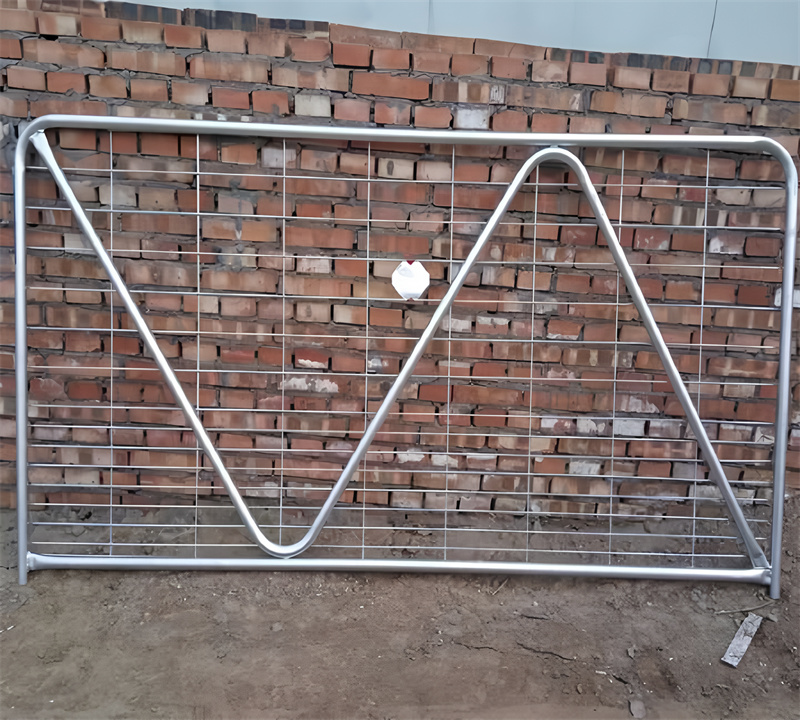

Container Loading & Freight Cost Math
12ft gates load 180-200 units per 40ft HC; 16ft gates max out at 110-130. That density gap drives a 35% per-unit freight premium on wider gates.
CBM and Stacking Math: 12ft vs 16ft Gates
A 40ft HC container offers roughly 76 cubic meters of usable internal volume (ISO 668 standard dimensions). A 12ft galvanized farm gate at 1.5-inch OD occupies approximately 0.35 CBM when nested, allowing 180-200 units per container depending on frame depth and latch hardware orientation. A 16ft gate in the same tube spec occupies roughly 0.58 CBM nested, capping out at 110-130 units.
The nesting efficiency difference comes down to frame geometry. Twelve-foot gates with 1.5-inch OD tubes nest tightly because the frame taper allows one gate to slide into the next with minimal wasted space. Sixteen-foot gates have a longer horizontal member that resists tight nesting — the diagonal stays create a wider gap between stacked units. We have measured an average of 8-10cm of wasted vertical space per 16ft gate in a stack, versus 3-4cm on 12ft units. Across a 130-unit stack, that wasted space compounds into 1.0-1.3 cubic meters of dead air — enough to fit 3-4 additional 12ft gates.
Per-Unit Freight Cost Calculations
Based on current Anping-to-Los Angeles 40ft HC rates, per-unit landed freight on 12ft gates runs approximately $18.50. The same container route carrying 16ft gates delivers a per-unit freight cost of roughly $25.00. That is a straight 35% premium on freight alone, with zero added value to your rancher customers.
Here is the margin impact in real terms. If your wholesale landed cost on a 12ft gate is $65 and you sell at $110, your gross margin is $45. On a 16ft gate, your landed cost might be $95 and you sell at $160 — a $65 gross margin that looks better on paper. But subtract the $6.50 extra freight per unit on the 16ft gate, and your real margin advantage shrinks to $58.50. More importantly, if that 16ft gate sits in your yard for 90 days because your local contractors mostly request 12ft, your inventory carrying cost erodes that margin entirely. Your 12ft inventory turns faster because 10ft and 12ft widths represent roughly 65% of total farm gate wholesale volume in North America.
Container Mixing Strategy to Optimize Margin and Fill Rate
The highest-margin containers we ship to North American distributors are never single-SKU loads. They are mixed loads engineered to hit maximum cubic utilization while matching the actual demand mix of the distributor’s local market.
A proven mix pattern for a first-time trial order: 140 units of 12ft gates, 60 units of 16ft gates, and 40 units of 8ft or 10ft utility gates. This configuration fills approximately 73-75 CBM of a 40ft HC — around 97-99% utilization. The 12ft units carry your freight baseline, the 16ft units satisfy the occasional large-opening request without committing a full container to a slow-moving SKU, and the smaller utility
| Gate Width | 40ft HC Capacity | Freight Cost Math | Inventory Turnover Risk | Net Margin Impact |
|---|---|---|---|---|
| 12ft Standard | 180-200 units | Baseline cost per gate | Low (Represents 65% of wholesale volume) | Maximum ROI due to rapid inventory cycles |
| 16ft Oversized | 110-130 units | 35% higher cost per gate | High (Slow moving, niche applications) | Margin killer due to shipping overhead & dead stock |
Conclusion
Load your first container with 10ft and 12ft widths in 14-gauge steel. These two sizes move 65% of your wholesale volume and nest tight enough to fit 180 units in a 40ft HC container. Don’t let a factory switch you to 16-gauge just to cut their material costs on a “heavy duty” label.
Force your next supplier to quote the exact wall thickness in millimeters, not just the tube OD. If they dodge the gauge question or push 5/8 inch drop-pin latches, walk away. Send DB Fencing your target specs and request a 100-unit trial quote to test actual inventory turnover in your local market.
Frequently Asked Questions
What sizes do farm gates come in?
Farm gates come in widths ranging from 4ft for pedestrian access to 20ft double-leaf configurations for heavy equipment, with 10ft and 12ft being the most heavily stocked sizes for wholesale distributors. Heights typically range from 3.5ft for poultry enclosures up to 6ft for containing cattle and horses. Leveraging our 10 advanced welding production lines in Anping, DB Fencing manufactures these varied dimensions with a weekly capacity of 2,000 sets to ensure global distributors maintain uninterrupted inventory.
What is a standard agricultural gate size?
The universally accepted standard agricultural gate is 12ft wide by 5ft tall, engineered from 1.5-inch OD galvanized steel tubing with a robust 14-gauge (2.0mm) wall thickness. This specific dimension is optimized to comfortably accommodate tractors and pickup trucks while providing the structural integrity necessary to contain cattle. As a leading manufacturer for the Australian and North American markets, DB Fencing produces these standard gates with a hot-dipped galvanized finish exceeding 42 microns to guarantee superior rust resistance in harsh outdoor environments.
What is the best farm gate size?
A 12ft wide by 5-6ft tall gate is the most strategic size for global fence distributors and retailers to stock, as it covers approximately 65% of typical rancher demand. Beyond its universal utility, this dimension maximizes shipping efficiency by allowing 180-200 units to fit securely within a single 40ft HC container. For our B2B partners, this translates to a highly optimized $28-$42 FOB price point that perfectly balances healthy profit margins with rapid inventory turnover.
What are standard gate sizes?
Standard gate sizes are systematically categorized by application, including 4ft for pedestrian access, 6ft for small equipment, 8ft for ATVs, 10ft for pickup trucks, and 12ft to 16ft for tractors and wide implements. Vertical heights are strictly standardized across the industry at 4ft, 4.5ft, 5ft, and 6ft to ensure seamless compatibility with standard fencing lines. At DB Fencing, we offer comprehensive OEM customization across all these standard dimensions, supported by our flexible low MOQ of just 100 panels to accommodate diverse wholesale needs.
How do sizes vary by livestock?
Farm gate dimensions must be precisely tailored to the specific livestock, with sheep and goats requiring a 4ft height and 6-inch vertical stay spacing to prevent escapes. Cattle applications demand a heavier 5-6ft height utilizing 14-gauge tubing capable of withstanding over 2,500 lbs of lateral pressure, while horse gates require the same height but mandate specialized finishing to eliminate sharp wire burrs. Poultry operations typically only require 3.5ft low-profile gates, and as a one-stop manufacturer, DB Fencing customizes all these specific configurations to meet strict ISO9001 and SGS certification standards.


