 Skip to content
Safety & Security Demystified
- Effective school security fencing blends height, anti-climb features, and controlled access to create safe educational spaces.
- Compliance with ADA, fire codes, and playground safety regulations is essential for legal and functional fencing installations.
Overview of School Security Fencing
In an era of evolving campus safety challenges, the role of physical security infrastructure has never been more critical. While technology-based solutions like surveillance cameras and digital access control systems are advancing rapidly, perimeter fencing remains the foundational layer of any comprehensive school security plan. It serves as the first line of defense, establishing a clear and controllable boundary that is essential for the effective deployment of all other security measures. A well-designed fence does more than just deter intruders; it shapes behavior, manages traffic, and provides the physical framework upon which a secure and orderly campus environment is built.
Modern educational facility fencing isn’t merely about erecting barriers. It’s a strategic discipline that balances robust security with a welcoming atmosphere, adheres to a complex web of regulations, and integrates seamlessly with both emergency protocols and campus aesthetics. For facility directors and security planners, understanding the specific specifications for height, materials, and access control is paramount. Failing to do so can result in a significant capital investment that is either non-compliant, ineffective, or worse, creates a new set of safety liabilities. This guide provides an authoritative overview of the specifications required to design and implement fencing that truly protects and serves an educational community.
Purpose and Benefits
The primary purpose of school security fencing is to establish effective perimeter security, a strategy focused on preventing unauthorized entry and clearly defining the institution’s property lines. This controlled perimeter is fundamental to enhancing student and staff safety by funneling all traffic through monitored access points, thereby reducing opportunities for trespassing, vandalism, and more severe threats. By creating this physical boundary, schools can more effectively manage who is on campus at any given time, which is a cornerstone of modern active-shooter prevention strategies and broader crime deterrence efforts recommended by law enforcement and federal agencies.
Beyond intrusion prevention, fencing delivers a multitude of operational benefits. It aids in daily traffic control, separating pedestrian walkways from vehicle zones and directing visitor flow to main offices. In K-12 environments, it is indispensable for creating secure playground and athletic field enclosures, ensuring young children remain in designated safe areas. Furthermore, strategically placed fencing supports emergency planning by pre-determining evacuation routes and establishing secure staging areas for first responders, ensuring that campus layouts are predictable and manageable during a crisis.
The psychological impact of well-designed fencing on the school community is also significant. For parents, a secure perimeter offers peace of mind. For students and staff, it can foster a sense of safety and order without feeling oppressive. The key is in the design—using architectural elements, appropriate colors, and landscaping can create a boundary that feels protective rather than punitive. This is achieved by understanding key industry terms: perimeter security establishes the outer boundary, controlled access refers to the gates and systems that manage entry, and anti-climb fencing incorporates specific design features to make scaling the barrier extremely difficult.

Types of Educational Fencing
Choosing the right fence involves a careful evaluation of security needs, aesthetic goals, maintenance capacity, and budget. Common materials include galvanized steel for its strength and corrosion resistance, aluminum for its lighter weight and durability, treated wood for specific aesthetic applications, and advanced mesh options for high-security areas. Each material can be used in various styles, such as traditional chain link, high-end ornamental steel, or modern anti-climb mesh panels, each offering a different balance of properties.
As a security consultant, I often work with campus planners navigating these choices. For instance, a university client recently debated between galvanized chain link and ornamental steel for their main campus entrance. While chain link was the more budget-friendly option, we analyzed the long-term implications. The ornamental steel, with its powder-coated finish and architectural design, not only provided superior strength but also projected an image of prestige and safety that aligned with the university’s brand, making it a better long-term investment for their primary public-facing perimeter.
Specific campus zones require specialized fencing. Playgrounds necessitate designs with specific picket spacing to prevent entrapment, as defined by the Consumer Product Safety Commission (CPSC). Swimming pool areas are governed by strict state health department codes mandating minimum heights and self-latching gates. Athletic fields may use taller, more open-weave fencing that allows for spectator visibility while containing sports equipment. Climate and environmental factors also heavily influence material selection; coastal campuses, for example, require materials with enhanced corrosion resistance like stainless steel or heavily treated aluminum to withstand saltwater exposure.
| Fence Type | Material | Security Level | Maintenance Needs | Typical Use Case |
|---|---|---|---|---|
| Chain Link | Galvanized Steel | Medium | Low | General Perimeter |
| Ornamental Steel | Powder-coated Steel | High | Medium | Main entrances, prestigious campuses |
| Anti-Climb Mesh | Aluminum/Stainless Steel | Very High | Medium | High-security zones |
| Wooden Privacy | Treated Wood | Low to Medium | High | Playgrounds, pool areas |
| Solid Panels | Composite/Metal | High | Medium | Noise barriers and privacy |
School Fencing Security Specifications
The effectiveness of a security fence is determined by its technical specifications. These details—covering height, structural soundness, anti-climb properties, and access control—are not arbitrary. Each measurement and material choice is rooted in established crime prevention principles and is designed to counter specific threats while facilitating necessary access for authorized personnel and emergency responders. Understanding the rationale behind these standards is crucial for facilities managers and architects, as it enables them to make informed decisions that align security investments with actual risk mitigation rather than simply meeting a minimum building code.
Height and Structural Requirements
Fence height is a primary deterrent, and recommendations vary based on the age of the student population and the perceived threat level. For elementary and K-8 schools, a minimum height of 6 feet is often standard for general perimeters. For high schools, where risks can be more significant, U.S. Department of Education safety guidelines often recommend heights of 8 feet or more to effectively discourage casual trespassing and climbing attempts. University campuses, with their more open layouts, may use shorter fences (4 to 6 feet) for delineating boundaries but install taller, high-security fencing around sensitive areas like research labs or utility centers.
Beyond height, structural integrity is paramount. Fencing must be specified to withstand not only potential vandalism but also environmental stresses. This involves meeting local building codes for wind load, which dictates the fence’s ability to resist high winds without failing—a critical consideration for facilities using solid panels or banner mesh. In seismically active regions, fence footings and post installations must adhere to specific seismic codes to ensure they remain standing after an earthquake. The goal is to invest in a system that provides durable, long-term security, not one that requires frequent repairs or fails under predictable environmental pressure.

Anti-Climb and Safety Features
A tall fence is only effective if it cannot be easily scaled. Anti-climb design principles are a core component of modern security fencing and integrate directly with CPTED (Crime Prevention Through Environmental Design) recommendations. These designs work by eliminating handholds and footholds. This is achieved through features like narrow vertical bar spacing (typically less than 4 inches), small-aperture welded mesh (1.5 inches or less), and smooth, solid panel surfaces. Accessory features can further enhance security, including angled tops, curved panels, or integrated sensor wiring that triggers alarms upon contact, though the use of more aggressive deterrents like razor wire is heavily regulated and generally inappropriate for a school environment.
Equally important are the safety features designed to prevent accidents. The spacing between vertical pickets or within mesh must be small enough to prevent a child’s head or limbs from becoming entrapped, a crucial consideration for any fence adjacent to a playground or elementary school walkway. All components must be free of sharp edges or hazardous protrusions. Balancing these security and safety needs with campus aesthetics is a key design challenge; using powder-coated finishes, incorporating architectural elements, and integrating the fence with landscaping can help create a solution that feels secure without appearing hostile or prison-like to students.
| Design Element | Function | Typical Specs | Safety Notes |
|---|---|---|---|
| Vertical Bar Spacing | Prevents foothold for climbing | Less than 4 inches | Must prevent finger entrapment |
| Mesh Aperture | Limits handholds | Max 1.5 inches | Smooth finish required |
| Top Edge Shapes | Deterrent | Angled or rounded | Must not be hazardous |
| Materials | Durability and safety | Galvanized or coated steel | Non-toxic coating |
| Accessory Features | Additional security | Sensor wiring, razor wire | Compliance with local regulations |
Access Control Integration
A fence is only as secure as its gates. Modern school fencing must integrate with sophisticated access control systems that manage entry for different user groups. These systems range from mechanical keypad locks to advanced electronic solutions, including card readers, biometric scanners, and video intercom systems that allow for remote verification and entry. For high-security zones, “man-traps” or sally ports—a sequence of two interlocking gates—can be used to ensure only one person enters at a time and that their authorization is verified before they gain full campus access.
Crucially, these access systems must be integrated with the school’s broader security infrastructure, including emergency notification systems. In a lockdown scenario, the system should allow security personnel to instantly secure all perimeter gates. Conversely, during an evacuation, designated egress gates must fail-safe or be remotely opened to allow for rapid exit. This requires close coordination with local law enforcement and fire departments during the planning phase to provide them with override access credentials or mechanical keys (often stored in a Knox Box) for emergency situations, ensuring they are never locked out during a critical event.
Finally, all access points must be fully compliant with the Americans with Disabilities Act (ADA). This includes ensuring that gate openings are sufficiently wide (a minimum of 36 inches of clear width), pathways leading to and from gates are accessible, and hardware like levers and push-buttons can be operated without tight grasping or twisting. This commitment to accessibility ensures the campus is safe and open to every member of the community.
Strong, Reliable Metal Fences Built to Last
Choose DB Fencing for top-quality metal fences crafted with precision and delivered quickly. Our direct factory offers competitive pricing and expert support for steel picket fences, temporary fences, and more—designed to meet global standards and your exact needs.
Regulatory Compliance for Educational Fencing
Navigating the regulatory landscape is one of the most complex aspects of specifying school fencing. Installations are governed by a multi-layered framework of federal, state, and local codes that dictate everything from height and materials to gate functionality and placement. This complex web of overlapping regulations requires careful analysis, as a design that satisfies a security goal may inadvertently violate a fire safety or accessibility mandate. For example, a high-security gate with a complex locking mechanism could fail an NFPA 101 inspection if it impedes emergency egress, while a fence that perfectly secures a perimeter might not have the ADA-compliant clear widths at its gates. A successful project requires a holistic approach that integrates all these requirements from the earliest design stages.
Height and Material Codes
Federal guidelines, such as those issued by the Department of Education, provide recommendations, but mandatory fence height regulations are typically enforced at the state and local levels. Many state education codes, particularly those updated in the post-Columbine era, stipulate minimum heights for public school perimeters. For instance, the California Title 24 building standards and the Texas Education Code contain specific provisions related to school facility construction and security that can influence fencing specifications. These codes often differentiate requirements for various areas; fences around pools, playgrounds, and athletic fields almost always have unique height and material stipulations to address the specific risks associated with those spaces.
Material choice is also regulated, primarily by fire safety and building codes. Materials must be non-hazardous and, in some cases, carry a specific fire-resistance rating if located near a building’s egress path. After installation, jurisdictions require a formal inspection and certification process to ensure the final product meets all applicable codes. Maintaining thorough documentation of materials used, installation methods, and final inspection reports is a critical step for demonstrating compliance and mitigating institutional liability.
Fire Department Access and Emergency Gates
Perhaps the most critical compliance area involves emergency access. According to the NFPA 101 Life Safety Code, fencing must not impede emergency egress for occupants or access for first responders. This means fence and gate placement must be carefully coordinated with a building’s designated exit routes and the local fire department’s operational plan. Emergency gates must be clearly marked with standardized signage, adequately illuminated, and wide enough to accommodate fire apparatus.
Planning for these gates requires direct consultation with the local fire marshal’s office to align with their operational plan. This collaboration is essential, as they will provide specific requirements for crucial details like gate locations, clear widths, and approved locking mechanisms. Adhering to these local mandates from the start prevents costly revisions and ensures first responders can operate effectively during an incident.
In terms of hardware, emergency gates are often required to have a “fail-safe” electronic lock that opens automatically during an alarm, or be fitted with a Knox Box for manual key access by fire personnel. To guarantee reliability, schools must implement and document a mandatory schedule of regular inspections and functional tests. These protocols ensure the gates operate exactly as intended during a real emergency, forming a critical part of the facility’s life safety system.

ADA and Playground Safety Regulations
Accessibility and child safety are non-negotiable legal requirements. The Americans with Disabilities Act (ADA) sets forth clear standards for public facilities, and these apply directly to campus fencing. All pedestrian gates must provide a minimum clear width of 36 inches to allow for wheelchair passage. The ground surface on both sides of the gate must be firm, stable, and slip-resistant, with compliant maneuvering clearances. Furthermore, gate hardware must be usable with one hand and not require tight grasping, pinching, or twisting of the wrist—lever-style handles and push-pads are common compliant solutions.
For facilities with younger children, playground fencing is subject to guidelines from the U.S. Consumer Product Safety Commission (CPSC) and standards from ASTM International (e.g., ASTM F2285 for playground equipment safety). These standards are designed to prevent common injuries like entrapment by specifying maximum gap widths (typically no more than 3.5 inches). Pool fences have their own rigorous set of codes, usually mandated by state health departments, which include minimum heights (often 4-5 feet), specific anti-climb provisions, and requirements for self-closing, self-latching gates with latches placed out of the reach of young children. Ongoing inspections are crucial to ensure these safety features remain functional and compliant over time.
| Requirement | Standard/Regulation | Application | Inspection Frequency |
|---|---|---|---|
| Gate Width | ADA | Minimum 36 inches | Annually |
| Latch Type | ASTM F2285 | Self-latching, out of reach | Monthly |
| Fence Height | State Health Dept. | Min 4 feet around pools | Quarterly |
| Entrapment Gaps | CPSC Guidelines | Max 3.5 inches spacing | Monthly |
| Surface Safety | ADA | Non-slip pathways | Annually |
Maintenance and Inspection for School Fences
Installing a compliant, high-quality fence is only half the battle; ensuring its long-term effectiveness requires a structured maintenance and inspection program. Over time, fences are subject to environmental wear, accidental damage, and deliberate vandalism, all of which can compromise their security and safety functions. An effective maintenance program is not a reactive measure but a proactive strategy designed to anticipate wear, identify vulnerabilities before they can be exploited, and ensure the entire perimeter system remains fully compliant with all applicable regulations. This program protects the initial capital investment and, more importantly, ensures the fence continues to provide the level of protection it was designed for.
Routine Inspection Checklist
A systematic inspection routine is the backbone of any effective fence maintenance program, ensuring ongoing safety and compliance. Facilities staff should be equipped with a detailed checklist to guide their reviews, which must occur at regular intervals like quarterly and after any significant weather event or security incident. These checks should cover all components, from fence posts showing signs of erosion to gates and locks that need realignment or testing.
Proper documentation of these inspections is just as critical as the physical check itself. Any identified issues, such as corrosion, damage, or malfunctioning hardware, must be recorded in a detailed log complete with photos and dates. This record-keeping creates a clear paper trail for compliance audits and provides the necessary data for prioritizing and planning repairs, ultimately proving due diligence in maintaining a safe campus environment.
Repair and Replacement Protocols
When an inspection reveals damage, a clear protocol must dictate the response by defining the threshold between minor repairs and full replacement. For example, minor corrosion may only require spot treatment, whereas a bent post necessitates replacement with code-compliant materials. All work must be coordinated with school operations to minimize campus disruption, and emergency breaches require an immediate response plan like deploying temporary fencing. Pre-qualifying certified repair vendors is also a crucial step to ensure quality and readiness.
Funding and Grants for Security Fencing
The significant cost of installing or upgrading school security fencing can be a major hurdle for many institutions. However, a variety of federal, state, and local funding sources exist specifically to help schools and universities enhance their physical security infrastructure. Successful funding acquisition requires a proactive approach, a clear understanding of eligibility criteria, and a compelling application that ties the proposed fencing project directly to tangible improvements in student and staff safety. Clarifying the nuances of these programs—such as which components are eligible and what matching funds are required—is the first step toward building a successful funding strategy.
E-Rate and Federal Grants
While the federal E-Rate program, administered by the FCC, does not typically fund the physical fence structure itself, it can be a vital resource for the technology integrated into it. E-Rate can provide discounts for access control technologies, surveillance cameras mounted on the fence line, and the cabling needed to connect these systems to the school’s network. Separately, federal agencies like the Department of Justice (DOJ) and the Department of Homeland Security (DHS) periodically offer grants specifically for improving school safety. These competitive grants often require detailed project proposals, risk assessments, and a clear plan for measuring the project’s impact on campus security. Following a school district client’s success in securing a major federal grant, they stressed the importance of starting the application process early and meticulously documenting how the new fencing would integrate with their existing emergency response plan.
State and Local Funding Options
At the state level, funding often becomes available through education safety grants or as part of larger capital improvement bonds approved by voters. These opportunities are frequently administered by the State Department of Education and may require the school district to provide matching funds. Building a strong case for these funds involves engaging key stakeholders, including the local school board, parent-teacher organizations, and community leaders. Presenting clear data on security incidents or vulnerabilities, along with a professional design proposal, can significantly bolster support. Additionally, partnerships with local government or businesses can sometimes unlock co-funding opportunities, demonstrating broad community investment in student safety and making the project more attractive to grant-making bodies.
Design & Aesthetic Considerations for Campus Fencing
Modern campus security is not merely a question of fortification; it is about creating an environment that feels safe, welcoming, and conducive to learning. Fencing design plays a pivotal role in this delicate balance. An overly aggressive or prison-like fence can negatively impact campus culture, instill fear in students, and create a poor impression on the surrounding community. Thoughtful design, however, can achieve robust security objectives while simultaneously enhancing campus aesthetics, reflecting institutional identity, and positively integrating with student life. The most successful projects are those where security needs and architectural vision are considered in unison from the very beginning.
Campus Landscape Integration
I once consulted for a flagship university that needed to upgrade the security around its historic main quad without creating a “fortress” feel. Instead of a stark, 8-foot steel fence, we developed a layered solution. We used a 6-foot ornamental fence set back from the primary walkways, fronted by tiered landscaping and low, architecturally complementary brick walls. This design choice effectively controlled access and deterred climbing while preserving an open, prestigious aesthetic that reflected the institution’s identity. This approach, which involves close collaboration between security consultants, landscape architects, and campus planners, demonstrates that security and beauty are not mutually exclusive. The use of color, texture, and high-quality materials can transform a simple barrier into a positive architectural feature.
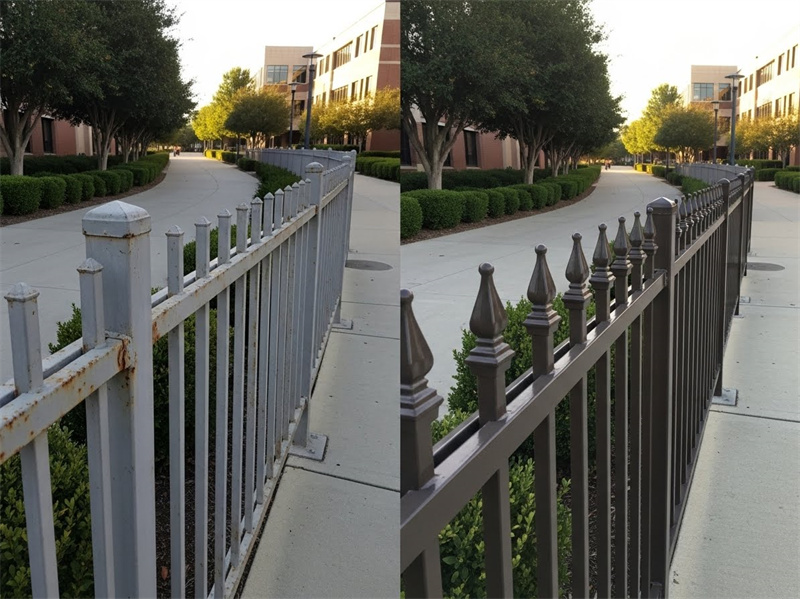
Multi-Purpose Fence Designs
Fencing can be designed to serve multiple functions beyond just perimeter security. In athletic complexes, for example, fencing must provide security while also supporting spectator viewing and crowd control during events. Some designs incorporate removable sections or use modular fencing options to provide flexibility for large seasonal events, such as commencement ceremonies or community festivals. In areas bordering busy roads or noisy facilities, solid-panel privacy fencing can offer both security and significant noise reduction, improving the quality of life within academic buildings and dormitories. By considering the full spectrum of campus activities—from daily routines to special events and even potential protests—planners can select fencing solutions that are adaptable, resilient, and add value to the campus experience rather than detract from it.
Strong, Reliable Metal Fences Built to Last
Choose DB Fencing for top-quality metal fences crafted with precision and delivered quickly. Our direct factory offers competitive pricing and expert support for steel picket fences, temporary fences, and more—designed to meet global standards and your exact needs.
Conclusion: Safety, Compliance, and Smart Design
Effective school security fencing is far more than a simple barrier; it is a complex and vital system that forms the bedrock of a safe educational environment. The process of specifying, installing, and maintaining this infrastructure demands a comprehensive approach that meticulously integrates security objectives, regulatory compliance, and operational needs. By tailoring solutions to the unique context of each campus, planners can implement a physical perimeter that both protects and preserves the institution’s mission.
- Comprehensive fencing solutions must integrate security, safety, and regulatory compliance tailored to campus needs.
- Ongoing maintenance and technology integration sustain fencing effectiveness over time.
- Proactive funding strategies empower schools to implement high-quality, compliant fencing.
- Thoughtful design enhances both protection and campus community atmosphere.
Ultimately, the primary goal is to foster a campus where students and staff feel secure without feeling confined, a balance achieved through deliberate design. This balance requires careful planning and a deep understanding of the diverse principles outlined throughout this guide. By using this information as a blueprint, school leaders and security experts can make strategic decisions that cultivate safer and more resilient educational environments.
Frequently Asked Questions
- What is the recommended fence height for K-12 schools?
- For K-12 schools, recommended fence heights typically range from 6 to 8 feet. Elementary schools may use 6-foot fences for general perimeters, while high schools often require 8-foot or taller fences to provide a more formidable deterrent against climbing and trespassing. These heights are based on security best practices and may be mandated by state or local education codes designed to enhance student safety.
- How do anti-climb fences improve school security?
- Anti-climb fences improve security by eliminating handholds and footholds. This is achieved through specific design elements, such as narrow vertical bar spacing, small-aperture welded wire mesh, and smooth panel surfaces. These features align with Crime Prevention Through Environmental Design (CPTED) principles by making the fence physically difficult to scale, thereby deterring opportunistic intruders and delaying determined ones.
- What are the key ADA requirements for school fence gates?
- Key ADA requirements for school fence gates focus on accessibility. Gates must have a minimum clear opening of 36 inches to accommodate wheelchairs. The path to and from the gate must be firm and stable. Additionally, gate hardware, such as levers or push-buttons, must be operable with one hand and not require tight grasping or twisting, ensuring they can be used by individuals with disabilities.
- Are there funding programs available for school security fencing projects?
- Yes, several funding options are available. While the federal E-Rate program can help fund the access control and communication technologies integrated with a fence, it does not cover the fence itself. Federal grants from the Department of Justice or DHS, along with various state-level school safety grants and capital improvement bonds, are common sources for funding the physical fencing infrastructure.
- How often should school fences be inspected and maintained?
- School fences should undergo routine inspections on a quarterly basis and after any severe weather event. These inspections should check key components like posts, panels, gates, and locks for signs of corrosion, damage, or malfunction. A formal maintenance program with documented inspections and timely repairs is essential for ensuring the fence remains effective and compliant with safety regulations.
- How do emergency gates factor into school security fencing?
- Emergency gates are a critical component mandated by fire safety codes like NFPA 101. They must be strategically placed to align with building evacuation routes and provide clear, unobstructed access for fire department vehicles. These gates must be clearly marked, illuminated, and often feature special locks (e.g., panic bars or Knox Box overrides) to ensure rapid egress for occupants and entry for first responders during a crisis.


