 Skip to content
What Matters Most
- Successful multi-family fencing balances aesthetics, security, and HOA regulations to enhance safety and property value.
- Prioritizing durable, low-maintenance materials and clear approval processes reduces long-term costs and management conflicts.
Understanding Multi-Family Residential Fencing
For any multi-family development, from sprawling apartment complexes to a tight-knit community of townhomes, fencing is far more than a simple boundary marker. It serves a dual role that is fundamental to the property’s success: it is both a primary security asset and a defining element of community design. These two functions can sometimes exist in tension. A design that prioritizes open, welcoming aesthetics might compromise security, while an imposing security fence could feel cold and fortress-like to residents. The key for property managers, developers, and HOA boards is to strike a deliberate, thoughtful balance, ensuring the final solution enhances safety, bolsters property value, and contributes to a positive living environment.
What is Multi-Family Residential Fencing?
Multi-family residential fencing is any fencing system designed and installed within a shared living community, such as an apartment complex, condominium development, or townhome association. Its application is broad, extending from perimeter security around the entire property to delineating private patios, enclosing common areas like pools and parks, and creating aesthetic separations between units. Unlike single-family homes where an individual owner’s taste dictates the choice, multi-family fencing decisions impact dozens or even hundreds of residents and must adhere to a unified set of community standards.
The core purpose of this fencing is threefold: it provides visual cohesion, ensures resident safety, and clearly marks lines of separation and responsibility. To achieve this, several materials are commonly employed, each with distinct properties. Wood offers a classic, natural look but requires significant upkeep. Vinyl provides a clean, modern aesthetic with minimal maintenance. Wrought iron delivers timeless elegance and strength, while modern composite materials offer a versatile and durable alternative that can mimic the look of natural materials without the associated maintenance demands. The choice directly influences the community’s feel, security posture, and long-term operational budget.

Key Functions: Aesthetic, Security & Management
From an aesthetic perspective, a well-executed fencing strategy establishes a cohesive visual identity for the entire development. It complements the architecture, elevates landscaping, and significantly boosts curb appeal, which is a direct driver of property value. A high-quality, uniform fence signals that the property is well-maintained and professionally managed, attracting desirable tenants and buyers while fostering resident pride.
On the security front, fencing is the first line of defense. A continuous perimeter fence with controlled access points is a powerful deterrent against unauthorized entry, vandalism, and other criminal activity. It channels all foot and vehicle traffic through monitored entryways, enhancing resident safety and creating a more secure environment. However, this must be carefully designed; an overly aggressive fence can impede emergency access or create a sense of isolation. The conflict between a welcoming, open design and the need for robust security is a central challenge that every community must address based on its specific location, resident demographics, and risk profile.
Finally, for community management, standardized fencing is an invaluable tool. Clear, documented guidelines on fence styles, materials, and maintenance responsibilities prevent disputes between neighbors and the HOA. They simplify the approval process for modifications, streamline repair schedules, and ensure consistent enforcement. This clarity reduces administrative burdens on property managers and HOA boards, freeing up resources and minimizing the potential for conflict that can so often arise from ambiguous property line rules.
Aesthetic Design of Multi-Family Fencing
Before diving into specific styles and materials, it’s crucial to understand the profound impact that fence aesthetics have on a community’s financial health and social fabric. A cohesive and attractive fencing plan is not a mere expense; it’s a strategic investment. Authoritative real estate industry reports consistently show that communities with strong curb appeal, in which fencing plays a major role, command higher property values and experience lower vacancy rates. Furthermore, a beautiful, well-maintained environment directly contributes to resident satisfaction, fostering a stronger sense of community and encouraging long-term tenancy. When residents feel proud of where they live, they are more likely to take care of their surroundings, creating a positive feedback loop of property enhancement and community wellbeing.
HOA Fence Specifications and Style Guidelines
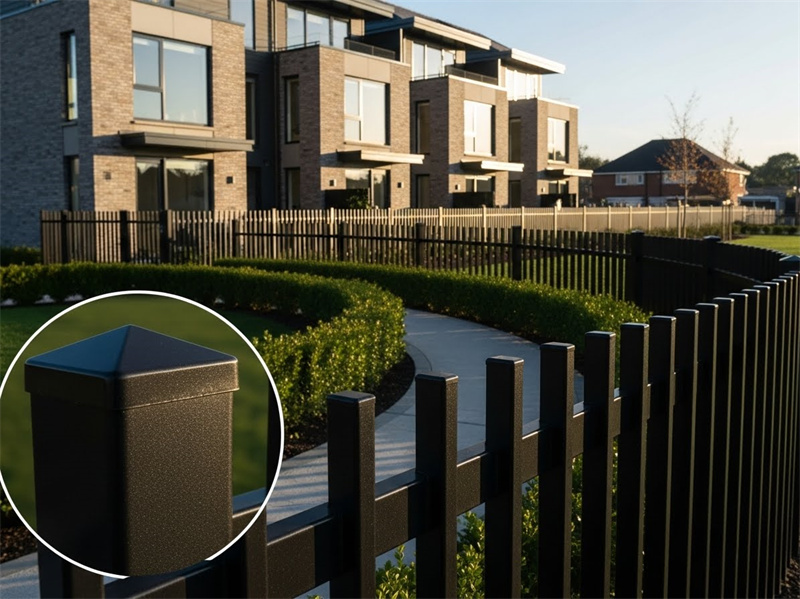
Most successful multi-family developments are governed by a Homeowners’ Association (HOA) with strict Covenants, Conditions, and Restrictions (CC&Rs) that dictate fencing specifications. We recently worked with a condominium association whose aging, mismatched collection of backyard fences had become a source of constant resident complaints. By establishing a clear set of guidelines for two pre-approved styles—a classic white vinyl privacy fence and an elegant black aluminum picket fence—they not only resolved the aesthetic chaos but also simplified future repairs and replacements. This is a common scenario.
Typical HOA requirements cover fence height (often capped at 6 feet for privacy fences and 4 feet for decorative ones), specific allowable colors (usually neutral tones like white, tan, or black), and a limited palette of materials to maintain architectural harmony. The design choices are rarely arbitrary; they are selected to complement the community’s overall architectural theme, whether it be modern, traditional, or craftsman. Preparing a submission for HOA review usually requires detailed drawings, a site plan showing the fence location, material samples, and color swatches. A well-prepared, comprehensive submission that clearly demonstrates adherence to the established guidelines is the fastest path to approval.
Materials and Visual Appeal
The choice of material is the single most important decision in balancing aesthetics, maintenance, and budget. For upscale multi-family communities, there’s a clear trend towards high-durability, low-maintenance materials that offer a premium look. While classic wood offers warmth, its need for regular staining and sealing makes it a less practical choice for large-scale developments. Vinyl and composite fencing have surged in popularity for their clean lines and resistance to weather, rot, and pests. For a touch of timeless elegance and superior strength, ornamental steel and aluminum—often mistaken for traditional wrought iron—are top choices, especially for perimeter security and amenity enclosures like pools.
The finish and color of the fence are just as important as the material itself. A powder-coated finish on a steel picket fence, for instance, provides a durable, smooth, and consistent appearance that far outlasts simple paint. Color should be used to create cohesion; a fence color that complements the trim or stone accents on the buildings can tie the entire property together visually. When integrated thoughtfully with landscaping—for example, using a dark-colored fence to recede into the background and let plantings shine—the fence becomes a seamless part of a beautiful, holistic design that significantly enhances curb appeal and resident experience.
| Material | Aesthetic Appeal | Maintenance Needs | Durability | Typical Cost |
|---|---|---|---|---|
| Wood | Warm, traditional | High | Moderate | Moderate |
| Vinyl | Clean, modern | Low | High | High |
| Wrought Iron | Elegant, classic | Moderate | High | High |
| Composite | Versatile, contemporary | Low | High | Moderate |
Security Considerations in Residential Fencing
Before selecting specific security hardware, property managers and developers must understand the fundamental principles of effective perimeter security, often summarized as “Deter, Detect, Delay, and Respond.” A strong fence is your primary tool for deterrence (discouraging potential intruders) and delay (slowing down an attempted breach). When integrated with other systems, it aids in detection (via cameras) and allows for a quicker response (from security personnel or law enforcement). The goal isn’t to create an impenetrable fortress, but to build a layered system where the fence acts as a physical and psychological barrier that makes your property a much harder target than its surroundings. Every design choice should be evaluated against these principles.
Perimeter Security Best Practices
The foundation of perimeter security is a continuous, unbroken fence line free of gaps or weak points. According to security industry whitepapers, effective designs feature tamper-resistant hardware and construction that resists cutting, dismantling, or climbing. This can include using smooth surfaces, anti-climb picket tops (like spear or bent-top designs), and fasteners that are inaccessible from the outside. All gates, which are inherent weak points, must be as robust as the fence itself and equipped with self-closing and self-latching mechanisms to ensure they are not inadvertently left open.
Visibility is a critical, yet often misunderstood, component. A solid privacy fence may seem more secure, but it can provide cover for intruders once they are inside. Picket-style or ornamental metal fencing allows for clear lines of sight, enabling residents, security patrols, and cameras to monitor activity both inside and outside the perimeter—a core principle of Crime Prevention Through Environmental Design (CPTED). The most effective strategies integrate fencing with other security measures, such as motion-activated lighting aimed along the fenceline, high-definition surveillance cameras overlooking key access points, and regular patrols to create a comprehensive security posture.

Residential Access Control Solutions
Once the perimeter is secured, managing who gets in and out becomes the next priority. Modern access control solutions range from simple mechanical locks to sophisticated electronic systems. For resident access, communities often use key fobs, access cards, or mobile apps that offer a high degree of security and convenience, allowing management to easily grant or revoke access without changing physical locks. These systems provide an audit trail, showing who accessed a gate and when, which is invaluable for security investigations.
Visitor management requires a different approach. Intercom systems, keypads with temporary codes, and remote-gating systems managed by a concierge or individual residents are common solutions. The key is to balance robust security with resident convenience—a system that is too cumbersome will lead to frustration and workarounds, like propping gates open, that defeat the entire purpose. Every access point must also be compliant with local fire and building codes for emergency egress, ensuring residents can exit quickly and safely in a fire or other emergency.
Residential Pool Fence Compliance
Of all the fencing on a multi-family property, the enclosure around a swimming pool carries the most significant legal and safety responsibilities. Local municipal codes and safety standards, often based on the International Swimming Pool and Spa Code (ISPSC), are non-negotiable. These regulations are designed to prevent accidental drownings, particularly of young children, and carry severe liability for non-compliance. A common requirement cited by safety organizations is a minimum fence height of 48 to 60 inches, with no more than a 2-inch gap at the bottom.
The materials must not provide handholds or footholds for climbing, which is why vertical picket-style fences with narrow spacing are preferred over chain-link or lattice designs. The most critical component is the gate. Every residential pool fence compliance plan must include gates that are self-closing and self-latching, with a latching mechanism located high enough to be out of a small child’s reach. Common pitfalls include gates that sag over time and fail to latch properly, or propping gates open for convenience during parties. Regular inspections are essential to ensure ongoing compliance and prevent a tragic accident, and many municipalities require periodic certification for HOA pools.
Quality Metal Fences Built to Last
Choose DB Fencing for durable steel picket fences made in our direct factory. Fast sample delivery, strict quality checks, and competitive prices help you secure reliable fencing solutions backed by expert support.
HOA Approval & Community Management
For any property manager or developer, navigating the HOA approval process can feel daunting, but it doesn’t have to be. The key is to treat it not as a hurdle, but as a collaborative process. We once assisted a management company in a community where the board was deadlocked over a perimeter fence upgrade due to cost concerns and aesthetic disagreements. Instead of pushing one solution, we helped facilitate a town hall, presenting three distinct, pre-vetted options with detailed lifecycle cost analyses. This transparent, educational approach empowered the board and residents to make an informed decision together, leading to a near-unanimous approval. This strategy of proactive engagement and clear communication is universally effective.
HOA Fence Approval Process
Successfully navigating the HOA fence approval process begins with thoroughly understanding the community’s governing documents. The typical review process involves several key steps: submission of a formal application, review by an architectural committee, and final approval by the HOA board. Your application package should be impeccably detailed, including professional drawings or site plans, photos of the proposed materials and colors, and a clear description of the project scope. To expedite approval, anticipate the board’s questions: Does the design conform to a pre-approved style? Does the color match the community palette? Is the height compliant? Providing this information upfront prevents delays and back-and-forth requests. A brief, successful case study could detail a project where a developer pre-negotiated fence standards with the initial HOA board, making it seamless for all subsequent builders and owners to comply.
Maintenance Programs & Cost Management
The initial cost of a fence is only part of the financial picture; the total lifecycle cost is what truly matters to a community’s budget. A well-designed maintenance program is proactive, not reactive. It includes scheduled inspections to catch minor issues like loose posts or faulty gate latches before they become major, expensive problems. Selecting durable, low-maintenance materials like powder-coated steel, vinyl, or composite is the most effective strategy for minimizing long-term costs. These materials resist rust, rot, and fading, requiring little more than occasional cleaning.
Crucially, the HOA’s governing documents must clearly define who is responsible for what. Typically, the HOA is responsible for perimeter fencing and fences in common areas, while individual homeowners are responsible for fences enclosing their private patios or yards. This clear delineation prevents disputes and ensures all fencing is maintained to the same standard. When budgeting, boards should not only account for routine maintenance but also establish a reserve fund for the eventual large-scale repair or replacement of the entire fencing system.
| Material | Initial Cost | Annual Maintenance | Average Lifespan | Total 10-Year Cost |
|---|---|---|---|---|
| Wood | $$ | $$$ | 10-15 years | $$$$$ |
| Vinyl | $$$ | $ | 20+ years | $$$ |
| Wrought Iron | $$$$ | $$ | 25+ years | $$$$ |
| Composite | $$$ | $ | 20+ years | $$$ |
Conflict Resolution & Enforcement
Even with the best guidelines, disputes can arise. The most common fencing-related conflicts in HOAs involve unapproved installations, poor maintenance, or arguments over property lines. An effective resolution protocol starts with informal communication, followed by a formal written notice of the violation. The most effective tool for preventing these conflicts in the first place is a comprehensive, easily accessible set of standardized fence guidelines. When every resident knows exactly what is and isn’t allowed, there is little room for “misunderstandings.”
When violations do occur, HOA boards have several enforcement mechanisms, ranging from simple warnings and fines to, in extreme cases, legal action or placing a lien on the property. However, the goal should always be compliance, not punishment. Open communication channels, such as a community newsletter or a dedicated portal on the HOA website, can be used to remind residents of the fencing rules and the shared benefits of compliance. For more entrenched disputes, professional mediation services can provide a neutral third party to help residents and the board find a mutually agreeable solution.
Special Design Considerations for Community Needs
A truly successful multi-family community is one that caters to the diverse needs of all its residents. This principle extends directly to fence design. It’s not enough to simply meet the baseline requirements for aesthetics and security; expert design considers how the fencing will impact daily life for everyone, including pet owners, children, the elderly, and individuals with disabilities. The goal is to create an environment that is not just secure and beautiful, but also inclusive, accessible, and comfortable for the entire community, without compromising the overall design integrity or safety standards.
Pet-Friendly Fence Design
For the millions of residents who consider pets part of the family, pet-friendly amenities are a major draw. Pet-friendly fence design focuses on safety and containment. Key features include minimal spacing between pickets to prevent small pets from squeezing through and ensuring there are no gaps at the bottom of the fence where an animal could dig or slip under. Materials should be non-toxic and durable enough to withstand scratching or chewing. A successful design might involve a designated, securely fenced community dog park with double-gated entry for safety, or specifications for private patio fences that allow pets to be outdoors securely. These thoughtful touches not only prevent pet escapes and injuries but also greatly enhance the quality of life for pet owners.
Accessibility & Resident Comfort
Universal design principles should be a cornerstone of any community fencing project. This means ensuring that access points are welcoming and usable for everyone, regardless of age or physical ability. All primary pedestrian gates should be compliant with the Americans with Disabilities Act (ADA), featuring lever-style handles instead of knobs, a clear width of at least 32 inches, and a smooth, level threshold. For communities with a large number of elderly or disabled residents, automated gate operators or keyless entry systems can provide a significant boost in convenience and independence.
This is another area where a balance must be struck. A heavy, hard-to-open security gate may be safe, but it is a major barrier for a resident using a wheelchair or a parent pushing a stroller. Case examples of excellent design include communities that use a primary, ADA-compliant automated gate for main entry and supplement it with more robust, manually keyed gates for service or emergency access. This layered approach maintains high security while prioritizing daily comfort and accessibility for all residents.
Quality Metal Fences Built to Last
Choose DB Fencing for durable steel picket fences made in our direct factory. Fast sample delivery, strict quality checks, and competitive prices help you secure reliable fencing solutions backed by expert support.
Conclusion: Key Takeaways
Ultimately, the right fencing is a powerful asset for any multi-family development. It is a tangible reflection of the community’s standards and a critical component in its long-term success. By approaching fencing as a strategic investment rather than a simple construction item, developers and property managers can achieve a powerful synthesis of form and function.
- Effective multi-family fencing harmonizes aesthetics, security, and community management requirements.
- HOA involvement is pivotal; proactive engagement ensures smooth approval and maintenance.
- Choosing durable, compliant materials pays off through lower costs and improved resident satisfaction.
- Innovative designs accommodate diverse resident needs, enhancing community value and safety.
We encourage you to assess your community’s current or future fencing needs using the criteria outlined here. A thoughtful, well-planned fencing strategy will pay dividends for years to come in the form of enhanced security, elevated property values, and a more harmonious living environment. To achieve the best results, consult with local experts who can help you navigate code compliance and tailor an optimal solution for your unique community.
Frequently Asked Questions
What materials are best for long-lasting multi-family residential fencing?
For longevity and low maintenance in a multi-family setting, materials like vinyl, composite, and powder-coated steel or aluminum are superior choices. While wood has a traditional appeal, its high maintenance needs (staining, sealing, rot repair) make it less cost-effective over its lifespan. Vinyl and composite offer excellent durability against weather and pests with minimal upkeep, while modern metal fences provide top-tier security and a premium aesthetic with excellent corrosion resistance.
How do I get HOA approval for my fencing project?
Start by thoroughly reading your community’s CC&Rs to understand the specific rules for fence height, style, material, and color. Prepare a detailed application package that includes a site plan showing the fence location, material samples or brochures, and color swatches. Submitting a complete, compliant proposal upfront is the fastest way to get your project reviewed and approved by the architectural committee and the board.
What are the security features to consider for community fencing?
Effective security fencing incorporates several key principles. It should be continuous and tamper-resistant, with features that deter climbing. Gates must be robust, self-closing, and self-latching. Consider picket-style fencing for visibility, which aids surveillance and aligns with CPTED principles. Integrating the fence with lighting, cameras, and a modern access control system creates a comprehensive, layered security solution.
Are there special rules for residential pool fencing in multifamily communities?
Yes, absolutely. Pool fencing is strictly regulated by local and national safety codes to prevent accidental drownings. Key requirements typically include a minimum fence height (usually 48 inches or more), no handholds/footholds for climbing, and—most importantly—gates that are self-closing and self-latching, with the latch positioned out of a small child’s reach. Non-compliance carries severe liability risks.
How can fences be designed to be pet-friendly in residential communities?
Pet-friendly design focuses on preventing escape and injury. This means ensuring the space between vertical pickets is narrow enough that a pet can’t squeeze through (typically under 4 inches). The fence should also be flush with the ground to prevent digging underneath. Using smooth, non-toxic materials is also important. Creating a dedicated, securely fenced-in dog run is an excellent amenity that adds significant value for pet-owning residents.
Who is responsible for fence maintenance in an HOA community?
This is defined in the HOA’s governing documents. Generally, the HOA is responsible for maintaining all perimeter fencing and fences surrounding common areas (like pools or clubhouses). Individual homeowners are typically responsible for fences that enclose their own private space, such as a patio or small yard. Having these responsibilities clearly written down is essential for preventing disputes.


