 Skip to content
The Essentials at a Glance
- Marine-grade steel fencing must combine intrinsic material resistance with multi-layer protective coatings tailored to C5 corrosion categories for longevity.
- Proper specification includes using duplex stainless steel components, enhanced galvanizing thickness, compatible fasteners, and rigorous maintenance to withstand severe marine conditions.
Understanding Coastal Steel Fence Requirements
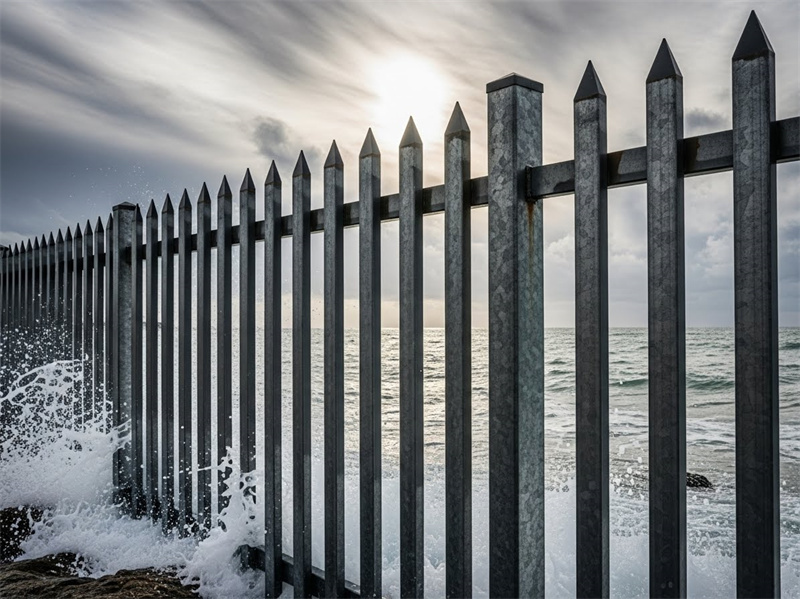
Specifying a steel fence for a coastal or marine environment is fundamentally different from specifying one for an inland location. The persistent assault of salt, moisture, and dynamic forces demands a level of engineering foresight that goes far beyond simple boundary definition. I’ve seen too many projects fail within a decade because the initial specifications underestimated the sheer corrosive power of the marine atmosphere. A fence that looks pristine in a catalog can dissolve into a rust-streaked liability without a proper understanding of the environmental challenges at play. This starts with a clear-eyed assessment of the specific site conditions and classifying them according to internationally recognized standards.
The core scientific principle at work is chloride-induced corrosion. Unlike simple oxidation (rusting) in a dry environment, airborne or waterborne chloride ions from seawater actively attack the passive, protective oxide layer on steel surfaces. These aggressive ions create microscopic breaches in the steel’s natural defense, leading to highly localized and rapid forms of decay like pitting and crevice corrosion. To combat this, a classification system is necessary to quantify the environmental corrosivity, allowing engineers to match the defense system—the material, coating, and design—to the severity of the threat. This is not just about choosing a ‘good’ material; it’s about engineering a complete system designed to survive a specific, highly aggressive environment for a planned service life of 30 to 50 years.
Marine Corrosion Categories Explained
To standardize the fight against corrosion, the industry relies on the ISO 12944 corrosion categories. This global standard classifies environments based on their potential to degrade steel and other metals. For coastal projects, the most critical classifications are C5-I (industrial, high humidity) and particularly C5-M (marine), which denotes a “very high” corrosivity. A site qualifies for the C5 category when it experiences constant high humidity and significant salt spray, typical of coastal and offshore areas. These are not benign environments; we are talking about conditions that can aggressively consume unprotected steel in a matter of months, not years.
The severity of the C5-M category is driven by a trifecta of factors. First, constant salt spray from breaking waves deposits a film of highly conductive chloride-rich electrolyte onto the fence surfaces. Second, high relative humidity (often exceeding 80%) ensures this salty film remains wet, creating an ideal electrochemical cell for corrosion to propagate. Finally, direct tidal exposure in splash zones means the fence is repeatedly wetted and dried, a cycle that concentrates salts and accelerates the corrosive attack. Real-world examples of C5-M environments include any infrastructure on or near the shoreline: beachfront properties, port facilities, naval bases, and bridge abutments directly exposed to sea spray and tidal movements.

Impact of Severe Marine Conditions on Steel Fencing
Designing for severe marine conditions requires an appreciation for a combination of relentless environmental stressors. The most obvious are the exposure scenarios: the splash zone where wave action directly impacts the structure, tidal immersion where parts of the fence are submerged daily, and the constant drift of salt spray and airborne chlorides that can travel hundreds of meters inland. Each scenario presents a unique challenge, from the physical force of water to the pervasive chemical attack of salt. Unprotected steel in a splash zone is arguably in the most aggressive environment possible, facing both high oxygen levels and a constant supply of chlorides.
Beyond salt and water, other factors conspire to degrade a fence’s integrity. Wind-driven sand can act like a constant sandblaster, eroding protective coatings and exposing the raw steel beneath. Unrelenting ultraviolet (UV) radiation from the sun breaks down the organic binders in many conventional paints and coatings, causing them to become brittle, crack, and fail, stripping the steel of its primary barrier against the elements. Furthermore, organic fouling from marine organisms can create localized environments under their growth where oxygen is depleted, leading to intense crevice corrosion. The combined effect of these stressors accelerates metal degradation, with pitting corrosion creating deep, narrow holes and crevice corrosion attacking the tight spaces between fasteners and panels.
Finally, we must consider thermal dynamics. The temperature fluctuations between day and night, or between direct sun and sea spray, cause metal components to expand and contract. If the design does not accommodate this thermal expansion, it can induce immense stress on connectors, welds, and fasteners. This mechanical stress, when combined with a corrosive chloride environment, can lead to a catastrophic failure mode known as stress corrosion cracking (SCC), where the material fractures under loads far below its nominal tensile strength.
Specifying Marine-Grade Steel Materials
Having witnessed the rapid failure of standard-grade steel in coastal installations, it’s clear that material selection is the first line of defense. Simply choosing ‘steel’ is not enough; the specification must demand grades with inherent, built-in resistance to the unique challenges of a marine environment. The metallurgical principles behind this resistance are key. For instance, in stainless steels, the magic lies in the alloying elements. Chromium is the primary hero, forming a thin, transparent, and self-healing passive chromium-oxide layer on the surface. To fight off chloride attacks, molybdenum is added, which significantly enhances the stability of this passive layer, making it more resistant to the pitting and crevice corrosion that chlorides initiate.
Duplex stainless steels take this a step further. Their unique metallurgical structure, a balanced mix of both austenitic and ferritic crystal structures, creates a material that is not only stronger but also far more resilient to chloride stress corrosion cracking, a particular vulnerability of standard austenitic stainless steels. Understanding these foundational principles allows an engineer to move beyond a brand name and specify a material based on its fundamental ability to perform under the extreme chemical and mechanical stresses of a coastal setting.
Marine-Grade Stainless Steel Options
For demanding marine applications, two classes of stainless steel stand out: austenitic and duplex. The most common and reliable austenitic option is AISI 316 and its low-carbon variant, 316L. The key to their performance is the addition of approximately 2-3% molybdenum to the alloy, which dramatically improves resistance to chloride pitting compared to the more common 304 grade. AISI 316/316L is an excellent choice for fence panels, mesh, and many hardware components where moderate to high corrosion resistance is required.
However, for the most critical structural components or in the most aggressive splash zones, duplex stainless steel, specifically grade 2205, is the superior choice. Its balanced two-phase microstructure of austenite and ferrite, combined with high levels of chromium and molybdenum, delivers a powerful set of benefits. It offers excellent resistance to both pitting and crevice corrosion, but its signal advantage is its near-immunity to chloride stress corrosion cracking. This, coupled with a mechanical strength nearly double that of 316-grade stainless, makes Duplex 2205 the gold standard for heavy-duty structural posts, high-security fittings, and critical fasteners in severe marine environments.
| Steel Grade | Composition Highlights | Corrosion Resistance | Typical Use Cases | Cost Considerations |
|---|---|---|---|---|
| AISI 316/316L | Higher Mo content (~2-3%) | Good resistance to chloride pitting | Fittings, fasteners, panels | Moderate |
| Duplex 2205 | Balanced ferrite/austenite, high Cr and Mo | Excellent pitting and stress corrosion resistance | Structural, heavy-duty hardware | Higher |

Hot-Dip Galvanized Steel Specifications
While stainless steels offer premier performance, hot-dip galvanized carbon steel provides a robust and cost-effective alternative when specified correctly. The governing standard for this process is ASTM A123, “Standard Specification for Zinc (Hot-Dip Galvanized) Coatings on Iron and Steel Products.” For marine applications, simply meeting the standard is not enough; one must specify an enhanced version of it. The critical factor is the thickness of the zinc coating, which acts as both a barrier and a sacrificial anode, corroding preferentially to protect the steel substrate. For a C5-M environment, a minimum zinc coating thickness of 70 microns (µm) is essential, and thicker coatings provide a near-linear increase in service life.
Achieving a durable galvanized coating hinges on rigorous quality control. The steel surface must be impeccably prepared—typically through a series of caustic cleaning, pickling, and fluxing steps—to ensure a perfect metallurgical bond between the zinc and the steel. Any contaminants on the surface will result in bare spots or poor adhesion, which become immediate failure points in a coastal setting. While hot-dip galvanizing provides excellent protection, its primary limitation compared to stainless steel is its finite life; once the sacrificial zinc layer is consumed, the underlying steel will begin to corrode. Therefore, its use is often combined with a paint system in what is known as a duplex coating for maximum longevity.
High-Performance Weathering Steel
Another option for specific scenarios is high-performance weathering steel, often known by the standard ASTM A588 or its trademark name, COR-TEN. This steel alloy is designed to form a stable, rust-like “patina” when exposed to the atmosphere. This dense oxide layer adheres tightly to the surface and significantly slows the rate of further corrosion, providing a form of passive protection. It has been used effectively in bridges and architectural elements, developing a desirable dark brown, earthy appearance over time.
However, the use of weathering steel in coastal environments comes with critical limitations. The protective patina only forms correctly in environments with cycles of wet and dry. In zones of continuous wetness, such as areas subject to constant fog, splash, or immersion, the patina will not stabilize. Instead, the steel will corrode at a rate comparable to or even faster than standard carbon steel. Therefore, its application in coastal fencing is restricted to areas that are set back from the immediate splash zone and will not have standing water or constant dampness, making it unsuitable for the most severe C5-M exposures.
Corrosion Protection Systems & Coatings
Selecting the right base material is only half the battle. For any steel, including stainless, to achieve a design life of 30 to 50 years in an extreme marine environment, an advanced protective coating system is non-negotiable. Think of this as a layered defense strategy where each layer has a specific job. A simple coat of paint is woefully inadequate. A successful system functions as an integrated unit, with the primer bonding to the steel, the intermediate coats building thickness and barrier properties, and the topcoat defending against the external environment. This multi-layer approach is the only way to effectively seal the steel substrate from the relentless chemical and physical attacks posed by seawater and salt-laden air.
The principle behind this is synergy. The primer, typically rich in zinc, provides sacrificial cathodic protection to any small scratches or pores, actively protecting the steel even if the barrier is breached. The intermediate epoxy or polyurethane layers create a thick, impermeable barrier, physically blocking water and chloride ions from ever reaching the steel. Finally, the topcoat is engineered for durability against the outside world, containing UV inhibitors to prevent sun degradation and a hard, smooth finish that resists abrasion and is easy to clean. Without any one of these layers, the system’s integrity and lifespan are drastically compromised.
Multi-Layer Coating Regimens
The industry benchmark for high-performance coating systems is defined by standards like ISO 12944-5 and NACE MR0175. For a C5-M marine environment, these standards outline a specific multi-layer sequence. The process begins with abrasive blast cleaning of the steel to achieve a specific surface profile (e.g., SSPC-SP10/NACE No. 2 “Near-White Blast Cleaning”), which is crucial for coating adhesion. The first layer applied is a zinc-rich epoxy primer, which provides sacrificial protection. This is followed by one or more intermediate coats of high-build epoxy or polyurethane to create a robust barrier. The system is finished with a UV-stable topcoat, typically a two-component polyurethane or a high-performance fluoropolymer, which provides excellent color and gloss retention and resists degradation from sunlight.
Quality control during application is as important as the coating selection itself. Each layer must be applied to a specific dry film thickness (DFT), which is verified using calibrated electronic gauges. Environmental conditions like temperature and humidity must be monitored and controlled during application and curing to ensure proper film formation. A properly specified and applied system following these protocols can provide over 25 years of maintenance-free service life, making it a critical investment in the longevity of any coastal steel fence.

Duplex Coating Advantages for Coastal Fencing
A duplex coating system, which involves painting or powder coating over hot-dip galvanized steel, offers one of the most durable and long-lasting corrosion protection solutions. This combination creates a powerful synergistic effect. The galvanized zinc layer provides sacrificial cathodic protection, while the organic topcoat (paint or powder coat) acts as a primary environmental barrier. If the topcoat is ever scratched or damaged, the underlying zinc layer prevents the steel from corroding, a phenomenon known as “undercutting” corrosion that plagues typical paint systems.
This dual-protection mechanism significantly extends the service life of the fence. Data consistently shows that the lifespan of a duplex system is 1.5 to 2.5 times the sum of the individual lifespans of the galvanizing and the coating system if they were used alone. This means a fence that might have a 20-year life with galvanizing and a 10-year life with a coating could achieve a 45- to 75-year life with a duplex system. For critical coastal infrastructure, the upfront investment in a duplex coating pays substantial dividends in reduced maintenance and replacement costs over the asset’s lifecycle.
Cathodic Protection Integration
In the most aggressive scenarios—such as fence posts continuously immersed in seawater, areas with high tidal flow, or sites with heavy marine biofouling—even the best coatings may not be enough. For these extreme cases, cathodic protection (CP) should be integrated into the design. CP works by turning the entire steel fence into the cathode of an electrochemical cell, effectively stopping the corrosion process. This is accomplished in one of two ways: using sacrificial anodes or an impressed current system.
Sacrificial anode systems involve attaching blocks of a more active metal, like zinc or aluminum, directly to the fence structure below the waterline. These anodes corrode preferentially, “sacrificing” themselves to protect the steel. Impressed current systems use an external power source to apply a small DC current to the fence through inert anodes, forcing it into a non-corroding state. Both systems require careful design, including proper grounding of all fence components and periodic monitoring of electrochemical potentials to ensure protection is being maintained. While adding complexity and cost, CP is a proven method for achieving a 50+ year service life for steel structures in direct marine immersion.
Quality Metal Fencing Delivered Fast from Factory to You
Count on DB Fencing’s expert manufacturing and reliable service for premium steel picket fences, temporary fencing, crowd control barriers, and more. Benefit from competitive factory pricing, fast 7-day sample delivery, and personalized support tailored to your project needs.
Stainless Steel Hardware for Marine Fencing
A chain is only as strong as its weakest link, and on a coastal steel fence, that weak link is often the hardware. Bolts, screws, brackets, and connectors are frequently the first points of failure. This is why the principle of galvanic corrosion is so critical to understand. When two different metals are in electrical contact in the presence of an electrolyte (like saltwater), one metal will corrode at an accelerated rate to protect the other. Using a less noble metal like zinc-plated or standard steel fasteners on a stainless steel or galvanized fence is a recipe for disaster. The fasteners will rapidly disintegrate, compromising the structural integrity of the entire assembly long before the panels or posts show signs of wear.
Therefore, it is an ironclad rule in marine specification: the hardware must be as corrosion-resistant as, or more resistant than, the components it is connecting. Failure to adhere to this creates a ticking time bomb built directly into the fence. I’ve personally inspected fences where beautiful, coated panels were lying on the ground because the cheap carbon steel brackets holding them to the posts had completely corroded away. Ensuring every single component, down to the smallest washer, is made from a compatible, high-performance, corrosion-resistant alloy is essential for long-term survival.
Selecting Stainless Steel Fasteners
For any marine fence assembly, the default specification for hardware should be marine-grade stainless steel. All screws, bolts, nuts, washers, and brackets must be composed of either AISI 316/316L or, for maximum security and longevity, Duplex 2205 stainless steel. This choice ensures that the fasteners have a corrosion resistance profile that matches or exceeds the fence panels and posts. When selecting stainless steel fasteners, it’s also important to consider mechanical strength. Duplex grades offer a significant strength advantage, which can be critical for high-load connections or security applications where resistance to vandalism or forced entry is a factor. Always look for hardware that comes with material test certificates verifying its composition and compliance with relevant standards to avoid counterfeit or substandard products.
Avoiding Galvanic Corrosion in Assemblies
Galvanic corrosion, also known as dissimilar metal corrosion, is an electrochemical process that causes one metal to corrode preferentially when it is in contact with another in the presence of an electrolyte. The less noble (more reactive) metal acts as an anode and corrodes, while the more noble metal acts as a cathode and is protected. A classic example of failure is using galvanized steel bolts to connect stainless steel panels. The zinc coating on the bolts is far less noble than the stainless steel and will be rapidly sacrificed, leading to the bolts’ premature failure. To avoid this, the primary strategy is material compatibility: use stainless steel fasteners with stainless steel components, and use properly coated, high-quality galvanized fasteners with galvanized components. Where dissimilar metals are unavoidable, they must be electrically isolated from each other using non-conductive washers and sleeves made from materials like nylon or neoprene.
Design & Foundation Specifications for Coastal Fences
The structural design and foundation of a coastal fence are just as critical as its material composition. These fences must withstand forces that inland structures rarely encounter. Dynamic loads from wind are amplified in open coastal areas, and the force of wave action in a splash zone can be immense. A fence that isn’t designed to absorb or deflect these forces will quickly suffer from mechanical failure. Furthermore, thermal cycling in a marine environment is extreme, with metal surfaces heating up in the sun and then being rapidly cooled by spray or high tide. This constant expansion and contraction puts enormous stress on rigid connections, and without proper design considerations to accommodate this movement, welds can crack and fasteners can loosen over time, leading to a loss of integrity and longevity.
Structural Design for Marine Loads
Fence design in a marine setting must account for significant environmental loads. In addition to sustained high winds, designers must calculate the potential impact forces from wave spray and even floating debris during storm events. The choice between panel types is strategic: welded mesh panels offer high rigidity and security, but tensioned chain-link systems can offer more flexibility to absorb dynamic loads without permanent deformation. Whichever system is chosen, all connections must be engineered for resilience. Using corrosion-resistant, low-maintenance connectors that allow for slight thermal movement without compromising strength is a key design feature. Adherence to relevant building codes and standards for wind and impact loading in coastal zones is mandatory for a safe and durable installation.
Concrete Foundation & Drainage
The fence’s durability begins at its foundation. For posts embedded in concrete, the concrete itself must be part of the defense system. A low-permeability concrete mix, often incorporating admixtures like silica fume, should be specified to minimize the ingress of water and chlorides, which can corrode the embedded portion of the post from the inside out. As a critical secondary defense, the portion of the steel post that will be embedded in concrete should receive a thick, impermeable epoxy coating of at least 10 mm. This creates a robust barrier, isolating the steel from any moisture that might eventually penetrate the concrete over decades of service.
Just as important as the foundation material is drainage. The design must ensure that water cannot accumulate around the base of the posts. Standing water, especially salty water, creates a permanently corrosive environment at the most vulnerable point where the post exits the concrete. Grading the surrounding area and incorporating a drainage system, such as a French drain or weep holes in the footing, is a simple but highly effective measure. Proper foundation treatment is not an afterthought; it is fundamental to preventing premature failure and ensuring the entire fence system achieves its intended service life.
Coastal Fence Maintenance & Longevity
Specifying the right materials and design is a massive step towards ensuring a long service life, but no coastal fence is truly a “set-it-and-forget-it” asset. A proactive maintenance program is essential to maximizing the return on this significant investment. Considering the harsh environment, a structured approach to inspection and upkeep can mean the difference between a 50-year service life and a 15-year failure. A proactive maintenance schedule should include routine assessments, targeted cleaning to remove corrosive deposits, prompt repair of any mechanical or coating damage, and verification of any active protection systems. This approach allows for small, low-cost interventions that prevent minor issues from escalating into major, costly structural failures.
Routine Inspection Protocols
A formal inspection protocol should be established with a defined frequency—typically semi-annually or annually, depending on the site’s severity. These inspections should be hands-on, focusing on critical areas. A detailed checklist should guide the inspector to look for any signs of coating damage like scratches, blistering, or delamination. All fasteners, brackets, and welds should be checked for tightness and early signs of corrosion. The fence foundation and its base should be examined for cracking, spalling of concrete, or issues with drainage. Using simple tools like a magnifying glass and a mechanic’s mirror can help identify early-stage problems like pitting or crevice corrosion in hard-to-see areas before they compromise the fence’s integrity.
Cleaning and Recoating Processes
One of the most effective and simplest maintenance tasks is regular cleaning. Salt deposits that accumulate on the fence surface absorb moisture from the air, creating a perpetually corrosive film. Periodic washing with clean, fresh water is often sufficient to remove these soluble chlorides and dramatically slow down the corrosion rate. This is particularly important in areas that don’t receive regular rainfall. If recoating is necessary to repair damage, the process must be as rigorous as the initial application. The area must be properly cleaned, de-greased, and abraded to create a surface profile for the new coating to adhere to. A full system of compatible primer and topcoat should be applied according to the manufacturer’s specifications to ensure a lasting repair.
Cathodic Protection Monitoring
For fences equipped with cathodic protection (CP), monitoring is not optional—it is essential for the system to function. For sacrificial anode systems, this involves visual inspection of the anodes to gauge their consumption rate and periodic measurement of the structure-to-electrolyte potential using a portable reference electrode and multimeter. These readings confirm that the steel is polarized to a protective potential (typically more negative than -0.85 volts CSE). For impressed current systems, the rectifier’s voltage and current output must be recorded regularly to ensure it is operating correctly. Anodes may need to be replaced or the current adjusted to maintain protection, directly impacting the fence’s ability to resist corrosion in its most extreme exposure zones.
Case Study: Successful Coastal Fence Maintenance
A prime example of a successful maintenance program involves a high-security perimeter fence at a port facility in the Gulf of Mexico, a classic C5-M environment. The fence, constructed of duplex-coated galvanized steel, was put on a semi-annual inspection and wash-down schedule. During an inspection in its eighth year of service, minor coating damage from a vehicle impact was noted on two posts. The maintenance team immediately implemented a repair, preparing the surface and applying the specified three-coat epoxy/polyurethane system. Potential readings on the cathodic protection system for the submerged sections also indicated two sacrificial anodes were nearing the end of their life. These were proactively replaced. Now, at 15 years post-installation, the fence remains in near-original condition, a testament to how a disciplined maintenance regimen protects the initial investment and ensures continued, reliable performance.
Case Studies of Marine Steel Fence Installations
Going beyond theory and standards, real-world case studies provide the ultimate proof of a specification’s success. Examining exemplary installations in extreme coastal environments showcases how the application of best practices in material choice, coating systems, and structural design leads to durable, long-lasting assets. In my experience reviewing these projects, the common thread is always a holistic approach. Success is never about a single “miracle” product, but about a thoughtfully engineered system where every component is specified to work in concert against the relentless marine environment. These projects provide invaluable lessons on tailoring strategies to meet specific site conditions and stakeholder goals.
Coastal Property Development Example
A luxury condominium development on the Florida coast required a perimeter fence that provided both security and high-end aesthetics while withstanding hurricane-force winds and constant salt spray. The project stakeholders’ primary goal was longevity with minimal maintenance to protect property values. The engineering team specified panels made from AISI 316L stainless steel with an architectural powder coat finish. All posts and structural connections were specified as Duplex 2205 for superior strength and corrosion resistance. Crucially, all fasteners were also Duplex 2205, and isolating gaskets were used at all connection points. After 10 years, including two direct hurricane hits, the fence shows no signs of corrosion or structural degradation, requiring only semi-annual freshwater wash-downs. The initial higher material cost has been more than offset by the near-zero maintenance and replacement costs.
Marine Facility Security Fence
A sensitive naval facility required a high-security fence with sections extending into the tidal zone. The specifications were among the most stringent possible, demanding a 50-year design life with absolute reliability. The chosen system was a hot-dip galvanized steel mesh fence with a full ISO 12944-compliant duplex coating (epoxy primer, intermediate coat, and polyurethane topcoat). For the sections in the tidal and splash zones, an impressed current cathodic protection system was integrated into the design. A rigorous inspection protocol, including quarterly CP potential monitoring and annual coating integrity surveys, was implemented from day one. After 20 years of service, the fence remains fully operational and structurally sound, demonstrating that even in the most aggressive marine immersion scenarios, a systems-based approach combining barrier coatings and cathodic protection can deliver exceptional long-term durability.
Quality Metal Fencing Delivered Fast from Factory to You
Count on DB Fencing’s expert manufacturing and reliable service for premium steel picket fences, temporary fencing, crowd control barriers, and more. Benefit from competitive factory pricing, fast 7-day sample delivery, and personalized support tailored to your project needs.
Conclusion: What Sets Coastal Steel Fences Apart
Ultimately, the specification for a coastal steel fence is a study in resilience engineering. It moves far beyond the simple selection of a product and into the design of a comprehensive defense system. The defining characteristic is the integration of multiple protective strategies—intrinsic material resistance, multi-layer barrier coatings, and in extreme cases, active electrochemical protection—all working together to combat a uniquely hostile environment.
- Marine-grade material selection, such as AISI 316L and Duplex 2205 stainless steel, combined with robust multi-layer coatings is essential for longevity in harsh coastal conditions.
- Structural design and foundation specifications must be engineered to account for dynamic environmental loads from wind and waves, as well as pervasive corrosion factors.
- A disciplined program of regular maintenance, including cleaning, coating upkeep, and cathodic protection monitoring, is not optional but mandatory to extend the fence’s service life and protect the initial investment.
- Case studies confirm that a well-specified and diligently maintained steel fencing system can deliver decades of reliable security and aesthetics, even in the most extreme marine environments.
By applying these comprehensive specifications and committing to proactive maintenance practices, developers, engineers, and facility managers can protect their coastal investments. This diligent approach ensures their infrastructure remains safe, secure, and structurally sound for decades to come. For any critical project, consulting with engineers specializing in marine corrosion is the surest path to a successful, long-lasting outcome.
Frequently Asked Questions
What steel grades are best for coastal fencing?
For coastal and marine environments, you must specify marine-grade steels. The primary choices are austenitic stainless steels like AISI 316 or 316L, which contain molybdenum for good chloride resistance. For superior performance, especially in splash zones, Duplex 2205 stainless steel is highly recommended. Alternatively, hot-dip galvanized steel that meets ASTM A123 standards, ideally with a supplementary coating system (a duplex coating), is a robust and cost-effective option.
How thick should galvanizing be for coastal environments?
In highly corrosive marine environments classified as C5 under ISO 12944, the zinc coating on hot-dip galvanized steel should be significantly thicker than for standard applications. According to ASTM A123, a minimum coating thickness of 70 microns (µm) is the recommended baseline. A thicker zinc layer provides a longer sacrificial life, directly extending the time before the underlying steel is exposed to corrosion.
Why is duplex stainless steel better for marine fencing?
Duplex stainless steel, like grade 2205, is superior for marine fencing due to its unique two-phase microstructure. This structure gives it nearly double the mechanical strength of standard austenitic grades like 316 and, more importantly, provides exceptional resistance to chloride stress corrosion cracking (SCC), a common and catastrophic failure mode for metals under tension in salty environments. Its high chromium and molybdenum content also gives it excellent resistance to pitting and crevice corrosion.
What maintenance is required for coastal steel fences?
Proactive maintenance is critical. Key activities include routine inspections (at least annually) to check for coating damage, loose fasteners, and corrosion. Regular cleaning with fresh water to remove salt deposits is one of the most effective measures. Any scratches or damage to coatings should be repaired promptly using a compatible system. If cathodic protection is installed, potentials must be monitored regularly and anodes replaced as needed to ensure the system remains effective.
When is cathodic protection necessary for steel fences?
Cathodic protection (CP) is necessary for the most extreme exposure conditions where even the best coatings can be overwhelmed. This includes sections of a fence that are continuously immersed in seawater, located in areas with high tidal flow, or buried in saturated, salty soil. In these scenarios, CP—either through sacrificial anodes or an impressed current system—provides an active defense that can significantly extend the metal’s life beyond what coatings alone can achieve.
Can I mix stainless steel hardware with galvanized steel in coastal fences?
No, this should be avoided. Mixing dissimilar metals, such as stainless steel hardware with a galvanized steel fence panel, creates a galvanic cell in the presence of saltwater. The less noble metal (the zinc galvanizing) will corrode at a highly accelerated rate to protect the more noble stainless steel. This will lead to rapid failure around the connection points. Always use hardware that is of the same or a more noble material, or ensure complete electrical isolation between the dissimilar metals.


