 Skip to content
What Every Industrial Facility Manager Should Know
- Industrial facility fencing must blend robust physical security with strict regulatory compliance to mitigate risks effectively.
- Integrating electronic access control and proper maintenance regimes substantially enhances fence effectiveness and operational safety.

Overview of Industrial Facility Fencing
In the complex ecosystem of an industrial or manufacturing facility, fencing is far more than a simple property line demarcator. It is the foundational layer of a comprehensive security and safety strategy. Industrial fencing serves as a critical physical barrier designed to control access, protect assets, ensure operational safety, and maintain regulatory compliance. Beyond its physical presence, it functions as a powerful psychological deterrent. The sight of a formidable, well-maintained fence signals a high-security environment, discouraging casual trespassers and opportunistic criminals alike. This initial layer of deterrence is a core principle of a layered security approach, where successive obstacles are designed to delay, detect, and ultimately deny unauthorized access, giving security teams invaluable time to respond.
Purpose and Importance of Fencing
Industrial facility fencing is the first line of defense against a wide spectrum of threats, including theft, vandalism, sabotage, and unauthorized entry. Typically constructed from robust materials like galvanized steel mesh, heavy-duty chain link, or palisade, these barriers are engineered to withstand both environmental stressors and determined attempts at breach. Their primary role in perimeter security is to establish a clearly defined and controlled boundary. This is crucial for operational safety, as it prevents untrained or unauthorized individuals from wandering into areas with heavy machinery, high-voltage equipment, or hazardous materials, thereby mitigating the risk of accidents and injuries.
From a regulatory standpoint, proper fencing is non-negotiable. Agencies like the Occupational Safety and Health Administration (OSHA) mandate specific fencing standards to protect workers and the public. Failure to comply can lead to devastating consequences. As safety authorities like WorkSafe have demonstrated, insecure or non-compliant installations can attract fines ranging from tens of thousands of dollars to over two million dollars where a risk of serious injury or death occurs. Beyond financial penalties, facilities face enforced shutdowns, legal liability for incidents, and irreparable damage to their corporate reputation. Fencing can be broadly categorized as either permanent or temporary, each serving distinct operational needs while being subject to stringent compliance and safety standards.

Types of Industrial Fences
Choosing the right type of fence depends on the specific security requirements, operational context, and duration of need. Permanent fences are designed for long-term perimeter protection, offering the highest level of security and durability. Constructed from materials like steel mesh or high-gauge chain link, they often feature heights of 6 to 12 feet or more and incorporate anti-climb features such as angled tops with barbed or razor wire. These installations are the standard for securing critical infrastructure, chemical plants, and large-scale manufacturing campuses where the perimeter is fixed and the need for robust security is constant.
In contrast, temporary fences provide a flexible solution for securing construction zones, special event areas, or short-term hazardous material containment within a facility. These systems consist of modular panels, typically made of welded mesh, which are connected by clamps and stabilized with weighted feet. While offering a moderate level of security, their primary advantage is rapid deployment and reconfigurability. However, they must still meet strict stability requirements, such as those outlined in AS 4687.1:2022, to resist wind loads and prevent easy disassembly. The choice between permanent and temporary fencing also involves environmental considerations, such as soil conditions for post-installation and potential wind exposure in open areas.
| Feature | Permanent Fence | Temporary Fence |
|---|---|---|
| Materials | Steel mesh, chain link, barbed wire | Modular panels, clamps, mesh |
| Typical Height | 6 to 12 feet+ | 4 to 8 feet |
| Durability | Long-term resistance to weather and damage | Designed for short to medium term use |
| Compliance Standards | OSHA, CFATS, industry-specific | AS 4687.1:2022, OSHA |
| Installation Time | Days to weeks | Hours to days |
| Security Level | High | Moderate |
Regulatory Compliance for Industrial Fencing
Navigating the complex web of regulations governing industrial fencing is a critical responsibility for any facility manager or security director. These standards are not arbitrary bureaucratic hurdles; they are established to prevent catastrophic accidents, protect national security, and ensure a baseline level of safety for workers and the public. Understanding the rationale behind regulations from bodies like OSHA, the Department of Homeland Security (DHS), and international standards organizations reveals a deep-seated focus on risk mitigation. These rules directly impact fencing design, dictating everything from height and material strength to the placement of signage and integration with electronic systems, forcing a proactive approach to security rather than a reactive one.
OSHA Fencing Guidelines
I once consulted for a manufacturing plant that was cited by an OSHA inspector for inadequate guarding around a robotic welding cell. The temporary barrier they were using was easily bypassed, and the fine was substantial, but the real cost was the mandated production halt until a compliant, permanent fence was installed. This experience underscores the seriousness with which OSHA views its fencing requirements. According to official guidelines, the agency mandates that permanent or temporary fences must be used to enclose hazardous areas to prevent unauthorized employee access. This includes open pits, tanks, vats, ditches, and areas around dangerous machinery or high-voltage electrical installations where accidental contact could be fatal.
OSHA-compliant fencing must be of sufficient height and strength to form a genuine barrier, and it must be supplemented with clear, unambiguous warning signage. For example, fences around high-voltage equipment must prominently display signs warning of the electrical hazard. Enforcement is rigorous, with penalties for non-compliance scaling based on the severity of the potential risk. To ensure continuous compliance, facility managers should implement a routine inspection protocol, documenting all checks, maintenance activities, and repairs. This documentation serves as crucial evidence of due diligence in the event of an inspection or incident.
CFATS Compliance for Chemical Plants
For facilities that produce, use, store, or transport certain high-risk chemicals, compliance with the Department of Homeland Security’s Chemical Facilities Anti-Terrorism Standards (CFATS) is mandatory. The CFATS program, as detailed in DHS documentation, is designed to secure these facilities against terrorist threats, making robust perimeter security a cornerstone of any compliance plan. Fencing under CFATS is not merely a boundary marker; it is an integral component of a risk-based performance standard for physical security. The specifications for fencing are tied to the facility’s specific risk tier and must be sufficient to deter, detect, and delay an intrusion attempt.
This often means implementing high-security fencing that is difficult to climb, cut, or drive through. CFATS compliance requires that the physical perimeter barrier works in concert with other security measures. This includes integrating the fence line with Intrusion Detection Systems (IDS), surveillance cameras, and clear zoning protocols that restrict access to different areas within the facility. The entire system—from the fence to the alarms and access control points—must be documented in the facility’s Site Security Plan (SSP) and be subject to continuous monitoring and regular audits to ensure it remains effective and compliant with evolving DHS directives.
AS 4687.1:2022 Temporary Fencing Standard
In Australia, the benchmark for temporary fencing is set by the stringent AS 4687.1:2022 standard. As referenced by bodies like Standards Australia, this regulation provides explicit criteria for the design, construction, and installation of temporary fencing to ensure it is safe and effective. The standard’s scope covers everything from the structural integrity of the individual fence panels and clamps to the overall stability of the installation against forces like wind load. This is particularly important for preventing fence collapse, a common cause of accidents on construction sites and at public events.
A key focus of AS 4687.1:2022 is the prevention of unauthorized access. It specifies requirements for anti-climb mesh, ensuring the apertures are too small to provide a foothold, and dictates the proper, secure fitting of panels and clamps to stop them from being easily dismantled. For instance, a common violation found during compliance audits is the use of non-compliant clamps or panels with damage that compromises their integrity. A case study might involve a construction site that failed an audit because its temporary fence line used mismatched clamps and had several panels that were not properly braced, creating a significant public safety hazard. To remain compliant, facility managers must not only use certified products but also implement a protocol for regular inspections and maintenance throughout the fence’s deployment.
High-Quality Metal Fences Made to Last
From steel picket fences to crowd control barriers, DB Fencing delivers reliable products with fast sample delivery, factory-direct prices, and expert support. Build with confidence backed by our commitment to international standards and quality assurance.
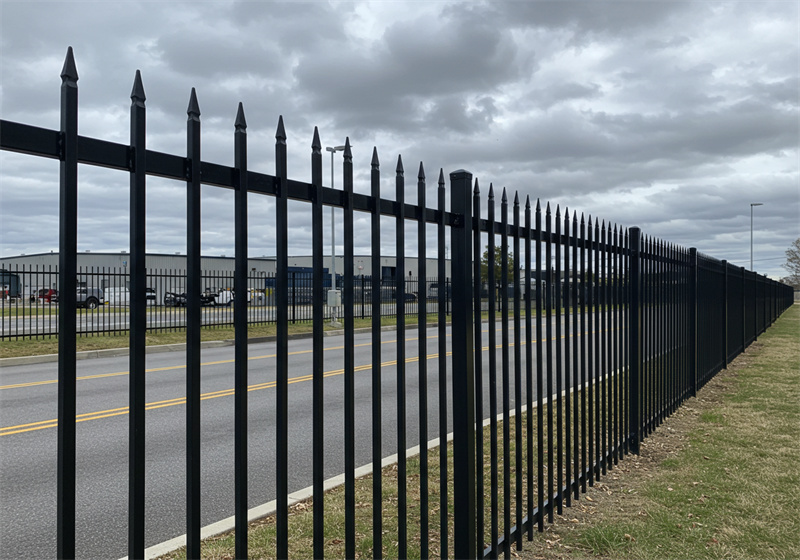
Designing Security & Operational Fencing
Effective industrial fencing design goes far beyond simply erecting a barrier. It requires a strategic, risk-based approach that aligns the physical structure with the facility’s unique operational needs and security vulnerabilities. The goal is to create a system, not just a fence. This means integrating physical barriers with electronic security systems, access control protocols, and operational workflows to create a cohesive and resilient protective layer. By analyzing potential threats—from casual vandalism to sophisticated intrusion attempts—and designing the fencing system accordingly, facility managers can achieve optimal protection while ensuring the smooth and efficient flow of authorized personnel and vehicles.
Perimeter Security Fencing Design
The core of any perimeter defense is the fence itself, and its design criteria must be meticulously planned. Height is a primary deterrent, with industrial standards often starting at 8 feet and extending to 12 feet or more for high-security applications. Material choice, such as anti-cut and anti-climb mesh, provides a formidable physical challenge. This is often topped with features like barbed or razor wire installed on angled outriggers to further discourage climbing attempts. Just as important as the fence is the area around it. Establishing a “clear zone” on both sides of the fence line, free of vegetation or obstructions, removes potential hiding spots for intruders and provides clear lines of sight for surveillance systems.
Environmental factors must also be considered; fences in high-wind zones require deeper footings and stronger posts, while those in seismic areas may need specialized flexible connections. Crucially, the fencing system’s effectiveness is magnified exponentially when integrated with robust security lighting. Well-designed lighting eliminates shadows along the perimeter, not only deterring intruders who prefer the cover of darkness but also ensuring that CCTV cameras can capture clear, actionable footage during nighttime hours, day.

Access Control and Vehicle Barrier Integration
A fence is only as strong as its weakest point, which is often the gate. Integrating robust access control systems is therefore essential. This layer of security can range from manned guardhouses to fully automated electronic systems, including card readers, biometric scanners, and remote-operated gates for personnel. For vehicle access, options include simple slide or swing gates for low-traffic areas and heavy-duty, crash-rated gates for main entry points. These can be supplemented with vehicle barriers like retractable bollards or tire-shredding spike strips to prevent unauthorized vehicle entry or exit.
Inside the main perimeter, the concept of zoning can further enhance security. By using internal fencing and access control points, facilities can segment critical areas—such as control rooms, server farms, or high-value storage—creating additional layers of protection. This entire ecosystem of gates and barriers must be seamlessly coordinated with the facility’s intrusion detection and alarm systems. An attempted forced entry at a gate should immediately trigger an alarm, direct cameras to the location, and notify security personnel, enabling a swift and coordinated response based on predefined operational workflows for everything from routine entry authorization to emergency lockdowns.
Hazardous Area Fence Specifications
At a previous engagement involving a petrochemical plant, we designed a multi-layered fence system around a high-volatility chemical storage area. The inner fence was not only grounded to prevent static discharge but was also equipped with vibration sensors that could distinguish between animal contact and a human cutting attempt. This level of specialization is paramount when securing hazardous zones. Fencing around areas with explosives, high-voltage substations, or toxic chemical storage demands specifications that go far beyond standard perimeter security. These fences must comply with stringent electrical safety codes and regulations from bodies like the National Fire Protection Association (NFPA).
Specialized materials that are non-sparking may be required in environments with flammable vapors, and proper grounding is critical to prevent static electricity buildup that could lead to an ignition. Signage in these areas must be even more explicit, often using internationally recognized symbols to convey the specific danger (e.g., “Danger: High Voltage,” “Explosive Hazard”). A multi-layered strategy is common, with a more formidable outer fence controlling general access and a more specialized inner fence directly enclosing the most critical equipment. To ensure these systems remain effective, facility managers must use detailed inspection and maintenance checklists specifically developed for hazardous zones, covering everything from grounding continuity to signage visibility and structural integrity.
Temporary Fencing: Standards & Best Practices
The use of temporary barriers for delineating space and controlling access has a long history, dating back to tactical military practices like the Roman Empire’s use of ‘circumvallation’ during sieges. Today, temporary fencing has evolved into a highly regulated and essential tool for industrial facilities, particularly for construction projects, maintenance shutdowns, and special events. Modern standards have moved far beyond simple barriers, focusing on public safety, structural stability, and security. Future innovations are likely to center on sustainable materials, smart-technology integration, and even more modular, waste-reducing designs, further cementing the role of temporary fencing as a critical, adaptable safety solution.
Temporary Fencing Compliance Standards
In any industrial setting, the deployment of temporary fencing is governed by strict legal requirements designed to prevent accidents and control site access. As discussed, standards like Australia’s AS 4687.1:2022 and regulations from the US OSHA provide a rigid framework for what constitutes a safe and compliant installation. These rules address the high risks associated with insecure fencing, which can be toppled by wind or crowds, creating severe injury hazards. The legal and financial ramifications of non-compliance are severe, including hefty fines, work-stoppage orders, and significant liability in the case of an incident.
Common compliance pitfalls that inspectors frequently cite include using damaged or non-compliant panels, failing to secure clamps correctly, and not using adequate bracing or weighting for the expected environmental conditions. To avoid these issues, managers must insist on using fencing that is certified to meet the relevant standards and implement rigorous inspection protocols. These checks should not be a one-time event at installation but should occur regularly throughout the deployment period, especially after high-wind events, to ensure the fence line’s integrity is maintained.
Installation and Maintenance of Temporary Fences
The security of a temporary fence line is fundamentally determined by the quality of its installation. A step-by-step approach is crucial to ensure stability and compliance. The process begins with a level and stable base. Fence feet should be placed on solid ground, and panels should be inserted vertically. The most critical step is the secure tightening of clamps that connect the panels; they should be high-quality and tightened with the proper tools to prevent them from being easily removed or coming loose. Bracing or stays should be added at regular intervals, especially for long, straight runs or in areas exposed to wind, to provide additional lateral support.
Regular maintenance is key to a safe installation. Daily visual inspections should check for loosened clamps, panel damage, or signs of tampering. Any identified issues must be rectified immediately to prevent a safety failure. When temporary fencing is installed adjacent to pedestrian walkways or vehicle traffic routes, additional safety considerations such as high-visibility screening, reflective markings, and appropriate buffer zones are essential. Meticulous documentation of installation checks and all maintenance activities provides a clear record of due diligence, which is invaluable for regulatory compliance and liability protection.

Innovations in Sustainable Temporary Fencing
As corporate environmental responsibility becomes a higher priority, the demand for sustainable industrial solutions is growing rapidly. The temporary fencing industry is responding with innovations that reduce environmental impact without sacrificing safety or durability. A significant trend is the use of recycled materials, such as plastics and metals, in the manufacturing of both fence panels and weighted bases. This approach not only diverts waste from landfills but also often reduces the carbon footprint associated with production.
Modular designs are also contributing to sustainability. By creating systems with interchangeable, durable components, manufacturers are extending the product lifecycle and minimizing waste from damaged sections. Instead of replacing an entire panel, a small component can be swapped out. Another exciting development is the integration of solar-powered security lighting and sensors directly into sustainable fencing systems, creating off-grid security solutions that are both green and highly effective. Case studies from forward-thinking construction and event management companies show that deploying these sustainable options can enhance a company’s public image while often providing long-term cost benefits through increased durability and lower energy use.
Maintenance & Operational Considerations
Installing a compliant, high-security fence is only the first step. To ensure it provides continuous protection and remains compliant over its lifespan, a robust maintenance and operational strategy is essential. Neglected fences can quickly become security liabilities and safety hazards. The future of fence upkeep is moving towards a more proactive model, where predictive maintenance, enabled by IoT sensors and data analytics, will revolutionize how facilities manage their perimeters. Imagine sensors that detect strain from high winds or the subtle vibrations of a cutting tool, automatically alerting maintenance crews before a failure occurs. This data-driven approach will optimize repairs, reduce downtime, and elevate security to a new level.
Routine Inspection and Repairs
A systematic inspection program is the backbone of effective fence maintenance. Facility teams should use a detailed checklist for routine visual inspections, whether daily, weekly, or monthly, depending on the site’s risk profile. This checklist should guide them to look for common signs of degradation or tampering: corrosion on posts and panels, loose or missing clamps and fittings, signs of cutting or climbing, and faded or damaged warning signs. Any identified damage must be triaged and scheduled for repair based on its severity to prevent a minor issue from becoming a significant security breach.
Repair methods should follow manufacturer guidelines to ensure the fence’s structural integrity is restored. During any fence maintenance operations, safety procedures are paramount, especially when working near hazardous areas or active traffic zones. Critically, every inspection, identified issue, and completed repair must be logged. This record-keeping is not just good practice; it is a vital tool for demonstrating due diligence to regulators and insurers, proving that the facility has a proactive program for maintaining a safe and secure environment.
Integrating Security Technology for Monitoring
A static fence, no matter how strong, is a passive barrier. Its value is multiplied when integrated with active security technologies that provide real-time monitoring and threat detection. One of the most effective integrations is the use of fence-mounted intrusion detection sensors. These systems can use fiber-optic cables or vibration sensors to detect attempts to climb, cut, or lift the fence fabric, triggering an immediate alarm at the security control center and minimizing false alarms from weather or small animals.
CCTV cameras should be strategically placed to provide complete coverage of the fence line, with no blind spots. When an alarm is triggered, modern video management systems can automatically display footage from the nearest camera, allowing security personnel to instantly assess the situation. This information can be streamed to a central command center or even to mobile devices for remote monitoring. This tight coordination between the physical barrier, electronic sensors, and on-site security personnel transforms the perimeter from a simple fence into an intelligent, responsive security system. Looking ahead, the integration of AI-powered video analytics will enable automated threat detection, capable of distinguishing between a person and an animal and flagging suspicious behavior before a breach even occurs.
High-Quality Metal Fences Made to Last
From steel picket fences to crowd control barriers, DB Fencing delivers reliable products with fast sample delivery, factory-direct prices, and expert support. Build with confidence backed by our commitment to international standards and quality assurance.
Personnel & Training for Fence Security
Technology and physical barriers are indispensable, but the human element remains the most critical component of any effective security strategy. Well-trained, vigilant security personnel are the active intelligence that brings a perimeter security system to life. However, their effectiveness hinges on understanding not just what to do, but why. By incorporating behavioral insights into training—exploring the psychology of how and why intruders probe perimeters—security teams can move from a reactive posture to a proactive one. This level of understanding enables them to spot subtle pre-attack indicators and patterns, effectively preempting security lapses before they escalate into full-blown incidents.
Role of Security Personnel
The role of security personnel in fence security extends far beyond simply watching monitors. They are responsible for active monitoring, rapid incident response, and enforcing access control protocols. Their duties include conducting regular patrols along the perimeter, both on foot and in vehicles, to provide a visible deterrent and to physically inspect the fence for signs of weakness or tampering. These patrol patterns should be varied and unpredictable to prevent observation and exploitation by would-be intruders.
When an alarm is triggered by an integrated technology system, it is the security officer who must rapidly respond, assess the threat, and initiate the appropriate emergency protocol. This requires seamless interaction with access control systems to manage entry points during an incident and clear communication according to established reporting standards. Officers carry significant legal responsibilities related to perimeter security, and their actions—or inaction—can have profound liability implications for the facility. Therefore, a deep understanding of their duties and the legal framework they operate within is absolutely essential.
Training Programs for Fencing and Security
Comprehensive training programs are the foundation of a high-performing security team. Essential training topics must cover not only the operation of all security technologies—from the access control system to the video management platform—but also the physical aspects of the fence line itself. Teams should be trained to identify vulnerabilities, understand compliance requirements under standards like OSHA and CFATS, and execute maintenance inspection protocols.
The most effective training incorporates simulation and scenario-based drills. These exercises prepare personnel to respond effectively and decisively under pressure, covering everything from a simple trespasser to a coordinated intrusion attempt. Continuous education is also a must, keeping the team updated on new security technologies, evolving threat tactics, and changes in safety regulations. To ensure proficiency, these training programs should culminate in formal evaluation and certification processes, creating a culture of professionalism, preparedness, and accountability within the security workforce.
Conclusion: Practical Security & Compliance Insights
In today’s high-stakes industrial environment, facility fencing can no longer be viewed as a passive background element. It is an active, dynamic component of a facility’s operational health, safety, and security. Achieving a truly secure perimeter requires a holistic approach that harmonizes robust physical barriers with demanding regulatory standards and intelligent technology.
- Effective industrial fencing harmonizes physical barriers with regulatory standards to secure facilities.
- Proactive design, technology integration, and maintenance reduce risks and operational disruptions.
- Well-trained security personnel are crucial to complement physical safeguards.
- Sustainability and innovation are emerging priorities in fencing solutions.
For facility managers and security directors, the path forward is clear. It is imperative to conduct regular, thorough audits of your existing fencing systems against current standards and potential threats. Staying updated on evolving regulations and embracing innovative technologies are not just best practices—they are essential strategies for enhancing security, ensuring compliance, and safeguarding your facility’s future.
Frequently Asked Questions
What are the OSHA requirements for fencing industrial sites?
OSHA standards primarily mandate that fences or equivalent barriers be used to prevent unauthorized personnel from accessing hazardous areas. This includes areas with open pits, tanks, dangerous machinery, and high-voltage electrical equipment. The regulations focus on ensuring the barrier is sufficient to prevent accidental entry and is accompanied by clear warning signs indicating the specific hazard. Minimum height and material strength are often implied by the aplication, as the fence must effectively perform its function as a protective barrier.
How does CFATS influence fencing design in chemical plants?
The Chemical Facilities Anti-Terrorism Standards (CFATS) requires high-risk chemical facilities to implement robust perimeter security as part of a comprehensive Site Security Plan. CFATS dictates that fencing must be part of a layered defense designed to deter, detect, and delay a terrorist attack. This often translates to requirements for high-security, anti-climb, and anti-cut fencing, integrated with electronic surveillance (CCTV), intrusion detection systems, and strict access control at all gates.
What standards govern temporary fencing installations?
Key standards include the Australian Standard AS 4687.1:2022 and US OSHA regulations. These rules focus on ensuring the structural integrity and stability of temporary fences, especially against wind loads, to prevent collapse and injury. They specify requirements for panel strength, secure clamping mechanisms, and the use of braces or weights. Regular inspection to ensure the fence remains stable and secure throughout its deployment is a critical component of compliance.
How can industrial fencing be integrated with electronic security systems?
Integration creates an intelligent perimeter. This is achieved by mounting alarm sensors (like fiber-optic or vibration sensors) directly onto the fence fabric to detect cutting or climbing attempts. These sensors are linked to an alarm system that notifies security. Furthermore, electronic gates and turnstiles with card readers or biometric scanners control access, while CCTV cameras provide visual verification of the entire perimeter, often automatically focusing on an area where an alarm has been triggered.
What maintenance practices ensure compliance and security longevity?
Best practices start with routine visual inspections using a detailed checklist to identify corrosion, damage, tampering, or loose fittings. A proactive repair schedule should address issues promptly. Crucially, all inspections and repairs must be documented in a logbook. This record-keeping demonstrates due diligence to regulators. Embracing new technologies, such as drones for large-perimeter inspections or IoT sensors for predictive maintenance, can further enhance efficiency and security.
Are there sustainable options for industrial and temporary fencing?
Yes, sustainability is a growing trend in the fencing industry. Options include fencing panels and bases made from recycled plastics and metals, which reduce landfill waste and the carbon footprint of manufacturing. Modular designs that allow for the replacement of small components rather than entire panels extend the product’s life and reduce waste. Additionally, integrating solar-powered lighting and security sensors offers an energy-efficient, green solution for perimeter protection.


