 Skip to content
What You Need to Know
- Chinese steel fences offer significant upfront cost savings but may involve longer lead times and variable quality compared to domestic fences.
- Choosing domestic suppliers can reduce delivery delays and yield higher quality control, critical for custom or certified fence projects.
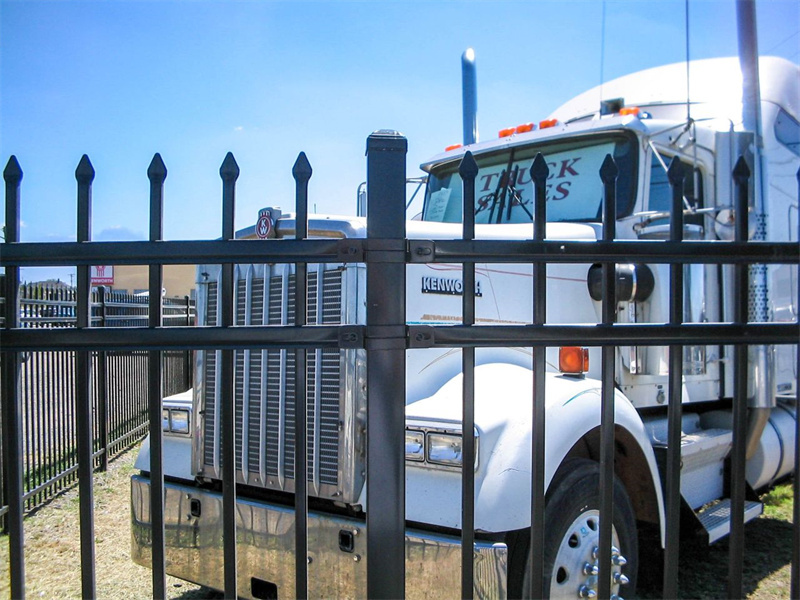
Overview: Chinese vs Domestic Steel Fence Costs
For any procurement director or project manager, the decision to source materials globally versus domestically is a perennial balancing act between cost, quality, and speed. When it comes to steel fencing, this choice is particularly stark. The price difference between Chinese-manufactured and domestic steel fence components can be dramatic, but the initial quote rarely tells the whole story. To make a strategically sound decision, one must look beyond the per-unit price and analyze the total landed cost, which incorporates a complex web of logistical fees, tariffs, and potential hidden expenses.
The core economic principles at play are straightforward yet powerful. Chinese manufacturers leverage labor arbitrage—the significant difference in wage costs—and massive economies of scale to produce standard fencing components at a fraction of the cost of their domestic counterparts. However, this advantage is increasingly being tested by volatile global supply chains. Fluctuating freight surcharges, unpredictable tariffs, and lengthy customs clearance processes can erode initial savings, transforming a seemingly smart budget decision into a logistical and financial headache. A comprehensive analysis requires weighing these competing forces to understand the true cost to your project’s bottom line and timeline.
Base Price Comparison
The most immediate and compelling factor in the Chinese vs. domestic steel fence cost debate is the base price. As a general rule, industry reports consistently show that Chinese steel fences typically cost 30-50% less than their American-made counterparts. This substantial variance is primarily driven by fundamental differences in the cost of raw materials and labor. Steel production in China benefits from state support and a vast industrial ecosystem, often resulting in lower input costs. When combined with lower average wages for factory workers, the result is a per-panel or per-post price that domestic manufacturers find difficult to match on standard, mass-produced items.
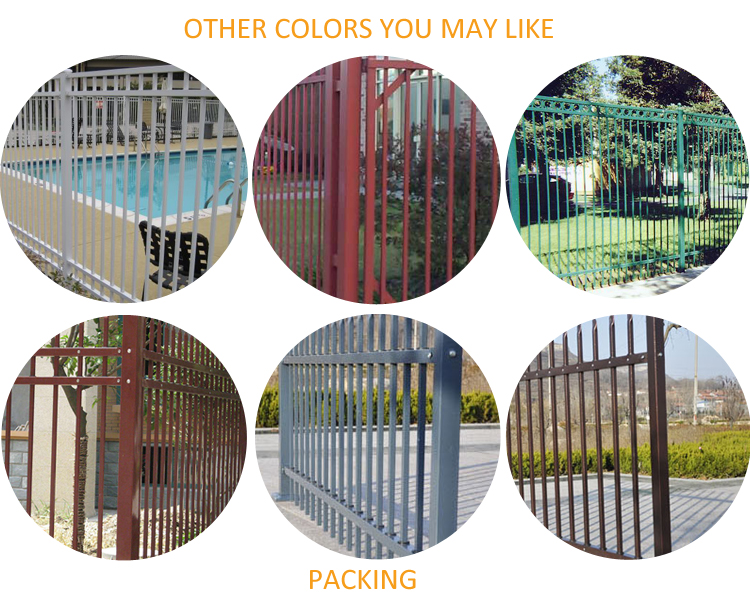
However, this base price is not a monolith. The specific grade of steel and the coating process applied are significant variables. A fence made from lower-grade mild steel with a simple pre-galvanized finish will be considerably cheaper than one using a higher-grade steel with a robust hot-dip galvanizing process followed by a powder coat. Procurement managers should also be aware that quoted prices can vary widely even among different Chinese suppliers. This variability often reflects differences in quality control, material sourcing, and the scale of the operation, making thorough vetting of potential partners an absolute necessity before committing to a purchase order based on price alone.
Import Costs and Landed Price
A low base price from an overseas factory is only the beginning of the cost equation. The true figure that impacts your budget is the total landed cost, which includes all expenses incurred to get the product from the factory floor in China to your job site in the United States. These additional, and often volatile, costs can significantly diminish the initial savings. Key import-related fees include ocean freight, customs duties, government-imposed tariffs (which can change with little warning), customs brokerage and clearance charges, and inland transportation from the port to the final destination.
Global trade conditions heavily influence these costs. Ocean freight surcharges, for example, can skyrocket during periods of high demand, port congestion, or geopolitical instability. Calculating the total landed cost involves a simple but crucial formula: Base Price + Shipping + Duties/Tariffs + Brokerage + Inland Freight. We once worked with a distributor who secured a fantastic 40% discount on a large container of standard fence panels from China. However, an unexpected spike in container rates and a newly imposed tariff on steel products ended up eroding nearly half of their anticipated savings, a stark lesson in the importance of accounting for every variable.
| Cost Component | Typical Range (USD) |
|---|---|
| Base Fence Price | 500 – 700 |
| Ocean Freight | 100 – 150 |
| Import Duty (5-10%) | 25 – 70 |
| Customs Clearance Fees | 20 – 50 |
| Inland Transportation | 50 – 100 |
| Total Landed Cost | 695 – 1070 |
Quality Comparison: Chinese vs Domestic Steel Fences
A project manager for a large commercial development recently shared a cautionary tale. To save on budget, they sourced what they believed were “equivalent” steel fences from an overseas supplier for a new retail complex. Within two years, rust stains began streaking down the posts, particularly at the weld points, and several panels showed signs of bowing. The supposed savings evaporated when they had to fund premature repairs and replacements. This experience underscores a critical point: in fencing, quality is not a luxury—it’s a direct determinant of service life, safety, and long-term cost.
Before comparing products, it’s essential to understand the standards that govern performance. Organizations like ASTM International and the International Organization for Standardization (ISO) provide detailed specifications for steel composition, coating thickness, and fabrication methods. These standards are the bedrock of durability and safety. For example, ASTM A123 specifies the requirements for hot-dip galvanizing on iron and steel products. A fence that meets this standard is certified to have a protective zinc coating of a certain thickness, ensuring a predictable level of corrosion resistance. When sourcing, the crucial question isn’t just “Is it steel?” but “Does it meet the specific ASTM or ISO standard required for my project’s environment and application?”
Steel Grade and Material Composition
The term “steel” is incredibly broad, and the specific alloy used has a profound impact on a fence’s strength and longevity. Domestic manufacturers typically use higher-grade steel that adheres to strict ASTM steel standards, ensuring consistent chemical composition and metallurgical properties. This results in superior tensile strength, meaning the fence can withstand greater force without bending or breaking. In contrast, while many Chinese manufacturers produce quality products, the market also includes suppliers who may use lower-grade recycled steel or alloys with less stringent composition control. This can lead to significant deviations in tensile strength and a higher susceptibility to structural failure under stress.
An interesting point of confusion in the industry is the use of the term “wrought iron.” Historically, wrought iron was a prized material for ornamental fencing. Today, true wrought iron is exceedingly rare and expensive to produce. Most modern “wrought iron” style fences are actually fabricated from mild steel, which is far more versatile and can be hot-dip galvanized to prevent rust—a process that cannot be applied to true wrought iron. Understanding this distinction is key to specifying the right material for both aesthetic and performance goals.
Surface Treatment and Corrosion Resistance
The single most important factor for a steel fence’s lifespan is its defense against corrosion, and this comes down to the quality of its surface treatment. The gold standard for protection is the hot-dip galvanizing process, where the fabricated steel component is fully submerged in a molten zinc bath. This creates a thick, metallurgically bonded layer of zinc that protects the steel from the elements. Domestic manufacturers are generally held to rigorous standards like ASTM A123, which dictates specific coating thicknesses and uniformity. This ensures a consistent, durable barrier against rust, even in harsh coastal or industrial environments.
With imported fences, the quality of this process can be more variable. Some may use a “pre-galvanizing” process, where steel sheets or tubes are galvanized *before* being cut and welded. This leaves the welds and cut edges exposed and highly vulnerable to rust. Even with hot-dip galvanizing, quality can differ. Issues like inconsistent coating thickness, poor adhesion, or “dross” (impurities) on the surface can compromise the protective layer and lead to premature failure. For added protection and aesthetics, many specifications call for a powder coating over the galvanized steel. Here too, the quality of surface preparation and application thickness is critical to prevent chipping and peeling, with domestic suppliers often providing a more uniform and adherent finish.
Manufacturing Process and Quality Control
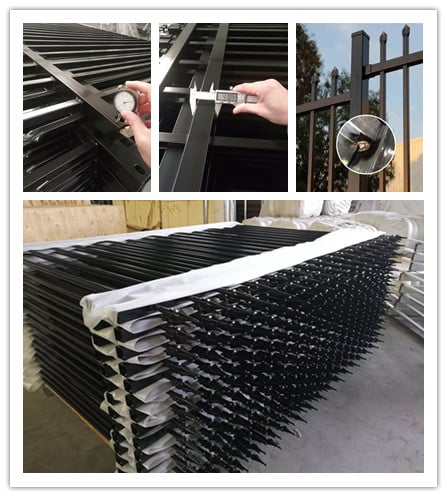
The consistency and reliability of a finished fence are direct results of the manufacturing and quality control (QC) protocols in place. U.S. manufacturers typically operate under stringent, documented QC systems, often certified to ISO 9001 standards. This involves multiple inspection checkpoints throughout the production process: verifying raw material certifications, checking weld quality, measuring fabrication tolerances, and testing coating thickness. Adherence to specific ASTM standards is not just a goal but a documented, verifiable part of the process.
In contrast, the level of QC among Chinese suppliers can range from excellent to nearly non-existent. While top-tier manufacturers have robust, world-class QC departments, many smaller factories may rely on simple visual checks at the end of the production line. This variability increases the risk of receiving a product with out-of-spec tolerances, which can make installation difficult or impossible as panels may not fit correctly with posts. Furthermore, issues like surface blemishes, inconsistent material thickness, and weak welds are more common in batches with less rigorous inspection, ultimately impacting both the fence’s appearance and its structural integrity.

Customization and Certification Options
For many commercial, industrial, or high-security projects, standard, off-the-shelf fencing is not an option. These projects may require custom heights, specific picket spacing, unique mounting solutions, or gates engineered to accommodate special hardware. This is an area where domestic manufacturers hold a distinct advantage. Their proximity and integrated engineering teams allow them to rapidly develop, quote, and fabricate custom components to precise specifications. If a project requires a fence to meet a certain wind-load rating or a specific safety certification, domestic suppliers can provide the necessary engineering documents and test reports to ensure compliance.
Attempting to source custom-fabricated fencing from overseas introduces significant challenges that are not present with domestic suppliers. The lengthy process of communicating designs, getting approvals, and producing prototypes can be slow and prone to misunderstandings due to time zones and language barriers. For any project where liability is a major concern, such as fencing for public pools or critical infrastructure, these hurdles become unacceptable risks. Therefore, the ability to obtain certified products and stamped engineering drawings directly from a domestic manufacturer becomes a non-negotiable requirement that easily outweighs any potential cost savings from importing.
Lead Time Comparison: China vs Domestic
In the world of construction and project management, time is money. A delay in material delivery can have a cascading effect, pushing back subsequent trades, incurring penalties, and blowing up project schedules. This is why a thorough lead time analysis is just as critical as a cost analysis. The timeline for receiving steel fencing is dramatically different depending on its origin, and these differences are shaped by the intricate and sometimes fragile nature of global supply chain logistics. A delay at a port in Shanghai, a shortage of shipping containers, or a customs inspection backlog in Los Angeles can add weeks to a delivery schedule, turning a predictable timeline into a series of frustrating uncertainties.
Understanding the full journey is key. The total lead time isn’t just the factory’s production time; it encompasses ocean transit, port unloading, customs clearance, and final inland delivery. Each stage has its own potential for bottlenecks. In contrast, domestic sourcing simplifies this chain dramatically, collapsing the multi-week ocean transit and customs process into a few days of ground transportation. This inherent simplicity provides a much higher degree of certainty and predictability, which is an invaluable asset for any tightly scheduled project.
Production Lead Time Differences
The manufacturing cycle itself represents the first major divergence in lead times. Domestic steel fence manufacturers, catering to a market that values speed and flexibility, often have more nimble production schedules. For standard items, they might complete a typical order within one to two weeks. Their proximity allows for just-in-time material sourcing and the ability to adjust schedules to accommodate urgent or custom orders. An order’s size can influence this, but domestic suppliers are generally better equipped to handle smaller, more specialized runs without significant delays.
Chinese factories, particularly the large-scale operations, often work on much higher production volumes. While this enables cost efficiency, it can also create bottlenecks. An order from a U.S. buyer is one of many in a long queue, and typical production lead times for a container-load of fencing can range from two to four weeks. This can be extended if the order is for a less common item or if the factory is experiencing a surge in demand. Your order’s priority is tied to its size and your relationship with the supplier, making it harder to expedite production for a time-sensitive project.
Shipping and Transit Times
The most significant and variable portion of the lead time for Chinese imports is the journey across the Pacific Ocean. Standard ocean transit from a major Chinese port like Shanghai or Ningbo to a U.S. West Coast port such as Long Beach or Seattle typically takes four to six weeks. This does not include the time it takes for the container to be loaded at the factory, trucked to the port, and cleared for export. Furthermore, this transit time is highly susceptible to delays from weather, port congestion on either side of the ocean, and customs inspections, which can hold a container for days or even weeks without warning.
In stark contrast, domestic freight is measured in days, not weeks. Once an order is produced by a U.S. manufacturer, it can typically be delivered to any job site in the continental United States within one to two weeks via truck. This dramatically shortens the overall timeline and, more importantly, reduces the number of variables that can cause a delay. Seasonal variations also play a role; for example, shipping costs and transit times from China often increase in the months leading up to the Lunar New Year as companies rush to get goods out before the country’s extended holiday shutdown.
| Stage | China Import | Domestic Manufacture |
|---|---|---|
| Production | 2-4 weeks | 1-2 weeks |
| Shipping/Transit | 4-6 weeks | 0-1 weeks |
| Customs Clearance | 1-2 weeks | N/A |
| Last Mile Delivery | 1-2 weeks | 1 week |
| Total Lead Time | 6-12 weeks | 2-4 weeks |

Communication and Responsiveness
Effective and timely communication is the lubricant of any successful supply chain. When sourcing domestically, this is often taken for granted. If there’s a question about a specification, a need to adjust an order, or a problem to troubleshoot, you can pick up the phone and speak with a representative in the same time zone, in the same language. This allows for real-time problem-solving and tight coordination, which directly contributes to lead time certainty and smooth project execution.
Communicating with overseas suppliers presents inherent challenges. The significant time difference—often 12 hours or more—means a simple question can take 24 hours to get an answer. Language barriers can lead to misunderstandings in specifications, resulting in costly errors. While many international sales teams are proficient in English, nuances can be lost, especially on complex technical or custom orders. To mitigate these delays, best practices include using extremely clear and detailed purchase orders with diagrams, confirming every detail in writing, and, for large or ongoing relationships, working through a trusted domestic-based import agent who can manage communication and logistics.
Metal Fencing Built to Last and Deliver Value
Since 2009, DB Fencing has supplied high-quality steel fences and panels meeting strict standards with fast sample delivery, competitive pricing, and expert support for international customers.
Risks and Benefits of Sourcing Steel Fences
Every sourcing decision is inherently a risk management exercise. Choosing between Chinese imports and domestic manufacturing for steel fencing is no different. A prudent procurement strategy doesn’t just chase the lowest price; it identifies, quantifies, and mitigates potential risks to ensure a project’s overall success. Sourcing from China is not necessarily about avoiding risk, but rather about understanding and actively managing it through smart strategies. A clear-eyed assessment of the potential pitfalls and powerful advantages of each option is the only way to protect your budget, timeline, and reputation.
Effective risk mitigation strategies are essential when sourcing from overseas. This isn’t just a backup plan; it should be integrated into your primary procurement process. For example, rather than simply trusting a factory’s internal QC report, a smart importer will budget for a third-party inspection service to verify material quality and fabrication standards on-site before the product is ever loaded into a container. This small upfront investment can prevent a catastrophic quality failure down the line. Similarly, building buffer time into your project schedule and negotiating crystal-clear contractual terms regarding quality, delivery dates, and penalties for non-compliance can provide a critical safety net.
Risks of Chinese Imports
The foremost risk associated with importing steel fences from China is the variability in quality. While many manufacturers produce excellent products, the lack of uniform enforcement of standards means there’s a tangible risk of receiving materials that don’t comply with stringent U.S. building codes or engineering specifications. This can lead to failed inspections, costly rework, or even long-term liability issues. The second major risk is lead time unpredictability. As outlined, the long and complex supply chain is vulnerable to disruptions from shipping bottlenecks, customs delays, and global events, which can jeopardize critical project deadlines. Communication barriers can exacerbate these issues, turning small misunderstandings into significant errors. Finally, there’s geopolitical and economic risk in the form of tariffs and hidden costs that can suddenly appear and inflate the final price well beyond the initial quote.
Benefits of Chinese Sourcing
Despite the risks, the benefits of sourcing from China remain compelling, which is why it remains a dominant force in global manufacturing. The primary benefit is, without question, the significant cost savings on the base price of materials and production. For large-scale projects where the fencing is a standard design, the per-unit savings can translate into hundreds of thousands of dollars. Chinese manufacturers possess enormous production capacity, allowing them to handle massive volume orders and offer attractive discounts for bulk purchases. This access to mass-produced, standard fence designs makes it an excellent option for projects with long planning horizons and less stringent customization needs. For companies looking to diversify their supply base, adding a vetted Chinese partner can also be a strategic move to reduce dependence on a single domestic source.
Domestic Manufacturing Advantages
The case for domestic sourcing is built on a foundation of reliability, speed, and quality assurance. The most significant advantage is the consistent, verifiable quality that comes from manufacturing under strict U.S. standards and regulatory oversight. This all but guarantees compliance with ASTM certifications and project specifications. The second key benefit is speed. With total lead times of just two to four weeks, domestic manufacturing is the superior choice for projects with tight deadlines. This rapid turnaround enables better inventory management and agility. Furthermore, domestic suppliers excel at customization, offering direct access to engineering support for custom designs, gates, and mounting solutions. This drastically simplifies the process for complex or security-critical projects. Finally, the risk of supply chain disruptions and unexpected charges is substantially lower, providing a level of budget and schedule certainty that is often worth the premium in price.
Risk Mitigation Strategies
For those who choose to leverage the cost benefits of Chinese imports, a proactive risk mitigation framework is essential. The first line of defense is engaging a reputable third-party inspection service to conduct on-site quality checks in China before shipment. Negotiating clear, detailed contracts that explicitly define material specifications, ASTM compliance requirements, and delivery timelines is also critical. These contracts should include penalties for non-conformance. Another effective strategy is to build a hybrid supply chain, leveraging a domestic partner for urgent needs, custom components, or any necessary reworks and repairs on imported materials. Lastly, for projects where fence availability is absolutely critical, maintaining a strategic safety stock of key components can buffer against unexpected shipping delays and ensure project continuity.
Making the Sourcing Decision
Ultimately, the choice between Chinese and domestic steel fence sourcing is not about finding a universally “better” option, but about selecting the right strategy for a specific project’s unique set of priorities. A truly strategic approach moves beyond a simple price comparison to a quantitative evaluation of how cost, quality, lead time, and risk align with the project’s goals. An effective method for this is to create a weighted decision matrix or scorecard. Assign a weight to each factor (e.g., Cost: 40%, Lead Time: 30%, Quality: 30%) based on project constraints. Then, score each sourcing option against these factors to arrive at a data-driven conclusion rather than one based on gut feeling or an attractive initial quote.
This analytical process forces a clear-eyed assessment of tradeoffs. Is the potential 30% cost saving from an import worth the risk of a four-week delay on a time-sensitive project? Does the higher price of a domestic product justify the assurance of certified quality for a high-security aplication? By asking and answering these questions systematically, procurement directors can make a defensible decision that delivers the best overall value, not just the lowest upfront price.
Evaluating Project Priorities
The first step in any sourcing decision is to clearly identify and rank your project’s primary drivers. Is the project budget the absolute, unbreachable constraint, making lowest cost the top priority? Or is the completion deadline immovable, making the shortest lead time paramount? For safety-critical projects, such as those at schools, airports, or government facilities, the importance of verified quality and certification will far outweigh cost considerations. You must also assess the complexity of your needs. If the project requires non-standard panel sizes, custom-engineered gates, or unique mounting brackets, the flexibility and engineering support of a domestic manufacturer become invaluable. Finally, consider logistical and geographic constraints; a remote job site might benefit from the simplified logistics of a single domestic delivery over coordinating international freight and inland trucking.
Cost-Benefit Analysis Framework
A robust cost-benefit analysis goes deep into the numbers. Start by calculating the true total landed cost for imported options, being sure to include conservative estimates for variable costs like freight and potential tariffs. Next, factor in the potential costs of negative outcomes. What is the financial impact of a two-week project delay caused by a late shipment? What is the cost of labor and materials to replace a section of fence that fails a quality inspection? These potential expenses should be factored into the equation as a “risk premium” against the import option. Inversely, what is the value of the schedule certainty and reduced risk provided by a domestic supplier? A scenario analysis can be illustrative: run the numbers for a best-case, likely-case, and worst-case import scenario to understand the full range of potential financial outcomes.
| Factor | Chinese Import | Domestic Manufacture | Recommendation Basis |
|---|---|---|---|
| Unit Cost | Lower (30-50%) | Higher | If budget-sensitive, favor import |
| Lead Time | Longer (6-12 wks) | Shorter (2-4 wks) | If deadline-critical, favor domestic |
| Quality Consistency | Variable | Higher | Certification-dependent projects favor domestic |
| Custom Fabrication | Limited | Flexible | Custom specs require domestic |
| Supply Chain Risk | Higher | Lower | Risk-averse prefer domestic |
Best Use Cases for Each Option
Based on this framework, clear use cases emerge. Sourcing steel fences from China is often the ideal choice for large-volume orders of standard, non-critical fencing where the project has a long and flexible timeline. Think perimeter fencing for a new large-scale warehouse development or a multi-year phased housing project. In these scenarios, the significant upfront cost savings can be fully realized without being overly threatened by potential schedule shifts. Building long-term relationships with a few trusted, high-quality Chinese suppliers can further enhance the benefits of this strategy.
Conversely, domestic sourcing excels in situations where speed, quality assurance, and customization are paramount. This includes urgent repair or replacement jobs, projects with tight, penalty-laden deadlines, and any application requiring specific engineering certifications, like high-security facilities or public infrastructure. A hybrid sourcing strategy can also be highly effective, where a company might source 80% of its standard panel stock from China for cost savings, while relying on a domestic partner for all custom gates, urgent needs, and high-specification components. This approach can offer the best of both worlds: cost efficiency and responsive capability.
Metal Fencing Built to Last and Deliver Value
Since 2009, DB Fencing has supplied high-quality steel fences and panels meeting strict standards with fast sample delivery, competitive pricing, and expert support for international customers.
Conclusion: Key Takeaways
The decision between sourcing steel fencing from China versus domestically is a complex strategic choice that goes far beyond the initial price tag. While Chinese manufacturers offer a compelling upfront cost advantage, typically 30-50% lower, this benefit is counterbalanced by longer and less predictable lead times of 6-12 weeks and a greater variability in quality control. Domestic suppliers, while commanding a higher base price, provide the invaluable assurances of faster delivery within 2-4 weeks, consistently higher quality adhering to strict standards, and far greater flexibility for custom fabrication projects. The final determination should never be made on price alone; instead, carefully weighing the total landed cost, schedule sensitivity, and quality requirements will help you select the sourcing strategy that delivers the best long-term value. A thoughtful risk mitigation plan, including third-party inspections and clear contractual terms, is paramount to maximizing the benefits of either approach. We strongly encourage procurement teams to assess their project needs carefully and to proactively engage both domestic manufacturers and trusted importers to request detailed quotes and samples before final sourcing.
Frequently Asked Questions
- How much cheaper are Chinese steel fences compared to domestic ones?
- Chinese steel fences typically have a base price that is 30-50% lower than comparable domestic products. This is mainly due to lower labor and raw material costs in China. However, it’s crucial to remember that this is not the final price. Import fees, including shipping, customs duties, and tariffs, will be added, which can reduce the overall savings.
- Is the quality of Chinese steel fences reliable for commercial use?
- Quality is variable. While many high-end Chinese manufacturers produce reliable fences that meet minimum international standards, the market has a wide range of quality levels. Common issues can include inconsistent coating thickness, which affects corrosion resistance, and less stringent quality control. Domestic fences generally offer superior and more consistent quality, often exceeding ASTM standards, making them a safer bet for critical commercial applications.
- What are the typical lead times when importing steel fences from China?
- The total lead time for importing steel fences from China typically averages between 6 to 12 weeks. This includes 2-4 weeks for production, 4-6 weeks for ocean transit, and 1-2 weeks for customs clearance and inland delivery. In contrast, sourcing domestically usually results in a much shorter lead time of 2 to 4 weeks from order to delivery.
- Can domestic manufacturers customize steel fences faster than imports?
- Yes, absolutely. Domestic manufacturers hold a significant advantage in customization. They can work directly with you on engineering specifications, offer rapid prototyping, and accommodate custom designs with a much shorter turnaround time. Attempting complex customizations with an overseas supplier can be slow and prone to communication errors.
- How do tariffs and freight surcharges affect the overall cost of Chinese fencing imports?
- Tariffs and freight surcharges add significant cost and unpredictability to importing from China. Tariffs are taxes imposed on imported goods and can change based on trade policy, while freight charges can fluctuate wildly depending on global demand, fuel costs, and port congestion. These variable costs can significantly eat into the initial price advantage of a Chinese fence and must be carefully factored into your total landed cost calculation.


