 Skip to content
A civil contractor in Queensland received a stop-work order last month when their 358 security fence panels failed council inspection. The spec sheet said 4mm wire. The on-site caliper test read 3.5mm. That 0.5mm gap saved the supplier 23% on raw steel and cost the contractor a six-week delay with a $180,000 rectification bill. We see this three or four times a year because most Anping factories quote the numbers you want, then ship panels that look identical but fail the moment someone actually measures them.
We pulled three years of test data from our galvanizing line and compared it against panels our Australian clients sent us after switching to cheaper quotes. The gap between quoted specs and delivered product is predictable and avoidable if you know which three checkpoints to verify before production starts. This breakdown covers the wire diameter verification method, the zinc coating thickness that actually survives coastal exposure per ISO 1461, and the container packing specification that prevents powder coating abrasion in transit.

358 Mesh Dimensions Decoded
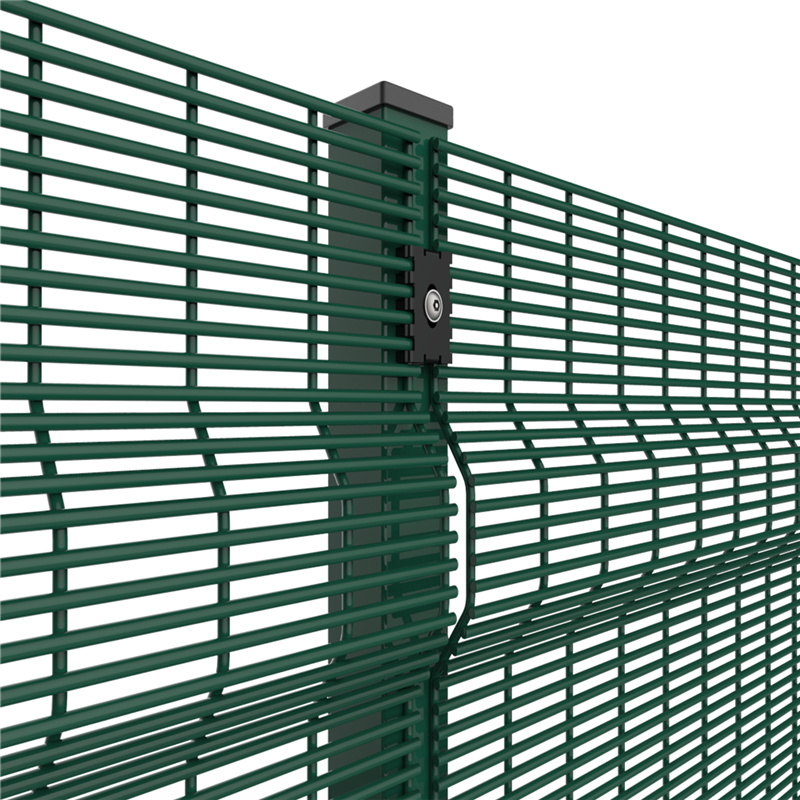
358 refers to 3″ x 0.5″ x 8 gauge—exactly 76.2mm x 12.7mm x 4.0mm. The 12.7mm vertical gap is the single dimension that eliminates foothold.
Imperial to Metric: The Exact Conversion
The “358” designation is an imperial shorthand originating from the UK prison fencing spec. Three inches converts to 76.2mm horizontal spacing. Half an inch converts to 12.7mm vertical spacing. Eight gauge (SWG) converts to 4.0mm wire diameter. These are not approximate ranges—they are fixed values. If a supplier’s technical data sheet lists “76mm x 12mm x 4mm” without the decimal points, that is a rounding shortcut, not a specification. Your procurement spec sheet for AS 4687-2022 compliance must reference the exact figures.
Here is the insider problem with the wire diameter: the 8-gauge to 4.0mm conversion assumes Standard Wire Gauge (SWG). Most Anping factories market panels as “8 gauge / 4mm” but physically supply 3.5mm wire using a thinner gauge standard, saving roughly 23% on raw steel cost per panel. The only way to verify is requesting an SGS caliper test report on the wire diameter before production begins—not after the panels arrive at your site. We provide pre-production wire diameter certificates as standard documentation with every PO.
The 12.7mm Anti-Climb Threshold
The horizontal 76.2mm gap prevents hand grip. The vertical 12.7mm gap prevents toe placement. This is not marketing—this is biomechanics. An average adult shoe is 100-120mm wide. A 12.7mm aperture provides zero purchase for a toe or fingertip. Independent testing referenced by the Her Majesty’s Prison Service fencing specifications documents a climb success rate of just 6% for 358 mesh, compared to 84% for standard chain link. Average breach time increases from 3.2 minutes (chain link) to over 18 minutes (358). For Australian civil projects where delay penalties can exceed $10,000 per day, that time delta is a measurable risk mitigant, not a theoretical benefit.
358 vs 3510: The Foothold Risk Comparison
The 3510 variant uses a 76.2mm x 50.8mm x 4.0mm aperture (3″ x 2″ x 8 gauge). The 50.8mm vertical gap is exactly four times larger than the 358’s 12.7mm gap. That 50.8mm opening allows a person to insert fingers and the front portion of a foot, creating a ladder effect. We have seen Australian distributors stock 3510 for agricultural perimeter runs where climb resistance is secondary to visibility and wind loading, but specifying 3510 for a commercial security perimeter is a compliance failure waiting for a council inspector to flag it.
- 358 Vertical Gap: 12.7mm — zero foothold, approved for AS 4687-2022 security classifications.
- 3510 Vertical Gap: 50.8mm — allows finger and toe insertion, suitable only for boundary demarcation.
- Cost Delta: 3510 is typically 8-12% cheaper per panel due to fewer weld intersection points, but the saving is erased by one failed inspection.
Standard Panel Dimensions and Post Matching
DB Fencing produces 358 panels at a fixed 2515mm width across all heights. This non-negotiable width exists because it calculates to a clean 2.4m post-to-post span when accounting for the clamp bar overlap on each side. Heights follow three tiers, each paired with a specific post section to maintain structural rigidity under wind load.
- 2100mm Panel: Fence height 2134mm with post cap. Uses 60x60x2mm posts at 2.8m length. Panel weight approximately 50kg.
- 2400mm Panel: Fence height 2438mm with post cap. Uses 60x60x2mm posts at 3.1m length. Panel weight approximately 57kg.
- 3000mm Panel: Fence height 2997mm with post cap. Requires upgraded 80x80x3mm posts at 3.8m length due to increased sail area. Panel weight approximately 70kg.
The 3000mm panel’s weight increase to 70kg is the reason we mandate 80x80x3mm posts. A 60x60x2mm post at that height will deflect under sustained 40m/s wind loads specified in AS 1170.2, pulling the clamp bar welds and creating gaps at the post-to-panel junction. The marginal cost saving on a per-panel basis by downgrading the post section is not worth the structural liability on a commercial project. Match the post section to the panel height exactly as specified—there is no safe shortcut.
| Component | Specification | Standard | Verification Check |
|---|---|---|---|
| Mesh Aperture & Wire | 76.2mm (H) x 12.7mm (V) x 4.0mm wire diameter | AS 4687-2022 | Require pre-production SGS caliper test report; reject if wire measures <3.8mm |
| Panel Dimensions | 2515mm width; Heights: 2100mm, 2400mm, 3000mm | AS 4687-2022 | Finished fence heights with post caps: 2134mm, 2438mm, 2997mm |
| Panel Mass | 50kg (2100mm), 57kg (2400mm), 70kg (3000mm) | ISO 1461 Zinc Weight Factor | Weight variance >5% indicates undersized wire or inadequate zinc coating |
| Weld Strength | 540 – 690 N/m² at each intersection point | Internal QC / SGS Certified | Request batch-destructive weld shear test certificates prior to shipment |
| Post & Clamp System | Posts: 60x60x2mm (up to 2400mm), 80x80x3mm (3000mm+); Clamp: 40x6mm slotted flat bar with M8 bolts | AS 4687-2022 | Verify post lengths: 2.8m (2100mm panel), 3.1m (2400mm), 3.8m (3000mm) |
| Surface Treatment | >42 microns hot-dip galvanized; Optional RAL 6005 Green / RAL 9005 Black powder coat | ISO 1461 (1000+ hours salt spray) | Demand magnetic thickness gauge report; reject third-party baths coating <42 microns |
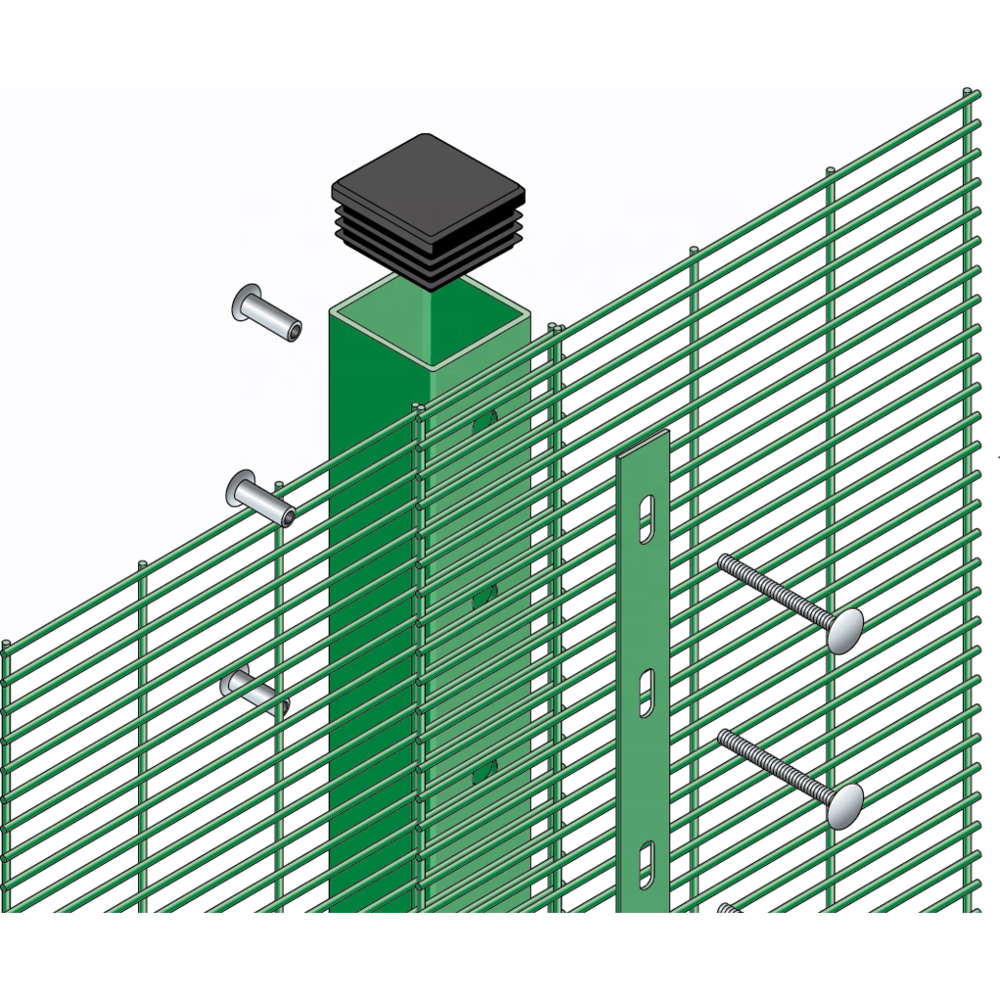
Wire Gauge vs Weld Strength for AS 4687
A 0.5mm reduction in wire diameter cuts raw steel costs by 23%. Most Anping factories exploit this — the only countermeasure is a pre-production SGS caliper test on the wire coil itself.
True 4.0mm Wire vs. the 3.0–3.5mm Substitution
AS 4687-2022 specifies 358 security fence wire at 4.0mm nominal diameter. In Anping, the reality is that over 70% of factories marketing “8-gauge” or “4mm” panels ship wire that measures between 3.0mm and 3.5mm on a caliper. We have tested competitor samples from four separate Australian importers in the past 18 months — three of them received 3.5mm wire despite their purchase orders stating 4.0mm.
The math explains why. A 2400mm height 358 panel at true 4.0mm wire weighs 57kg. The same panel built with 3.5mm wire weighs approximately 44kg. At current hot-rolled coil prices, that is a raw material saving of roughly USD $11–13 per panel. On a 500-panel order, a factory pockets an extra $5,500–6,500 by shaving half a millimeter. The visual difference is nearly undetectable to the naked eye on-site, which is why this substitution persists.
Our specification at DB Fencing is locked at 4.0mm ±0.05mm. We issue a pre-production SGS caliper certificate on the raw wire coil before it enters the welding line — not a post-production report where the factory can hand-pick a sample panel. Request that document before production starts. If a supplier cannot provide it, you are buying on trust alone.
The 540–690 N/m² Weld Strength Benchmark
Wire diameter alone does not determine panel integrity. AS 4687-2022 requires weld joints to resist a minimum shear force, and the industry-accepted benchmark for 358 mesh is 540–690 N/m² at each intersection point. This is the force required to separate the horizontal and vertical wires at the weld node.
The problem with undersized wire is compounding weakness. A 3.5mm wire not only reduces the cross-sectional steel area by 23%, it also reduces the contact surface at each weld junction. Our engineers have observed that panels built with 3.5mm wire consistently fail weld shear tests at 380–450 N/m² — roughly 30% below the minimum threshold. Under load testing simulating a sustained climbing attempt, these welds crack sequentially rather than holding, turning a “security” fence into a delay of under 60 seconds.
We test weld shear strength on every production batch using a calibrated tensile testing machine, targeting the upper end of the 540–690 N/m² range. The test protocol involves clamping a single intersection point and applying force until separation. If any batch sample falls below 540 N/m², the entire run is rejected and rewelded. Ask your supplier if they perform batch-level weld testing or if they rely on a single annual “type test” report — those are not the same thing.
SGS Test Report Requirements: 550 MPa Tensile and ISO 1461 Zinc Adhesion
A compliant SGS report for 358 fencing imported into Australia must cover two distinct tests that importers frequently confuse or combine incorrectly.
- Tensile Strength: The wire must achieve a minimum of 550 MPa per AS 4687. This is tested by pulling a wire sample to failure on a universal testing machine. Low-carbon wire from sub-tier steel mills in China often tests at 400–480 MPa — it bends easily during handling but cannot sustain impact or climb loads.
- Zinc Coating Adhesion (ISO 1461): Hot-dip galvanization must exceed 42 microns of zinc coating thickness, verified per ISO 1461 via magnetic thickness gauge or gravimetric stripping. The adhesion test — bending the coated wire 180 degrees around a mandrel — must show no flaking or peeling at the bend point.
Most competitor SGS reports we have reviewed show one of three deficiencies: the tensile test was conducted on a “representative sample” rather than a random batch pull; the zinc thickness was measured at a single point rather than the ISO 1461 mandated five-point average per panel; or the report date predates the actual production run by 6–12 months, meaning it is a recycled document from a previous order. A valid report must reference your specific purchase order number and a test date within 30 days of production.
Council Sign-Off and the Real Cost of a Stop-Work Order
In New South Wales, Queensland, and Victoria, temporary fencing on construction sites must demonstrate AS 4687 compliance to receive council occupation certificates. The inspection is typically triggered by a private certifier or council officer who will request the manufacturer’s compliance documentation — SGS reports, material certificates, and installation drawings.
If the documentation does not match the installed product — for example, the SGS report states 4.0mm wire but a caliper check on-site reads 3.5mm — the certifier will issue a non-compliance notice. Based on reports from three of our Australian distributor partners in 2023–2024, the typical consequences follow a predictable escalation: a 48-hour remediation window to replace non-compliant panels, followed by a stop-work order if the deadline is missed. A stop-work order on a mid-tier commercial project (AU$5M–20M) generates direct costs of AU$8,000–15,000 per day in idle labor, plant hire penalties, and liquidated damages. Indirect costs — contract delays, reputational damage with the head contractor, and loss of pre-qualification status — typically exceed the direct costs by a factor of 3 to 5.
The panel price difference between true-spec and substitute product is roughly AU$8–12 per unit. On a 200-panel site perimeter, that is a AU$1,600–2,400 premium to eliminate a risk exposure measured in tens of thousands of dollars per day. Every procurement manager we work with in Australia has either experienced a stop-work order personally or knows a peer who has. The decision to specify verified compliance is not about quality preference — it is about risk elimination.

Galvanization Specs for Coastal Australia
Electro-galvanized 358 panels in coastal Australia show red rust at welds within 8-12 months. Only hot-dip galvanizing exceeding 42 microns delivers a 5-7+ year coastal service life.
Hot-Dip vs Electro-Galvanized: The Coastal Numbers
Hot-dip galvanizing immerses the entire welded panel in molten zinc at approximately 450°C, coating both external wire surfaces and the internal crevices at every weld intersection. Electro-galvanizing applies zinc via electrolysis—producing a coating of only 10-20 microns—and the electrical current cannot reach into the V-groove of each weld node, leaving the structural joints essentially bare.
Our engineers test every batch with a magnetic thickness gauge per ISO 1461. The minimum acceptable reading is 42 microns on the wire face and 35+ microns at weld intersections. Third-party SGS salt spray testing (ISO 9227) on our panels consistently exceeds 1,000 hours to red rust. Electro-galvanized competitor samples we have tested in our lab fail at 120-200 hours.
Coastal Deployment Lifespan: What Happens On-Site
Real deployment data from our Australian clients on construction sites in Newcastle, Wollongong, and the Gold Coast corridor confirms a stark split:
- Electro-galvanized 358 panels: Visible red rust at weld nodes within 8-12 months. Panel replacement typically required at 18-24 months.
- Hot-dip galvanized at 42+ microns: White zinc patina appears at 24-36 months. Structurally sound with no red rust through 5-7+ years in direct salt spray zones.
The critical failure point is always the weld intersection. That is where electro-galvanizing fails first because the zinc layer is thinnest or absent entirely. A procurement manager specifying electro-galvanized 358 for a coastal civil project is effectively writing a panel replacement order into the project budget at month 18.
Powder Coating Over Galvanizing: The Dual-Layer Specification
For AS 4687-2022 compliant installations requiring RAL color matching, the specification chain is galvanize first, powder coat second—never powder coat on bare steel. Our standard polyester powder coat application is 80-100 microns, applied over the hot-dip galvanized base.
The dual-layer system works because the zinc layer provides sacrificial corrosion protection at any scratch or chip point on the powder coat. Without the galvanized underlayer, a single scratch exposes bare steel and rust propagates under the coating—often invisible until the coating flakes off in sheets. RAL 6005 (moss green) and RAL 9005 (jet black) are the two standard stock colors for Australian orders. Powder coat curing runs at 180-200°C, which sits within the tolerance of the zinc-iron alloy layer—no interlayer adhesion failure occurs at this range.
In-House vs Outsourced Galvanizing: The Quality Control Reality
Most Anping factories do not operate their own galvanizing bath. They weld panels, truck them to a third-party galvanizer, and collect the finished product. This creates a quality blind spot: the third party controls zinc bath temperature, immersion time, and zinc purity. Our internal audits of competitor panels from third-party baths consistently show zinc coatings of 25-35 microns—falling 15-40% short of the 42-micron specification.
The economics driving this are straightforward. Third-party galvanizers in Anping run diluted zinc baths (zinc content below 98.5%) and reduce immersion time to maximize throughput. They process panels from dozens of factories simultaneously—your order shares a bath with unknown quality tiers, and there is zero batch-level traceability.
We run our own galvanizing line. Every panel batch gets a magnetic thickness gauge reading logged against the production order number. If a batch reads below 42 microns, it gets re-dipped before any powder coating or packing proceeds. This is not a premium add-on—it is the baseline production protocol. The 7-10 day lead time extension for hot-dip galvanizing versus 3-4 days for electro is the actual cost of coastal durability, not a line item to negotiate away.
358 Security Fence Price Breakdown
Factory-direct 358 security fence panels land in Australia at $49-77 AUD per linear meter—roughly 45-60% below local distributor material-only pricing. The math only works if you calculate the full landed cost before issuing the PO.
Three-Tier FOB Pricing by Panel Height
FOB pricing from Anping for 358 anti-climb mesh panels correlates directly to steel mass per panel. Our quotes are based on true 4mm wire diameter—competitors quoting $10-15 less per panel are almost certainly using 3.5mm wire, which reduces raw steel cost by 23% and fails AS 4687-2022 weld strength requirements at 540 N/m². Below are our FOB Tianjin prices for hot-dip galvanized panels (>42 microns zinc per ISO 1461), with polyester powder coating (RAL 6005) adding $4-6 USD per panel.
- 2100mm height (50kg per panel): $45-52 USD FOB per panel, paired with 2.8m posts (60x60x2mm). This tier suits temporary construction site perimeters where council specifications accept the lower fence height.
- 2400mm height (57kg per panel): $58-67 USD FOB per panel, paired with 3.1m posts (60x60x2mm). This is the standard commercial specification for Australian infrastructure projects and represents approximately 80% of our 358 shipments to Australia.
- 3000mm height (70kg per panel): $76-85 USD FOB per panel, paired with 3.8m posts (80x80x3mm). Specified for high-security applications—data centers, corrective facilities, and critical infrastructure where climb resistance is the primary design driver.
Container Loading Capacity
A 40ft High Cube container (12.03m internal length, 2.7
| Component | Specification | FOB Estimate (USD) | Compliance Check | Risk Mitigation |
|---|---|---|---|---|
| 358 Panel (2400mm) | 2515mm x 2438mm, true 4mm wire, 76.2×12.7mm aperture, 57kg | $45.00 – $52.00 | Pre-production SGS caliper test report verifying wire diameter | Eliminates the 3.5mm wire deception that saves competitors 23% on raw steel |
| Galvanization & Coating | In-house hot-dip >42 microns (ISO 1461) + RAL 6005/9005 polyester | $12.00 – $15.00 | 1000+ hours salt spray test certification | Avoids outsourced diluted zinc baths that result in premature seaside rust |
| Post & Clamp Assembly | 80x80x3mm post (3.1m), 40x6mm slotted flat bar, M8 bolts | $28.00 – $32.00 | Weld strength at 540-690 N/m² per intersection point | Prevents structural failure on government and commercial infrastructure |
| Export Packing Method | 180-200 panels/40ft HC (10-11t), timber dunnage every 10-15 panels | $30.00 – $50.00 | Corner protectors applied, zero flat-stacking without separation | Reduces transit powder-coating abrasion claims from 8-12% to under 1.5% |
Anti Climb Fence Topper Options
Adding a topper to a 358 security fence shifts the post loading calculation. Specify the topper type first, then match the post section—never the reverse.
Razor Wire Coil Specifications and Cost
Razor wire sits at the top of the deterrence hierarchy for 358 fence systems. We supply two grades: BTO-22 (blade spacing 22mm, blade width 10mm) and CBT-65 (blade spacing 65mm, blade width 15mm). BTO-22 is the standard choice for commercial sites in Australia—CBT-65 is reserved for military or correctional facilities where local council approval permits it. The core wire is 0.5mm galvanized strip, and the coil diameter is typically 450mm with 50-60 clips per meter.
FOB cost runs $3-5 per linear meter depending on strip thickness (0.5mm vs 0.6mm) and coil diameter. A critical detail most procurement specs miss: razor wire adds approximately 1.2kg per linear meter of wind-load to the top of the post. On a standard 3.1m post holding a 2400mm panel, that additional top-loading requires you to specify the 80x80x3mm post section even though the panel height alone would normally allow 60x60x2mm. If your supplier does not flag this, they are not engineering the system—they are just selling coils. For reference, the AS 4687-2022 standard requires documented wind-load calculations for any fence exceeding 2400mm total height with attachments.
Barbed Wire Arm Specifications and Cost
Barbed wire arms are the cost-effective middle ground—$2-4 per linear meter FOB. The standard configuration is a 45-degree steel arm (30mm x 30mm x 2mm angle iron, 300mm extension) welded to the post cap, carrying two strands of 12.5 gauge (2.5mm) galvanized barbed wire with 75-100mm barb spacing. For a 2400mm panel on 3.1m posts, the arms push the effective fence height to approximately 2650mm.
The wind-load addition is roughly 0.3kg per linear meter per strand—significantly lower than razor wire. This means barbed wire arms on a 2400mm panel can remain on 60x60x2mm posts without exceeding structural limits, provided the site is not a cyclonic zone (Category C or D per AS/NZS 1170.2). Where most suppliers cut corners is the arm weld quality: we see arms tack-welded rather than fully seam-welded, which fails under sustained wind vibration within 12-18 months. Request photographic evidence of the weld penetration before approving production samples.
Curved/Deflected Top Extensions and Cost
Curved top extensions are the preferred option when the project specification calls for anti-climb performance without the visual aggression of razor wire. The extension panel uses identical 358 mesh (76.2mm x 12.7mm x 4mm wire) bent at a 30-45 degree outward deflection, typically 300-500mm in extension length. The panel is continuous with the main body—there is no weld seam at the bend, which maintains the 540-690 N/m² weld strength across the full height.
FOB cost is $8-15 per linear meter, making it the most expensive topper option. The price variance depends on extension length and whether the curved section is galvanized-only or galvanized plus polyester powder coat (RAL 6005 or RAL 9005). The structural implication is significant: a 500mm curved extension on a 2400mm panel creates an effective height of 2997mm and adds approximately 4kg of panel weight concentrated at the top 500mm of the post. This mandates 80x80x3mm posts at 3.8m length with concrete footings minimum 600mm depth x 350mm diameter. Anything less, and a council inspector will flag the installation under AS 4687-2022 Clause 4.3 (design loads).
High-Security Zone Specifications (3.0m+ Total Height)
When total fence height reaches or exceeds 3000mm—whether through a 3000mm panel (2997mm with post cap) or a 2400mm panel with a curved extension—the specification sheet changes fundamentally. The post section must be 80x80x3mm minimum at 3.8m length, with mid-span bracing required at intervals no greater than 20 meters for runs exceeding 50 meters. Concrete footings must increase to 800mm depth x 400mm diameter with 25MPa concrete minimum.
For these heights, we do not recommend barbed wire arms as the sole topper. The deflection under wind load at the arm tip can exceed 40mm, which looks structurally inadequate to inspectors even if the math technically passes. The two compliant configurations we supply for 3.0m+ zones are: curved 358 extension only (cleanest visual, highest cost at $12-15/linear meter), or 3000mm straight panel plus single-run BTO-22 razor wire ($8-10/linear meter combined). Both configurations maintain the 18+ minute average breach time that defines the 358 system’s security rating.
Post Reinforcement Requirements (80x80x3mm vs 60x60x2mm)
The post section decision is not a budget line item—it is a structural compliance gate. We supply two standard sections, and the selection rule is binary once you factor in topper choice and site wind classification.
- 60x60x2mm post (2.8m length): Approved for 2100mm panels (50kg) with no topper, or 2100mm panels with barbed wire arms in non-cyclonic zones. Wall thickness 2mm, weight approximately 4.8kg per post. Not acceptable for any configuration exceeding 2400mm total height.
- 80x80x3mm post (3.1m or 3.8m length): Mandatory for 2400mm panels (57kg) with any topper, all 3000mm panels (70kg), and any installation in Wind Region C or D per AS/NZS 1170.2. Wall thickness 3mm, weight approximately 8.5kg per 3.1m post and 10.4kg per 3.8m post. The section modulus increase from 60x60x2mm to 80x80x3mm is approximately 2.4x—this is what absorbs the cantilever moment from topper wind loading.
A common quoting error we see from competitors: quoting a 2400mm panel with razor wire topper on 60x60x2mm posts to hit a lower price point. The panel itself is compliant at that height on the lighter post, but the topper load pushes it over. If your project engineer signs off on that spec and a council inspector measures the post wall thickness with a caliper, the stop-work order costs more than the post upgrade saved. We flag this mismatch in every quote—our 24-hour turnaround includes a structural compliance note when the topper selection requires a post section change. That is the difference between a supplier filling boxes and a supplier engineering a compliant perimeter.
Conclusion
If your site faces council inspection, spec true 4mm wire and >42 micron galvanizing, period. Accepting cheaper 3.5mm wire saves 15% upfront but guarantees a failed AS 4687-2022 audit. DB Fencing issues pre-production SGS caliper certificates to eliminate that risk before the factory runs a single panel.
Demand a pre-production wire diameter test report from your next supplier, not a post-production finish certificate. If they refuse to send an SGS caliper reading before welding starts, walk away from the quote. Use the verification checklist in this guide as your baseline to compare factory quotes line-by-line.
Frequently Asked Questions
What are the exact 358 mesh dimensions?
The 358 anti-climb mesh dimensions are precisely 76.2mm horizontal spacing by 12.7mm vertical spacing, fabricated from robust 4mm diameter steel wire. This industry nomenclature directly stems from its imperial measurements: 3 inches by 0.5 inches by 8 gauge. DB Fencing manufactures these panels to strict tolerances at a standard 2515mm width, with security heights ranging from 2100mm to 3000mm. This precise geometry ensures the ultimate anti-climb and anti-cut barrier required by high-security construction sites and critical infrastructure projects.
Which anti-climb fence topper works best?
Razor wire coils at 300mm height and 2-3 strand barbed wire arms are highly effective options that bolt directly onto our standard 60x60mm or 80x80mm posts using offset brackets. For clients like event management companies requiring maximum security without sharp hazards, curved V-beam top extensions are the ideal solution. These V-beam extensions seamlessly integrate with our existing clamp bar systems, adding an additional 300-500mm of deflected height. DB Fencing can pre-drill and customize these post toppers during our 10-line production process to ensure rapid on-site assembly for global distributors.
What is the price per panel?
Factory-direct FOB pricing from our Anping facility ranges from $45-55 USD for 2100mm panels, $55-65 USD for 2400mm panels, and $70-85 USD for 3000mm panels. For our primary Australian and New Zealand market, the landed cost at port including freight, duties, and GST typically adds 60-80% to the FOB base price. This results in a highly competitive landed rate of approximately $85-120 AUD per panel, significantly undercutting local distributor margins. Global fence distributors benefit from our low MOQ of just 100 panels and 24-hour quoting to accurately project these costs for their bulk orders.
How much does it cost installed?
In the Australian market, the total installed cost for a 358 security fence ranges from $120-180 AUD per linear meter, fully encompassing panels, posts, clamps, concrete footings, and professional labor. Construction firms opting for self-installation to reduce budgets can expect materials-only costs of approximately $65-85 AUD per linear meter. Sourcing these materials factory-direct from DB Fencing yields massive savings compared to purchasing equivalent specifications from local Australian distributors, who typically charge $200-280 AUD per linear meter installed. This stark price differential allows our wholesale partners to capture significant market share while delivering AS 4687 compliant perimeter security.
How do 358 panels compare to chain link?
358 high-security panels deliver an exceptional 18+ minute breach time compared to a mere 3.2 minutes for traditional chain link, reducing climb success rates from 84% down to just 6%. While chain link may initially cost 30-40% less per meter, it fundamentally fails high-security compliance and offers zero anti-cut resistance, as bolt cutters can slice through it in under 10 seconds. For critical infrastructure and civil engineering projects, the superior durability of our hot-dipped galvanized 358 panels justifies the investment. Ultimately, chain link serves only as a basic boundary demarcation, whereas DB Fencing’s 358 mesh provides a true, impenetrable anti-climb perimeter solution.


